
Southern Theater Command's First Public Warning of Electronic Interference: The Dutch Ship Druid Incident in the Xisha Islands Sends New Signals
 Li Minghui
Southern Theater Command Publicly Warns with Electronic Interference for the First Time: The Dutch Frigate De Ruyter Incident in the Xisha Islands Sends New Signals
On the evening of May 27, a brief announcement from the Southern Theater Command contained a striking term: warning electronic interference. After the Dutch Navy frigate "De Ruyter" entered the air and sea space near the Xisha Islands, the People's Liberation Army (PLA) organized naval and air forces to drive it away, stating that verbal warnings and warning electronic interference were applied to the ship and its onboard helicopters. In past South China Sea frictions, common responses included tracking, shouting, intercepting, and escorting, but this time, the inclusion of "electronic interference" in the public announcement carries a different weight.
Sources include CGTN's report on Xinhua News Agency and Southern Theater Command announcements, South China Morning Post, USNI News, and The Maritime Executive. The Dutch side denied any wrongdoing, claiming that the "De Ruyter" was in a navigable area. This mutual denial is not new; what holds real analytical value is the choice of technical means and scenarios.
Electronic Interference Brought to the Forefront
The public information did not specify the method of interference. Based on common configurations in the South China Sea, it may include suppression of the onboard helicopter's radar, data link, communication link, or the ship's air search link, or it could simply be a low-intensity directional warning. The Global Times quoted experts categorizing it into passive and active types: passive can be understood as means like chaff, decoys, and reflectors that "make it hard to get an accurate read"; active refers to more proactive electromagnetic suppression. Caution is warranted here, as the announcement did not disclose frequency bands, power, or platforms, so it cannot be directly equated to actual combat electronic attacks.
However, even low-intensity interference indicates a change: the PLA is beginning to treat the electromagnetic spectrum as a publicly demonstrable tool for law enforcement and military pressure in the South China Sea. In simple terms, it’s not just about ships approaching you or planes watching you; it’s also about making your sensors and communication systems uncomfortable.
De Ruyter is Not an Ordinary Patrol Ship
The "De Ruyter" is a "Zeeland" class air defense command frigate of the Royal Netherlands Navy, with a full load displacement of about 6,000 tons. Its core capabilities are fleet area air defense and command control. This class of ship is equipped with APAR active phased array radar and SMART-L long-range search radar, making it a high-value node in NATO's maritime air defense system. This time, it is not a single ship on a tourist visit, but part of the Netherlands' "Pacific Archer" five-month Indo-Pacific deployment, having previously docked in the Philippines and planning to participate in the Rim of the Pacific military exercises.
Thus, the technical implications of this encounter are more complex than "a certain country's warship approaching a disputed island." The PLA is facing a NATO air defense ship with strong radar and command capabilities; if the Dutch side launches its onboard helicopter, it effectively extends the reconnaissance radius outward from the ship. The Chinese side's choice to respond with electromagnetic means is, to some extent, a message to more foreign navies: after entering sensitive waters in the South China Sea, they will face not just visual tracking but a complete integrated air-sea electromagnetic countermeasure chain.
The Xisha Scenario Has Special Significance
The Xisha Islands are about 300 kilometers from Hainan Island and are one of the disputed island groups closest to China's mainland defense system in the northern South China Sea. Compared to the Nansha Islands, the Xisha Islands are supported by Hainan Airport, naval bases, shore-based radar, and electronic reconnaissance facilities, resulting in a shorter response chain. USNI News mentioned that China has deployed a vast electronic warfare capability network in the South China Sea island and mainland support system, a judgment that generally aligns with observable infrastructure trends in recent years.
The author believes that the focus of the Xisha incident is not merely on the act of driving away but on the PLA's choice to publicly demonstrate "electronic interference" here. It serves as a boundary marker: for Southeast Asian claimants, the Xisha Islands are a region that China is more willing to handle firmly; for European navies, the freedom of navigation missions in the South China Sea will not have their response levels lowered simply because the participating countries are from outside the region.
Risks Are Also Rising
One cannot only view the situation from a hardline perspective. There is a problem with electronic interference: its intensity is difficult for the opposing side to accurately assess. A low-power suppression may be interpreted by the affected party as a more dangerous lock-on or attack preparation; when helicopters fly at low altitude, low speed, and in a cluttered sea surface environment, navigation, data links, and ship-air coordination are affected, amplifying the space for misjudgment. The Southern Theater Command's announcement specifically used the phrase "easily leads to misunderstandings and misjudgments," indicating that both sides are aware of the risks.
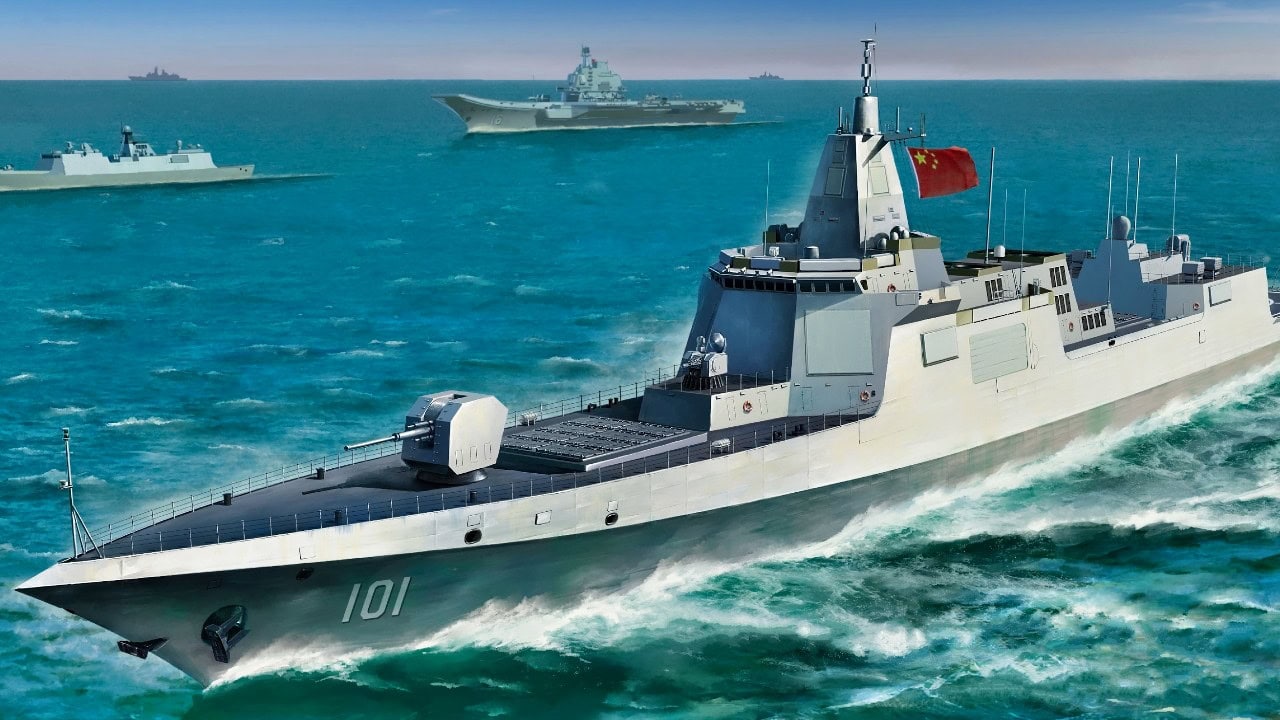
From an equipment development perspective, the next phase of competition in the South China Sea will not only revolve around prominent platforms like the 055 destroyers, aircraft carriers, or anti-ship missiles. More crucial will be the density of distributed sensors, electronic reconnaissance stations, jamming platforms, drone relays, and command links. Whoever can control the electromagnetic environment in gray zone operations can change the cost of the opponent's actions without firing a shot.
This incident also raises a practical question for China's military industry: if electronic warfare has become a routine tool in the front lines of the South China Sea, can the production capacity of onboard electronic warfare equipment, shore-based electromagnetic suppression systems, and unmanned platform electronic payloads keep pace? In the past, we were accustomed to discussing missile quantities and ship tonnage; perhaps we should now ask more: can the PLA stably, controllably, and with low risk deploy its electromagnetic advantages in every close-range air-sea contact?
Main Sources
- CGTN report on Southern Theater Command announcement dated May 27, 2026
- South China Morning Post report on the "De Ruyter" incident dated May 28, 2026
- USNI News report on the South China Sea electronic interference incident dated May 27, 2026
- The Maritime Executive report on the Dutch frigate's encounter in Xisha dated May 27, 2026
The Southern Theater Command of the People's Liberation Army (PLA) conducted warning electronic interference against the Dutch frigate "De Ruyter" after it entered the vicinity of the Paracel Islands on May 27, 2026. This marks the first public acknowledgment of such tactics by the PLA, indicating a shift in their operational approach in the South China Sea. The incident highlights the increasing complexity of naval interactions in the region, particularly with NATO forces.
- The PLA conducted electronic interference against the Dutch frigate "De Ruyter".
- This incident marks the first public acknowledgment of warning electronic interference by the Southern Theater Command.
- The "De Ruyter" is part of a larger Dutch naval deployment in the Indo-Pacific region.
- The incident occurred near the Paracel Islands, a strategically significant area for China.
- The use of electronic interference indicates a shift in PLA tactics in maritime operations.