
Spain’s army gets its first Aracne anti-drone vehicles
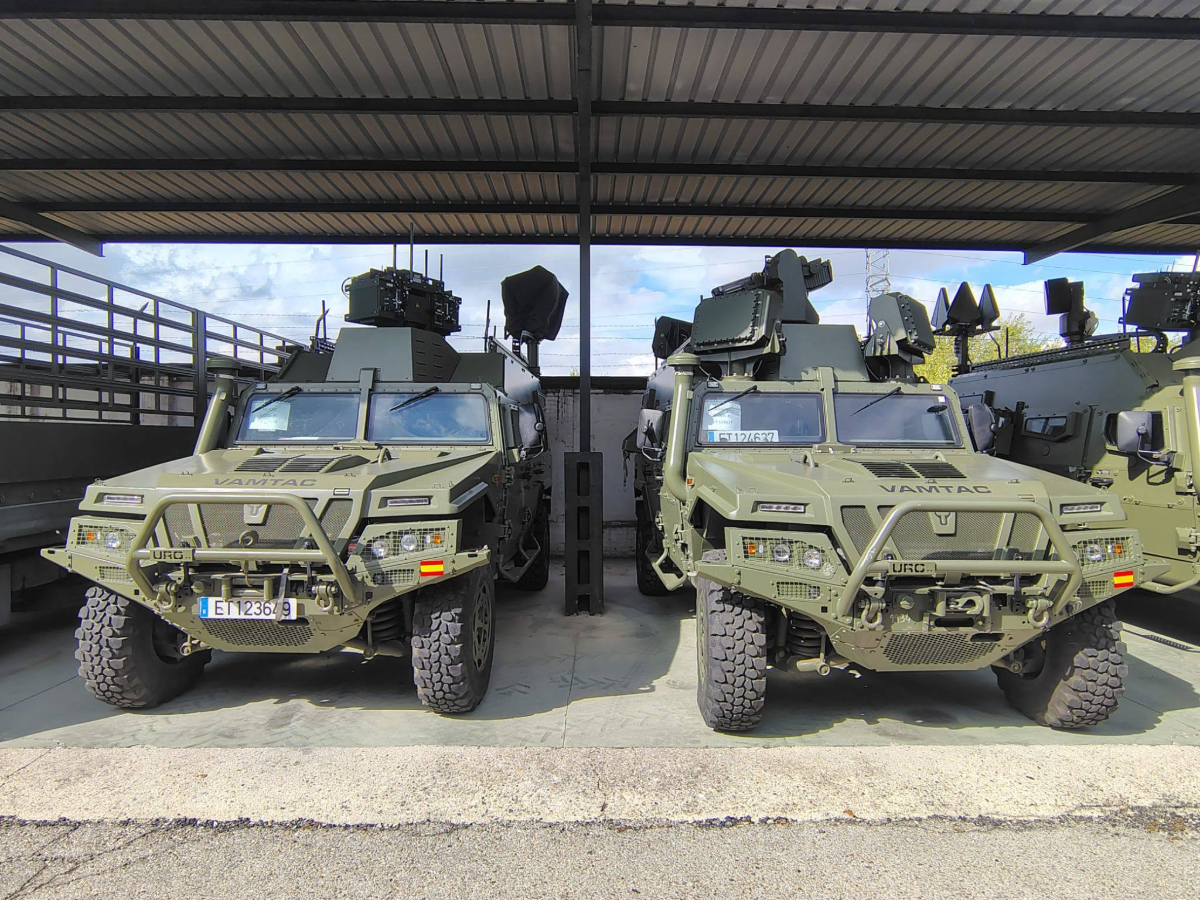
The Spanish Army has received its first Aracne counter-drone systems, delivered to the 71st Anti-Aircraft Artillery Regiment, which serves as the army’s lead unit for defending against drones.
The army announced the delivery on Oct. 8. The system is built to detect drones, identify them and choose a response, and the regiment has already completed its operational evaluation of Aracne’s soft-kill mode, which jams or disrupts a drone without destroying it. Testing of the hard-kill mode, which physically shoots drones down, is planned during the army’s next Atlas exercise. The army did not say how many systems arrived or when that exercise will take place.
Aracne was developed by a joint venture of Spanish companies Indra and EM&E Group, also known as Escribano, with TRC as a partner. Indra supplies the command-and-control system, radar and radio-frequency sensors, while EM&E provides the Oteos electro-optical sensor and Guardian 2.0 remote weapon stations. The command system fuses data from the different sensors to classify a target and help operators decide whether to jam it, take control of its signals or fire on it. Kinetic options include cannons and automatic grenade launchers.
The program covers 14 systems for the Spanish armed forces in two configurations. Fixed versions use a shelter as a command post to protect bases and critical infrastructure, while mobile versions are mounted on two Vamtac ST5 tactical vehicles, one carrying electronic warfare equipment and the other the hard-kill weapons. The army is set to receive 10 systems, five fixed and five mobile, plus a simulator, with two more going to the Spanish Air and Space Force and two to the Spanish Navy. The contract was valued at just over €30 million (about $35 million) when it was signed in February 2025, and it was Spain’s first major defense procurement focused solely on counter-drone systems.
Aracne grew out of the earlier Cervus prototypes, which the companies developed with the army’s electronic warfare regiment and which have protected Spanish troops on NATO missions in Latvia and Slovakia. Spain’s Ministry of Defense also deployed an Indra counter-drone system to protect its contingent in Lithuania last December after repeated incursions by drones and balloons from Russia and Belarus. Indra says it continues to develop that system within the Aracne project.
The 71st Anti-Aircraft Artillery Regiment led the Atlas 2025 exercise at the Médano del Loro range in Huelva in October last year, one of the largest counter-drone drills Spain has held, involving units from all three services as well as the Civil Guard and National Police. Indra demonstrated Aracne there before deliveries began.
The army said the regiment will use the new systems to train personnel and build up its readiness against drones, which it described as one of the fastest-growing challenges in current operations. Spain’s defense ministry is also preparing a new Aracne contract with Indra and EM&E as part of this year’s Special Modernization Programs, though its value and scope have not been announced.
Content preview only. Full article available at source. View Full Article
The Spanish Army received its first Aracne counter-drone systems on October 8, 2025, delivered to the 71st Anti-Aircraft Artillery Regiment. The systems are designed to detect and respond to drone threats, with operational evaluations already completed for the soft-kill mode. The army plans to test the hard-kill mode during the next Atlas exercise. The contract for these systems was valued at over €30 million.
- Spanish Army received its first Aracne counter-drone systems on October 8, 2025.
- The 71st Anti-Aircraft Artillery Regiment is the lead unit for defending against drones.
- The Aracne system includes soft-kill and hard-kill modes for countering drones.
- The contract for the systems was valued at over €30 million.
- The program includes 14 systems for the Spanish armed forces in two configurations.