
German lawmakers approve funds for eight-ship fleet of sub-hunting frigates
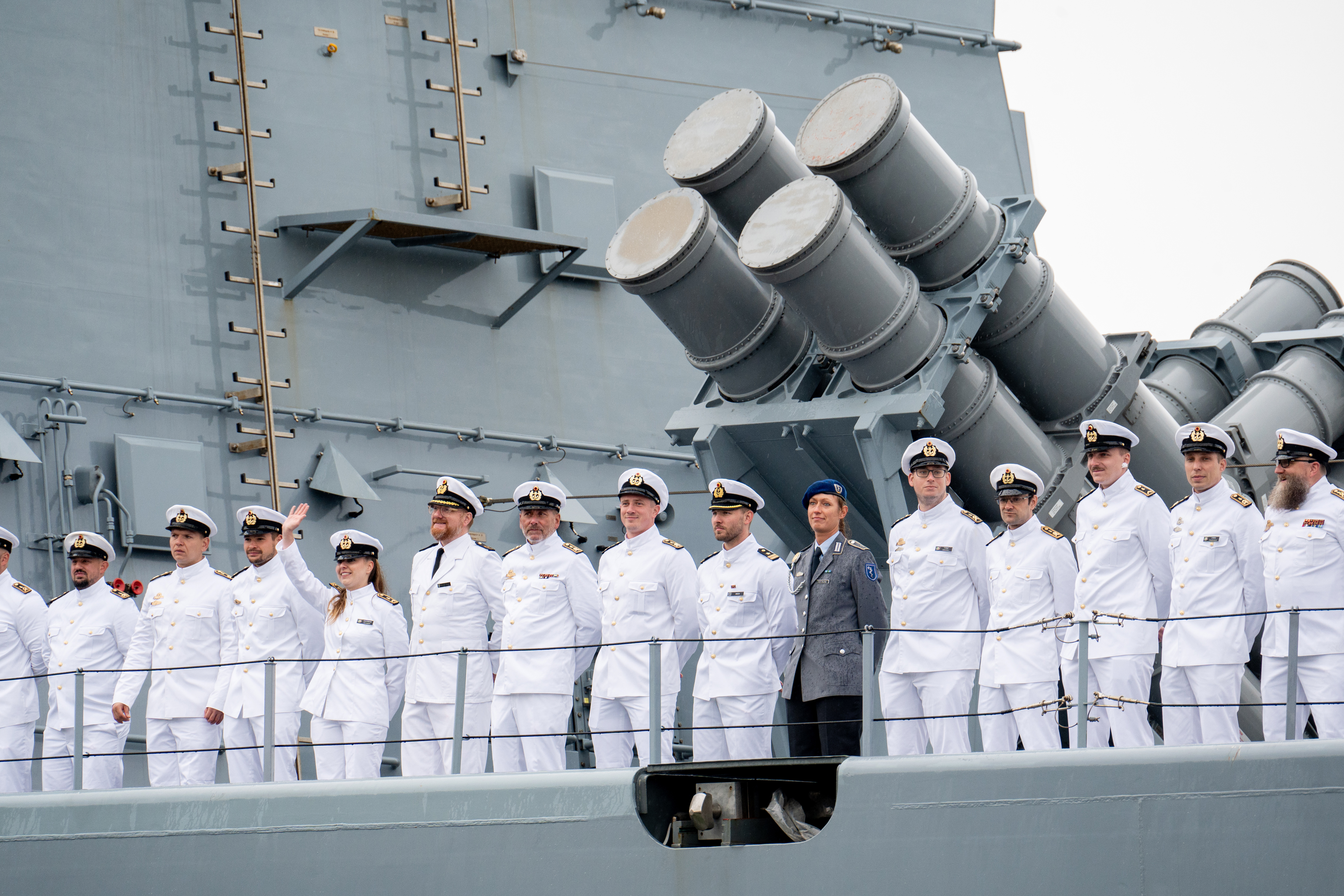
VIENNA — German lawmakers on Thursday approved the acquisition of four additional MEKO A-200 DEU frigates from shipbuilder TKMS, bringing Berlin’s planned fleet to eight ships after the government abandoned its troubled F126 program.
The Bundestag budget committee had approved the first four vessels July 8, alongside an option for four more. The Defense Ministry said the decision to exercise that option will give the German Navy a single, eight-ship class intended chiefly for anti-submarine warfare.
Delivery of the first vessel is set for 2029, the agency said in a statement. The ships will support NATO missions in the Baltic and North seas, the Atlantic and the High North, according to the announcement.
Berlin selected the MEKO design after withdrawing from its contract with Damen Naval for six F126 frigates, which had initially been intended to supply the Navy’s future anti-submarine warfare capability. The ministry attributed its withdrawal to “considerable performance problems” by Damen, saying it had completed a broader assessment before terminating the arrangement.
The program change has already triggered a costly dispute. Damen is seeking €4.7 billion ($5.3 billion) in damages from the German government, arguing that Berlin’s termination was politically motivated and legally unfounded, Der Spiegel reported last week. The F126 effort had already cost Germany more than €2 billion without delivering a ship, according to public broadcaster ARD.
The initial four-ship MEKO purchase carried a reported €6.3 billion price tag, while the four-ship option was valued at €5.3 billion. Reuters reported that the second tranche, including project support and reserves, would cost roughly €5.6 billion; the projected operating costs for those four vessels through 2045 amount to another €1.55 billion.
The Defense Ministry argued that selecting one ship type should simplify training, maintenance and logistics. It also said variants of the MEKO A-200 are already in service with allied navies.
TKMS described the envisioned eight-ship production run as the company’s largest-ever surface vessel contract.
“With the four frigates already on order, the program has entered the implementation phase,” the shipbuilder said in a statement.
As part of its post-2022 buildup, the German military has put a heavy emphasis on anti-submarine warfare abilities in the Baltic, North Sea and, especially since the crisis over Greenland, in the Arctic. The F-126 was meant to be an integral part of this strategy. Other, more successful, procurements aimed at combating submarines include the Boeing P-8A Poseidon maritime-surveillance aircraft, the first of which landed in Germany almost exactly a year ago.
German lawmakers approved the acquisition of four additional MEKO A-200 DEU frigates, bringing the total planned fleet to eight ships for anti-submarine warfare. The first vessel is scheduled for delivery in 2029 and will support NATO missions in the Baltic Sea, North Sea, Atlantic Ocean, and Arctic. This decision follows the abandonment of the troubled F126 program, leading to a dispute with Damen Naval over contract termination.
- German lawmakers approved the acquisition of four additional MEKO A-200 DEU frigates.
- The total planned fleet will consist of eight ships.
- The first vessel is set to be delivered in 2029.
- The ships will support NATO missions in various seas.
- Damen Naval is seeking €4.7 billion in damages from Germany over the F126 program termination.