
Spain’s next-gen Eurofighter is ready for its maiden flight
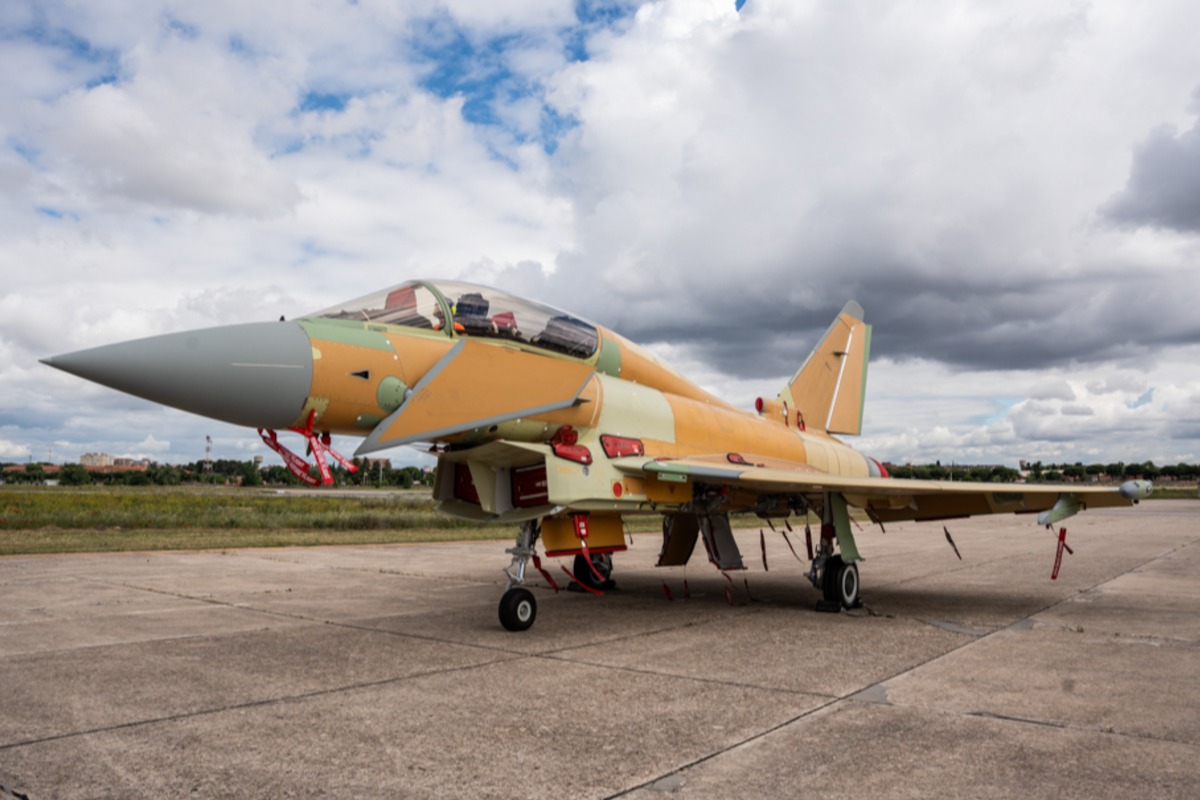
The first Eurofighter built under Spain’s Halcon I program has rolled out of the factory at Getafe, Madrid, with Airbus Defence and Space confirming that the aircraft is ready for its first engine run and maiden flight, marking the arrival of a new generation of European air combat capability on the Spanish Air Force’s flight line.
Airbus posted the announcement on Monday, confirming that the aircraft rolled out at its Getafe facility, which sits approximately 15 kilometers (9 miles) south of Madrid and has assembled, tested, and delivered every Spanish Eurofighter since the country first operated the type in 2003.
The rollout marks the physical completion of the first aircraft in the 20-jet Halcon I order that Spain signed in June 2022, making it the first Eurofighter Tranche 4 scheduled for delivery to a Spanish squadron. Deliveries of the full 20-aircraft Halcon I batch are planned to begin in 2026, with the Spanish Air Force Chief of Staff, General Francisco Braco Carbó, confirming that the first three aircraft will be delivered to the fleet this year.
The Halcon I Eurofighters carry a configuration that represents a generational step beyond the aircraft Spain has operated since 2003. The most significant upgrade is the E-Scan radar, an Active Electronically Scanned Array that replaces the mechanically rotating antenna of older Eurofighter variants with a fixed array of hundreds of individual transmit-receive modules, each capable of pointing and shaping the radar beam electronically without moving parts. An AESA radar can track multiple targets simultaneously, switch between air-to-air and air-to-ground modes in milliseconds, operate with much lower probability of interception by enemy electronic warfare systems, and perform electronic attack functions against adversary sensors that a mechanical radar cannot. The Halcon I aircraft will also carry the Full Meteor missile, a ramjet-powered air-to-air weapon with a range of over 100 kilometers (62 miles) that significantly exceeds the reach of the AMRAAM missiles carried by older Eurofighter variants, and the Brimstone III air-to-ground precision missile.
The 20 Halcon I aircraft will replace the F-18 Hornet fleet operated from the Gando air base in the Canary Islands, the Spanish archipelago sitting approximately 100 kilometers off the northwest coast of Africa, which is geographically positioned as the southwesternmost point of NATO territory in the Atlantic. That location gives the aircraft based there a surveillance and air defense role covering the approaches to the Strait of Gibraltar and the eastern Atlantic shipping lanes, as well as providing coverage for the Canary Islands themselves, which sit within range of potential threats from the African continent. The F-18s currently stationed at Gando are aging toward retirement, and the Halcon I Eurofighters are the aircraft the Spanish military has selected to maintain credible air defense coverage of that strategic position.
Spain’s total Eurofighter commitment has grown substantially since the original Halcon I order. In December 2024, Spain signed a second contract covering 25 additional aircraft under the Halcon II program, bringing the total Spanish Eurofighter order since 2022 to 45 aircraft and the projected total Spanish fleet to 115 jets when all deliveries are complete. The Halcon II aircraft will join the Halcon I jets in replacing the F-18 fleet across the Spanish Air Force’s three Eurofighter wings, with the same E-Scan radar, Meteor missile compatibility, and improved connectivity features across both batches.
The Eurofighter Typhoon itself has been in continuous production and development since the first aircraft entered service in 2003, with successive tranches incorporating progressively more capable avionics, sensors, and weapons. The Tranche 4 aircraft that Spain is receiving under Halcon I represents the current production standard, incorporating the E-Scan radar as a baseline fit rather than a retrofit, along with redesigned cockpit displays, an improved electronic warfare suite, and the full spectrum of current and planned Eurofighter weapons compatibility. The aircraft’s Eurojet EJ200 engines, each producing approximately 90 kilonewtons (20,230 pounds) of thrust in afterburner, give the Typhoon a thrust-to-weight ratio that enables sustained supersonic cruise without afterburner, a capability called supercruise that few fighters in service can match and that the F-18 cannot perform.
Content preview only. Full article available at source. View Full Article
The first Eurofighter under Spain's Halcon I program has rolled out in Getafe, Madrid, and is ready for its maiden flight. This aircraft marks a significant upgrade in capabilities for the Spanish Air Force, featuring advanced E-Scan radar and new missile systems. Deliveries of the 20 aircraft are set to begin in 2026, with the first three expected this year. The Halcon I program aims to replace the aging F-18 Hornet fleet stationed in the Canary Islands.
- First Eurofighter under Halcon I program rolled out in Getafe, Madrid.
- The aircraft is ready for its first engine run and maiden flight.
- Spain has ordered 20 Halcon I Eurofighters, with deliveries starting in 2026.
- The Halcon I aircraft features advanced E-Scan radar and new missile systems.
- Spain's total Eurofighter commitment has increased to 45 aircraft with the Halcon II program.