
Specially designed and powerful "marine flatbed"! The Navy's latest semi-submersible ship makes its debut.
The semi-submersible ship, also known as a semi-submersible mother ship, carries the word "submersible," but it cannot fully submerge underwater like a submarine. The latest model of the People's Navy, the 711-type semi-submersible ship, is the Yinma Lake ship, hull number 834. Due to its special mission, it rarely appears in the public eye. As mission tasks continue to expand, the Yinma Lake ship is also challenging its own combat power limits.
In one day, the Yinma Lake ship transitioned from familiar waters to unfamiliar waters, from general conditions to complex and harsh boundary meteorological conditions, conducting continuous transitions, loading, and submerging operations. Let's take a look at the Yinma Lake ship's first night loading and submerging training since its commissioning.
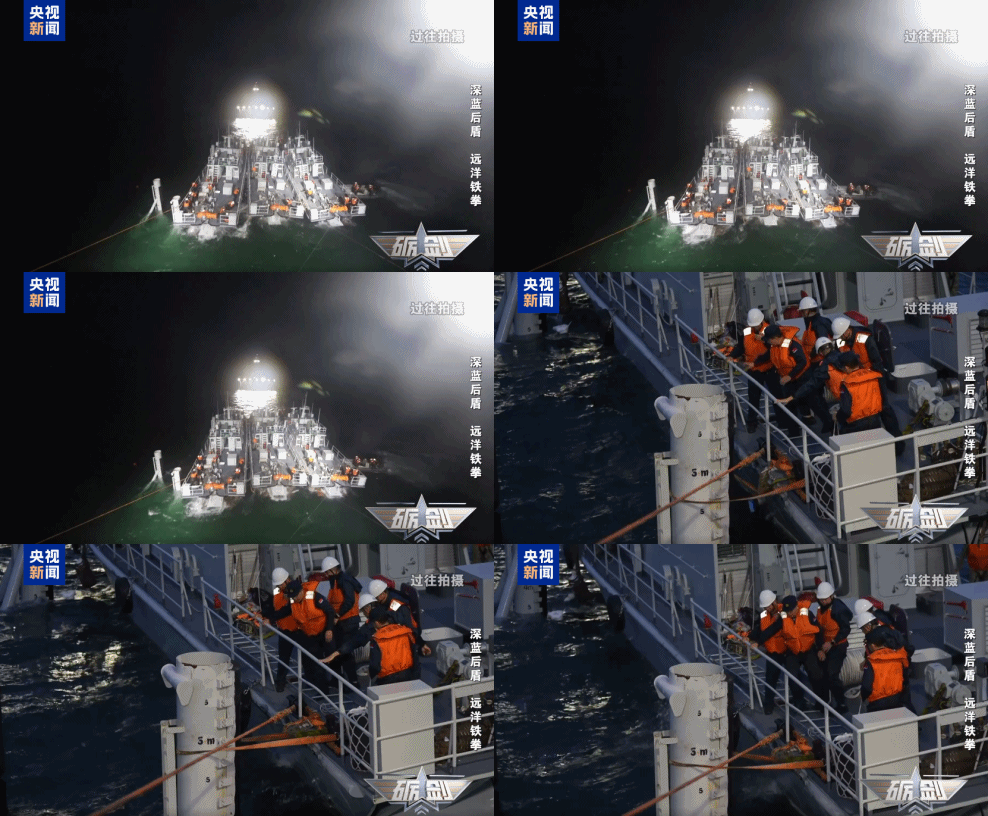
The greatest difficulty of night operations lies in low visibility, making it hard to observe whether the small boats are accurately loaded in place, which requires coordination and cooperation among the command team and personnel at various positions. After a whole day of training, the soldiers' physical strength and endurance have reached their limits, which also poses a greater test to their physical fitness. After surfacing, it was already late at night. However, the soldiers could not rest; they immediately began the work of securing the transport vessel. This must be completed before the semi-submersible ship sails again to ensure the stability of the transport vessel during navigation.
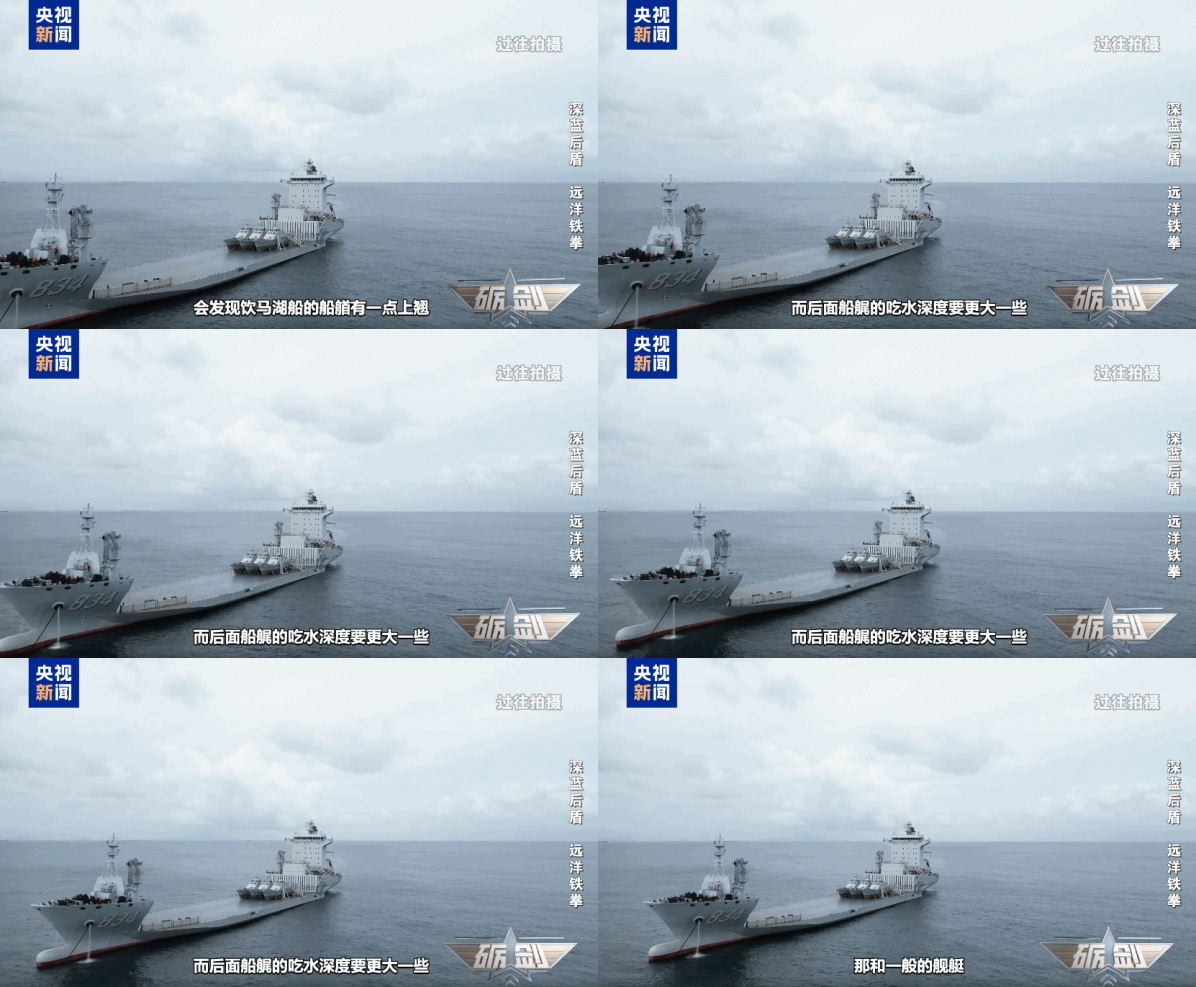
Upon closer inspection, one can find that the bow of the Yinma Lake ship has a slight upward curve, while the draft at the stern is deeper. Unlike typical vessels that concentrate their main functional areas at the bow, the Yinma Lake ship has centralized its "headquarters" at the stern to free up space on the loading deck, which means the stern bears most of the weight and is therefore heavier; this is also referred to as a stern tower ship type.
With the entire ship's center of gravity concentrated at such a high stern, how can stability be ensured during surfacing and submerging?
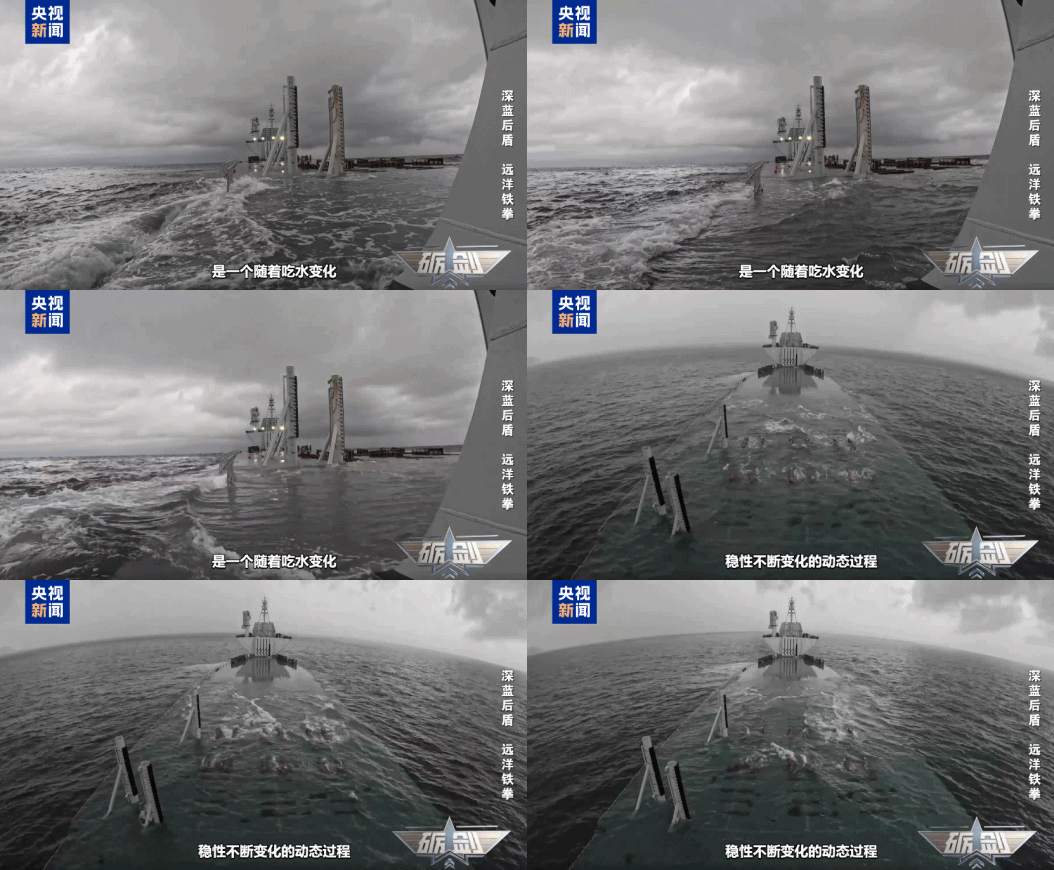
The cockpit of the Yinma Lake ship is very spacious and also serves as the command center, from which all orders are issued. The submerging and surfacing operations of the semi-submersible ship are a dynamic process where stability continuously changes with the draft. After loading cargo, the ship and cargo are interconnected, and the ship's stability and height will also change.
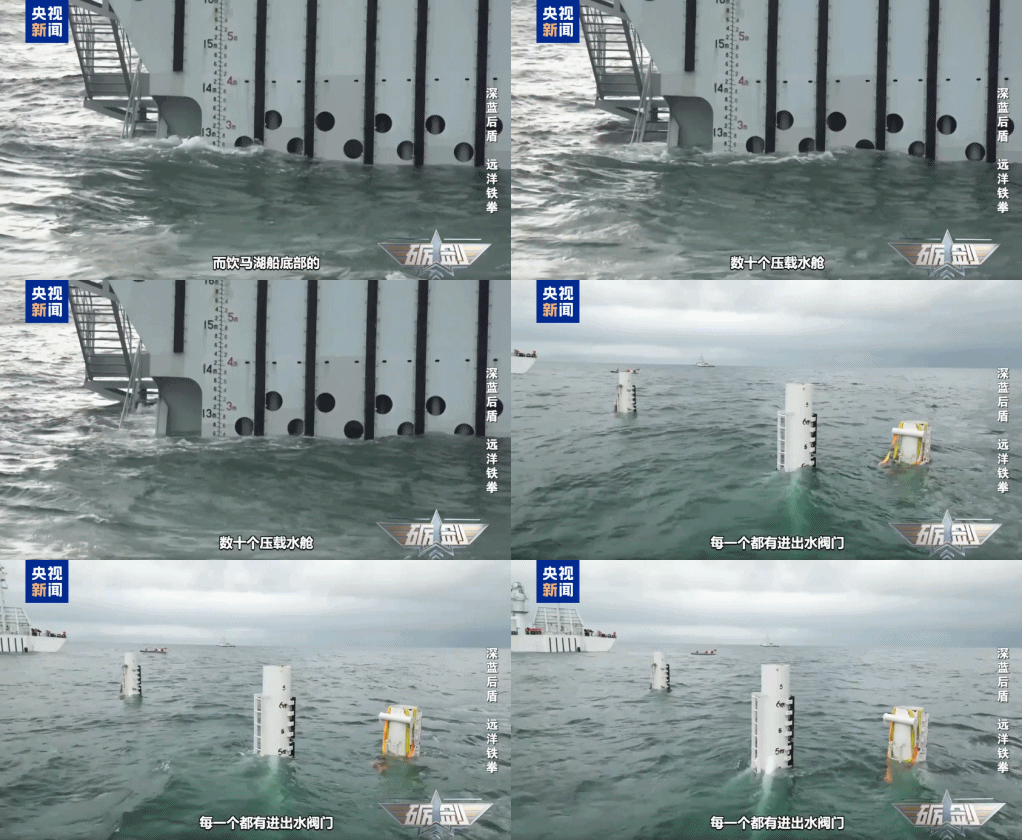
Dozens of ballast water tanks at the bottom of the Yinma Lake ship each have inlet and outlet valves, allowing for adjustments to the ship's posture through water intake and discharge. Additionally, the Yinma Lake ship is equipped with a real-time monitoring and control system to ensure the ship's stability in both longitudinal and lateral directions, as well as the strength of the hull, effectively ensuring safe and rapid operations.
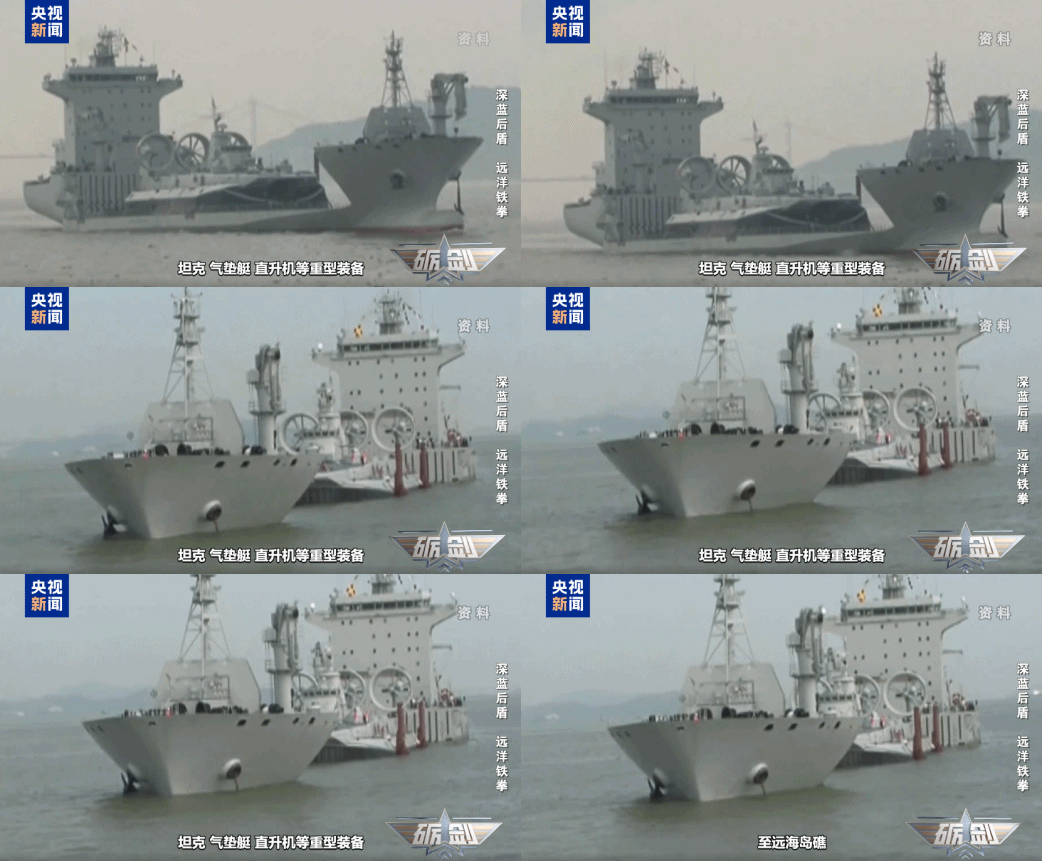
In addition to safely transporting malfunctioning warships back to base for repairs, as a "marine flatbed truck," the semi-submersible ship can also quickly deploy heavy equipment such as tanks, hovercraft, and helicopters to distant sea islands, and even serve as a "marine transfer platform" connecting large transport ships with small landing craft, enhancing the efficiency of landing operations. (Source: CCTV Defense Military Channel's "Sword Training" program)
The People's Navy's latest semi-submersible ship, the 711 type named Yinma Lake, is conducting training exercises that include night loading and submerging operations. This ship is capable of deploying heavy equipment like tanks and helicopters to remote islands and serves as a maritime transfer platform. Recent exercises tested the crew's endurance and the ship's operational limits under adverse weather conditions.
- The 711 type semi-submersible ship is named Yinma Lake, hull number 834.
- The ship is designed for loading and deploying heavy equipment such as tanks and helicopters.
- Recent training included night operations and submerging exercises under challenging conditions.
- The ship features a real-time monitoring control system for stability during operations.
- The design allows for a unique weight distribution to enhance operational capabilities.