
Stopped less than 5 meters from the edge of the aircraft carrier deck! Test pilot recounts extreme maneuvers
Today (July 30)
on the comprehensive channel of the Central Radio and Television Station (CCTV-1),
the program "Victory"
revealed a precious early footage
of a J-15 carrier-based aircraft during a ski-jump takeoff
when the engine encountered an emergency situation.
In the end, the test pilot precisely controlled the aircraft
and stopped it less than 5 meters from the edge of the deck!
The takeoff and landing of carrier-based aircraft
can be described as "dancing on the edge of a knife".
The carrier-based pilots are "dancers on the edge of a knife".
Today, listen to carrier-based test pilot Yang Yong
share the story behind the test flight.
01
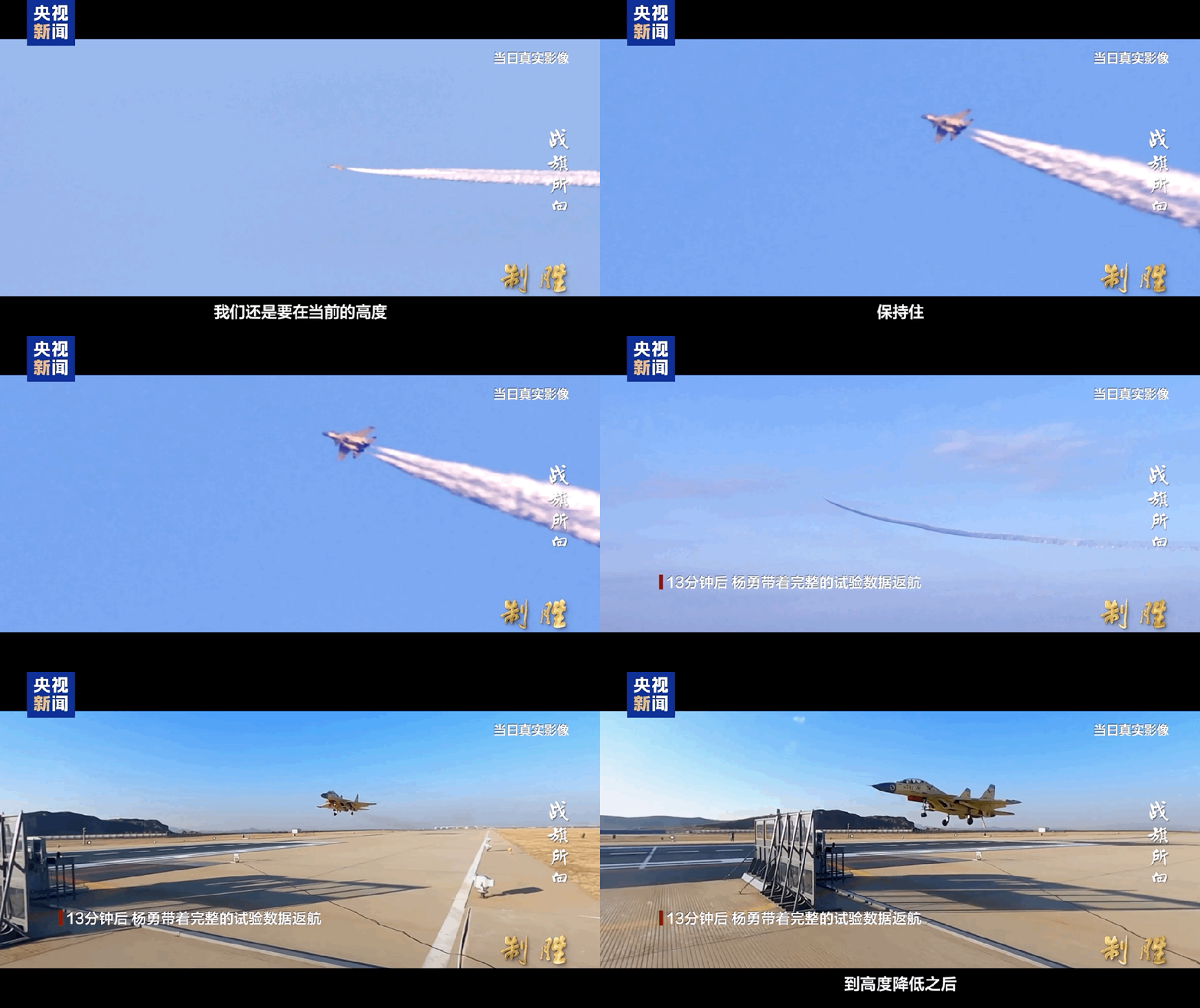
Encountering cabin depressurization emergency
He held on for 13 minutes and returned safely
Yang Yong, a carrier-based test pilot from a naval squadron,
once encountered a cabin depressurization emergency at an altitude of 10,000 meters.
The cabin pressure gauge needle dropped sharply.
The ground control tower issued the command:
“Cabin depressurization, descend immediately and return.
There is civil aviation below, and they are coordinating.
Follow orders to descend in altitude.”
That day, there were civil aviation flight paths below Yang Yong's aircraft,
making it impossible to descend immediately.
However, if the cabin gas leaked for too long,
Yang Yong could fall into a coma due to lack of oxygen.
In this critical moment, he endured discomfort
and maintained the predetermined altitude.
“At that moment, I felt my condition was deteriorating,
but as long as there was no command,
we still had to maintain our current altitude.”
Thirteen minutes later,
Yang Yong returned safely with complete test data.
Recalling this experience, he said,
“It was just one of the special situations in our entire test flight career.”
02
The "stunning landing" of the J-15 on the Liaoning
is backed by a group of "pioneers" who rise to the challenge.
Yang Yong introduced that
as a carrier-based test pilot,
the truly difficult moments are never about life and death,
but how to face a blank slate.
“Back then, carrier-based flight testing started late, and experience was lacking.
It was a blank slate both domestically and within the military.”
No one told the first batch of "pioneers"
whether they could fly or how to fly.
Every meter flown was drawing a flight path for those who came after.
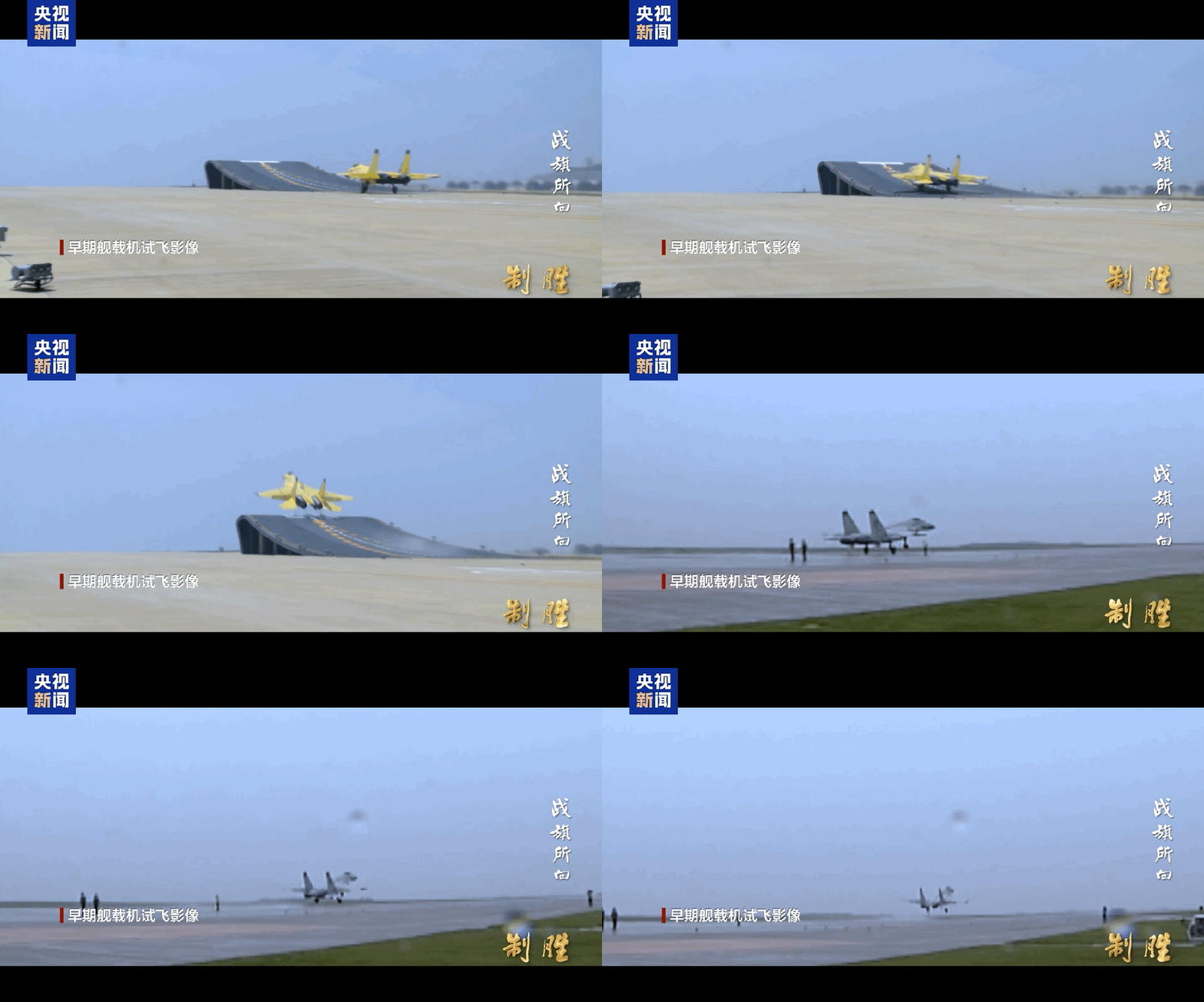
In the early days,
a J-15 carrier-based aircraft encountered an engine emergency during a ski-jump takeoff.
In the end,
the test pilot precisely controlled the aircraft
and stopped it less than 5 meters from the edge of the deck.
After countless efforts from researchers and test pilots,
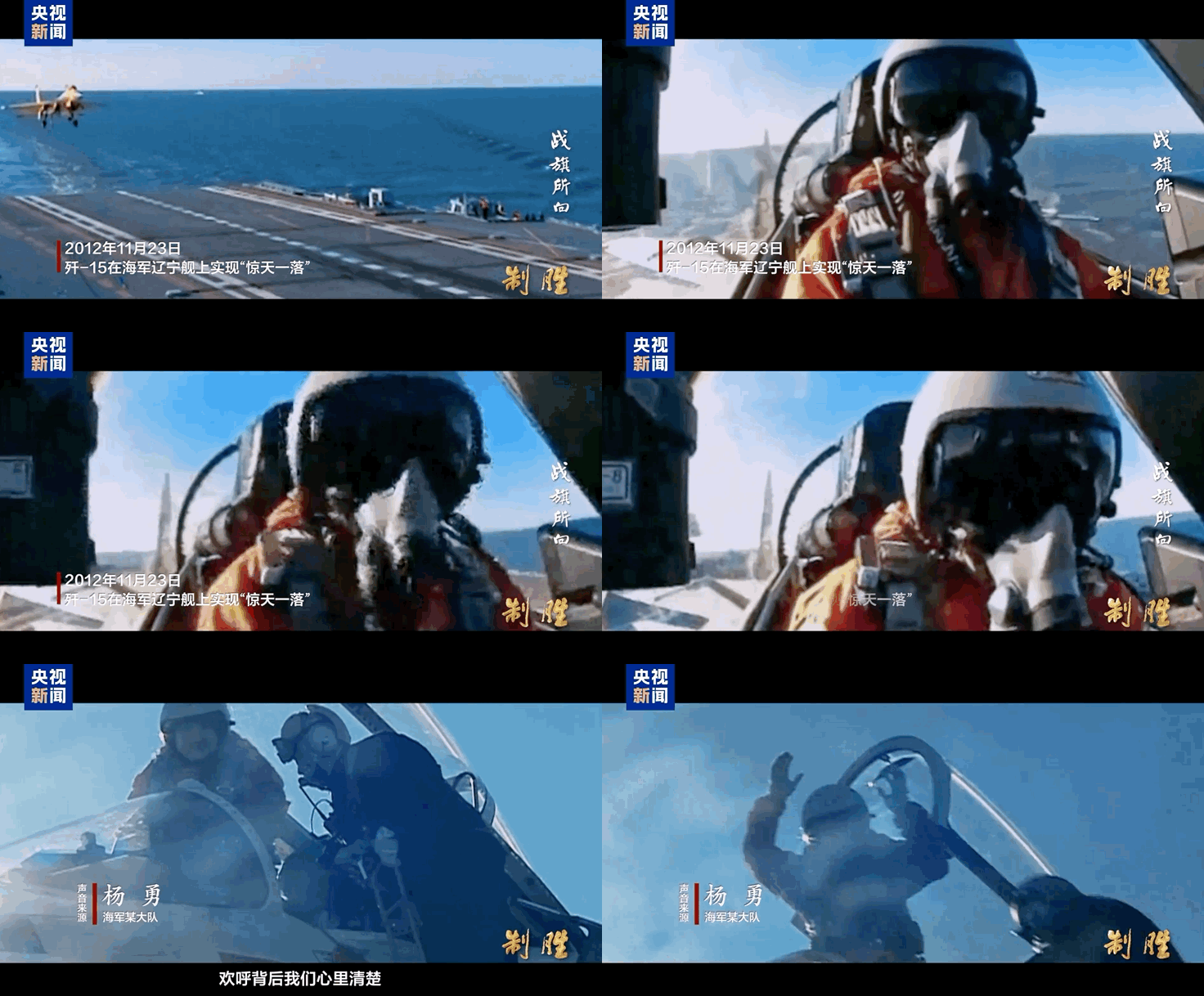
on November 23, 2012,
the J-15 achieved a "stunning landing" on the Liaoning,
marking the Liaoning as a true aircraft carrier.
However, behind the cheers,
the long journey had just begun.
The path of carrier-based flight testing is filled with sacrifices and challenges.
Yang Yong experienced the serious injuries and sacrifices of two comrades in just over twenty days.
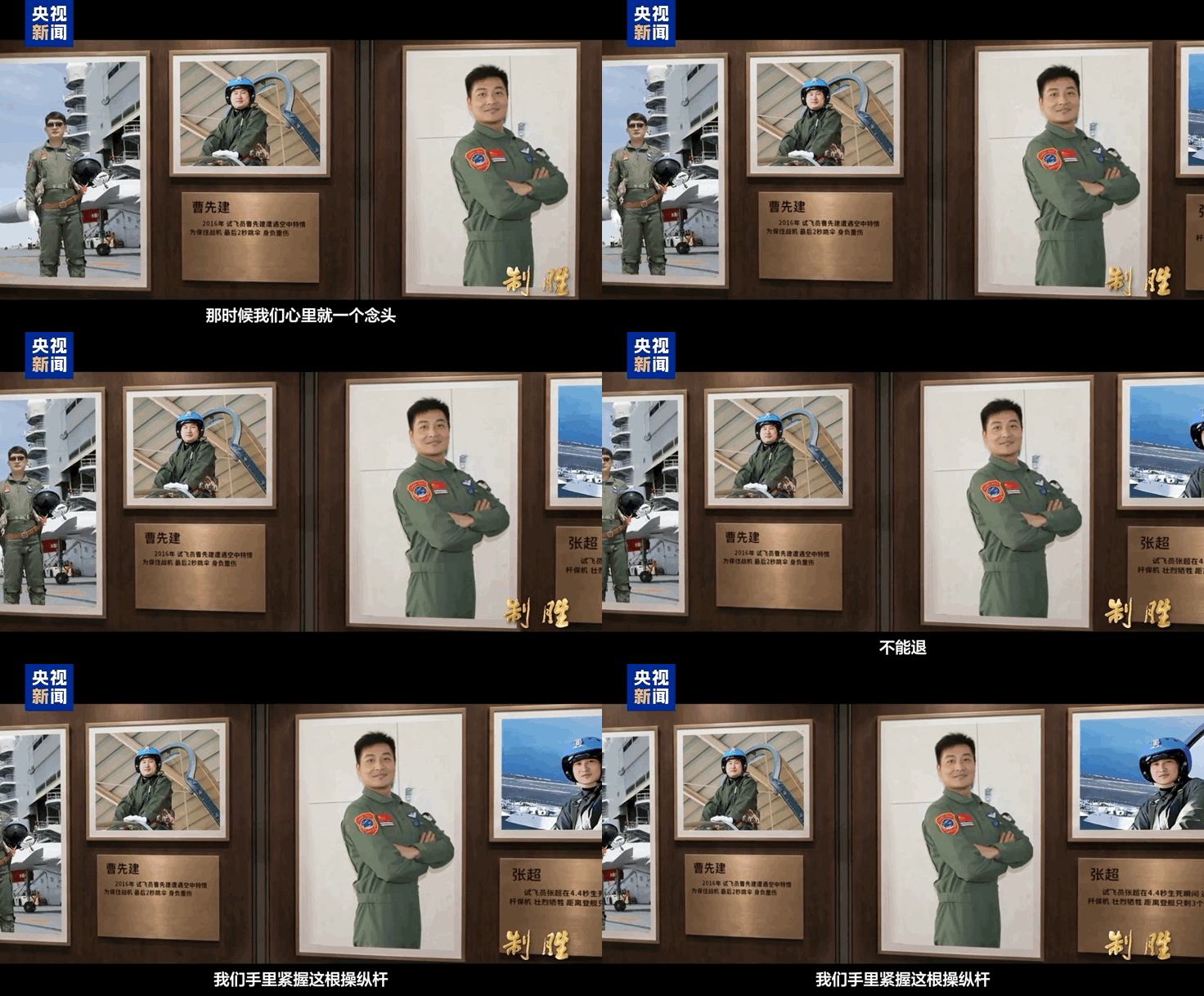
△ Honor wall, the deeds of Cao Xianjian and Zhang Chao.
At that time, he had only one thought in his mind:
we cannot be afraid, we cannot panic, we cannot retreat.
No one in the unit backed down.
“We tightly held onto this control stick,
with a strong determination not to give up.
Carrier-based pilots need people like us.”
03
“As long as there is still a blank slate,
we will keep flying.”
With the arrival of the electromagnetic catapult era on the Fujian,
the flight test tasks for the KJ-600 carrier-based early warning aircraft
followed one after another.
The KJ-600
is China's first carrier-based fixed-wing early warning aircraft,
allowing the new early warning aircraft to achieve catapult takeoff on the Fujian.
Chinese aircraft carriers now have a "thousand-mile eye."
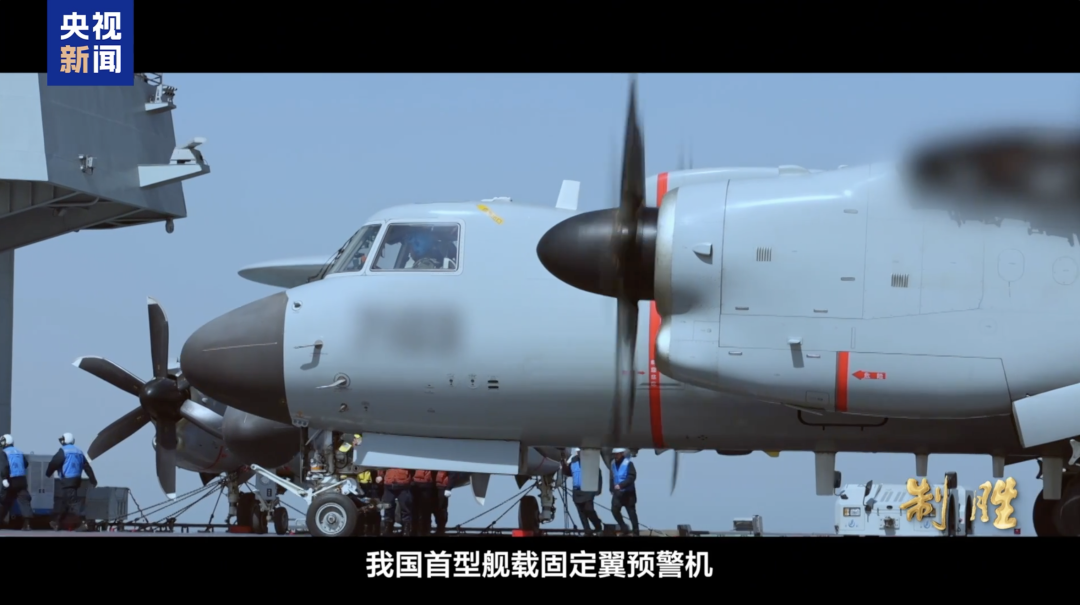
This time, the test pilots faced another blank slate.
They had no mature experience to draw from.
During the first land-based flight test,
Yang Yong encountered significant setbacks.
“I had only flown small aircraft before.
After the first land-based flight test, I looked at the data and was dumbfounded; I didn't even meet a single new flight standard.
All the test pilots felt the same way at that time.”
With tight deadlines,
Yang Yong and his comrades discovered that
they could no longer completely replicate the experience of flying fighter jets.
They conducted extensive training on the simulator.
“While improving the issues,
we pushed this test work forward.”
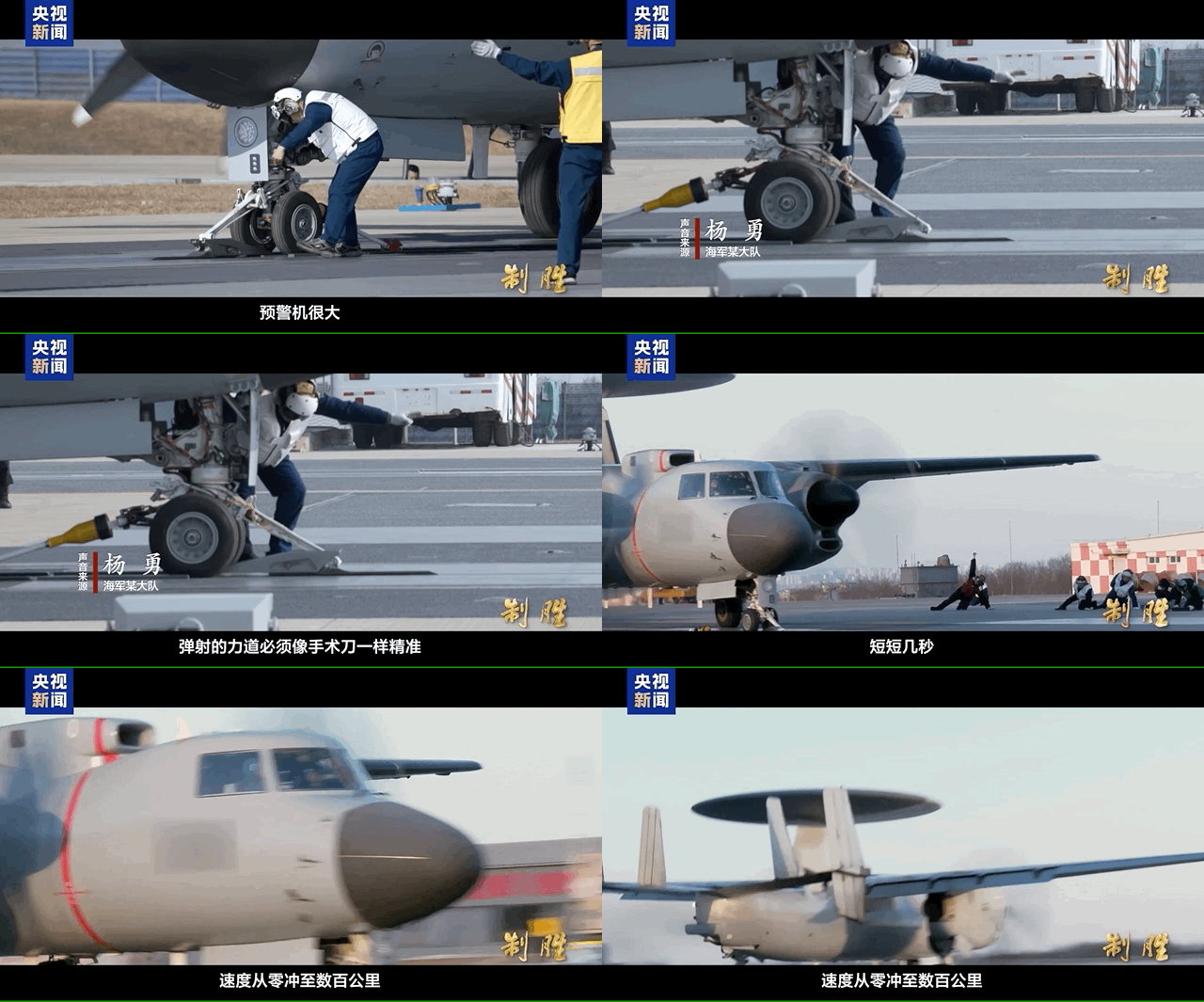
After repeated refinement,
Yang Yong and his comrades compressed the time for controlling the stick after catapult takeoff to just a few tenths of a second.
“If a problem occurs after being catapulted,
the test pilot can take control a few tenths of a second earlier,
which can save the aircraft at critical moments.”
They tackled multiple flight test challenges for carrier-based catapult landings one by one.
In 2025, the Navy's three types of carrier-based aircraft
will complete catapult takeoff and landing training on the Fujian.
This marks another breakthrough in the development of China's aircraft carriers,
indicating that the Fujian has the capability for electromagnetic catapult and recovery.
From the "stunning landing" of the J-15 on the Liaoning to the completion of the full process of catapult takeoff and landing tests by the three types of carrier-based aircraft on the Fujian,
the combat capability of China's aircraft carriers has achieved a leap forward.
Yang Yong said,
“The fire of test flying has never been extinguished.
As long as the Party and the people need us,
as long as there is still a blank slate,
we will keep flying.”
On July 30, 2023, a J-15 carrier-based fighter jet experienced an engine emergency during takeoff and was successfully stopped less than 5 meters from the edge of the carrier deck in Liaoning Province, China. Pilot Yang Yong managed to return safely with complete test data after facing a cabin pressure loss. This incident highlights the operational capabilities and challenges faced by China's naval aviation.
- A J-15 fighter jet experienced an engine emergency during takeoff.
- The pilot managed to stop the aircraft less than 5 meters from the edge of the carrier deck.
- The incident occurred on July 30, 2023, during a test flight.
- The pilot, Yang Yong, successfully returned with complete test data after a cabin pressure loss incident.
- The J-15's successful operation marks a significant milestone for China's naval aviation capabilities.