
Taiwan Gets $500 Million While the $14 Billion Package Waits
 Marcus Chen
Taiwan Gets $500 Million While the $14 Billion Package Waits
$500 million is not a Taiwan defense policy. It is a down payment on one, and a small one at that.
The House-passed fiscal 2027 appropriations language that sets aside $500 million in Foreign Military Financing for Taiwan matters because it shows Congress is still willing to spend political capital on Taipei while President Donald Trump holds back a reported $14 billion weapons package. But the operational question is not whether Congress likes Taiwan. The question is whether money approved in Washington becomes launchers, missiles, sensors, training days and spare parts before the People's Liberation Army can change the facts around the island.
On that question, the gap is still uncomfortable.
Congress Can Fund What the White House Still Controls
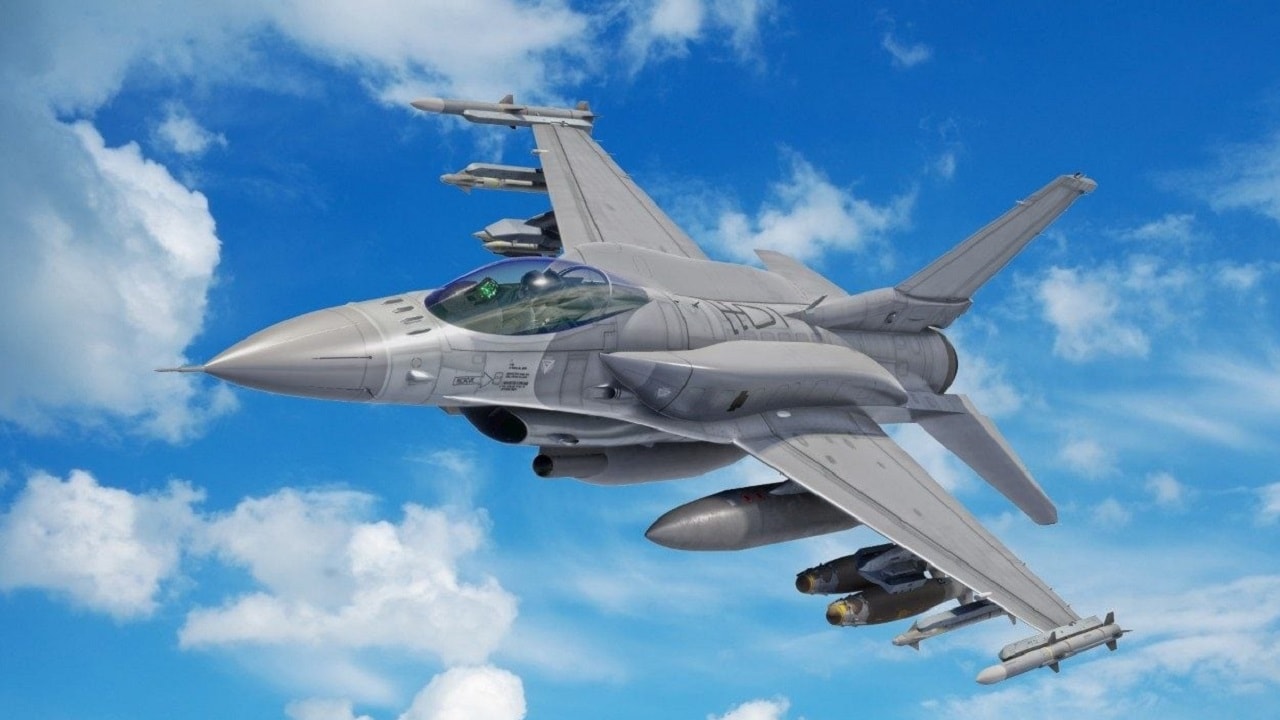
Defense News reported on July 27 that the House bill includes $500 million for Taiwan as Trump continues to delay approval of a larger $14 billion arms package after his May meeting with Xi Jinping. Taiwan News separately reported that the appropriation is tied to the Taiwan Security Cooperation Initiative and would require quarterly reporting on how the money is used. Another Taiwan News report said a Senate committee has backed authority for up to $1 billion in drawdown assistance from existing U.S. stocks.
Those are not trivial signals. Foreign Military Financing can pay for weapons, training and support services. Drawdown authority, if used seriously, can move equipment faster than a normal Foreign Military Sales case. Congress is trying to create multiple paths around delay.
But anyone who has watched a weapons case move through the system knows the uncomfortable truth. Appropriations do not equal deliveries. FMF answers the payment question. It does not by itself answer release authority, production capacity, stockpile availability or Taiwan's ability to absorb the kit. Those are the bottlenecks that decide combat power.
The Backlog Is the Real Battlefield
The numbers make the point. A $500 million line is 3.6 percent of a $14 billion package. If the larger package includes Patriot interceptors, an air-defense integration system and other high-demand items, as Taipei Times reported in May, then the issue is not simply writing a check. Patriot Advanced Capability-3 Missile Segment Enhancement interceptors, National Advanced Surface-to-Air Missile System components, HIMARS rockets, Javelins, Stingers and drones all compete with Ukraine, U.S. stockpile rebuilding and Middle East demand.
Taiwan already has roughly 30 partly unfulfilled U.S. arms cases, according to the Taiwan Security Monitor project cited by Defense News. The December-approved package alone reportedly included M109A7 self-propelled howitzers, HIMARS, Javelin anti-tank missiles and unmanned attack systems. Taiwan's cabinet approved a special budget in May to help pay for those purchases. That means Taipei is not just waiting for new promises. It is waiting for old ones to become units on a loading pier.
This is where the military math gets hard. Taiwan does not need a symbolic funding stream. It needs enough dispersed fires, mobile air defense, mines, drones, command nodes and runway repair capacity to keep fighting after the first 72 hours. A Chinese blockade or missile campaign would not wait for the Senate calendar. It would try to break Taiwan's air defenses, paralyze ports, isolate air bases and force political decisions before U.S. forces could surge enough mass west of Guam.
A half-billion dollars can buy useful pieces. It cannot buy time already lost.
Air Defense Is Where Delay Hurts Most
The Taiwan funding story sits inside a larger missile-defense squeeze across the Indo-Pacific. India just tested the Kusha long-range interceptor to reduce dependence on Russia's S-400. Japan is racing to field interceptor drones as a cheaper layer against Shahed-type threats. Australia is improvising medium-range air defense combinations. Everyone in the theater has reached the same conclusion: missiles and drones are arriving faster than legacy procurement can answer.
Taiwan has the most compressed geography of all. The Taiwan Strait is about 160 kilometers wide at its narrowest useful military frame. PLA Rocket Force brigades do not need exquisite basing arrangements to put airfields, radars and logistics nodes under pressure. PLA Air Force J-16s, H-6 bombers, KJ-500 airborne early-warning aircraft and surveillance drones already practice the architecture that would support a quarantine or strike campaign.
That is why the reported contents of the delayed package matter. Patriot interceptors and air-defense integration are not prestige items. They are the difference between independent batteries fighting as isolated pockets and a layered system that can see, assign and conserve interceptors. In a missile fight, conservation is lethality. Firing a $4 million interceptor at the wrong target is not just waste. It may leave the next runway, command post or fuel farm exposed.
Trump Has Leverage But Taiwan Pays the Carrying Cost
The administration's argument, at least implicitly, is that the $14 billion package is leverage with Beijing before another Trump-Xi meeting. That may be tactically useful in a diplomatic sense. It is operationally expensive for Taiwan.
Beijing reads delay differently than Washington often intends. A temporary pause in Washington can look like a testable political constraint in Beijing. If China believes the White House can be induced to slow new Taiwan cases for the sake of summit management, then every future arms package becomes part of a bargaining cycle. That is dangerous because deterrence depends less on private reassurances than on predictable behavior.
Congress is trying to restore some predictability. The $500 million FMF line says Taiwan is still a budget priority. The Senate drawdown language says stockpile transfer remains on the table. But neither fully solves the central problem: the executive branch controls when major cases are notified, when licenses move, and how much risk the Pentagon is willing to take from its own inventories.
The real test is not whether Washington can announce Taiwan aid. It is whether Washington can keep Taiwan supplied while also arming Ukraine, covering the Middle East and rebuilding U.S. missile magazines.
The Useful Move Now Is Boring and Urgent
Washington should split Taiwan security assistance into two lanes. The first lane is fast and ugly: draw down immediately transferable stocks that improve survivability, including air-defense missiles where available, mobile communications, small drones, counter-drone gear, coastal sensors, mines and spare parts. The second lane is industrial: multi-year buys for interceptors, rockets and unmanned systems with Taiwan embedded in the production plan rather than treated as an end-of-line customer.
Taipei has work to do as well. It should keep shifting money away from platforms that only survive in peacetime and toward magazines, mobility, camouflage, hardened logistics and reserve training. A fighter or frigate that cannot leave base after the first missile wave is not a deterrent. A mobile launcher with trained crews, reloads and a hidden fuel truck is.
The $500 million appropriation is useful because it keeps the Taiwan account alive. It is also revealing because it shows how thin the margin has become. Congress is patching a signal problem while the island still faces a delivery problem.
The danger is mistaking the patch for the defense. Beijing does not have to beat a congressional line item. It has to beat a force that may or may not receive its weapons on time. Until the $14 billion package moves and the backlog shrinks, Taiwan is still being asked to deter with too many promises in transit.
The U.S. Congress allocated $500 million in Foreign Military Financing for Taiwan as part of its defense strategy while awaiting a delayed $14 billion arms package. This funding is crucial for Taiwan's military readiness amid ongoing tensions with China, as it faces a backlog of unfulfilled arms cases. The report highlights the urgency for Taiwan to enhance its defense capabilities in light of potential threats from the People's Liberation Army.
- Congress allocated $500 million in Foreign Military Financing for Taiwan.
- A larger $14 billion arms package is delayed by the White House.
- Taiwan has approximately 30 unfulfilled U.S. arms cases.
- The funding is tied to the Taiwan Security Cooperation Initiative.
- Taiwan needs immediate military capabilities to deter potential threats.