
Taiwan Puts HIMARS and Hsiung Feng Missiles Into the 2026 Blockade Fight
 Marcus Chen
Taiwan Puts HIMARS and Hsiung Feng Missiles Into the 2026 Blockade Fight
Five days is not much time to prove an island defense plan. But Taiwan's July 13-17 drill matters because it puts two of the right weapons into the same problem: mobile rocket artillery for targets ashore and mobile anti-ship missiles for targets at sea.
USNI News reported on July 15 that Taiwan had mobilized M142 High Mobility Artillery Rocket Systems and domestically produced Hsiung Feng anti-ship missile launchers for a major defense drill. The point is not the choreography. Taiwan has run Han Kuang-style drills for decades. The point is that Taipei is trying to connect launchers, roads, sensors and command posts into a kill chain that can survive the first missile salvos of a People's Liberation Army campaign.
The Weapons Are Finally Being Exercised Together
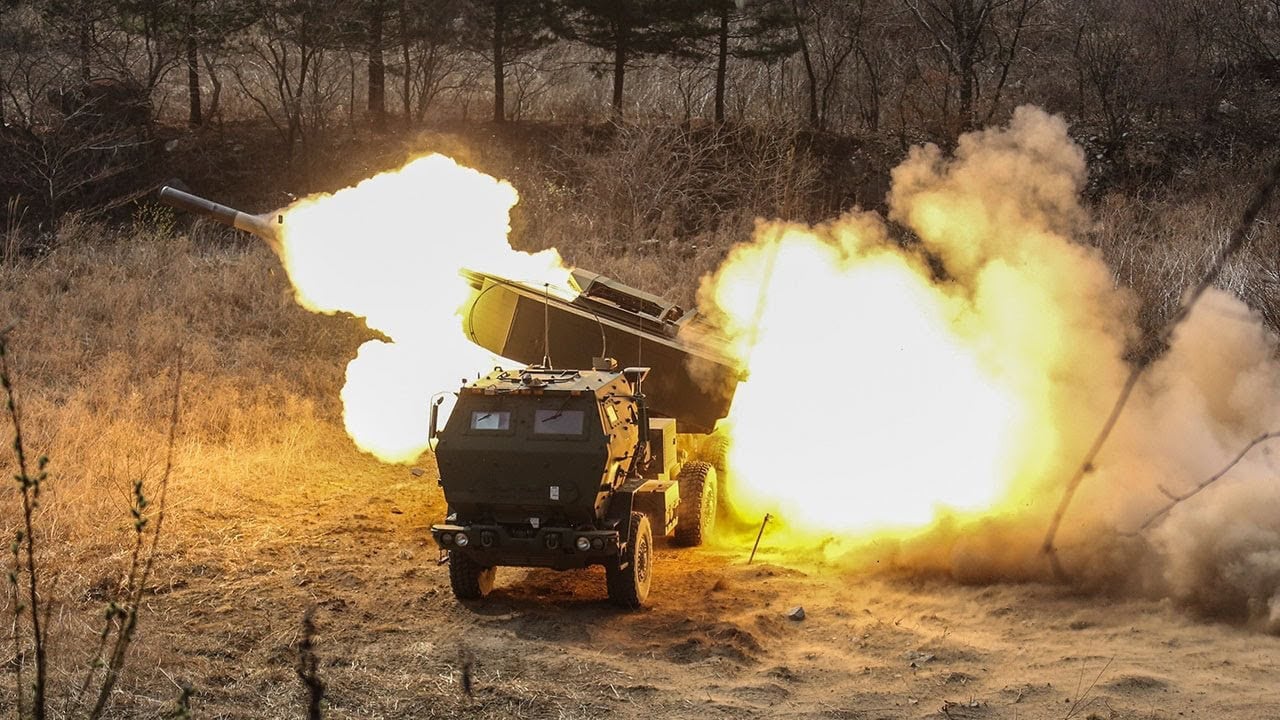
The M142 HIMARS gives Taiwan a road-mobile precision fires system that can move, shoot and hide. With standard Guided Multiple Launch Rocket System rounds, the useful range is roughly 70 kilometers. With longer-range Army Tactical Missile System munitions, if supplied and cleared for use, the reach can extend far beyond that. The launcher itself is the key: one six-rocket pod or one larger missile on a truck that can reposition before counterfire arrives.
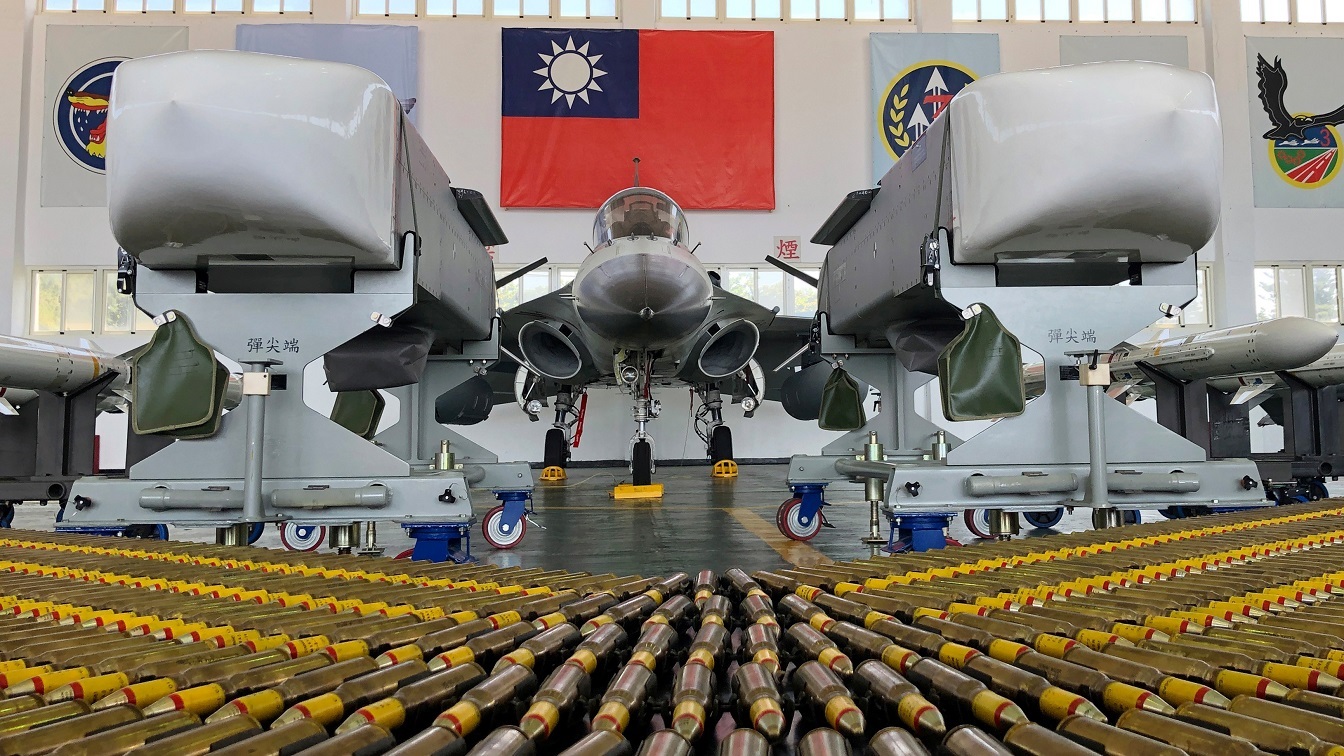
The Hsiung Feng family solves a different part of the problem. Hsiung Feng II gives Taiwan a subsonic anti-ship option generally discussed in the 100-plus kilometer class. Hsiung Feng III is the more dangerous weapon for a Chinese surface action group: a supersonic missile often credited with a range in the several-hundred-kilometer band, depending on variant. Put those launchers on trucks, keep them moving, and Taiwan can threaten amphibious ships, escorts and blockade vessels without needing to win air superiority first.
That distinction matters. Anyone who has served on a destroyer knows the nervous part of littoral operations is not the weapon you see on a briefing slide. It is the launcher you cannot find, parked under cover, waiting for a targeting update.
The Math Is About Roads, Not Just Missiles
Taiwan sits about 160 kilometers from the Chinese coast at its narrowest point. That sounds small until you start plotting what an invasion force has to do. PLA amphibious ships and civilian roll-on/roll-off vessels pressed into service must assemble, cross, suppress coastal defenses, clear mines, land troops and then sustain them. Every hour spent inside the missile envelope is an hour of exposure.
HIMARS is not primarily an anti-ship weapon in Taiwan's order of battle. Its better role is to hit ports, staging areas, airborne landing zones, captured beachheads and command nodes. If Chinese forces seize a beach exit or try to push inland from a port, mobile precision rockets can punish the bottleneck. That is where a 70-kilometer weapon becomes useful even on a small island: most likely landing areas, roads and airfields are not far from somewhere Taiwan can hide a launcher.
The anti-ship missile trucks are the maritime half of the same equation. A Chinese blockade does not require an immediate landing. It can start with coast guard cutters, maritime militia, destroyers, frigates and aircraft trying to close Taiwan's ports while staying outside the most obvious engagement zones. Hsiung Feng launchers complicate that geometry. They force PLA Navy commanders to assume that a seemingly quiet stretch of coastline may already be covered.
The drill is a practical test of Taiwan's central bet: it cannot match China's platform count, so it must make every Chinese ship, airfield and beachhead operate under the threat of mobile precision fire.
China Sees the Same Kill Chain
Beijing is not guessing about this. The PLA has spent years practicing joint fires, missile suppression and blockade operations around Taiwan. Taiwan's Ministry of National Defense has continued to report regular PLA aircraft and ships around the island, including sorties crossing the median line and entering multiple sectors of Taiwan's air defense identification zone. Those patrols are not random intimidation. They are reconnaissance, pattern-setting and pressure.
That creates the hard part for Taipei. Mobile launchers only matter if they can receive targeting data after the first wave of Chinese strikes. A truck without communications is just a truck. Taiwan therefore needs hardened fiber, mobile command posts, redundant radios, passive sensors, drones, coastal radars and preplanned fire missions. The July drill is useful if it stresses those connections. It is theater if the launchers move on schedule and everybody already knows where the cameras are.
The PLA's counter is obvious: saturate likely hide sites, jam communications, attack fuel and maintenance points, and use drones to find launchers after they fire. A HIMARS launcher can shoot and scoot, but it still needs reloads. A Hsiung Feng battery can hide, but it still needs radar or offboard targeting. The logistics tail is where small forces get exposed.
The U.S. Role Is Ammunition, Not Speeches
Washington likes to talk about deterrence in the Taiwan Strait. The useful question is narrower: how many launchers, how many missiles, and how fast can replacements arrive before the shooting starts?
Stars and Stripes reported last month that Taiwan had demonstrated HIMARS fire toward the Taiwan Strait for the first time. The Associated Press account carried by Chron described the same kind of shoot-and-scoot logic: launch, move, survive. That is the right muscle memory. But muscle memory does not solve magazine depth. Ukraine has shown what HIMARS can do when paired with good targeting. It has also shown that precision rockets are consumed quickly in a real fight.
If Taiwan has only enough rounds for a few days of high-tempo fires, the capability becomes a political signal. If it has enough stocks, reload vehicles, decoys and dispersed storage to keep firing after the first week, it becomes an operational problem for Beijing. That is the gap between a parade weapon and a denial system.
What This Drill Really Proves
The July exercise does not prove Taiwan can defeat a blockade or invasion. No five-day drill can do that. It does show that Taipei is moving in the right direction: fewer exquisite platforms that die on fixed bases, more mobile launchers that force the PLA to search, decide and risk ships close to shore.
The judgment is simple. Taiwan does not need HIMARS and Hsiung Feng to win a symmetrical fight. It needs them to make China's first 72 hours ugly enough that Beijing cannot assume a clean fait accompli. That is a narrower standard, and it is the only one that matters.
The launchers are not a strategy by themselves. But if Taiwan can keep them alive, fed and connected, they change the price of crossing the Strait. If it cannot, this week's drill was just another rehearsal for a war plan that runs out of missiles before it runs out of slogans.
Taiwan conducted a major defense drill from July 13-17, 2023, mobilizing M142 HIMARS and Hsiung Feng missile systems to enhance its island defense capabilities. The exercise aimed to integrate mobile rocket artillery and anti-ship missiles into a cohesive defense strategy against potential Chinese aggression. This drill is part of Taiwan's efforts to improve its military readiness and complicate PLA operations in the region.
- Taiwan mobilized M142 HIMARS and Hsiung Feng missiles for a defense drill from July 13-17, 2023.
- The HIMARS system has a range of approximately 70 kilometers with standard munitions.
- Hsiung Feng II and III missiles provide anti-ship capabilities with ranges exceeding 100 kilometers.
- The drill aims to enhance Taiwan's defense against potential Chinese military actions.
- Taiwan's strategy focuses on mobile launchers to complicate PLA operations.