
Taiwan RIMPAC 2026 Invite Cannot Fix the $1 Billion Readiness Gap
 Marcus Chen
Taiwan RIMPAC 2026 Invite Cannot Fix the $1 Billion Readiness Gap
The number that matters in the Senate's latest Taiwan move is not one invitation. It is $1 billion. The Senate-passed fiscal year 2026 defense policy bill strongly encourages the Pentagon to invite Taiwan's navy to the Rim of the Pacific exercise and authorizes $1 billion for the Taiwan Security Cooperation Initiative, according to South China Morning Post reporting on the bill and Senate aides. That is a meaningful political signal. It is not, by itself, a fleet plan.
RIMPAC is the world's largest maritime exercise. The 2026 iteration, according to U.S. Pacific Fleet figures tracked for this year's exercise cycle, brings together 31 countries, roughly 40 surface ships, five submarines, about 140 aircraft, and more than 25,000 personnel. For a navy that lives under daily pressure from the People's Liberation Army Navy and China Coast Guard, getting into that operating environment would matter. Taiwanese crews would see multinational command-and-control, anti-submarine warfare patterns, damage-control habits, replenishment discipline, and the unglamorous mechanics of keeping ships on station.
RIMPAC Access Is Useful but Limited
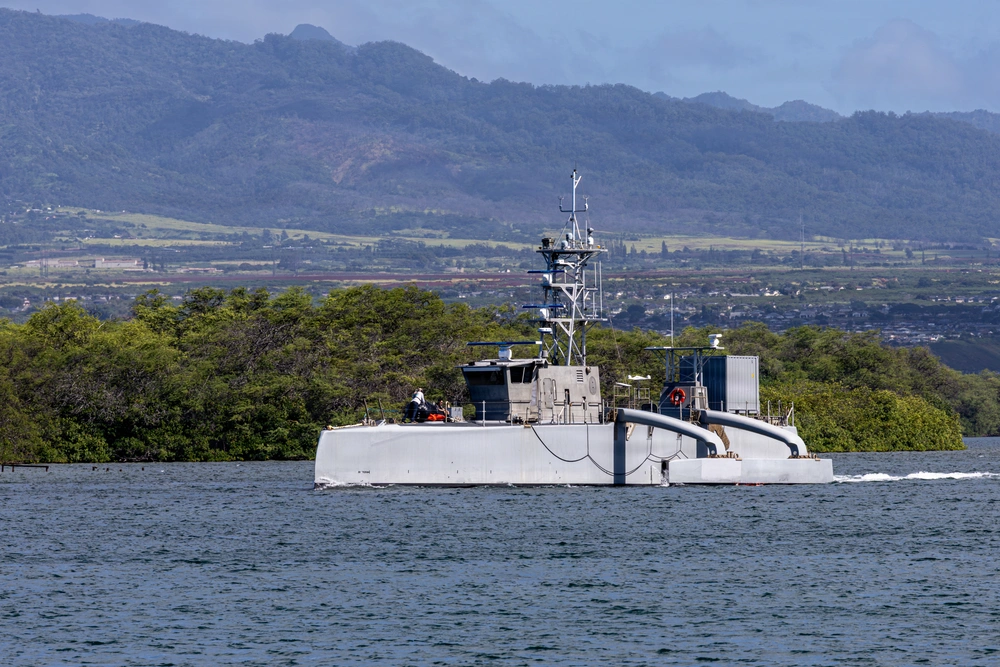
But anyone who has stood watch on a destroyer knows an exercise berth is not the same thing as wartime interoperability. It takes years to make two navies work together under electronic attack, missile warning, degraded communications, and ambiguous rules of engagement. RIMPAC can start that process. It cannot compress it into one summer.
The Senate language also has a built-in limit. The bill can encourage an invitation; the executive branch still has to decide whether to issue one, and the Pentagon would have to manage the diplomatic blowback. Beijing will treat a Taiwan RIMPAC invitation as a sovereignty challenge, not a training schedule adjustment. That does not mean Washington should avoid it. It means the move should be judged by military utility, not by how loudly China complains.
The Useful Part Is Medical and Sustainment Funding
The more operationally important line in the bill is the $1 billion Taiwan Security Cooperation Initiative. The reported expansion to include combat casualty care and medical equipment sounds less dramatic than warships in Pearl Harbor. It may matter more.
A Taiwan fight would punish the things militaries usually underfund: blood, evacuation, repair parts, distributed fuel, secure communications, and trained crews able to operate after the first missile salvos. Taiwan's geography makes casualty evacuation uniquely hard. In a blockade or quarantine scenario, the island cannot assume open air corridors or uncontested sea lanes. If ports and air bases are under missile pressure, tactical medicine becomes a deterrence issue. A force that cannot keep wounded sailors and soldiers alive after the first 72 hours loses combat power before the ammunition runs out.
$1 billion is not a small authorization, but it is modest against the scale of the problem. Taiwan's defense budget has risen, but the island is still trying to fund new submarines, coastal missile batteries, air defense, reserve reform, civil defense, hardened infrastructure, and ammunition stocks. The U.S. backlog of approved arms deliveries to Taiwan has been measured in the tens of billions of dollars. One billion dollars can buy important resilience. It cannot buy time back from delayed Harpoon, Stinger, or air-defense deliveries.
The Navy Problem Is Still Mass
Inviting Taiwan to RIMPAC also risks encouraging the wrong mental picture. Taiwan does not need to become a miniature blue-water navy. It needs to survive inside the first island chain and make a PLA landing, blockade, or coercive quarantine too expensive to sustain.
Taiwan's surface fleet includes capable but aging major combatants, many inherited from U.S. designs built for a different era. Large ships have value for peacetime presence and wartime command functions, but they are also big targets inside a missile-dense battlespace. The harder problem is distributed sea denial: mobile coastal missiles, mines, unmanned surface and underwater systems, shore-based sensors, decoys, and enough repair capacity to keep damaged systems returning to the fight.
That is where RIMPAC participation could be useful if Washington keeps it practical. Taiwan should not be invited merely to appear in a multinational photo line. It should be plugged into anti-submarine warfare, unmanned systems integration, maritime domain awareness, cyber resilience, and casualty response. If the exercise becomes a diplomatic ceremony, Beijing gets the provocation and Taiwan gets little military value. If it becomes a hard training lane for wartime tasks, the trade looks different.
Congress Is Signaling Faster Than the Fleet Can Move
The Senate vote, reported as 77-20, shows strong bipartisan support for Taiwan-related defense provisions even after congressional gridlock. The Senate Armed Services Committee's public summary also highlights new authorities for cooperation with Taiwan, the Pacific Deterrence Initiative, AUKUS, shipbuilding, drones, and industrial-base expansion. That is the right menu. The problem is throughput.
U.S. shipyards are already struggling to deliver submarines and surface combatants on schedule. Missile production remains a pacing item. The same industrial base expected to arm Ukraine, refill U.S. magazines, support Israel-related requirements, expand Pacific posture, and execute AUKUS is also being asked to accelerate Taiwan. Congress can authorize priorities faster than factories can turn them into deployable inventory.
That matters because Taiwan's timeline is not abstract. PLA air and naval activity around Taiwan has become routine enough that each new patrol or exercise no longer shocks the system. The coercion is cumulative. China does not need to launch an invasion tomorrow to improve its position. It can normalize presence, stress Taiwan's readiness, force expensive scrambles, and practice the command relationships needed for a blockade.
The Test Is Not Whether China Objects
Washington should invite Taiwan to RIMPAC if the Pentagon is prepared to make the training real. It should also fund the $1 billion initiative in ways that make Taiwan harder to paralyze: casualty care, resilient communications, dispersed logistics, mobile missile support, and repair capacity. Those are not glamorous categories, but they are the ones that decide whether a force can still fight after the first week.
The worst version of this policy is symbolic. Taiwan gets an exercise slot, Congress declares resolve, China protests, and the underlying readiness math barely changes. The better version treats RIMPAC as one small part of a larger survival architecture.
That is the uncomfortable conclusion. A Taiwan invitation to RIMPAC would be a useful signal, but signals do not stop missiles, reopen ports, or move blood plasma across a contested island. The $1 billion matters only if it buys the boring things that keep a navy alive. Otherwise, Washington will have created another political symbol pretending to be military preparation.
The U.S. Senate passed a bill encouraging Taiwan's navy to participate in RIMPAC 2026 and authorized $1 billion for the Taiwan Security Cooperation Initiative. This initiative aims to enhance Taiwan's military readiness amid ongoing pressures from China. RIMPAC, involving 31 countries and significant military assets, is seen as a critical opportunity for Taiwan to improve its operational capabilities. However, the report highlights that mere participation is insufficient without substantial military utility and readiness improvements.
- Senate passed a bill encouraging Taiwan's navy to participate in RIMPAC 2026.
- The bill authorizes $1 billion for the Taiwan Security Cooperation Initiative.
- RIMPAC is the world's largest maritime exercise involving 31 countries and significant military assets.
- Taiwan's defense budget is under pressure to fund various military needs.
- The report emphasizes the importance of medical and sustainment funding for Taiwan.