
Taiwan's 2026 $14 Billion Arms Pause Exposes the Wrong Deterrence Gap
 Marcus Chen
Taiwan's 2026 $14 Billion Arms Pause Exposes the Wrong Deterrence Gap
The number that matters is not $14 billion. It is four to five years.
That is the estimated delivery window for Patriot Advanced Capability-3 interceptors if Washington eventually releases the stalled Taiwan weapons package, according to Taiwan-based analysts cited by Defense News. The Trump administration can announce the sale tomorrow and still leave Taipei waiting into the next presidential cycle for some of the air-defense hardware that matters most in a missile-heavy Taiwan scenario. The political hold is serious. The production lag is worse.
Washington's latest signal at the Shangri-La Dialogue did not close that gap. Secretary of War Pete Hegseth told the Singapore forum that the United States wants a durable balance of power in the Pacific and that allies must become partners rather than protectorates. The official speech text stresses burden-sharing, distributed posture, and denial of quick gains. But the most operationally important word in the Taiwan Strait was missing from the prepared remarks: Taiwan.
The Package Is a Signal Before It Is a Shipment
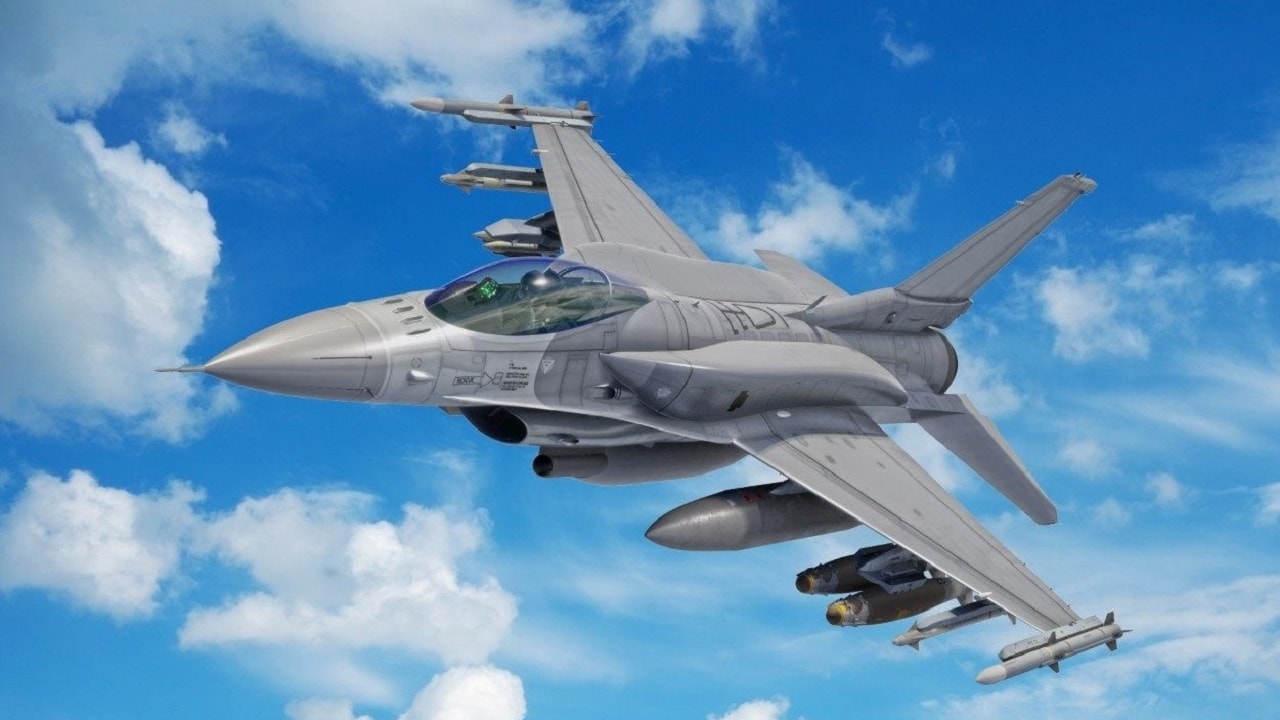
The pending package has been reported at roughly $14 billion. Defense News says the pause covers weapons that include PAC-3 systems, while Taiwan had already approved a separate $9.34 billion special defense budget for previously approved U.S. weapons, including HIMARS and Javelin anti-tank missiles. The Associated Press reported earlier that Taiwanese officials said they had not been notified of a formal pause after Acting Navy Secretary Hung Cao linked some foreign military sales delays to U.S. munitions demands from the Iran war.
This is exactly why arms sales to Taiwan cannot be evaluated as normal procurement. The first function is political credibility. A signed notification tells Beijing that Washington is still willing to absorb diplomatic cost for Taiwan's self-defense. The second function is force generation. That part takes years, and it depends on production lines that are already serving Ukraine, the Middle East, U.S. replenishment, and other allies.
For deterrence, both functions matter. A delayed sale weakens the first immediately and the second only gradually, because most of the weapons were not arriving next month anyway. That distinction is easy to miss in Washington, where announcements are often treated as capability. Anyone who has served on a destroyer knows the difference between a magazine plan and rounds in the launcher.
Taiwan Needs Magazines, Not Mood Music
China's problem set for Taiwan is not subtle. The People's Liberation Army can use ballistic missiles, cruise missiles, rockets, cyber operations, electronic warfare, naval quarantine tactics, and air sorties to stress Taiwan before an amphibious landing is even on the table. The first days of a crisis would be about keeping air bases, command nodes, ports, fuel, radars, and mobile missile units alive under repeated strikes.
That makes PAC-3 interceptors valuable but insufficient. PAC-3 is designed for point defense against ballistic missile threats. It protects what sits inside its defended footprint. It does not defend an island by itself, and it is expensive enough that every shot invites a cost-exchange problem. If Taiwan has to spend multimillion-dollar interceptors against cheaper salvos without enough decoys, hardening, mobility, and local munitions production, the defender loses arithmetic even when individual engagements succeed.
HIMARS and ATACMS-type capabilities create a different problem for the PLA by threatening ports, staging areas, air-defense sites, and ships operating inside the battlespace. Javelins help only after Chinese forces reach shore, which means they matter for resilience but not for preventing the crossing. F-16Vs give Taiwan flexible airpower, but survivability depends on runway repair, shelters, dispersal, pilots, fuel, and the ability to operate under missile attack.
That is the Taiwan gap: not whether Taipei can buy advanced systems, but whether it can keep enough shooters, sensors, and command links alive after 72 hours of pressure.
The Shangri-La Message Was Clearer for Allies Than for Taipei
Hegseth's Singapore speech was not empty. The official Department of War transcript framed the Pacific as the central theater for U.S. interests and called China's military buildup a source of rightful alarm. The department's accompanying summary said U.S. posture in the region would be resilient, distributed, and optimized to deny quick gains through force. That is the right operational concept for the first island chain.
But concepts are not commitments. ABC reported from Singapore that Hegseth did not mention Taiwan in the speech, even as officials were watching for clarity after the Beijing summit and the stalled arms package. When asked, he said future Taiwan arms sales rest with President Trump and that there had been no overall change in U.S. status. That answer may be diplomatically useful. It is militarily thin.
Beijing does not need Washington to abandon Taiwan in a formal communique. It only needs enough ambiguity to make Taipei and regional militaries question whether U.S. political will can survive a fast-moving crisis. Delay, equivocation, and transaction talk all feed that calculation. The danger is not that China believes the United States has no capability. The danger is that China believes the decision process can be slowed, split, or bargained with in the opening phase of a crisis.
Self-Reliance Is Necessary but Not a Shortcut
Several Taiwan analysts now argue the pause will push Taipei toward asymmetric self-reliance: drones, local munitions, anti-ship missiles, air defenses, and domestic defense production. That is directionally correct. Taiwan should be building expendable unmanned systems, mobile coastal fires, distributed command posts, hardened fuel storage, passive sensors, sea mines, and rapid runway repair capacity at a pace that assumes U.S. deliveries arrive late.
But self-reliance is not a slogan. It requires production capacity, trained operators, maintenance pipelines, secure communications, and realistic exercises under electronic attack. Taiwan's drone industry is promising, but drones that cannot survive jamming or feed targeting data into a kill chain are not a substitute for integrated fires. Indigenous air-defense missiles are useful, but the network must be layered and redundant. Domestic anti-ship missiles matter, but only if launchers can move, hide, reload, and receive targeting updates while Chinese aircraft and satellites are searching for them.
The United States should still release the $14 billion package. Political signaling matters, and Taiwan needs Patriots, precision fires, and sustainment. But Washington should stop pretending that sale approval equals solved deterrence. The better metric is how many launchers can survive, how many reloads are on island, how many decoys complicate Chinese targeting, and how fast damaged runways and command links can be restored.
The uncomfortable conclusion is that the arms pause exposes two weaknesses at once. Washington's Taiwan policy is becoming too transactional, and Taiwan's defense remains too dependent on systems that arrive slowly from overloaded U.S. factories. Beijing can read both.
The fix is not another speech about resolve. It is magazines, mobility, hardening, local production, and a U.S. approval process that does not turn Taiwan's survival kit into a bargaining chip. The math is unforgiving. If the first decisive week is fought with whatever is already on the island, a four-year delivery timeline is not deterrence. It is a reminder that the real deadline comes before the weapons do.
Taiwan's arms procurement is significantly delayed, with a $14 billion package including PAC-3 interceptors and other systems not expected to arrive until 2026. This delay raises concerns about Taiwan's defense capabilities against potential Chinese aggression, prompting a shift towards self-reliance in military production. The U.S. has not provided clarity on future arms sales, contributing to uncertainty in Taiwan's defense strategy.
- Taiwan's arms package is estimated at $14 billion, with significant delays in delivery.
- The U.S. has not formally notified Taiwan of a pause in arms sales.
- Taiwan's defense strategy is increasingly focused on self-reliance due to delays in U.S. arms deliveries.
- The PAC-3 interceptors are crucial but insufficient for Taiwan's defense needs against China.