
Taiwan's $4.6 Billion Defense Add-On Tests US Deterrence in 2026
 Marcus Chen
Taiwan's $4.6 Billion Defense Add-On Tests US Deterrence in 2026
Taiwan is asking for another $4.6 billion in defense spending while the head of the American Institute in Taiwan is warning that a cross-Strait war would be disastrous. Those two facts belong in the same sentence. Taipei is buying time, not buying certainty. The question is whether the new money can produce usable combat power before the People's Liberation Army (PLA) turns a political crisis into a blockade.
The New Money Is a Readiness Bill
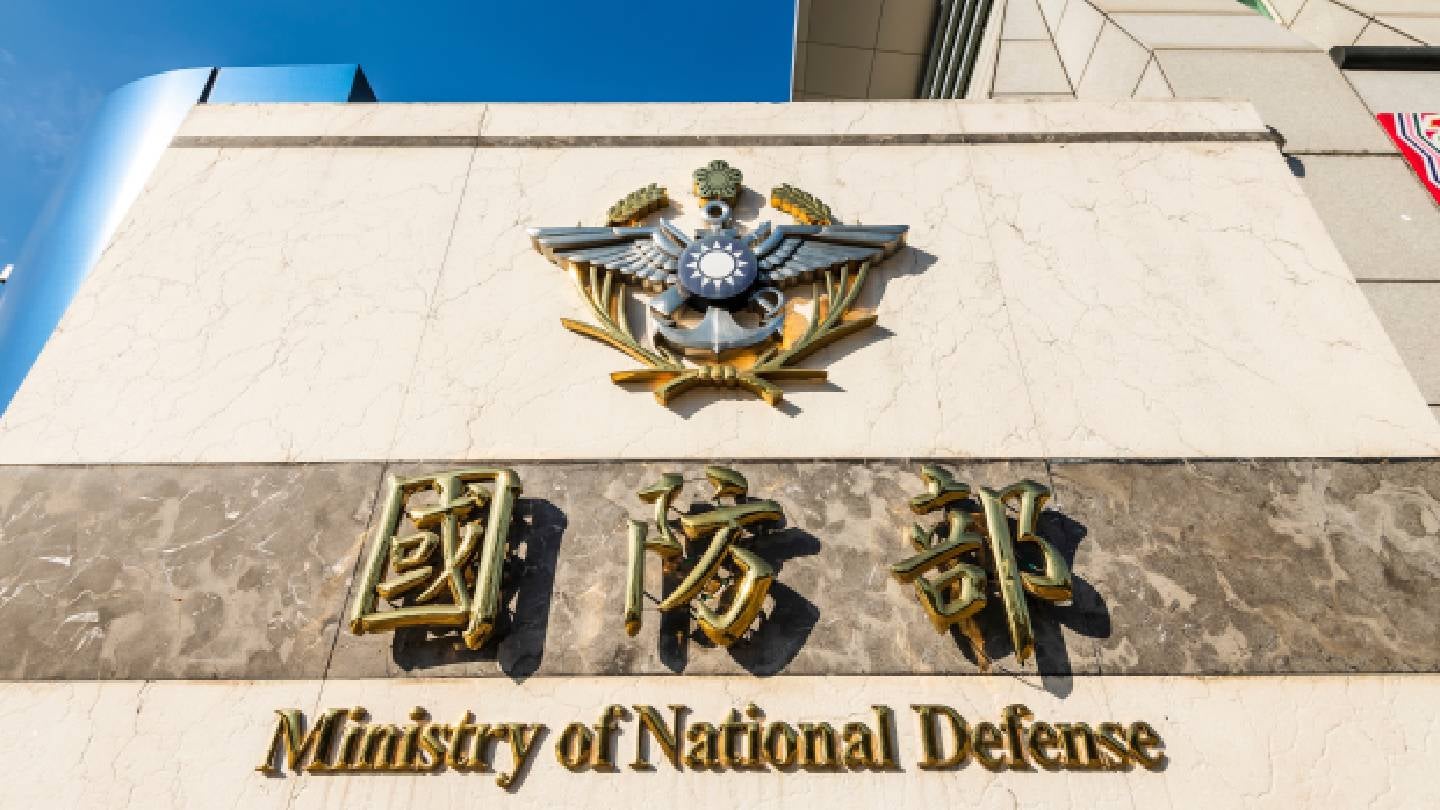
Reuters reported on September 3 that Taiwan proposed an additional $4.6 billion for defense this year. On September 9, Reuters reported that AIT Director Raymond Greene told a Taipei defense forum that conflict would be disastrous, as Taiwan modernizes its forces and President Donald Trump and Chinese President Xi Jinping are expected to meet later this month. The timing matters: an emergency appropriation signals urgency, but it also reveals that urgency arrived after the threat environment had already changed.
Money only matters if it reaches the magazine, the flight line, and the repair shop. Taiwan's inventory includes upgraded F-16V fighters, Patriot air-defense batteries, mobile anti-ship missiles such as Hsiung Feng II and III, and truck-mounted artillery and rocket systems. These are useful systems, but each depends on a different fragile chain: trained maintainers, spare parts, secure communications, fuel, dispersal sites, and enough interceptors or missiles to survive the opening week.
- Air defense: Patriot interceptors are valuable against selected ballistic and cruise-missile threats, but they are finite and expensive.
- Air power: F-16Vs add modern radar and weapons, yet runways and fuel infrastructure remain targets from the first hours.
- Sea denial: mobile anti-ship missiles can threaten a landing force, but only when sensors, command links, and launchers survive.
- Resilience: drones, hardened communications, reserve stocks, and repair capacity may buy more time than another exquisite platform.
Taiwan Is Finally Spending on the Hard Part
Recent reporting points to two less glamorous priorities. Taiwan is building a U.S.-backed military unit to hunt hidden Chinese cyber threats, according to the South China Morning Post, and a new drone bill is being presented as a way to strengthen domestic defense capacity, according to the Foundation for Defense of Democracies. That is the correct direction. A blockade or invasion would begin with confusion: disrupted networks, spoofed sensors, damaged ports, and contradictory orders. A force that cannot see, communicate, and regenerate cannot use its missiles effectively.
The drone question is not about buying a few thousand airframes for a press conference. It is about production volume, batteries, datalinks, electronic-warfare resistance, and operators. Cheap systems can force the PLA to spend expensive interceptors and reveal its positions. They also disappear quickly in a dense jamming environment. Taiwan needs a layered fleet of expendable reconnaissance drones, one-way attack drones, and larger systems that can remain airborne beyond the first salvo. It needs factories and stockpiles, not a procurement ceremony.
What the PLA Would Try to Break
Beijing does not need to begin with an amphibious landing. A coercive campaign could combine maritime quarantine, cyberattacks, air and missile strikes, and law-enforcement pressure around Taiwan's outlying islands. The objective would be to make the island's leadership doubt whether U.S. forces can arrive, whether commercial shipping will continue, and whether Taiwan can keep its own population supplied.
USNI News' recent review of South China Sea disputes is a useful reminder that Chinese coercion is often incremental. The PLA and China's maritime agencies can probe, normalize, and escalate without crossing a single dramatic red line. Taiwan's $4.6 billion must therefore fund endurance: distributed fuel, protected ammunition, alternate runways, port repair, civil-defense logistics, and enough communications equipment to operate when satellites and fiber links are degraded.
From a naval officer's perspective, the arithmetic is blunt. A missile battery that fires once is an ambush; a battery that can relocate, reload, and receive targeting data is a campaign asset. The same logic applies to aircraft and drones. Taiwan's defense budget should be judged by sorties generated, targets tracked, ships denied, and days of autonomous operation—not by the headline value of the package.
Washington's Warning Is Not a War Plan
Greene's warning is diplomatically sensible and militarily incomplete. Saying war would be disastrous may reduce miscalculation, but deterrence requires Beijing to believe that an attack will fail or become intolerably costly. It requires Taipei to demonstrate that its forces can keep fighting after the first wave, and it requires Washington to answer the logistical questions that public statements avoid: which bases are usable, which munitions are available, and how quickly can replacements cross the Pacific?
The United States can help with intelligence, training, air defense, cyber cooperation, and pre-positioned stocks. It cannot outsource Taiwan's first days of resistance. Geography gives the PLA the opening move; Taiwan must make that opening move insufficient.
The Test Is Delivery Before Crisis
Taiwan's additional $4.6 billion is a serious signal, but a budget vote is not deterrence. The money must become dispersed launchers, loaded magazines, resilient networks, drone production lines, and trained reservists before the next exercise becomes a blockade rehearsal. If Taipei spends it on visible platforms while neglecting sustainment, Beijing will see a showroom. If it spends it on endurance, the calculation changes.
The uncomfortable conclusion is simple: Taiwan does not need to prove that it can defeat China alone. It needs to prove that China cannot win quickly. That is the standard Washington's warning—and Taiwan's new budget—will be measured against.
Sources
- Reuters, “Taiwan proposes extra $4.6 billion in defence spending for this year,” September 3, 2026.
- Reuters, “Conflict over Taiwan would be disastrous, de facto US ambassador says,” September 9, 2026.
- South China Morning Post, “Taiwan sets up US-backed cyber unit to hunt hidden military threats,” September 7, 2026.
- Foundation for Defense of Democracies, “Taiwan’s Drone Bill Signals Stronger Defense,” September 8, 2026.
- USNI News, “Report to Congress on South China Sea Disputes,” September 2, 2026.
Taiwan proposed an additional $4.6 billion in defense spending for 2026 to enhance military readiness amid rising tensions with China. The head of the American Institute in Taiwan warned that a conflict would be disastrous, emphasizing the need for Taiwan to demonstrate its capability to deter a quick victory by the People's Liberation Army. The funding aims to improve Taiwan's military inventory, including F-16V fighters and air-defense systems, while also addressing cyber threats.
- Taiwan proposed an additional $4.6 billion for defense in 2026.
- The head of the American Institute in Taiwan warned that a cross-Strait war would be disastrous.
- Taiwan's military inventory includes upgraded F-16V fighters and Patriot air-defense batteries.
- Taiwan is building a U.S.-backed military unit to address cyber threats.
- Taiwan's defense budget must focus on endurance and resilience.