
Taiwan's HIMARS Fires 32 Rockets on the West Coast for the First Time, PLA's Landing Firepower Account Needs to Be Recalculated
 Li Minghui
Taiwan's HIMARS Conducts First Live Fire of 32 Rockets on the West Coast, PLA Must Recalculate Landing Firepower
On June 10, the Taiwan Army moved the HIMARS to a west coast position near the Dajia River estuary and fired 32 training rockets towards the Taiwan Strait. This detail is more interesting than the word "first": it was not conducted at a safe testing range on the east coast, but rather at a potential landing front, integrating the vehicle-mounted rocket artillery, 155mm howitzers, and mobile repositioning processes.
Not a Range Demonstration, But a Time Demonstration
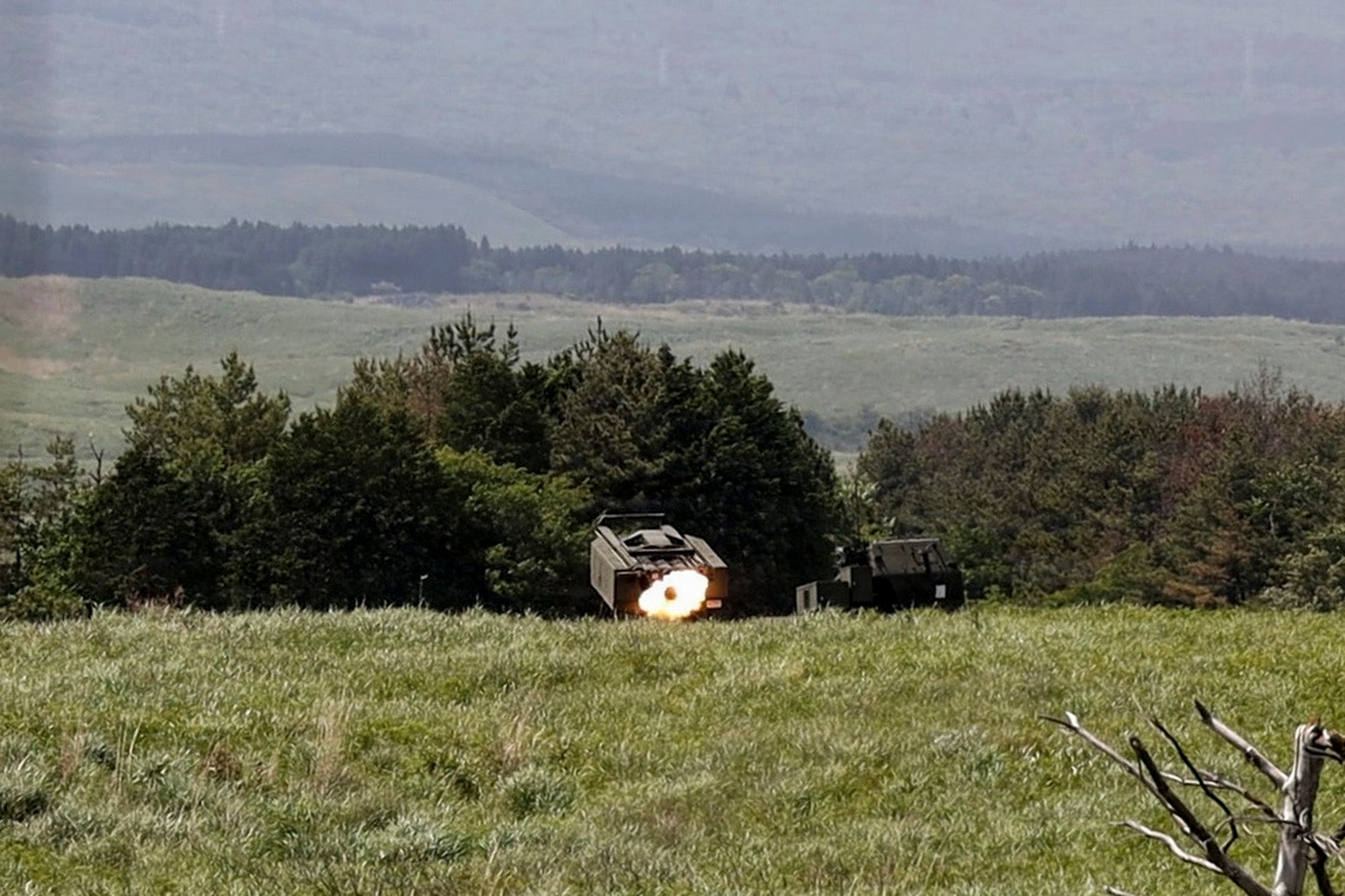
Public reports indicate that this exercise used reduced-range training rounds, not the combat-ready GMLRS. In other words, Taiwan did not truly demonstrate the capability to "hit Fujian." However, the key to HIMARS has never been just its maximum range, but the time window from leaving a concealed position, completing a launch, and then relocating. The U.S.-made M142 launcher carries six rounds, has strong road mobility, and if combined with pre-set positions, civilian road networks, and dispersed ammunition points, the PLA cannot simply calculate based on fixed artillery positions.
The author believes that the real question posed by this exercise for the PLA's amphibious operations is whether the countermeasures can be compressed to a matter of minutes. Detecting a launch vehicle, confirming it is not a decoy, allocating firepower, and completing the strike—if any of these steps lag behind, the HIMARS may have already finished firing and left. In simple terms, this is not a straightforward question of whether "rocket artillery can destroy landing ships," but rather whether the PLA's reconnaissance, electronic suppression, long-range fire, and air forces can form a closed loop.
The Most Fearful Scenario for Landing Forces is Being Forced to Extend the Tempo
When considering the Taiwan Army's HIMARS in a landing scenario, its value can be seen in three main aspects. First, it can strike assembly points near the beach, vulnerable nodes during the crossing, and port loading areas. Second, it forces the PLA's amphibious task force to disperse earlier and maneuver more frequently, thereby reducing loading efficiency. Third, it shifts the fire suppression task from "destroying several artillery positions" to "continuously searching for a batch of mobile launchers." This change may seem minor, but it will consume a large amount of resources from drones, early warning aircraft, electronic reconnaissance, and tactical air forces.
- This exercise took place in the west coast area of Taichung, close to a potential landing front.
- The WSJ reported that Taiwan launched 32 rockets, and local media stated that part of the launch process included multiple waves of fire.
- On June 14, Taiwan's defense department still reported that one PLA military aircraft, five naval vessels, and two civilian ships were active around Taiwan, indicating that daily pressure has not ceased due to the exercise.
However, it must be said that HIMARS is not a panacea. The western part of Taiwan Island has limited depth, and for the launchers to survive, they rely not only on speed but also on camouflage, decoys, ammunition resupply, and communication countermeasures. If the PLA can grasp pre-set positions through satellites, drones, cyber reconnaissance, and human intelligence before the war, the mobility advantage of HIMARS will be significantly weakened. The battlefield in Ukraine has proven the value of rocket artillery, but it has also shown that once high-value launchers are exposed, the pressure on their survival is very real.
The PLA's Countermeasures Will Shift Towards Systematic Attrition
For the PLA, the direct response is not to build more of a certain type of landing ship, but to incorporate "anti-HIMARS" into the regular subjects of landing firepower preparation. More likely actions include: using reconnaissance-strike integrated drones to monitor west coast traffic lines for extended periods, employing electronic warfare to suppress the Taiwan military's command links, using long-range rocket artillery and cruise missiles to cover suspected launch areas, and using aerial patrols to force Taiwan's launch vehicles to reduce exposure opportunities.
Interestingly, from June 12 to 14, the Chinese military network continuously released images of J-11B air combat training, army aviation helicopter training, and vehicle driving training. Each news item may seem ordinary on its own, but viewed together, they represent typical "system end proficiency" training. What truly determines the outcome of firepower confrontation in the Taiwan Strait is often not the parameters of a specific model, but whether these end-stage processes can operate continuously.
This live fire of HIMARS on the west coast sends a clear signal to Beijing: Taiwan is transforming American-style long-range fire from an equipment list into demonstrable tactical actions. The real unanswered question is how much ammunition and reconnaissance resources the PLA's landing firepower plan reserves for these launchers that can change positions within three minutes?
Main Sources
Associated Press, Wall Street Journal, USNI News, Taiwan's defense department report on June 14 regarding activities around the Taiwan Strait, and images of public training released by the Chinese military network from June 12 to 14.
On June 10, the Taiwan Army conducted a live-fire exercise near the Dajia River estuary in Taichung, launching 32 training rockets from HIMARS towards the Taiwan Strait. This exercise aimed to showcase rapid deployment and firing capabilities, although the rockets used were not operational GMLRS. The ongoing military activities in the region indicate continued pressure from the Chinese military.
- Taiwan Army launched 32 training rockets from HIMARS on June 10.
- The exercise took place near the Dajia River estuary in Taichung.
- The rockets were training rounds, not operational GMLRS.
- The exercise aimed to demonstrate rapid deployment and firing capabilities.
- Taiwan's military continues to face pressure from Chinese military activities nearby.