
Tear Open the Shoreline Defense! Departing at Dawn, Combat Power Accelerates Generation
Amphibious Armored Units
are the "Dragon" at sea
that can tear through the enemy's beach defenses
and also the "Blade" that charges across land.
Today
we follow CCTV reporter Wu Jie
into the amphibious vehicle training ground
to witness how the combat effectiveness of the crew is rapidly generated.
Close to real combat!
Directly hitting multiple subject comprehensive assessments
In the early morning
vehicles rush to the firing range
the amphibious assault vehicle equipped with a 105mm main gun
can provide precise fire support
whether landing on the beach or in land combat.
The cloud explosive and penetrator rounds used
have outstanding damage effects on solid fortifications and bunkers.
As the types of ammunition become increasingly rich,
the means of combat to respond to complex battlefield environments
are becoming more diverse,
and the ability to win is also stronger.
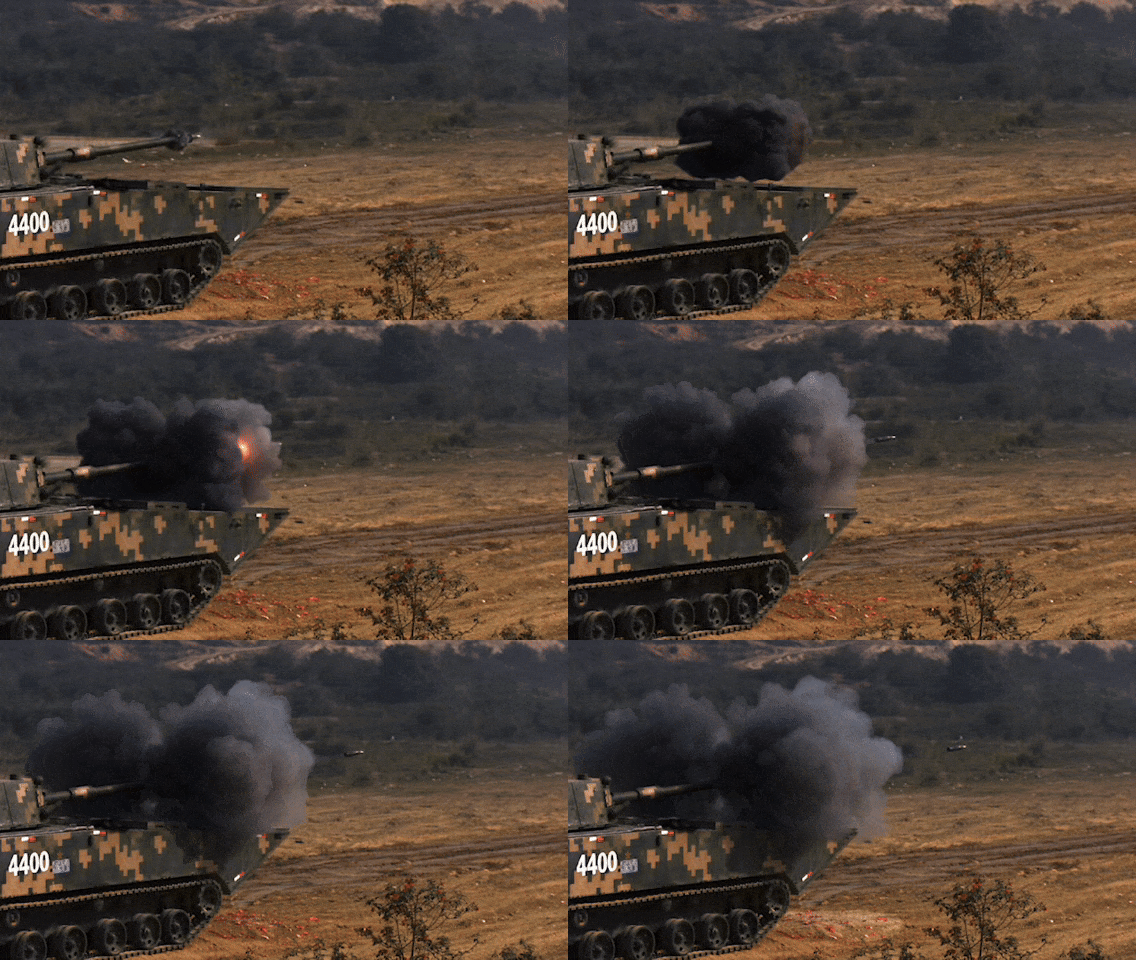
In this assessment,
the entire process is dynamically directed, with targets randomly assigned.
A total of three different routes are set up.
The directing team explains:
"The crew does not know the targets and routes
and will only be informed when it's time to depart,
making it closer to real combat."
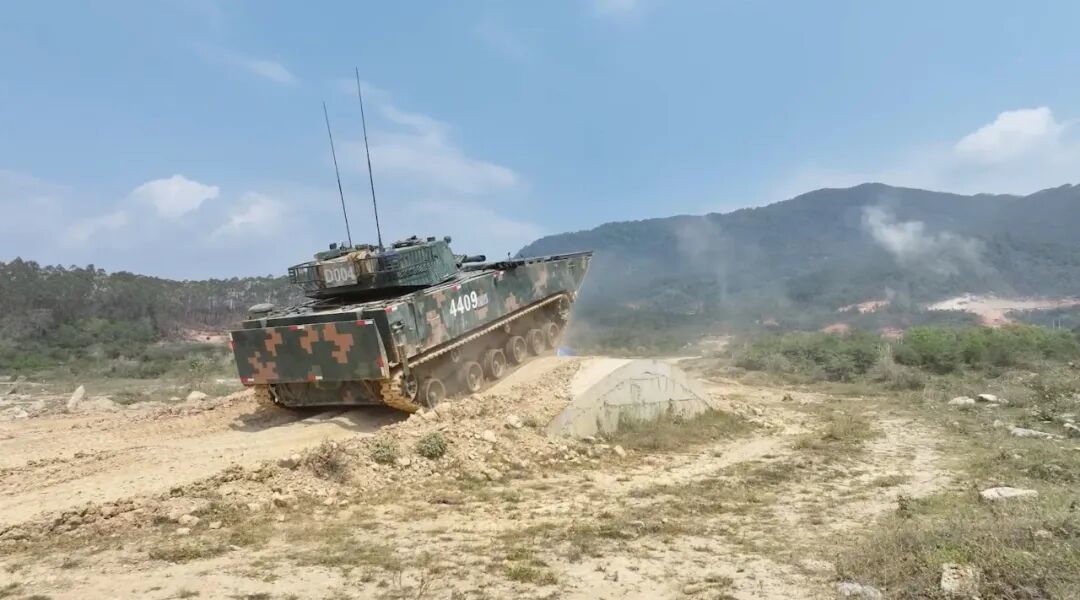
The vehicle first climbs over a slope
to enter the main gun firing position.
Faced with steep earthen embankment obstacles,
the crew must seize the opportunity
to complete firing before crossing the obstacles.
On the steep slope, the front of the vehicle rises significantly,
obstructing the driver's view.
Additionally, due to the structural characteristics of the amphibious assault vehicle,
this poses a great test of driving skills and spatial awareness.
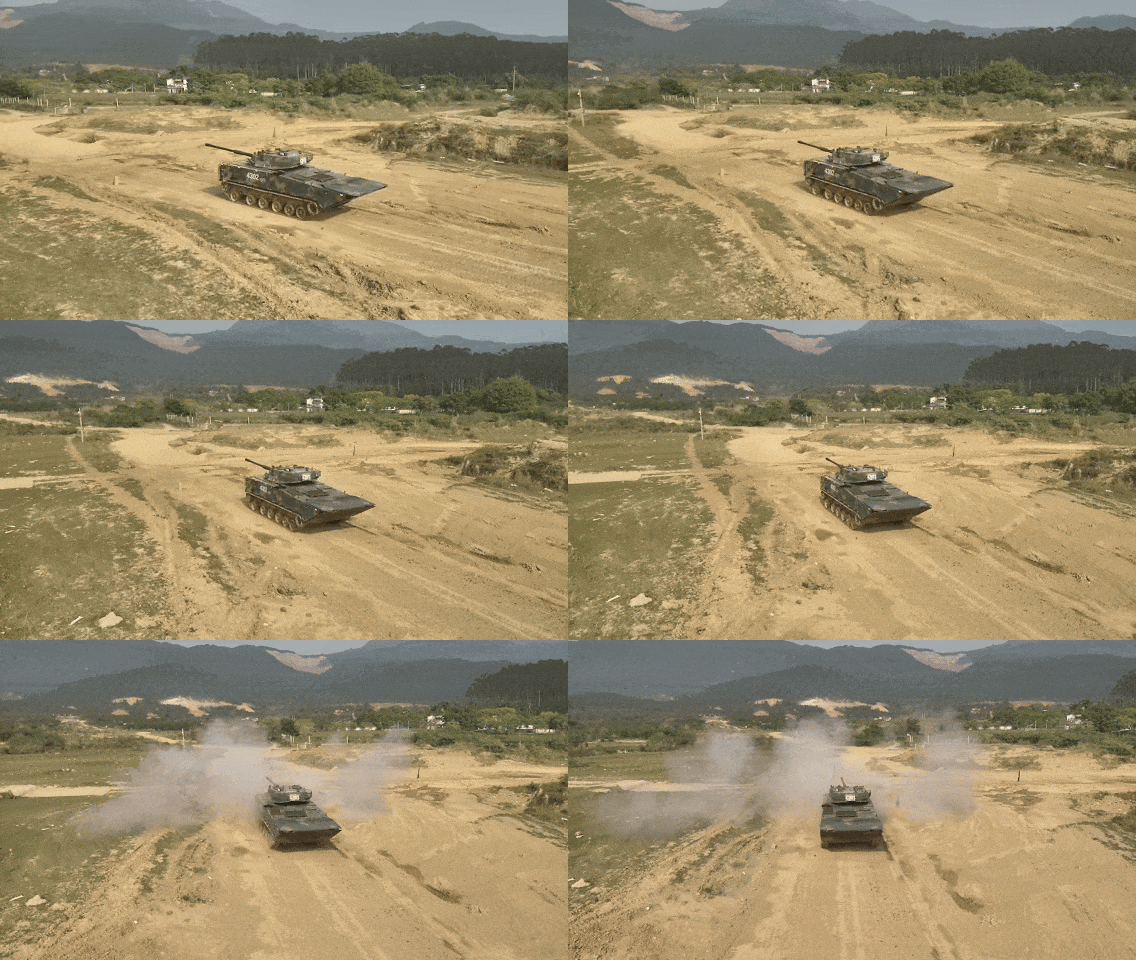
Subsequently, the battle vehicle moves to the side firing position,
with the direction of travel
at a 90-degree angle to the turret weapon.
The crew needs to complete multi-target firing with the co-axial machine gun.
Immediately after, they enter the reverse firing segment,
driving the vehicle forward
while the turret turns towards the rear of the vehicle
to implement firing,
accurately hitting the target.
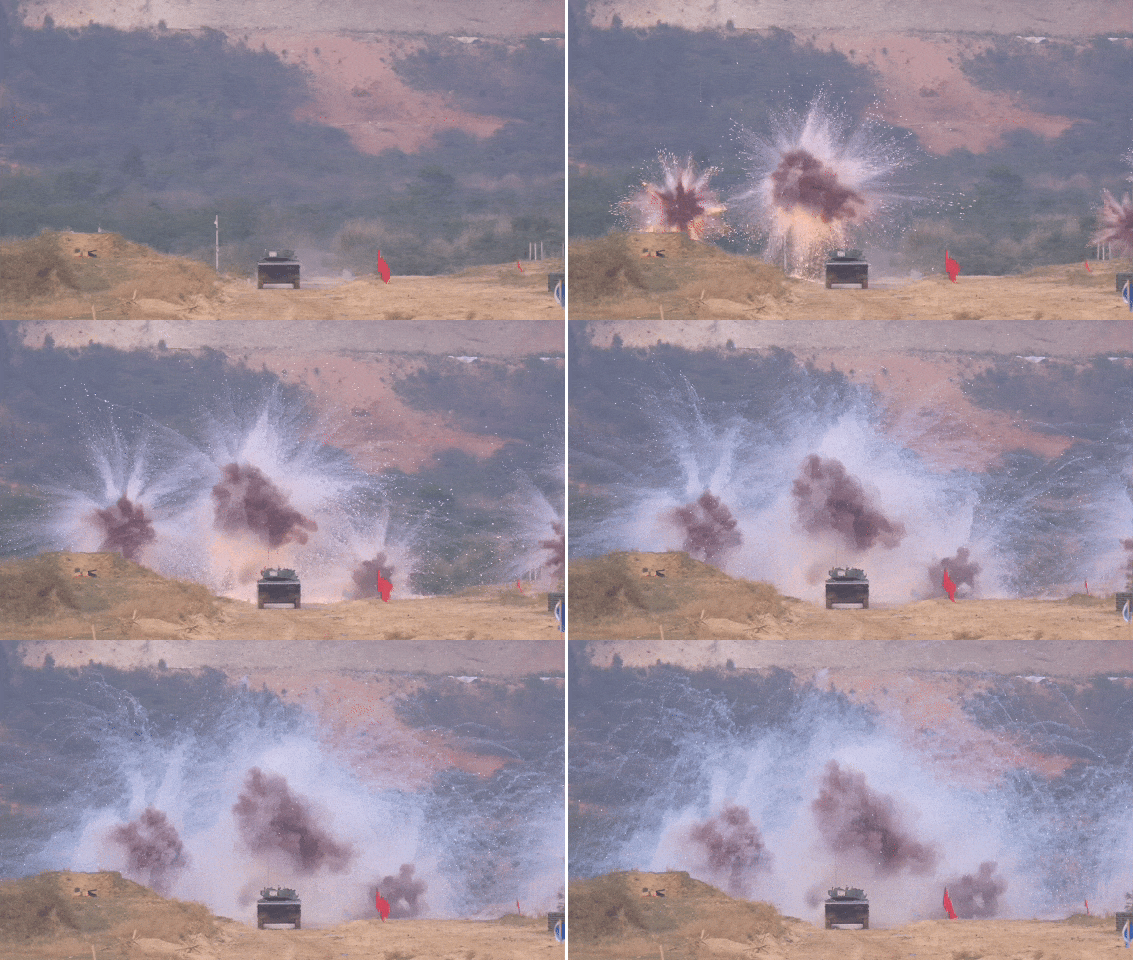
After completing the main gun and co-axial machine gun firing,
the battle vehicle releases smoke grenades
to interfere with the "enemy's" reconnaissance intentions,
effectively self-protecting.
The entire set of tactical actions is coherent,
aligning with real combat requirements.
Coherent comprehensive assessment
honing an all-around crew
To maximize the combat effectiveness of the amphibious assault vehicle,
the officers and soldiers must master multiple practical skills.
Coherent assessment
is precisely about integrating various essential combat skills
into a comprehensive test.
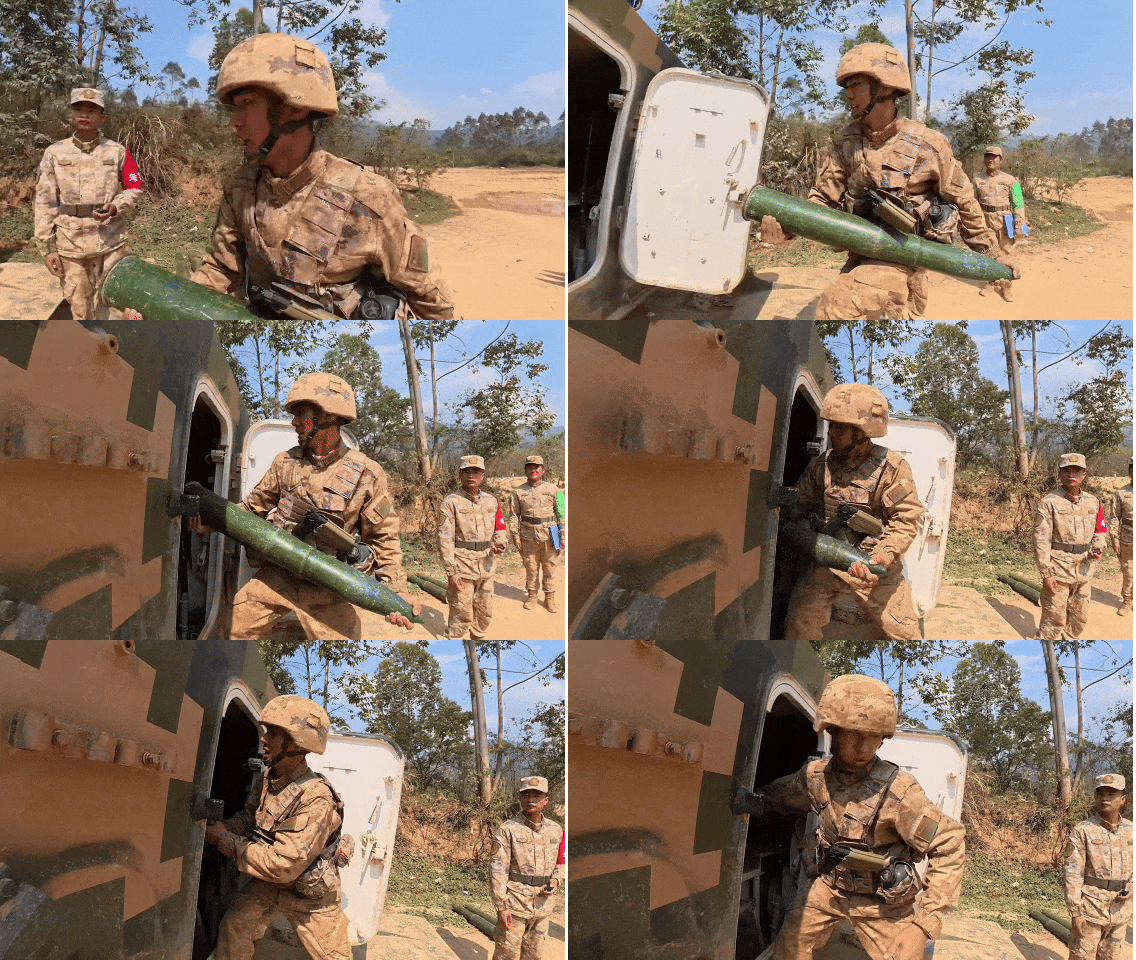
On-the-spot ammunition resupply
requires the crew to quickly load 20 rounds
of 105mm complete ammunition onto the vehicle.
This task has high intensity,
with significant physical consumption.
Daily training is arduous and strict.
The vehicle's concealment and camouflage task
is a dual test of physical strength and willpower.
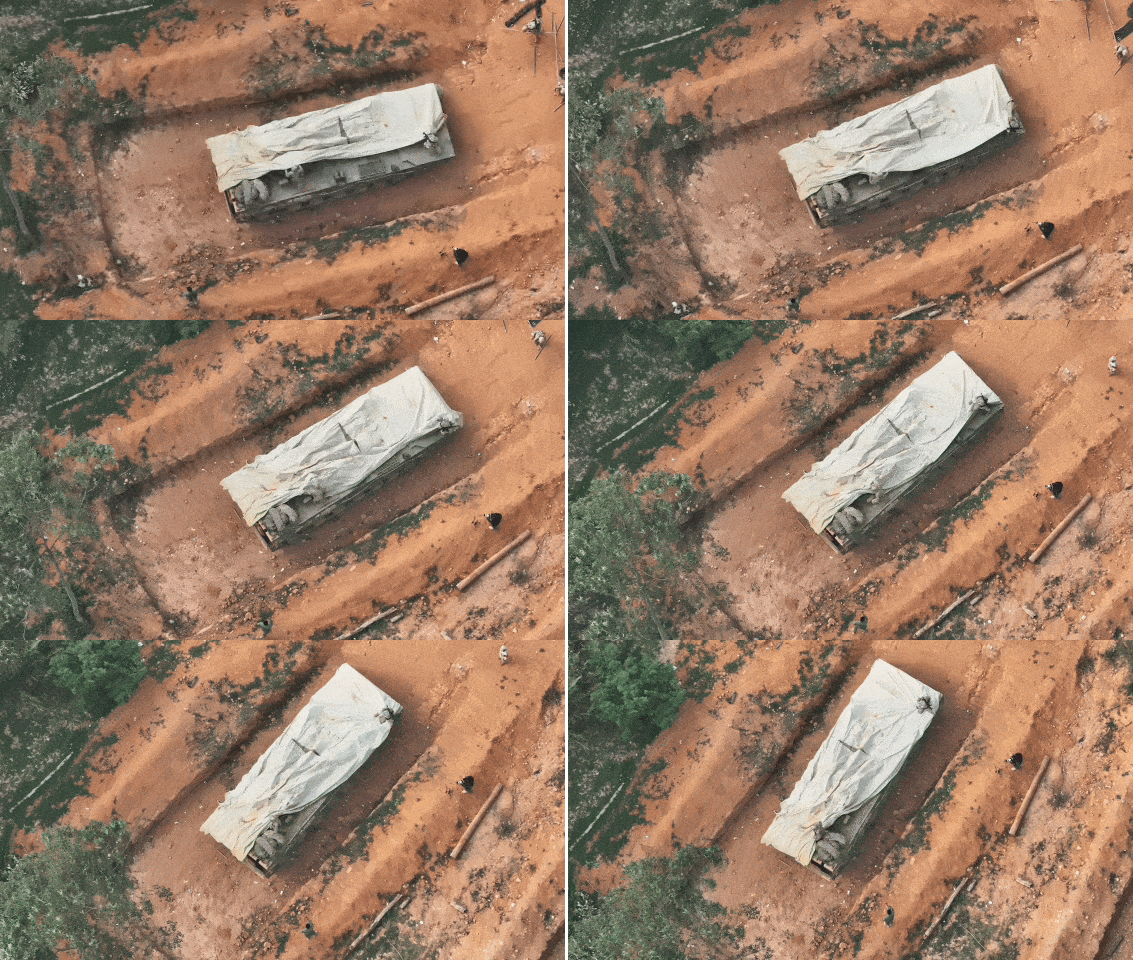
The new camouflage net
can naturally blend with the terrain environment,
possessing infrared and satellite reconnaissance defense capabilities.
To fully utilize the camouflage effectiveness,
meticulous operations are required.
By setting up support poles,
the vehicle's regular outline is broken,
eliminating exposed features.
Battlefield repair and towing
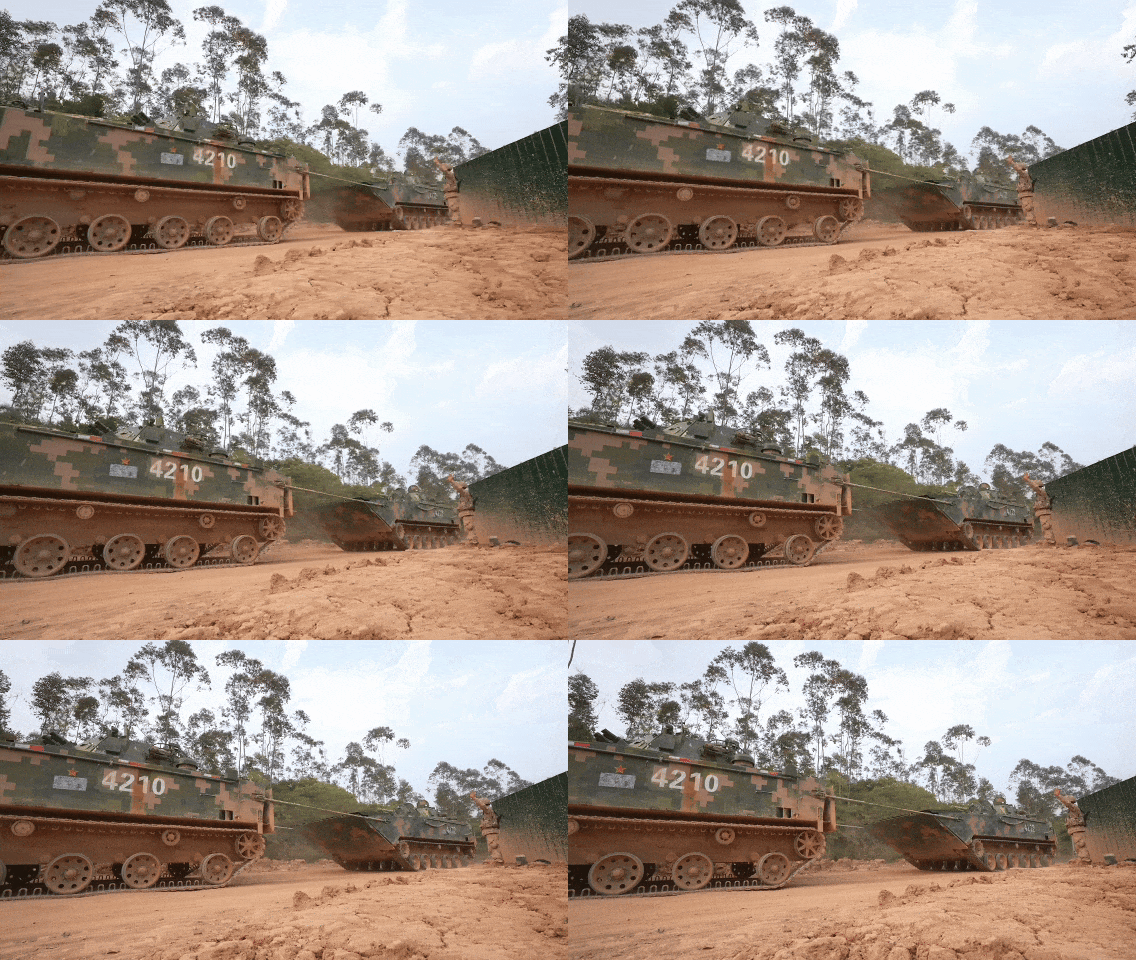
simulates the battle vehicle being damaged or trapped,
where the amphibious vehicle
uses a dedicated towing rope to implement towing,
timely transporting the faulty vehicle for repairs
to quickly restore battlefield operational capability.
This focuses on testing whether the crew
can maintain a clear mind
and accurately handle emergencies
under continuous high intensity and physical exhaustion.
Reporters experience the amphibious assault vehicle
disassembling and assembling the co-axial machine gun
In assault operations,
it is necessary to flexibly switch weapons
to strike different targets.
Therefore,
the daily maintenance of weapons is crucial.
The co-axial machine gun of the amphibious assault vehicle
is a key focus of the officers and soldiers' daily maintenance.
Weapon maintenance
starts with disassembling the firing mechanism
and completing all disassembly and assembly steps in order.
This seemingly basic disassembly process
proved challenging for the reporter during practical operation.
After several attempts, it was finally completed,
while the officers and soldiers practice weapon operation and firing day after day
to accumulate solid skills
to calmly respond to various emergencies.
Practice hard skills, strategize for victory!
Always ready!
Source: CCTV Military Comprehensive CCTV-7 "Military Weapons Up Close"
CCTV reporters | Wu Jie, Bai Chen, Tian Feng, Lin Jingxi, Zhang Weiran, Liu Mengyuan, Wang Zi'ang, Deng Kai, Han Liude
Amphibious armored units in China conducted live-fire training exercises early in the morning to enhance combat readiness. The training involved the use of 105mm main guns and various types of ammunition, focusing on tactical maneuvers and operational capabilities. Units practiced under conditions simulating real combat, including random target assignments and the use of advanced camouflage technology.
- Amphibious armored units conducted live-fire training exercises.
- The training included the use of 105mm main guns and various ammunition types.
- Units practiced tactical maneuvers and combat readiness drills.
- The exercises involved random target assignments to simulate real combat conditions.
- New camouflage technology was tested for effectiveness in the field.