
Tehran Attacked Again in the Early Morning! Middle East Crisis Exceeds 60 Hours, Latest Summary
As of now, the military strikes by the U.S. and Israel against Iran have exceeded 60 hours, and the situation continues to escalate. In the early hours of March 3, local time, multiple areas in Tehran, the capital of Iran, were again hit by airstrikes and explosions.
Around 12:20 AM local time on March 3, reporters from the main station reported airstrikes not far from their location, with fighter jets circling over Tehran. It is understood that some facilities of the Iranian Broadcasting and Television Organization were hit by airstrikes for the second consecutive night.
U.S.-Israel-Iran intense battles escalate
Iran launches the 13th round of counterattacks
The Israeli military claims to have used 2,500 munitions to destroy Iranian targets
On the 2nd, the Israeli military announced multiple rounds of strikes against Iran, targeting relevant sites in the core area of Tehran. The Israeli military also stated that since launching military strikes against Iran on February 28, approximately 110,000 reservists have been mobilized, using 2,500 munitions to "destroy" about 600 Iranian targets.
Explosions occur in the area of the Iranian Ministry of Defense
On the 2nd, around 2:20 PM local time, reporters in Tehran heard the sound of aircraft flying overhead. From around 2:20 PM to 3 PM, explosions occurred in at least 10 locations across Tehran. It is reported that an explosion occurred in the area of the Iranian Ministry of Defense.
Additionally, on that day, a loud explosion was heard in the area of the air force base and nuclear facilities in Isfahan, Iran's third-largest city, and the specific cause of the explosion is currently unclear.
Iran claims the Natanz nuclear facility was attacked twice by the U.S. and Israel
According to Iranian sources on the 2nd, the head of the Iranian Atomic Energy Organization, Eslami, stated that the U.S. and Israel launched two attacks on the Natanz nuclear facility located in Isfahan Province, central Iran, on the evening of the 1st.
Eslami made this statement in a letter to the Director General of the International Atomic Energy Agency, Grossi, emphasizing that Iran's nuclear facilities are "peaceful."
Iran conducts the 13th round of attacks in "Real Commitment-4"
On the 2nd, the Iranian Islamic Revolutionary Guard Corps launched a counterattack using "Khoramshahr-4" ballistic missiles, targeting the Israeli government building in Tel Aviv, military and security centers in Haifa, Israel, and East Jerusalem. Iran reiterated that its offensive against Israel will further expand, stating that "the sirens in Israel will never cease." Iran also stated that the attack on the Israeli Prime Minister's office and the Israeli Air Force Command caused "serious damage." The Israeli side, however, referred to the attack on the Prime Minister's office as "fake news."
In the early hours of the 3rd, the Iranian Islamic Revolutionary Guard Corps announced that its naval drone units launched the 13th round of attacks in "Real Commitment-4" against the U.S. military base "Ali Al-Salem" in Kuwait.
Iran claims to be prepared for a long-term war
The Secretary of Iran's Supreme National Security Council, Larijani, posted several messages on social media on the 2nd, stating that Iran will not negotiate with the U.S. Trump "fantasizes" about dragging the Middle East into chaos, but is now worried about more U.S. military casualties. Larijani also stated that Iran is prepared for a long-term war.
U.S. reports six American soldiers have been killed
The "heaviest blow" to Iran has yet to come
On the 2nd, U.S. President Trump reiterated that a nuclear-armed Iran is intolerable for the U.S. The goals of the U.S. and Israel are very clear, including destroying Iran's missile capabilities and ensuring Iran cannot acquire nuclear weapons. Trump stated that military actions against Iran could last 4 to 5 weeks, but he indicated that he is prepared for "actions that far exceed this timeframe." Trump also stated that the U.S. aims to completely destroy the Iranian navy and has already sunk 10 of its vessels.
Additionally, on March 2, local time, U.S. Secretary of Defense Esper and Chairman of the Joint Chiefs of Staff Milley held a joint press conference at the Pentagon to introduce the U.S. military's operational goals and related details regarding Iran.
The U.S. military received operational orders at 3:38 PM on February 27
Milley stated that the U.S. Central Command received the final military action order against Iran from President Trump at 3:38 PM on February 27 through Esper, and stated that "there will be no cessation." Milley noted that over 1,000 targets were struck within the first 24 hours. The operation has been ongoing for about 57 hours and is in its initial phase.
Milley stated at the press conference that the scale of military operations is continuously expanding, and more aircraft will join in the coming days, but he refused to disclose the specific scale of the troop increase.

△ Chairman of the Joint Chiefs of Staff Dan Milley (file photo)
The U.S. Central Command stated that as of 4 PM Eastern Time on March 2, six American soldiers have been killed. Additionally, the U.S. military stated that since the operation began, 1,250 targets within Iran have been attacked.
No U.S. ground forces have been deployed inside Iran
U.S. Secretary of Defense Esper refused to disclose how long U.S. military operations will last. When asked if U.S. forces have entered Iran, Esper said, "Not yet, and we will not publicly discuss what we will or will not do."
"The heaviest blow has yet to come"
On March 2, local time, U.S. Secretary of State Rubio told reporters on Capitol Hill that U.S. military actions against Iran will continue, and that "the heaviest blow has yet to come." When asked how long U.S. military actions against Iran will last, Rubio responded, "As long as it takes," adding that "the next phase of strikes against Iran will be more severe than now."
The Strait of Hormuz has been closed
The situation in Iran exacerbates turmoil in European and American financial markets
In the late night of the 2nd, an advisor to the commander of the Iranian Islamic Revolutionary Guard Corps stated that the Strait of Hormuz has been closed, and Iran will strike all vessels attempting to pass through the Strait of Hormuz.
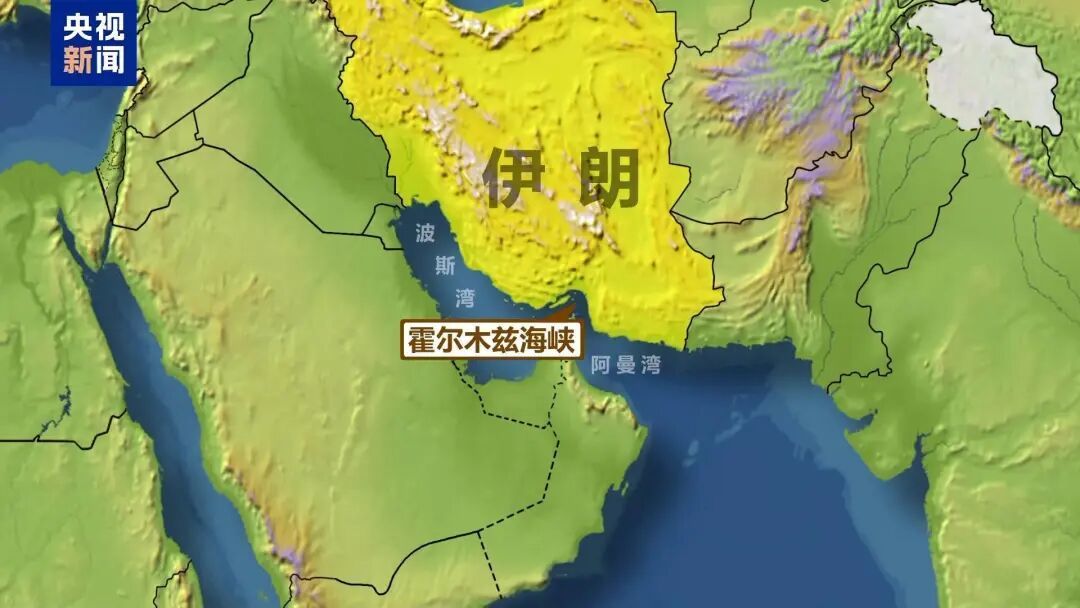
Iran controls the vital global energy transport route of the Strait of Hormuz, and there is a risk of disruption to international oil supply. Currently, several tanker owners and traders, including Denmark's Maersk, have suspended the transport of crude oil, fuel, and liquefied natural gas through this strait.
Risk aversion sentiment in European financial markets has significantly increased, with European natural gas prices soaring over 50% on the 2nd, and Brent crude oil futures prices rising sharply, leading to noticeable declines in European and American stock markets after opening.
Due to Qatar Energy Company announcing a suspension of liquefied natural gas production due to facility attacks, European benchmark natural gas prices surged over 50% during trading on the 2nd. Meanwhile, Brent crude oil futures prices soared nearly 13% to $82.37 per barrel, reaching the highest level since January 2025.
Reporters: Li Jiannan, Li Chao, Liang Hui, Wu Hanying, Liu Xiaoqian
Iran is facing military attacks from U.S. and Israeli forces, with airstrikes reported in Tehran and Isfahan on March 2-3, 2023. The Iranian Revolutionary Guard Corps has retaliated with strikes against Israeli targets. U.S. military operations have resulted in the deaths of six soldiers, and the Strait of Hormuz has been closed, affecting global oil supply.
- Iran has been under military attack for over 60 hours by U.S. and Israeli forces.
- Tehran experienced multiple airstrikes, with significant explosions reported.
- Iran's Revolutionary Guard Corps launched retaliatory strikes against Israeli targets.
- Six U.S. soldiers have been reported killed during the operations.
- The Strait of Hormuz has been closed by Iran, impacting global oil supply.