
Teledyne FLIR Defense lands role in $500M Pentagon drone defense program
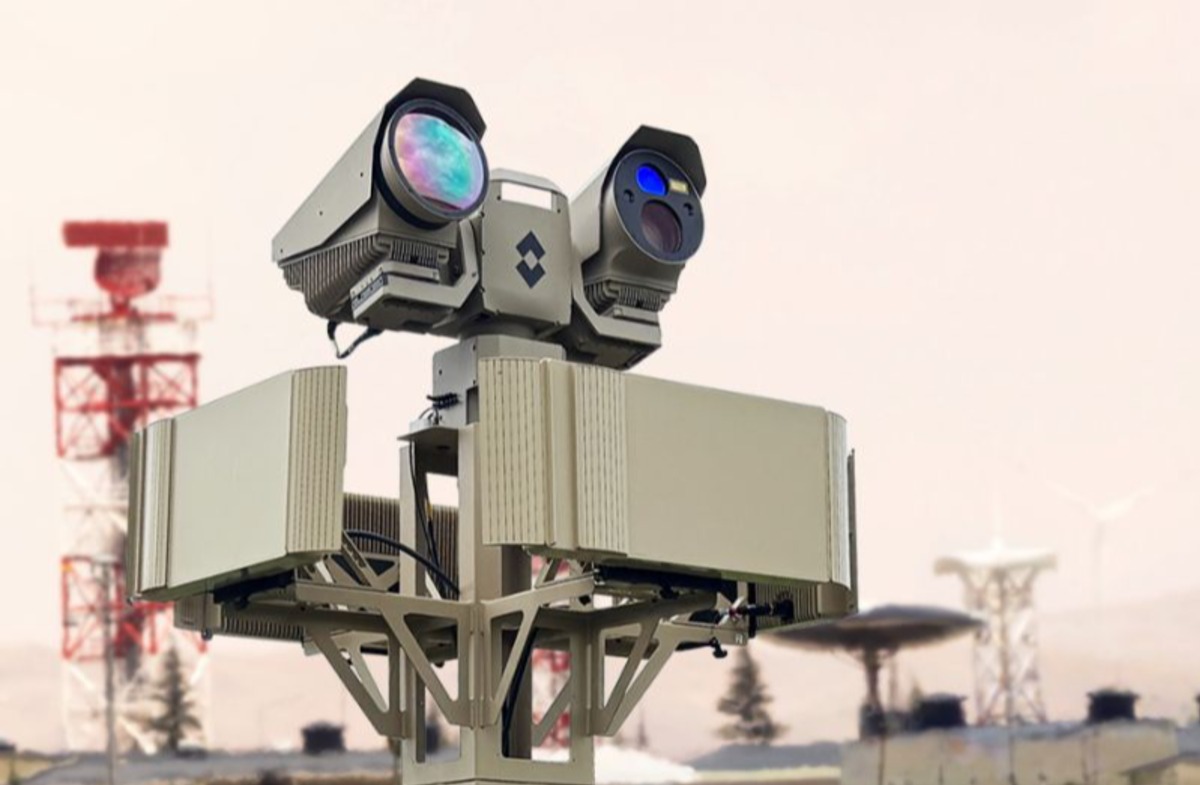
A sensor company that has spent 45 years building infrared cameras for the military just landed a piece of one of the Pentagon’s biggest new homeland defense contracts, supplying the eyes for a system built to spot drones before they ever reach American soil.
Teledyne FLIR Defense, a division of Teledyne Technologies Incorporated, announced July 29, 2026, that it received a significant order from AeroVironment, known as AV, to supply its Argus XL counter-drone detection platform as part of AV’s Titan Multi-Sensor system for the U.S. Air Force. The order flows from a three-year, $500 million contract the Pentagon awarded AV on a sole-source basis, meaning without competitive bidding, to support Joint Interagency Task Force 401’s Domestic Shield Program, an initiative built to protect American military installations and critical infrastructure from drone attacks on U.S. soil rather than overseas.
JIATF-401 is a relatively young Pentagon task force focused specifically on countering the growing threat small, cheap drones pose to bases and infrastructure inside the United States, a mission that has taken on new urgency as drone warfare tactics refined in conflicts overseas increasingly show up as a domestic security concern. The task force selected AV’s Titan MS system in early July 2026 through an $80.5 million task order issued under the larger $500 million contract vehicle, with that specific award aimed at strengthening layered base defense for Air Force Global Strike Command, the command responsible for the nation’s bomber fleet and land-based nuclear missiles, according to AV’s own announcement of the award. The Pentagon disclosed in April 2026 that JIATF-401 had already committed more than $600 million at what officials described as a record pace toward strengthening counter-drone capabilities in support of both homeland defense and Operation Epic Fury, the military’s broader campaign responding to escalating drone and missile threats in the region.
Titan MS itself functions as a fusion system, a term that describes software designed to pull together data streams from multiple different sensors, radar, cameras, radio frequency detectors, and combine them into a single, coherent picture an operator can act on quickly rather than forcing a human to mentally cross-reference several separate screens during a fast-moving threat. AV has described Titan MS as an AI-powered multisensor fusion solution capable of detecting, identifying, tracking and defeating unmanned aircraft systems, using machine learning algorithms to counter both radio-frequency-controlled drones, which a human pilot flies remotely, and fully autonomous drones that navigate on their own without a live operator.
Teledyne FLIR Defense’s contribution sits at the front end of that entire detection chain. The company’s Argus XL system, according to Teledyne’s own product materials, is a fixed-site, multi-sensor platform designed to detect and track multiple aerial threats around the clock and in demanding weather conditions, combining radar with electro-optical and infrared cameras, the kind of thermal-imaging technology that lets an operator spot a drone by its heat signature even in total darkness or thick cloud cover. The system also supports integration with third-party radio-frequency sensors and defeat technologies, the equipment actually used to jam, disable, or physically destroy a drone once it has been identified as a threat, giving Argus XL a role providing hemispherical detection, meaning coverage across essentially the entire sky above a protected site, including small and micro drones that are often difficult for older radar systems to distinguish from birds or debris.
Dr. JihFen Lei, President of Teledyne Defense and Aerospace Group and Senior Vice President of Teledyne Technologies, framed the order as validation of the company’s broader counter-drone product line.
“We are proud to collaborate with AV to deliver advanced counter-drone technology that enables the U.S. military to detect, classify, track, and respond to increasingly complex unmanned aerial threats,” Lei said. “Argus XL, Cerberus XL, and other Teledyne FLIR Defense counter-UAS systems provide proven, mission-ready capabilities that are integral to the Titan MS solution.”
Lei distilled the core logic behind why detection technology matters as much as the interceptors or jammers that eventually neutralize a threat, a distinction easy to overlook in a defense conversation that often focuses on the more dramatic act of shooting something down.
“When countering drone threats, operators can’t defeat what they can’t find,” Lei said.
That principle explains why Teledyne’s role, providing sensors and software rather than the physical weapons that disable a drone, still counts as a meaningfully significant piece of the Domestic Shield architecture. A defense system built entirely around powerful jammers or interceptors is useless if it cannot first locate and correctly classify an incoming threat with enough speed and accuracy to act before the drone reaches its target, and the surge in cheap, difficult-to-detect small drones worldwide has made that identification step one of the hardest technical problems facing counter-drone programs today.
AV’s chairman, president and chief executive officer Wahid Nawabi, framed the broader contract award earlier this month around the stakes involved for ordinary Americans rather than purely military installations, stating that Domestic Shield is about protecting Americans where they live and work and safeguarding the critical infrastructure underpinning the country’s economy and national security, according to AV’s own July 6 announcement of the $500 million IDIQ award. Brig. Gen. Matt Ross, who directs the nearly year-old JIATF-401 task force, has described the program’s central mission as delivering counter-drone capabilities to warfighters both at home and abroad as quickly as possible, according to AV’s statement announcing the contract.
Content preview only. Full article available at source. View Full Article
Teledyne FLIR Defense secured a major order to supply its Argus XL counter-drone detection platform for the U.S. Air Force under a $500 million contract aimed at enhancing drone defense capabilities. This initiative, part of the Domestic Shield Program, is led by Joint Interagency Task Force 401 to protect U.S. military installations from drone threats. The Titan Multi-Sensor system, which includes the Argus XL, integrates multiple detection technologies to identify and track aerial threats effectively.
- Teledyne FLIR Defense received a significant order for its Argus XL system from AeroVironment.
- The contract is part of a $500 million Pentagon initiative to enhance drone defense.
- Joint Interagency Task Force 401 is focused on countering drone threats to U.S. military installations.
- The Titan Multi-Sensor system integrates various detection technologies for drone threats.
- The order was announced on July 29, 2026.