
U.S. Army expands tactical drone lethality training
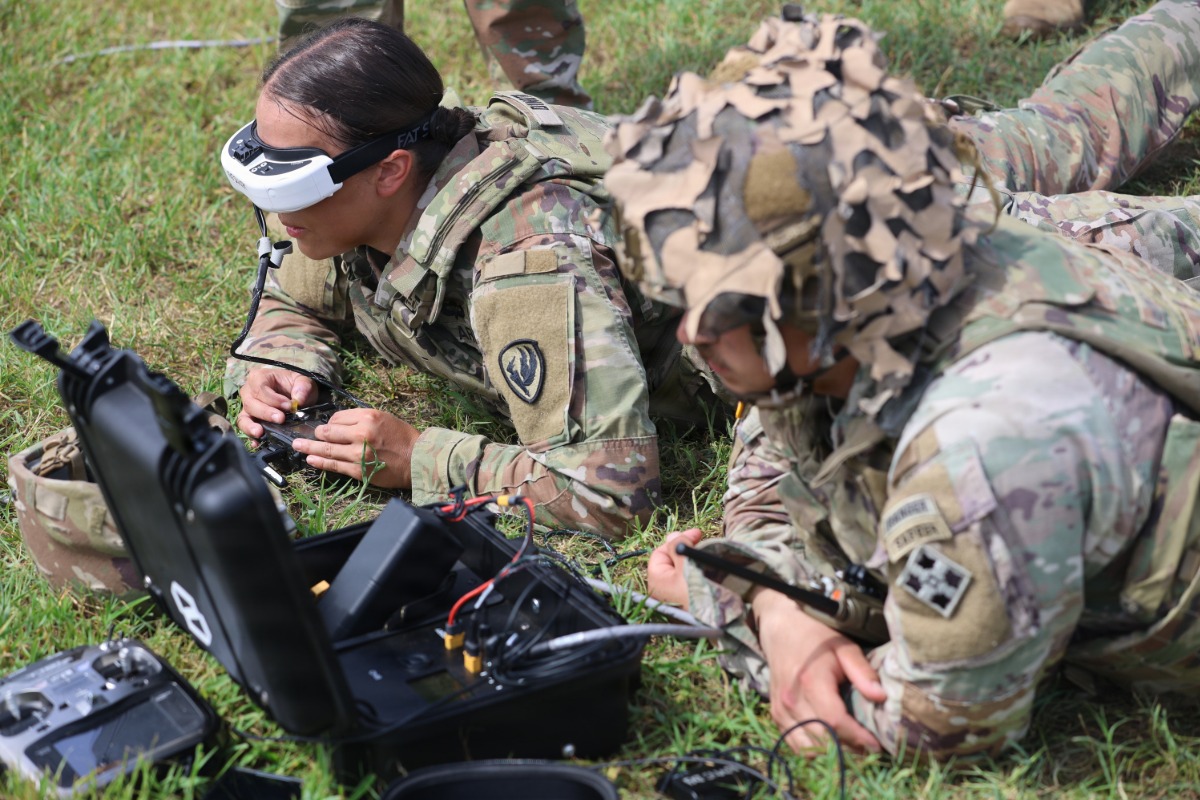
The Unmanned Advanced Lethality Course at Fort Rucker, Alabama, increased its live kinetic engagements, meaning exercises where students actually fly a drone armed with a real explosive payload against a target rather than practicing in simulation, from five to 12 per class, according to Chief Warrant Officer 3 Robert Gatta, the course manager.
Gatta and Staff Sgt. Mario Rostran, the course’s noncommissioned officer in charge, described the change as part of an ongoing effort to sharpen the program’s tactical rigor, according to a story published July 28, 2026, by the Army’s Aviation Center of Excellence.
“We’re continuing to improve the course,” Rostran said. “We’re taking comments as we go and making sure we’re meeting the standards students expect. The goal is to make this the advanced course it claims to be.”
The course, known by its acronym UALC, launched at Fort Rucker in August 2025 as the Army’s answer to a battlefield reality that has reshaped modern warfare faster than most military training pipelines could keep pace with. Small first-person-view drones, the kind flown using a headset that shows the pilot a live video feed as if they were sitting in the cockpit, have become a dominant weapon in conflicts including the war in Ukraine, where both sides have used cheap, modified commercial drones to destroy tanks, artillery, and personnel at a fraction of the cost of traditional munitions. Army officials described the course at its launch as a deliberate catch-up effort, with the program’s original director stating publicly that the United States was behind its adversaries globally in this specific area of warfare, a gap the course was built to aggressively close.
“The most significant update is increasing the amount of physical, kinetic engagements from 5 to 12,” Gatta said. “We have been working to refine the overall course to run smoother and provide the most up-to-date data.”
That shift toward more live-fire repetition reflects a broader change in what the course is trying to teach. Where earlier iterations leaned heavily on outdoor live flights in relatively open terrain, the current class is moving toward tighter, more realistic tactical scenarios, including a culminating exercise held this week at the drone training facility in Daleville, Alabama, that incorporates close-quarters battle training, the term for combat conducted at very short range inside buildings or confined spaces where split-second decisions matter far more than open-field maneuvering.
“This exercise will demonstrate a more real-world tactical environment and incorporate a Close-Quarters Battle level of training, whereas previous emphasis has been heavily placed on outdoor live flights,” Gatta said. “Our current goal is to make the training more tactical in nature. I believe we have several solid plans to build on moving forward.”
During this iteration of the course, students trained using a purpose-built expendable drone system called Shank 1.0 paired with C4, a widely used military plastic explosive prized for its stability and controllable detonation, giving students direct experience coordinating flight altitude and executing a strike against a designated target rather than simply learning the concept in a classroom. That combination of live ordnance and live flight puts students through the same basic sequence a drone operator would face in an actual engagement, forcing them to manage the aircraft’s flight path, judge distance and timing, and confirm the strike, all under conditions closer to real combat than any simulator can fully replicate.
Sgt. 1st Class Riley Watts of Company A, 1st Battalion, 14th Aviation Regiment, said he spent months trying to get a seat in the course, a wait that reflects growing demand across the Army as units increasingly recognize how central drones have become to modern combat operations.
“This is a great course to keep you relevant in today’s force,” Watts said. “Seeing how UAS is being implemented and utilized in today’s Army is eye opening, and it shows you how important it is to understand these systems.”
The course has also drawn interest well outside the Army’s own ranks. West Point Cadet Matthew Baldwin, a rising sophomore and civil engineering major from Andover, Kansas, attended the course to bring tactical drone employment strategies back to the U.S. Military Academy’s Future Applied Systems and Tactics team, part of a deliberate push by his leadership to send cadets through the program and share what they learn with the broader Corps of Cadets.
“If I’m lucky enough to branch ADA, one of the big questions is how to counter drones effectively,” Baldwin said, referring to Air Defense Artillery, the Army branch responsible for shooting down enemy aircraft and missiles. “You’re talking about sending a very expensive rocket to take out a cheap drone. Understanding drones from the operator’s side, how they fly, what they look for, helps you understand how to counter them.”
Baldwin arrived at Fort Rucker with limited experience flying tactically, and the shift from casual drone piloting to combat-style flight control turned out to be a bigger adjustment than he expected.
“I didn’t know how to tactically fly. It’s a completely different flying style,” he said. “I feel better flying them, and now we’re trying to develop a training program to help build other pilots on our team.”
Beyond the flying itself, Baldwin pointed to the course’s mission-planning instruction as some of the most valuable material he encountered, covering the Military Decision-Making Process, the Army’s formal framework officers use to analyze a mission and develop a tactical plan, along with troop leading procedures and reconnaissance fundamentals.
“I’ve really appreciated the planning side, MDMP, troop leading procedures, what goes into reconnaissance,” he said. “I hadn’t learned a lot of that yet. Going into my MS200 class and eventually into the Army, my knowledge base is definitely better now.”
The Unmanned Advanced Lethality Course runs six times per fiscal year, giving soldiers across the force recurring opportunities to work through the program, with upcoming classes scheduled for September 14 through October 2 and November 2 through 20. Soldiers interested in attending should coordinate directly with Gatta for scheduling and enrollment, according to the Aviation Center of Excellence.
Fort Rucker’s classroom cannot replicate the fear or chaos of an actual battlefield, but tripling the number of live explosive engagements a soldier flies before graduation closes a meaningful part of that gap, and in a war increasingly decided by who can put a small, cheap aircraft on target first, that kind of repetition may matter as much as any weapon the Army ever fields.
Content preview only. Full article available at source. View Full Article
The U.S. Army expanded the Unmanned Advanced Lethality Course at Fort Rucker, Alabama, increasing live drone engagements from 5 to 12 per class. This change aims to enhance tactical training for drone operators, incorporating real-world scenarios and live explosives. The course, which began in August 2025, has attracted interest from various military branches, reflecting the growing importance of drone operations in modern warfare.
- The Unmanned Advanced Lethality Course increased live engagements from 5 to 12 per class.
- The course aims to improve tactical training for drone operators.
- Students use a purpose-built drone system called Shank 1.0 with C4 explosives.
- The course has drawn interest from outside the Army, including West Point cadets.
- The training incorporates close-quarters battle scenarios.