
Ten Women Killed in Ségou — JNIM Slips into Central Mali
 Marie Dubois
Ten women killed in Ségou — JNIM slips into central Mali
On August 6, in Bertha, in the Sarro circle, Ségou region, about ten women perished in the explosion of a mine. They were on their way to Sarro to offer their condolences after the death of two men, killed a few days earlier by unidentified armed individuals. The cart hit the device on the path. The victims were buried the same day, local sources reported, as cited by Studio Tamani.
This Sarro circle had long been absent from any map of Sahelian jihad. It is now entering — through the worst of doors.
JNIM retreats to the center
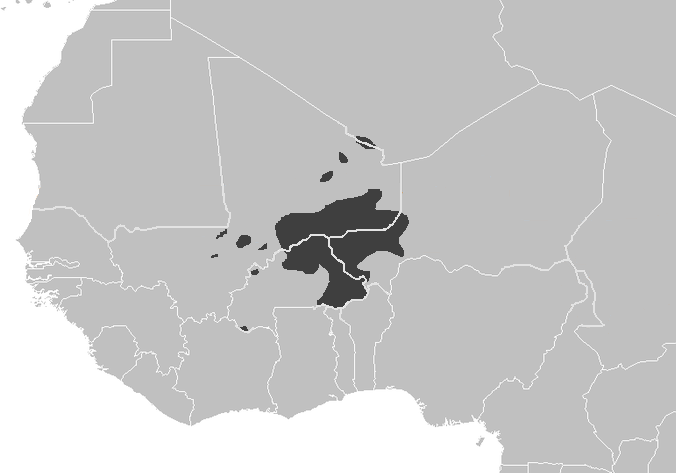
The concentration of JNIM (Jama'at Nusrat al-Islam wal-Muslimin) fighters along the Nyono–Djenné–Sévaré–Benibana axis is not a coincidence. For the past month and a half, their mobile units have been gathering in the Ségou and Mopti regions. After the fighting in June, the jihadists have relinquished ground in the north and west of the country. The center has become their fallback point.
This shift is logical. The north is saturated, gridlocked by airstrikes, and local alliances are crumbling. The center, on the other hand, offers what the desert refuses: water, crops, markets, and drivable paths for a large part of the year. For a guerrilla that lives off extortion and resupply, the Niger Valley and the Office du Niger basin are far more nourishing terrain than the Adrar des Ifoghas.
Dougoukoloko strikes, but caches resurge
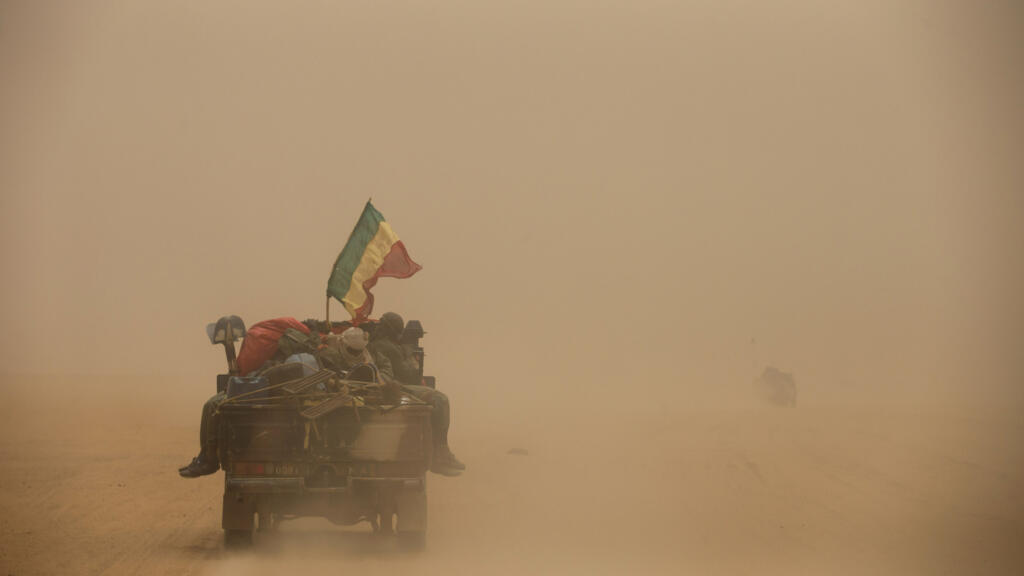
The General Staff of the Armed Forces communicated this week about Operation Dougoukoloko. On August 6, about 40 km northwest of Macina, targeted strikes destroyed a gathering point of the JNIM/FLA coalition — Front for the Liberation of Azawad — which served as a base and housed fighters and war material. The final toll has not yet been established: the destruction of the site is reported, but the losses are not confirmed.
On August 4, on the outskirts of Tessalit, the engaged forces struck a site of illegal gold mining used by the same coalition. The objective was explicit: to cut off the source of funding. The next day, August 5, several gathering points were targeted by air assets in the Tabrichat area.
Joint patrols with Russian partners regularly discover caches — and observe the same phenomenon: activity resumes a few days after destruction. The aviation destroys groups that approach the positions of the Malian Armed Forces, but breakthroughs ending in fierce fighting are not uncommon.
The north remains porous
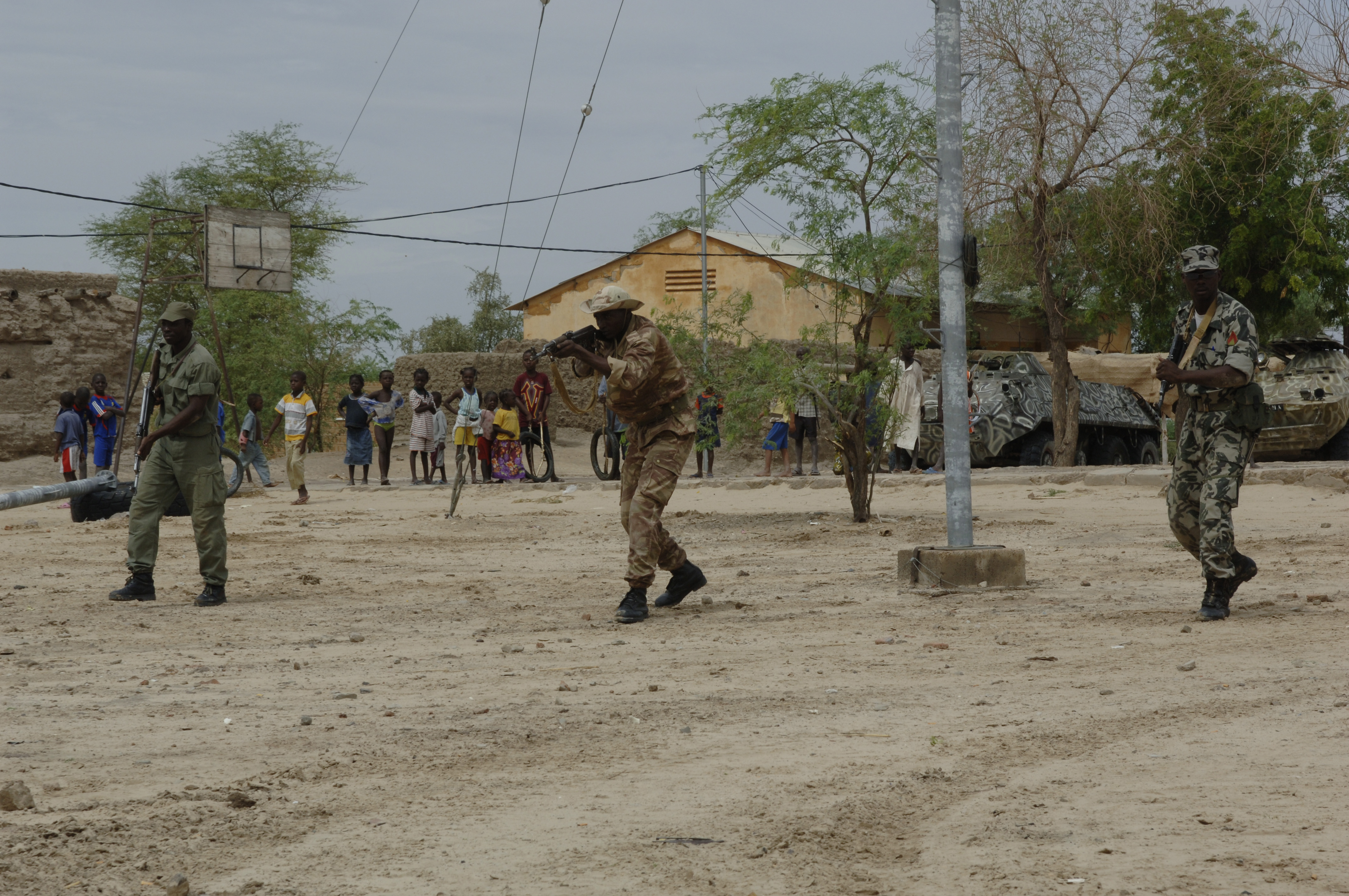
The relative stability of the center should not mask the instability in the north. Sabotages are multiplying along the supply routes in the Gao region. The JNIM/FLA coalition and its satellites seek to hinder the reinforcement of FAMA positions in the still contested areas of the north of the country. The Gao–Anefis road, a vital artery to Kidal and the northeast, remains under constant pressure.
The picture is therefore one of a war that is not being won anywhere, but is shifting. The agricultural center is becoming the receptacle of a violence that the north can no longer absorb.
The mine, a signature of a war changing terrain
The mine in Bertha says it all. It did not target a military convoy: it struck a cart of women. It is the choice of an enemy that can no longer hold the ground but can make the paths impassable and life impossible. In the center, the rainy season concentrates movements on the few passable routes — predictable trajectories for anyone laying a device. And an improvised mine costs less than a 12.7 mm cartridge.
On the ground, experience shows: a mined area is not a lost area for the state; it is an area where the state can no longer enter. The difference is strategic. The devices do not just kill — they isolate villages, empty markets, discourage administration and NGOs. They prepare the ground, without a single shot being fired.
JNIM does not need to conquer Ségou to win. It is enough for the region to become as dangerous as the north — for the population, for commerce, for the state.
It must be stated clearly: our information remains partial. Neither the exact number of victims in Bertha nor the origin of the device — laid by jihadists or from an old stock — is confirmed by independent sources. JNIM has not claimed responsibility for the explosion. What is documented is the movement of its units towards Ségou and Mopti for the past month and a half. It is this movement that gives meaning to the mine.
The next dry season will reveal the essentials
The question is not whether the Malian army strikes — it strikes, and Dougoukoloko is proof of that. The question is whether the center can be held without emptying the north. With limited forces, each battalion redeployed to Ségou is one less battalion in Gao or Kidal. Airstrikes do not replace strongholds.
By the end of the rainy season, the paths in the center will become drivable again. It is at that moment that we will know whether the shift towards Ségou and Mopti is a controlled maneuver — or a gradual abandonment of the north in favor of a battle to save Mali's agricultural granary.
On August 6, ten women were killed in a mine explosion in Bertha, Ségou, while traveling to offer condolences after two men were previously killed by unidentified armed individuals. This incident highlights the shifting tactics of JNIM, which is reportedly regrouping in the Ségou and Mopti regions, as the northern areas become increasingly unstable.
- Ten women were killed in a mine explosion in Bertha, Ségou.
- The women were traveling to offer condolences after two men were killed by unidentified armed individuals.
- JNIM is reportedly regrouping in the Ségou and Mopti regions.
- The mine explosion reflects a shift in tactics by JNIM, targeting civilians instead of military convoys.
- The situation in northern Mali remains unstable, with ongoing sabotage and pressure on supply routes.