
The 2026 Deployment of U.S. Military Typhoon and HIMARS in Kanoya Demonstrates the Realization of Southwest Defense
 Tanaka Takashi
The Deployment of Typhon and HIMARS in Kanoya in 2026 Demonstrates the Realization of Southwest Defense
Among the explanations presented to the Kanoya City Council, the striking phrase is "live fire is not planned." Even if it is training without missile launches, the fact that the U.S. Army's Typhon mid-range capability and HIMARS are entering the Japan Maritime Self-Defense Force's Kanoya Air Base quietly changes the deterrence structure in the southwest region. Sometimes, such ground deployments tell a better story about the reality of alliances than grand speeches from Washington.
According to the U.S. Naval Institute News, Typhon and HIMARS have been deployed to Kanoya in connection with Valiant Shield 2026 since June and the Orient Shield in September, and after withdrawing from Kanoya in mid-October, they will be stored at U.S. military bases in Japan. The Ministry of Defense's official announcement states that Valiant Shield 2026 will be conducted from June 22 to July 1 over a wide area including Self-Defense Force facilities, U.S. military facilities in Japan, Ishinomaki, Amami Oshima, surrounding air and sea areas, Hawaii, and Guam. The Japan Ground Self-Defense Force and U.S. Marine Corps' Resolute Dragon 26 will also take place from June 20 to 30 in areas including Kyushu, Amami, Okinawa, Miyako, Ishigaki, and Yonaguni.
The Significance of Being in Kanoya
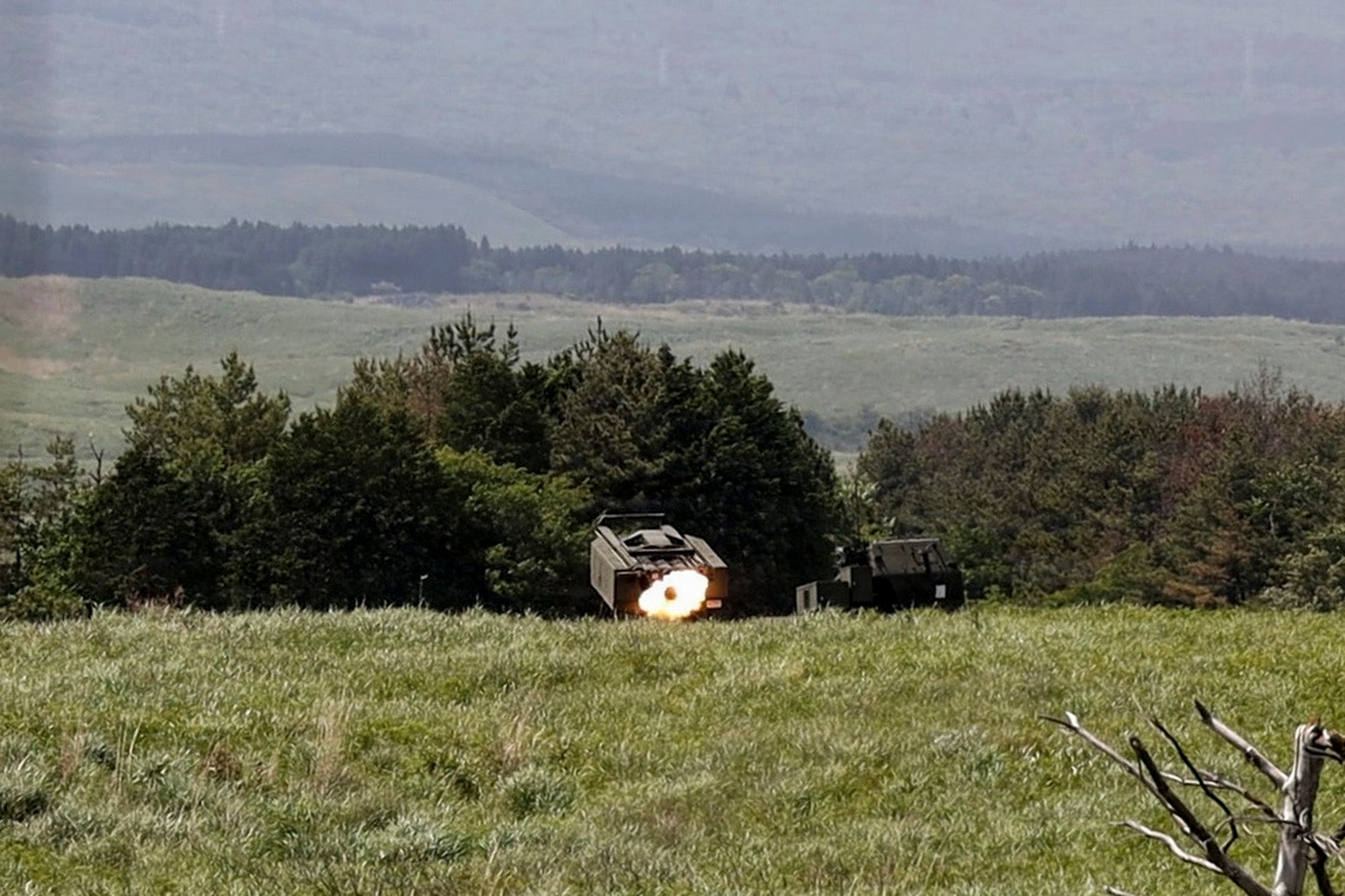
Kanoya is not just an air base. Considering the operation of the JMSDF's P-1 patrol aircraft and air and maritime surveillance towards the southwestern islands, it is positioned to observe the SLOC (Sea Lines of Communication) that connects from the Osumi Strait to Amami and Okinawa. The temporary presence of ground-launched anti-ship and ground firepower here signifies the integration of the JMSDF's patrol, the JASDF's air defense, and the U.S. military's long-range firepower into a single training scenario.
Typhon is known as the U.S. Army's Mid-Range Capability, which is a system for launching SM-6 and Tomahawk missiles from the ground. According to explanations from the Congressional Research Service and others, it is positioned as a firepower that fills the gap between PrSM and future long-range hypersonic weapons. The SM-6 has flexibility for air and anti-ship operations, while the Tomahawk is used for long-range ground attacks. From Japan's perspective, this means that part of the long-range strike capability that has relied on naval vessels will also appear in ground-based dispersed locations.
HIMARS is Also a Political Weapon
In the author's view, the focus this time is not just on "how far Typhon can fly." Rather, it lies in the fact that the series of training sites, including Kanoya, Amami, Okinawa, Miyako, Ishigaki, and Yonaguni, is becoming a testing ground that connects firepower, transportation, supply, and command and control. Resolute Dragon 26 involves the Western Army Group, the 15th Brigade, the 12th Marine Coastal Regiment, the 3rd Multi-Domain Task Force, the 7th Fleet, and the 18th Air Wing. This training treats island defense not only as land combat but also as a joint response that includes maritime, air, space, and cyber domains.
Connection to the Shangri-La Speech
On the same day, May 30, at the Shangri-La Dialogue in Singapore, U.S. Secretary of Defense Lloyd Austin stated that while the expression towards China was more restrained than last year, the U.S. will continue to engage in Pacific security. Outlets like ABC reported that he also touched on the strengthening of U.S. military posture in the First Island Chain. Even if the tone of the speech has softened, the preparation to place Typhon and HIMARS in Kanoya sends a message that is harder than words.
What makes this deployment difficult for Japan is that, while it is explained that this is not a "permanent deployment," it will be stored at U.S. military bases in Japan after training. Last year's deployment in Iwakuni was removed, but this time, at least for a certain period, it has been indicated that it may remain within the Japanese archipelago. The binary of whether it is permanent or temporary does not adequately explain the reality. The cycle of deploying when needed, training, storing, and deploying again is the essence of modern forward deterrence.
Remaining Weaknesses
However, the mere existence of launchers does not complete deterrence. Both Typhon and HIMARS are just vehicles without target information, communication, fuel, ammunition supply, and base protection. In the southwestern islands, runways, ports, ammunition depots, and civilian infrastructure are limited, and typhoons and earthquakes also affect operational plans. Furthermore, if long-range firepower is introduced, the Chinese side will likely shake the very use of bases through reconnaissance, cyber operations, information warfare, and political maneuvering.
The U.S.-Japan alliance has entered a stage where it is tested more by the speed of decision-making and social acceptance than by equipment shortages. The temporary deployment in Kanoya may seem like a small article, but the questions behind it are significant. Can Japan not only accept firepower in times of emergency but also take on the political responsibility to support that firepower in peacetime? The true weakness lies not in the range of missiles but in the slowness of consensus-building leading to launch orders.
Major Information Sources
- USNI News, “Japan Announces 2 Major Western Pacific Exercises with U.S.,” May 25, 2026.
- Ministry of Defense Joint Staff Office, “Participation in Valiant Shield 2026,” May 22, 2026.
- Ground Staff Office, “Overview of the Joint Training with U.S. Marine Corps (Resolute Dragon 26),” May 22, 2026.
- AP News, HIMARS Camp Fuji Training and Shangri-La Dialogue Reports, May 20 and 30, 2026.
- Congressional Research Service, “The U.S. Army’s Typhon Mid-Range Capability System.”
The U.S. Army deployed Typhon and HIMARS systems to Kano for training exercises from June to October 2026, as part of Valiant Shield 2026 and Resolute Dragon 26. This deployment enhances the operational readiness of U.S. forces and Japanese Self-Defense Forces in the southwestern region, integrating various military capabilities for deterrence. The Typhon system provides mid-range missile capabilities, while HIMARS training focused on mobile firing tactics.
- U.S. Army's Typhon and HIMARS were deployed to Kano for training exercises.
- The exercises included Valiant Shield 2026 and Resolute Dragon 26.
- Typhon is a mid-range capability system for ground-launched missile operations.
- HIMARS training involved 'shoot and scoot' tactics to avoid stationary targets.
- The deployment is part of a broader strategy for deterrence in the southwestern region.