
The 2026 Model of Japan-U.S. Air Defense System Demonstrated by Joint F-22 Exercises in the East China Sea
 Tanaka Takashi
The Joint F-22 Training in the East China Sea Indicates the 2026 Model of the Japan-U.S. Air Defense System
On July 10, the Joint Staff Office released a brief announcement. However, the location mentioned cannot be overlooked. On July 9, two Japan Air Self-Defense Force aircraft and two U.S. F-22 fighter jets conducted tactical training in the airspace over the East China Sea, northwest of Okinawa. While the number of participating aircraft may seem small, the significance of such training lies not in the quantity but in the airspace where it was conducted, the types of aircraft involved, and the timing.
The Significance of the F-22's Presence in the East China Sea
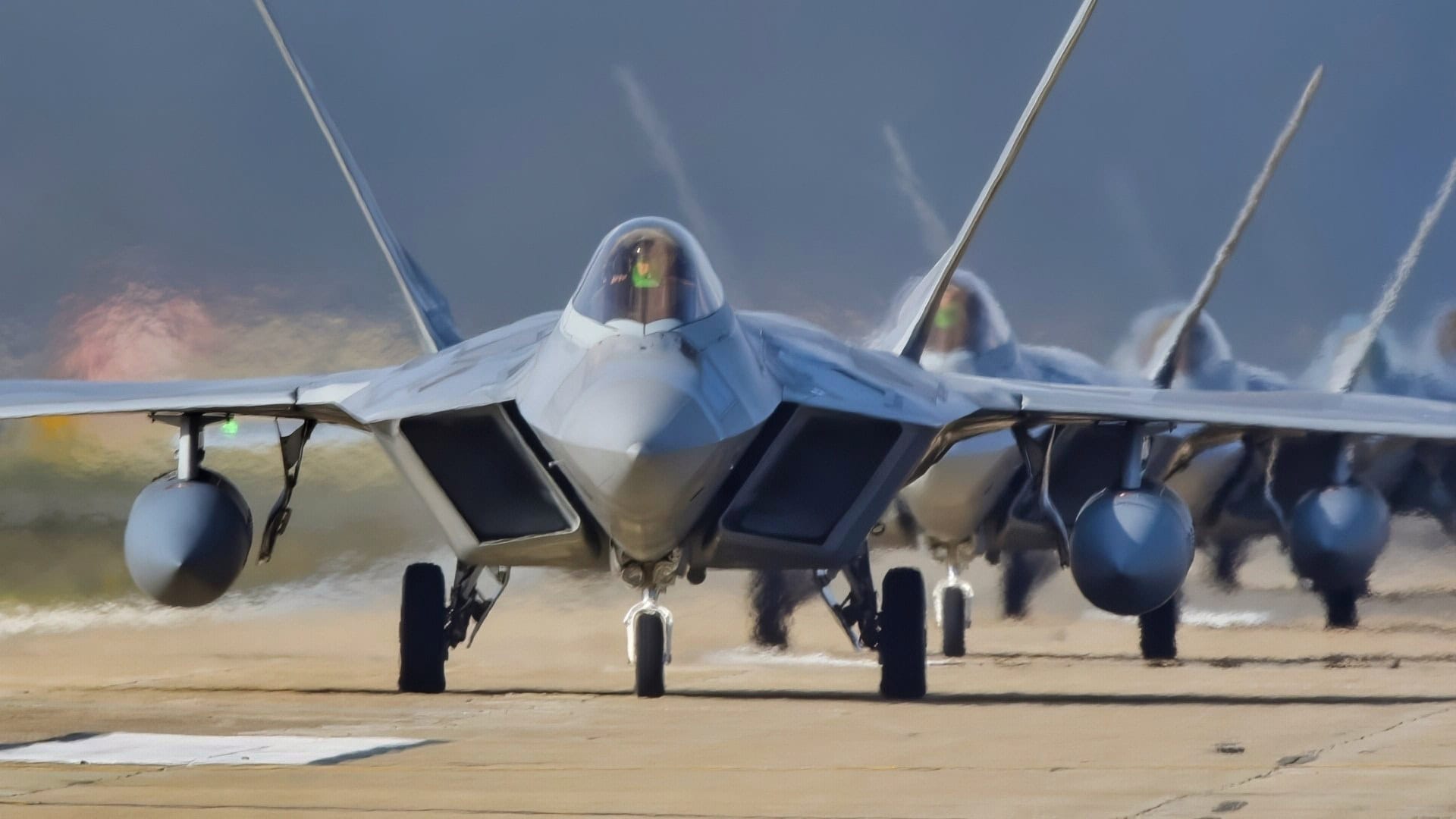
The F-22 is a fifth-generation fighter focused on air superiority, combining low observability, sensor fusion, and high maneuverability. The U.S. Air Force has already positioned the F-35 as the core of joint operations with allies, but the F-22 remains a sharp tool for quickly establishing air-to-air dominance. The location northwest of Okinawa is close to a tactically constrained airspace where the air defense identification zones of the Senkaku Islands, northern Taiwan, and the East China Sea overlap.
According to the announcement, the type of training conducted was "tactical training," but the specific aircraft type on the Japan Air Self-Defense Force side was not specified. This should be seen as intentional information management. Whether it was an F-15J, an F-35, or included other support elements changes the meaning of the training. What can be said within the disclosed scope is that Japan and the U.S. confirmed responsive joint procedures with a small number of aircraft in the airspace over the East China Sea.
The Movement of the Chinese and Russian Navies in the Same Week
If this training is read as a standalone event, its significance diminishes. In the same week, China and Russia conducted "Joint Sea-2026" off the coast of Qingdao. According to reports from Stars and Stripes, the exercise took place in the Yellow Sea from July 6 to 13, and after its conclusion, joint maritime patrols in the Pacific are planned. The Russian side deployed the cruiser Varyag, corvettes, the diesel-electric submarine Ufa, and rescue ships, while the Chinese side participated with destroyers, frigates, supply ships, submarine rescue ships, and submarines.
What is noteworthy here is that the Chinese-Russian exercises in the Yellow Sea and the air training northwest of Okinawa, while geographically distant, appear to Japan as a continuous operational pressure. From the perspective of the Japan Maritime Self-Defense Force, the issue is not just the actions of naval vessels but how air reconnaissance, anti-submarine operations, resupply, and information warfare overlap in that context. The longer China and Russia continue joint maritime operations, the more Japan must simultaneously consider its surveillance distribution across the East China Sea, the Japan Sea, and the Pacific.
Small-Scale Training as a Deterrent Grammar
The training involving only four aircraft is not a flashy show of force. Rather, it is practical. First, it serves as training for the Japan Air Self-Defense Force and the U.S. military to quickly align communication, identification, target allocation, and withdrawal procedures in an emergency. Second, the presence of the F-22 demonstrates to the opposing side that "there are options even in the unseen." Third, for Japan, it is a valuable opportunity to incorporate the U.S. military's high-performance fighters into the actual tactical picture of its surrounding airspace.
However, excessive evaluation should be avoided here. The mere presence of two F-22s does not secure air superiority in the East China Sea. Only with continuous air refueling, early warning, electronic warfare, base defense, and runway recovery capabilities can deterrence take shape. The vulnerability of bases around Okinawa, both politically and militarily, has not changed since the Cold War.
Structural Challenges Remaining for Japan
In my view, the most important aspect of this announcement is not the F-22 itself, but the minimal explanation provided by the Japan Air Self-Defense Force. While this can be understood as operational security, there is also a danger in not adequately explaining to domestic public opinion what the training is meant to protect against. The crisis in the East China Sea is more likely to take the form of a gradual erosion of decision-making time through identification, approach, warning, and tracking, rather than suddenly escalating into large-scale combat.
It may be coincidental that the Chinese-Russian naval exercises and the Japan-U.S. air training overlapped in the same week. However, even if it is coincidental, the operational burden does not decrease by chance. What is truly lacking in the southwestern region is not the performance of the latest aircraft, but the personnel, maintenance, ammunition, runways, and the speed of political decision-making necessary to handle multiple fronts simultaneously.
Source: Joint Staff Office "Press Release" July 10, 2026, Stars and Stripes "China-Russia naval exercise challenges US-led military might in Pacific" July 6, 2026.
On July 9, the Japan Air Self-Defense Force and U.S. Air Force conducted tactical training with four aircraft, including F-22s, in the East China Sea near Okinawa. This exercise is part of a strategic military posture amid concurrent naval exercises by China and Russia in the Yellow Sea, highlighting regional security concerns.
- Japan Air Self-Defense Force and U.S. Air Force conducted tactical training in the East China Sea on July 9.
- Four aircraft were involved, including F-22s and potentially F-15Js or F-35s.
- The training is part of a broader military posture in response to regional threats from China and Russia.
- The exercise coincided with a joint naval exercise by China and Russia in the Yellow Sea.