
The 2026 Navigation of China's Coast Guard Fleet 1307 Shakes Up Japan-China Crisis Management
 Tanaka Takashi
The 2026 Senkaku Navigation of China's Coast Guard Fleet 1307 Shakes Japan-China Crisis Management
The China Coast Guard announced on Sunday that it conducted a "rights maintenance patrol" in the waters around the Senkaku Islands with fleet 1307. Looking at the numbers alone, it appears to be a simple passage of a single fleet. However, when considering the timing and context, this cannot be dismissed as just a routine navigation. Amid ongoing diplomatic friction surrounding Prime Minister Sanae Takaichi's remarks on a Taiwan emergency, Beijing is putting Coast Guard vessels at the forefront instead of military ships, further expanding the gray zone between Japan and China.
The Form of Pressure Demonstrated by Fleet 1307
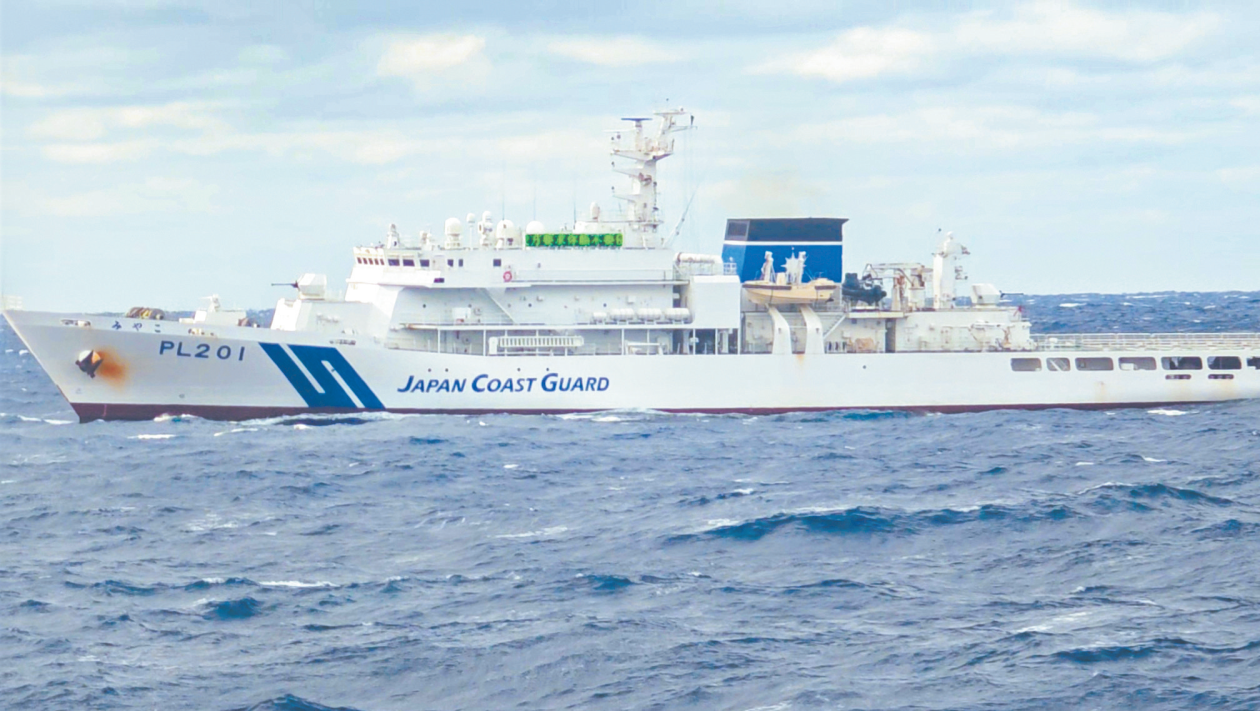
According to NBC's report, the China Coast Guard positioned the actions of fleet 1307 as "legitimate cruising within the territorial waters of Diaoyu Island." From Japan's perspective, the Senkaku Islands are an area under Japanese administrative control, and such expressions are acts of asserting sovereignty on the ground. Furthermore, Taiwan's Ministry of National Defense reported that at the same time, they confirmed 30 Chinese military aircraft and 7 vessels around Taiwan. While it appears that the Coast Guard, Navy, and air forces are operating separately, they collectively form a single picture of political pressure.
In the incident on July 7, the Japan Coast Guard confirmed four Chinese Coast Guard vessels around the Senkaku Islands, two of which approached Japanese fishing boats, prompting a demand for them to leave. Both CNA and DW reported that the Japanese side managed to drive the Chinese vessels out of territorial waters by around 9:20 AM. On the other hand, the Chinese side referred to the Japanese fishing boats as "intrusions" and claimed to have taken warning and expulsion measures. While the factual claims are at an impasse, it is noteworthy that an increase in proximity involving fishing boats could create a crisis based on on-site judgments before political decisions are made.
A Problem That Cannot Be Resolved by the Coast Guard Alone
The response to the Senkaku issue is primarily the responsibility of the Japan Coast Guard, and if the Japan Maritime Self-Defense Force takes action, it could provide China with a pretext for militarization. This restraint is correct. However, in my view, the current challenge is not whether to act or not, but the speed of information sharing among the Coast Guard, Maritime Self-Defense Force, Air Self-Defense Force, and U.S. forces stationed in Japan. If China is taking on the appearance of law enforcement with Coast Guard vessels while simultaneously strengthening air and maritime activities around Taiwan, Japan must share the overall picture even before issuing maritime security actions.
- The Senkaku Islands are located between Okinawa Island and Taiwan, in a maritime area where the recognition of southwestern island defense and a Taiwan emergency overlap.
- Coast Guard vessels have a lower political threshold than military ships, making it easier to stay for extended periods and approach repeatedly.
- In situations involving Japanese fishing boats, there is a simultaneous demand for ensuring on-site safety and diplomatic restraint.
Linked Risks After Taiwan Remarks
Following Prime Minister Takaichi's remarks on Taiwan, China has escalated its actions through non-military means, including summoning the Japanese ambassador, travel advisories, changes to flight tickets, and restrictions on exports to Japan. The navigation of Coast Guard vessels in the Senkaku area adds to this. This is not a classic display of naval power. Rather, it is a method of solidifying domestic public opinion and international legal claims without provoking a military response from the opponent.
What is truly dangerous around the Senkaku Islands is not a single approach by large vessels, but the handling of Coast Guard vessels, fishing boats, and air activities as separate incidents.
What Japan needs is a calmness that does not overly militarize the situation around the Senkaku Islands. At the same time, the margin for managing air activities around Taiwan, Coast Guard actions in the East China Sea, and surveillance of the southwestern islands as separate accounts is diminishing. As a former member of the Maritime Self-Defense Force, I am somewhat concerned that discussions on the number of vessels and missile ranges are overshadowing the training for political decision-making connections between the Coast Guard and Self-Defense Forces. The true weakness lies not in the performance of sensors, but in how to handle the hours during which a crisis progresses in a gray area.
Main references: NBC News, Channel NewsAsia, Deutsche Welle, announcements from the China Coast Guard, announcements from Taiwan's Ministry of National Defense.
The Chinese Coast Guard 1307 Fleet conducted a patrol in the Senkaku Islands area on July 7, 2026, amid rising political tensions between Japan and China. Japan's Coast Guard confirmed the presence of four Chinese vessels, which approached Japanese fishing boats, prompting Japan to issue a withdrawal request. Concurrently, Taiwan reported increased Chinese military activity nearby, highlighting the complex security dynamics in the region.
- Chinese Coast Guard 1307 Fleet conducted a patrol in the Senkaku Islands area on July 7, 2026.
- Japan's Coast Guard confirmed the presence of four Chinese vessels near the Senkaku Islands.
- Political tensions are rising due to statements made by Japanese Prime Minister Sanae Takaichi regarding Taiwan.
- Taiwan's defense ministry reported 30 Chinese military aircraft and 7 naval vessels near Taiwan at the same time.
- The situation is complicated by the presence of fishing boats and the potential for incidents.