
The American-Iranian War Reveals Ammunition Shortages and Tests Saudi Arabia's Air Defense in 2026
 Ahmed Al-Rashid
The American-Iranian War Reveals Ammunition Shortages and Tests Saudi Air Defense in 2026
On September 15, 2026, the Saudi Civil Defense announced the end of the danger alert in six cities, including Yanbu, following warnings related to the American-Iranian war. On the same day, American reports revealed that the Department of Defense had spent about $33 billion on operations and was facing shortages in some munitions. These two pieces of news may seem separate, but they tell the same military story from different sides: missiles do not need to penetrate every air defense network to impose a cost, and the force launching interceptors may run out of stock before the fighting ends.
From the Alert in Yanbu to the American Stock Crisis
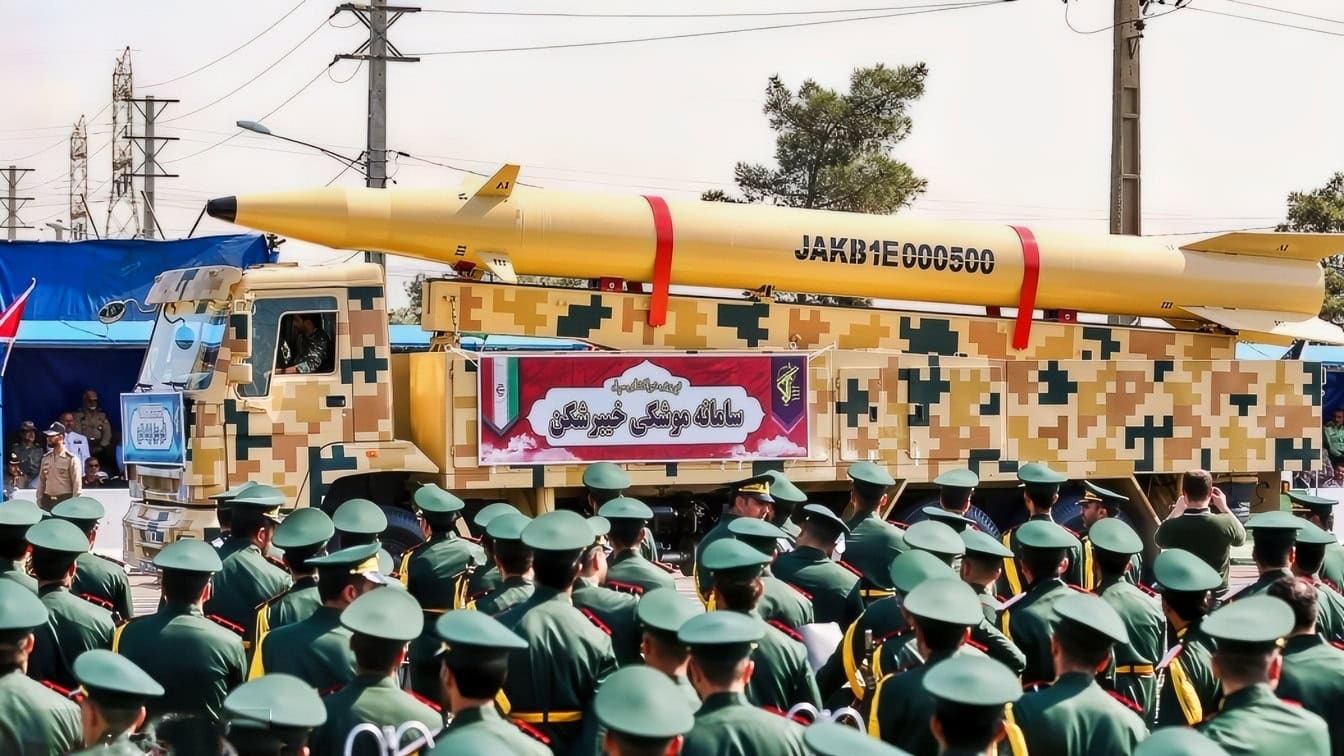
The lifting of the Saudi alert does not mean that the threat has ended; rather, it means that the window of direct danger has temporarily closed. Yanbu is not an ordinary city in military calculations; it is an industrial hub and a port on the Red Sea, and its location connects energy and export facilities to the internal infrastructure of the Kingdom. Therefore, any attack or alert around it tests Riyadh's ability to protect fixed targets, not just to intercept a single missile.
The American figure of $33 billion, if confirmed in the oversight report, highlights a different problem. The United States has long-range fighters, intelligence capabilities, and warning networks, but it does not have an unlimited stock of PAC-3, THAAD, and precision air munitions. In a prolonged war, the issue becomes a calculation between the adversary's launch rate and the production rate of factories, and between the value of the target and the value of the interceptor. If an ally is forced to choose, the priority will not always be a Gulf facility.
Iran Bets on Attrition, Not the Perfect Strike
The circulating reports about an Iranian civil defense plan for three scenarios, from limited escalation to full-scale war, reveal that Tehran is considering institutional survival under bombardment. This does not prove that every Iranian claim about the outcomes of operations is correct, but it does demonstrate that the leadership is preparing society and the economy for a prolonged conflict. Practically, Iran can distribute missile platforms, use decoy targets, and move its stockpile between fortified sites; it does not need to destroy every American or Saudi battery, but rather to force them to launch an expensive interceptor against every potential threat.
This is the dilemma of Gulf air defense. THAAD missiles are excellent against certain categories of ballistic missiles under specific conditions, and Patriot provides an important layer of point defense, but there is no single system that protects a wide network of facilities from a mix of missiles, drones, and low-altitude attacks. The real system is a network of command and control, overlapping radars, trained crews, a renewable stockpile, and camouflage, fortification, and distribution of targets. Buying the launcher is much easier than building this institution.
The Triad Capability Lacking in Gulf Purchases
I always measure armies by a triangle of capability: equipment, training, and institutions. Saudi Arabia has improved its equipment and spent billions on Patriot, THAAD, and fighter jets, as well as developed command centers and integration with the United States. However, the recent alert reminds us that training is not measured by the number of propaganda maneuvers, but by the speed of decision-making under the pressure of a complex attack, by the crews' ability to operate for consecutive days, and by the availability of spare parts and interceptors.
Institution also means that air defense does not exist in a vacuum. Air, naval, and civil defense forces must exchange information, and every city must know what to do when communications fail or a radar station is hit. The announcement of the end of danger in six cities is an important communication step, but it does not tell us how many targets were put at risk, how many missiles were launched, or whether the Kingdom had to request additional American support. In war, what official data does not publish may be more important than what it does.
What This Means for Saudi Arabia, Israel, and Washington
For Riyadh, the lesson is not to buy a new battery every time the threat rises. The priority is to increase depth, protect vital facilities by distributing and fortifying them, and develop cheaper layers to counter drones and decoy targets, while retaining expensive interceptors for missiles that truly warrant them. The American partnership should also shift from a political umbrella to clear agreements on alerts, resupply, and determining who leads defense in each sector.
Israel faces the same problem more acutely. The presence of Iron Dome, David’s Sling, and Arrow does not eliminate the risk of running out of interceptors, especially if multiple fronts coincide. Meanwhile, Washington finds that deterrence based on rapid force deployment is insufficient if it is not accompanied by an industrial base capable of compensating. Revealing shortages after spending tens of billions means that the war has exposed a gap in sustainability, not just in technology.
Conclusion
The alert in Yanbu and the American ammunition shortage are not isolated incidents, but a test of the Gulf security model that buys protection as it buys systems. The United States can provide precious time, Saudi Arabia can reduce risk, and Iran can raise the cost of every night of fighting. But no party can buy sustainability with a single deal. The contradiction that will remain is that the Gulf wants military independence, while still being able to defend its skies only to the extent allowed by the ally's stockpiles and political will.
Sources
- Reuters, Saudi Civil Defense update on six cities including Yanbu, September 15, 2026.
- CBS News, Inspector General report on war spending and American ammunition shortages, September 15, 2026.
- Anadolu Agency, Iranian civil defense plan for three scenarios, September 15, 2026.
- Middle East Eye, analysis of the non-activation of the Mecca Agreement against the Houthis, September 14, 2026.
On September 15, 2026, Saudi Civil Defense announced the end of danger in six cities, including Yanbu, amid alerts related to the US-Iranian war. Concurrently, reports revealed that the US Department of Defense has spent around $33 billion on military operations but is experiencing a shortage of certain munitions. The situation underscores the logistical challenges faced by both the US and Saudi Arabia in maintaining effective air defense capabilities against potential Iranian threats.
- Saudi Civil Defense declared the end of danger in six cities, including Yanbu, on September 15, 2026.
- The US Department of Defense reportedly spent $33 billion on operations and is facing a shortage of munitions.
- Iran is preparing for a prolonged conflict, considering various scenarios for civil defense.
- The report highlights the challenges of air defense in the Gulf region against missile threats.
- The US's reliance on its industrial base for munitions is questioned due to the current shortages.