
The Appearance of the 09V Type SSN Tests the Japan Maritime Self-Defense Force's Anti-Submarine Capability
 Tanaka Takashi
The Emergence of the 09V Class SSN Tests the Japan Maritime Self-Defense Force's Anti-Submarine Capabilities
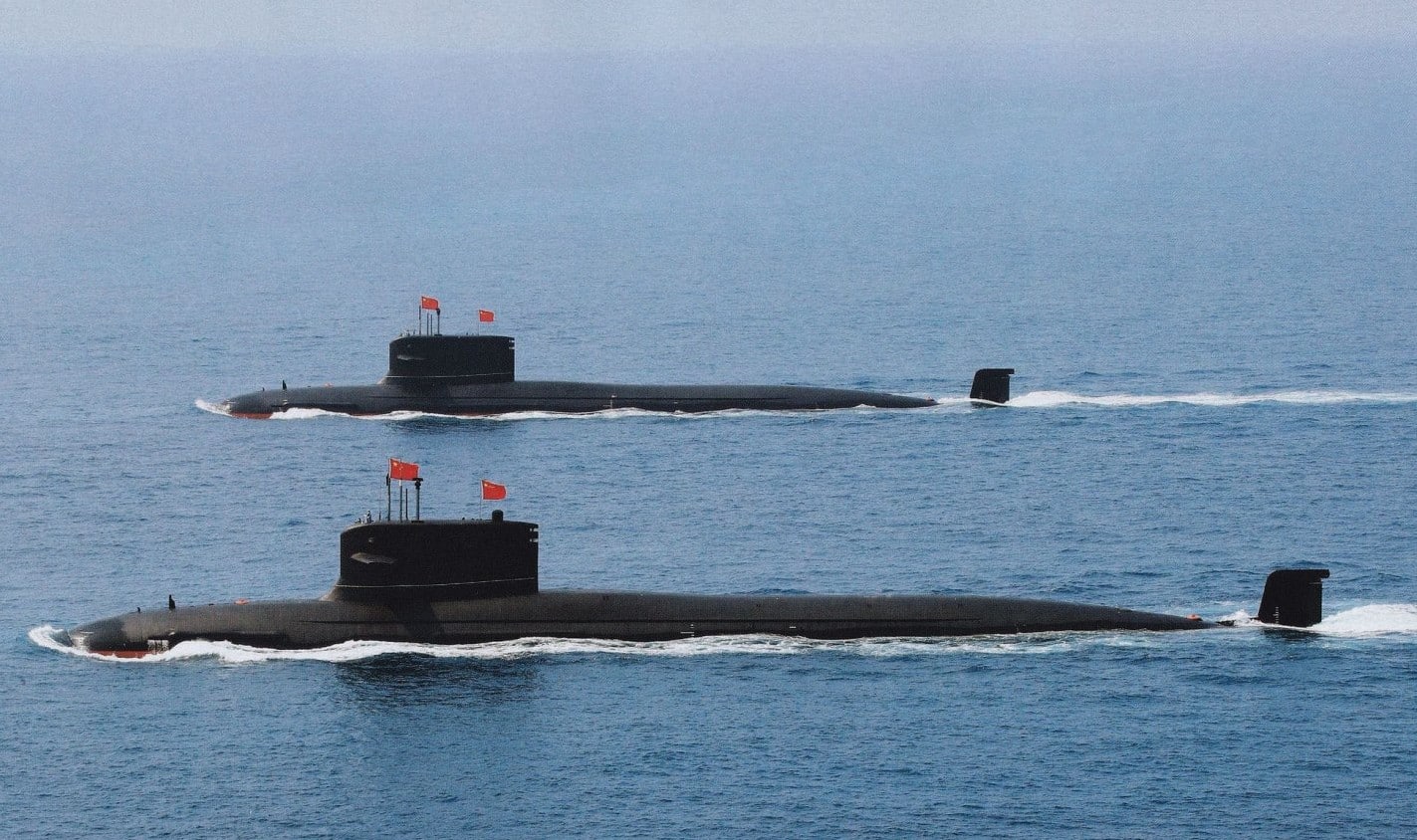
[Yokosuka] On February 9, 2026, an unusual silhouette appeared in Sentinel-2 images released by the satellite image analysis company EOS Land Viewer. The hull, floating in the Bohai Shipyard dock in Huludao, China, was clearly different from the 09IIIB class (Type 093B) guided missile nuclear submarines, of which 7 to 8 have been launched so far. According to a report by Naval News, along with SAR (Synthetic Aperture Radar) images from the independent satellite image analysis organization Imageriq, this vessel is believed to be the lead ship of the 09V class, or Type 095, which is China's next-generation nuclear attack submarine (SSN).
Numbers Indicate a Qualitative Shift
First, we must discuss dimensions. According to Naval News analysis, the overall length of the 09V class is estimated to be 110 to 115 meters, which is not significantly different from the conventional 09III class series (Type 093 family). However, the hull width (beam) is estimated to be about 12 to 13 meters, which greatly exceeds the figures for the 09III class. As a result, the submerged displacement is calculated to be 9,000 to 10,000 tons, approximately 30% larger compared to the 7,000 tons of the 09III class.
The Ministry of Defense is unlikely to officially discuss what these numbers imply. However, for the Japan Maritime Self-Defense Force's anti-submarine personnel, the increased beam of the SSN generally suggests two things. First, an increase in speed and endurance due to the installation of a larger nuclear reactor. Second, the structural margin to accommodate pump-jet propulsion and noise reduction technologies.
The 09V class has been confirmed to have an X-tail, which is the first adoption for a Chinese nuclear submarine. The X-tail improves maneuverability at low speeds while making it easier to ensure bottom clearance in shallow waters, potentially providing an advantage in the waters around the southwestern islands, where the PLAN has frequently attempted deployments in recent years. Additionally, an unfinished section believed to be a VLS (Vertical Launch System) has been identified behind the sail, suggesting the potential for carrying anti-ship and land-attack cruise missiles, similar to the 09IIIB class.
"Silent Threat" — The Unknown of Quietness
The core issue is "quietness."
For the 09III class (Shang-class), a certain level of acoustic characteristics has been understood from the accumulated anti-submarine patrol activities of the JMSDF and the U.S. Navy. The sonar net developed by the P-1 patrol aircraft, the towed array (TASS) of the escort fleet, and the fixed underwater acoustic monitoring systems deployed in Naha, Atsugi, and Hachinohe have experience and training data for identifying and tracking the 09III class.
Such data does not exist for the 09V class.
Of course, at this stage, even sea trials have not yet begun. Accurate evaluation of the vessel's acoustic characteristics and actual quietness levels will be impossible without several years of testing. Defense Security Asia quotes a former U.S. Navy officer stating that it will be "a very quiet submarine," but that is an estimate, not a certainty. Whether the PLAN can achieve quietness comparable to the U.S. Virginia-class or Russia's Yasen-class with its third-generation SSN remains to be seen at this stage.
PLAN's Operational Patterns and Implications for the Southwestern Islands
Reflecting on the operational patterns of the PLAN's nuclear submarines, the Shang-class (09III class) has already conducted deployments in the western Pacific, Philippine Sea, and even the Indian Ocean, continuously enhancing its blue-water operational capabilities since the 2020s. The 09IIIB class, equipped with YJ-18 anti-ship cruise missiles and the recently confirmed YJ-19, which appears to utilize scramjet propulsion, is characterized not merely as a patrol vessel but as an underwater launch platform capable of precision strikes against vessels. It is natural to assume that the 09V class is an extension of this.
The greatest concern for the JMSDF is likely the improvement in specific strait transit capabilities. The Miyako Strait, Osumi Strait, and Tsugaru Strait—these three major chokepoints are still designated as key areas for anti-submarine patrol, and the JMSDF maintains a monitoring posture by mobilizing multiple patrol aircraft units and SH-60K-equipped escort vessels. The 09III class can be addressed with a combination of fixed acoustic listening systems and the P-1. However, if the 09V class achieves quietness below the detection threshold of the anti-submarine warning network, the effectiveness of the chokepoint strategy itself will be called into question.
Current Status of the JMSDF and Equipment Response
Looking at the current anti-submarine equipment system of the JMSDF, the P-1 patrol aircraft (planned 60 units, being deployed sequentially), SH-60J/K shipborne helicopters, and a high-performance SSK fleet of 22 vessels centered around the "Taigei" class are the core. The defense budget for fiscal year 2025 includes enhancements to anti-submarine-related equipment, with domestic production of high-sensitivity buoys and an increase in P-1 production plans underway.
- P-1 Patrol Aircraft: Currently about 40 units deployed (planned 60 units), manufactured by Kawasaki Heavy Industries, four-engine jet, maximum range over 8,000 km
- SH-60K Mod: Successor to the shipborne anti-submarine helicopter, equipped with a towed sonar
- "Taigei" Class SSK: Four vessels already in service, improved underwater endurance with lithium-ion batteries
However, these capabilities are based on the current threat environment. If the mass production of the 09V class begins in earnest and its acoustic characteristics are significantly below those of the 09III class, the ongoing maintenance plans may not be sufficient.
As of February 2026, it is reported that the PLAN possesses about 32 nuclear submarines (excluding new builds of Type 096 ballistic missile submarines), making China the second-largest nuclear submarine power in the world. If the mass production of the 09V class gains momentum, that number is expected to increase further.
The Risk of "People and Organizations" Lagging Behind Technology
A more fundamental issue is how long it will take to collect "acoustic training data" for countering the 09V class. From sea trials to operational deployment and then to blue-water operations, it is expected to take at least 5 to 7 years. Japan may have that time.
However, my concern lies elsewhere. The real challenge is not the detection technology of the quietened 09V class itself, but the delay in training personnel for the JMSDF's anti-submarine patrol aircraft and the rigidity of the training system. When will the deployment of the P-1 reach the planned 60 units? Is there enough flight time secured to maintain specialized anti-submarine training for the crew? Who, when, and where will the training system for adapting to the new SSN, which is disconnected from the accumulated data of the 09III class, be constructed?
Hardware budgets have been secured. However, training the personnel who will utilize it takes more time than the budget. By the time the 09V class is fully deployed in the western Pacific, the JMSDF may face not submarines that cannot be detected, but crew members who have not received sufficient detection training.
(Based on analysis reports from Naval News, Defense Security Asia, SPAS Consulting, and various reports from February 2026)
The People's Liberation Army Navy (PLAN) has revealed the Type 095 nuclear attack submarine at the Bohai Shipyard in China, testing the Japan Maritime Self-Defense Force's anti-submarine capabilities. This new class of submarine, larger and potentially quieter than its predecessor, is expected to enhance China's naval operational capabilities in the Pacific. The Japan Maritime Self-Defense Force is currently assessing its anti-submarine strategies in response to this emerging threat.
- The Type 095 submarine is larger than the previous Type 093 class, with an estimated length of 110-115 meters and a beam of 12-13 meters.
- The underwater displacement of the Type 095 is estimated to be 9,000-10,000 tons, significantly larger than the Type 093's 7,000 tons.
- The Type 095 is expected to incorporate advanced technologies for stealth and operational capabilities, including a new X-type tail fin.