
The Appearance of the PLA Y-20B in Training Photos in 2026: What Does Balancing Transport and Aerial Refueling Mean?
 Li Minghui
The Appearance of the PLA Y-20B in Training Images in 2026: What Does the Dual Role of Transport and Aerial Refueling Mean?
A training image recently released by the PLA Air Force has attracted attention from the outside world. The image shows an underwing refueling pod on the Y-20 aircraft, indicating that the Y-20B is undertaking both transport and aerial refueling missions. The South China Morning Post reported this change on October 20, citing relevant images, while the Global Times mentioned the role of modular refueling pods the day before. It should be noted that public information is still insufficient to prove that this model has formed a large-scale combat deployment, but it at least indicates that a more flexible support concept is being implemented.
The Real Change Lies in Mission Switching
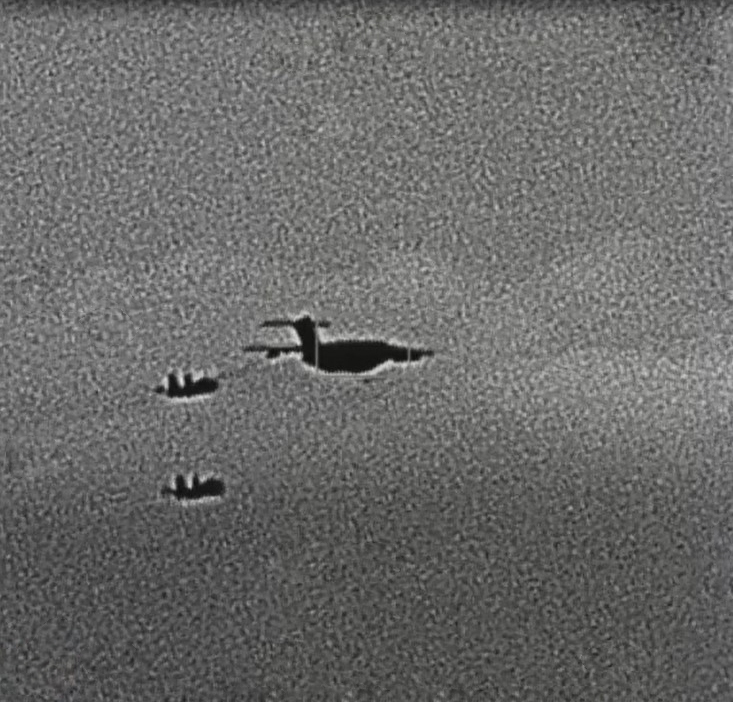
The basic model of the Y-20 is currently China's largest domestically produced large transport aircraft, with a publicly estimated maximum takeoff weight of about 220 tons, a payload of about 55 to 66 tons, and a fuselage length of about 47 meters. In the past, it was often compared to the U.S. C-17 in terms of transport capability, but the value of the Y-20B lies not only in its cargo hold. If detachable hose refueling pods are used, the same batch of aircraft can switch between transport, personnel and material delivery, and aerial refueling based on mission requirements.
This is different from the concept of dedicated tankers. Dedicated platforms are more efficient, with more mature pipelines, fuel tanks, and mission systems; the Y-20B is like a heavy truck that can be outfitted with modules. Its individual performance may not be the best, but it can reduce the pressure on the Air Force to maintain multiple fleets for different missions. For the PLA, which is still expanding its long-range air power, quickly obtaining "enough tankers" may be more realistic than waiting for a completely new design platform.
What Shortcomings in PLA Aerial Combat Can It Address?
Currently, the PLA Air Force already possesses aerial refueling capabilities represented by the H-6 tanker, but the fuel capacity, range, and ability to service multiple aircraft simultaneously of the H-6 are limited by the platform size. If the Y-20B can reliably perform refueling missions, it can first increase the loiter time of the J-20, J-16, and early warning aircraft in the Western Pacific, and also provide mid-air support for cross-regional deployments.
More importantly, the Y-20B may bring production capacity flexibility. The transport aircraft and tankers share large platforms, engines, and maintenance systems, which can reduce the complexity of training and spare parts. Modular pods also allow units to prioritize transport missions during peacetime and then concentrate on refueling support during crises. While this number may not seem as straightforward as that of dedicated tankers, for an Air Force that needs to cover the East China Sea, South China Sea, and even farther airspace, it will translate into more available sorties.
One Image Cannot Equate to a Leap in Combat Capability
The most lacking aspect in public information is precisely the key details: whether the Y-20B's refueling system has completed the full set of compatibility tests with receiver aircraft, the fuel transfer rate and failure rate of the pods, whether the aircraft can retain sufficient cargo capacity when fully loaded with fuel, and how many have actually entered service. Until these questions are answered, it cannot simply be referred to as China's version of the KC-46.
Additionally, the engines, refueling lines, and mission avionics used by the Y-20B will still be constrained by supply chain and maintenance capabilities. If module replacement requires a long ground preparation time, the so-called "multirole" capability may remain only on paper. The author believes that to judge whether this project is successful, one should look for signs of sustained training, fixed unit organization, and clearer indications of bulk deliveries in the coming year, rather than just focusing on a single public image.
From Transport Aircraft to System Node
The emergence of the Y-20B reflects that the PLA Air Force is transforming large transport aircraft from rear transport tools into system nodes that connect fighter jets, early warning aircraft, and long-range strike forces. It may not immediately change the balance of power over the Taiwan Strait, but it could allow the PLA to maintain air presence over a larger area, especially suitable for providing mobile support when bases are threatened and need to be dispersed.
What is truly worth tracking is not whether the Y-20B can "double as" a tanker, but whether the PLA can turn this dual role into a stable sortie rate. Will the next public release be more training photos of the pods, or the formal bulk deployment of dedicated tankers? This question determines whether the Y-20B is merely a transitional solution or a long-term pillar of China's long-range aerial combat system.
Sources
The PLA Air Force is utilizing the Y-20B aircraft for both transport and aerial refueling tasks, as indicated by recent training images. This dual capability aims to enhance operational flexibility and logistical support for the air force. However, the extent of its deployment and operational readiness remains unclear, pending further testing and validation of its refueling systems.
- The Y-20B is equipped with modular refueling pods for dual transport and refueling roles.
- The aircraft can switch between transport and refueling missions, enhancing operational flexibility.
- Current information does not confirm large-scale deployment of the Y-20B.
- The Y-20B's capabilities may improve the PLA Air Force's operational range and efficiency.
- The report emphasizes the need for further testing and validation of the Y-20B's refueling system.