
The Russian strike on Kyiv with 210 drones and missiles demonstrated a new logic of pressure on Ukraine.
 Dmitri Volkov
The Russian strike on Kyiv with 210 drones and missiles demonstrated a new logic of pressure on Ukraine
The scale of the attack is more important than individual types of missiles
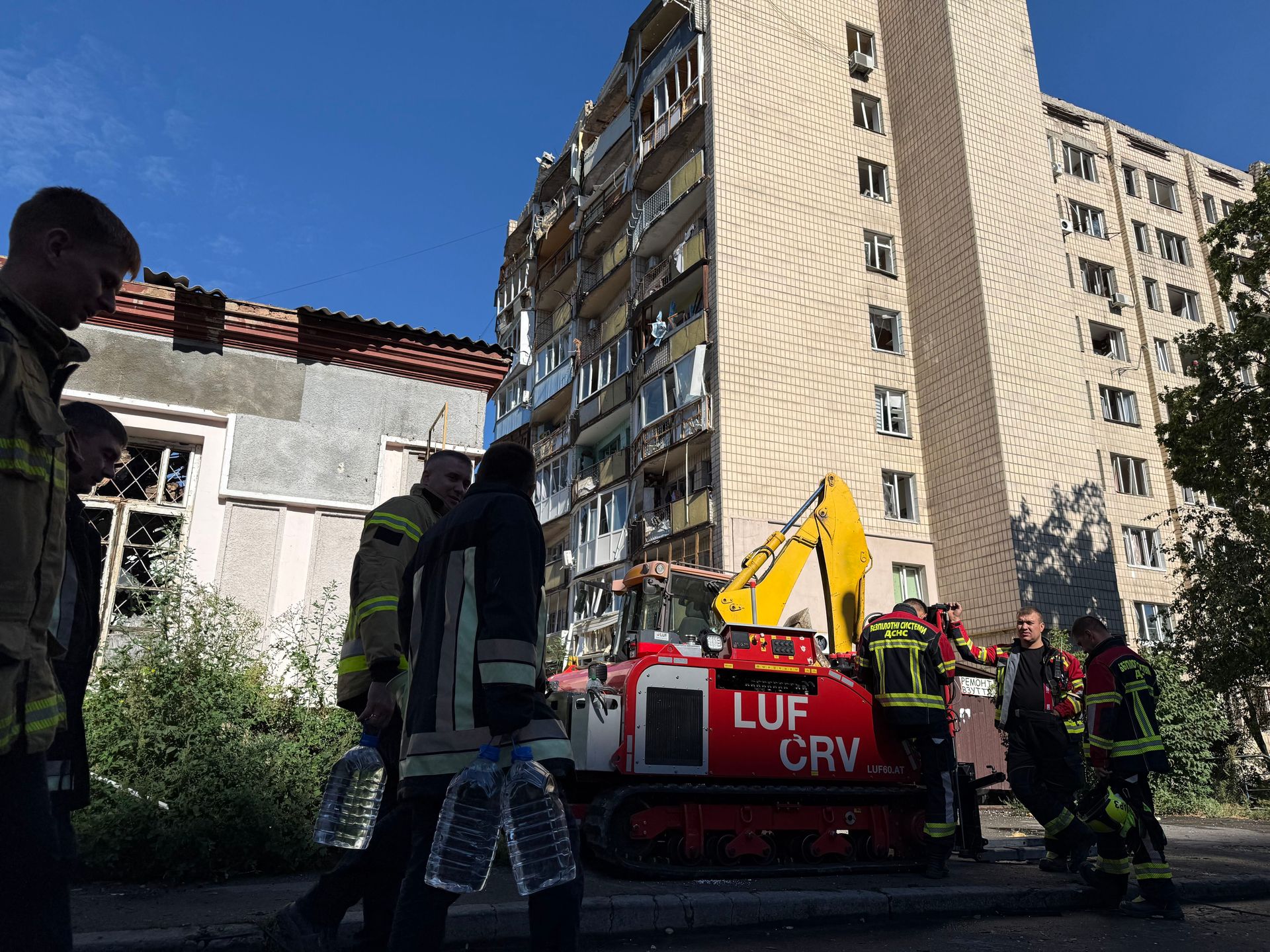
On the night of October 21-22, Russian forces used 210 strike drones simultaneously with Iskander-M missiles, S-400, Zircon, and Onyx. Ukrainian sources report that 181 drones were destroyed or suppressed by 09:00, with another ten remaining in the air. At first glance, this appears to be yet another mass raid. However, the combination of means of destruction and the timing of the strike indicates a more complex task: Moscow was testing not only Ukrainian air defense but also the state's ability to maintain control at a moment when the diplomatic channel was once again open.
The main target was Kyiv. According to the Ukrainian Air Force, launches were conducted from the Kursk, Bryansk, and Rostov regions, as well as from airfields in Millerovo, Orel, Shatalovo, Primorsko-Akhtarsk, and from occupied territories in Donbas and Crimea. The strike affected 32 districts, with debris found in eight other locations. According to the Ukrainian State Emergency Service, at least one person was killed and 22 were injured, including children (Ukrainska Pravda, October 22, 2026; AP, October 22, 2026).
Why Moscow mixed 210 UAVs with four missile systems
The number of drones alone does not explain the operation's intent. The wave included Shaheds, reactive variants of these devices, Geran or their Russian analogs, Italmas, Gerberas, and false targets called Parody. According to RBC-Ukraine, about 110 devices were reactive, and among the 181 neutralized drones, 87 belonged to reactive models. This is an important detail. Russia is gradually building not just a mass raid but a layered system of saturating defenses, where cheap false targets consume ammunition and attention, while faster devices reduce reaction time.
In this context, the missile component of the strike serves two functions. Iskander-M and Onyx create threats of ballistic and low-flying profiles, while the use of missiles identified by the Ukrainian side as S-400 and Zircon expands uncertainty for air defense calculations. Not every such munition necessarily reaches its target; however, the defense commander is forced to allocate limited interceptors among several types of threats. In other words, the Russian General Staff measures the result not only by destruction. For them, the expenditure of interceptor missiles, the overload of the radar network, and the hours of operation of mobile fire groups are equally important.
The effectiveness of air defense does not equal the safety of the city
181 destroyed or suppressed drones out of 210 is a high figure, but it does not mean that the capital is protected from the consequences. Firstly, even one breach by a missile or drone in a dense urban area creates disproportionate damage. Secondly, suppression by electronic warfare does not always mean the harmless disappearance of a target: a device may crash in another area, and its debris becomes an independent source of danger. Thirdly, data on neutralization reflect a specific window of time and do not describe the extent of damage to infrastructure.
This time, the Ukrainian defense acted as a distributed system. Anti-aircraft missile units, aviation, electronic warfare, drone units, and mobile fire groups participated in repelling the raid. Such a combination reduces the burden on expensive missiles but has its limits. Mobile teams depend on reconnaissance networks and communications, aviation relies on the situation in the air, and electronic warfare does not guarantee results against all navigation modes. Judging by the composition of the strike, Russia attempted to make these elements work simultaneously and at their limits.
The diplomatic backdrop turns the raid into a political signal
The timing of the attack is particularly important. According to the Associated Press, just a few hours before the strikes, the Kremlin agreed in principle to resume trilateral negotiations with the U.S. and Ukraine after November 10, that is, after the American midterm elections. For Moscow, this is a convenient construct: the diplomatic gesture maintains the possibility of discussing readiness for negotiations, while the military operation demonstrates that the cost of waiting for Ukraine remains high.
This approach resembles the Soviet practice of negotiating under fire, but in its modern version, it relies on the drone industry. Mass-produced devices allow for constant pressure without exhausting the entire stock of precision missiles. This is not a sign of limitless resources. On the contrary, the mixed strike shows that Russia is trying to compensate for the high cost of missiles with a quantity of relatively cheap platforms, and then use the remaining missiles to complicate the work of air defense.
What this means for Russian military doctrine
The event demonstrates a shift from campaigns of individual "package" strikes to a constant model of coercion. The goal is not necessarily the destruction of a single target. It is more important to deprive the opponent of a normal rhythm of life, force them to keep air defense forces around the capital, disrupt transport and energy supply, and then use this tension as an argument in negotiations.
However, this strategy has a structural limitation. Ukraine is already building a multi-layered defense, where expensive anti-aircraft missiles are complemented by electronic warfare, drone interceptors, and mobile groups. If the share of destroyed devices remains high, Moscow will have to constantly increase the volume of launches to maintain the previous effect. This is a race of production, logistics, and operator training, not just a simple demonstration of force.
Therefore, the current raid should be assessed in dual terms. Russia has retained the ability to organize a large combined attack and synchronize it with a diplomatic maneuver. Ukraine has shown that it can neutralize a large part of the drone wave but is unable to turn interception statistics into absolute protection for cities. Negotiations after November 10 will begin under conditions where Moscow will consider strikes as a bargaining tool, while Kyiv will see them as proof that promises of peace do not accompany a cessation of violence. If this logic persists, the next winter will be defined not by one missile or one type of Shahed but by the ability of both sides to endure an industrial war of attrition.
Sources: Ukrainian Air Force, data from October 22, 2026; Ukrainska Pravda, October 22, 2026; RBC-Ukraine, October 22, 2026; Associated Press, October 22, 2026.
Russian forces launched a coordinated attack on Kyiv using 210 drones and various missile systems on October 21-22, 2026. Ukrainian defenses reportedly destroyed or suppressed 181 drones, but the attack resulted in at least one death and 22 injuries. The operation aimed to test Ukraine's air defense capabilities while maintaining military pressure amid renewed diplomatic talks.
- Russian forces launched 210 drones and missiles against Kyiv.
- 181 drones were destroyed or suppressed by Ukrainian defenses.
- The attack involved multiple missile systems including Iskander-M and S-400.
- At least one person was killed and 22 injured, including children.
- The operation aimed to test Ukrainian air defenses and maintain pressure on Ukraine.