

Summary and Key Points: Boeing announced on November 17 that its Load Adaptable Modular pylon for the B-1B Lancer had passed its Critical Design Review, a step toward manufacturing and testing rather than operational use. The bomber now carries its weapons in three internal bays holding 75,000 pounds; the new system would add up to six external mounting points, each built for weapons over 5,000 pounds, and Boeing says payload could potentially double.
The B-1B Lancer Is a Timeless Bomber for the US Air Force Stacked with Upgrades:
The US Air Force is preparing to give one of its oldest bombers a significant increase in weapons-carrying capability.
The B-1B Lancer, a supersonic bomber originally developed during the Cold War, could soon carry additional weapons beneath its fuselage rather than relying exclusively on internal bomb bays.
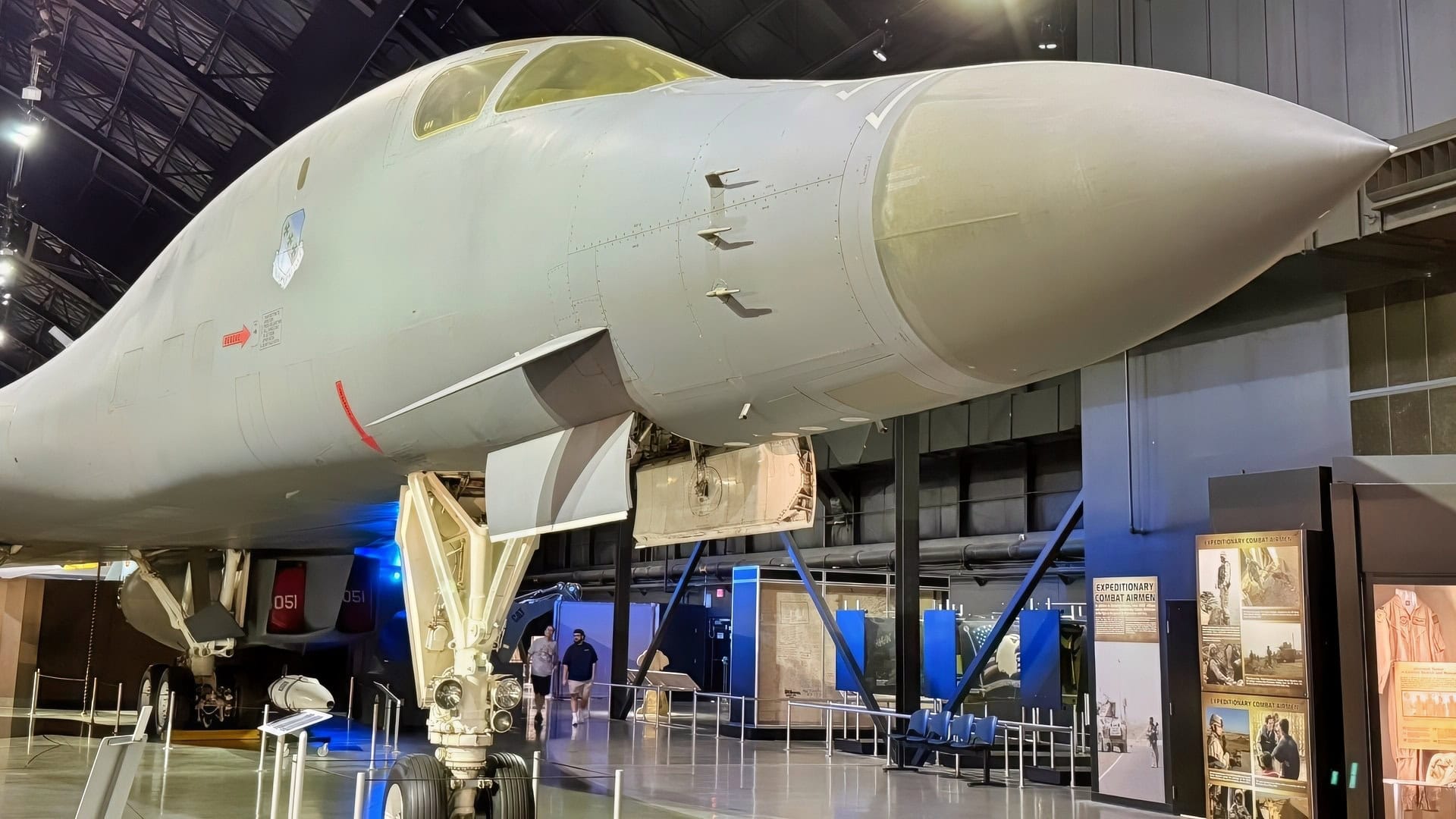
B-1B Lancer at National Museum of the U.S. Air Force. 19FortyFive.com Original Photo.
The upgrade could eventually allow the aircraft to carry hypersonic missiles, which travel at more than five times the speed of sound.
Boeing announced November 17 that its new external weapons pylons had cleared a major design milestone, and the development comes as the Air Force considers keeping the B-1B operational through at least 2037.
The Upgrade Explained
The upgrade centers on Boeing’s Load Adaptable Modular (LAM) pylon, a mounting structure that allows an aircraft to carry weapons externally.
The B-1B currently carries its primary weapons in three internal bomb bays, but the new system would let the aircraft carry additional weapons on up to six external mounting points.
Boeing says the pylons could potentially double the aircraft’s weapons payload capacity, depending on the weapons carried and aircraft limitations.
Each pylon is designed to accommodate weapons weighing more than 5,000 pounds (2,270 kg). On November 17, Boeing announced the design had passed its Critical Design Review.
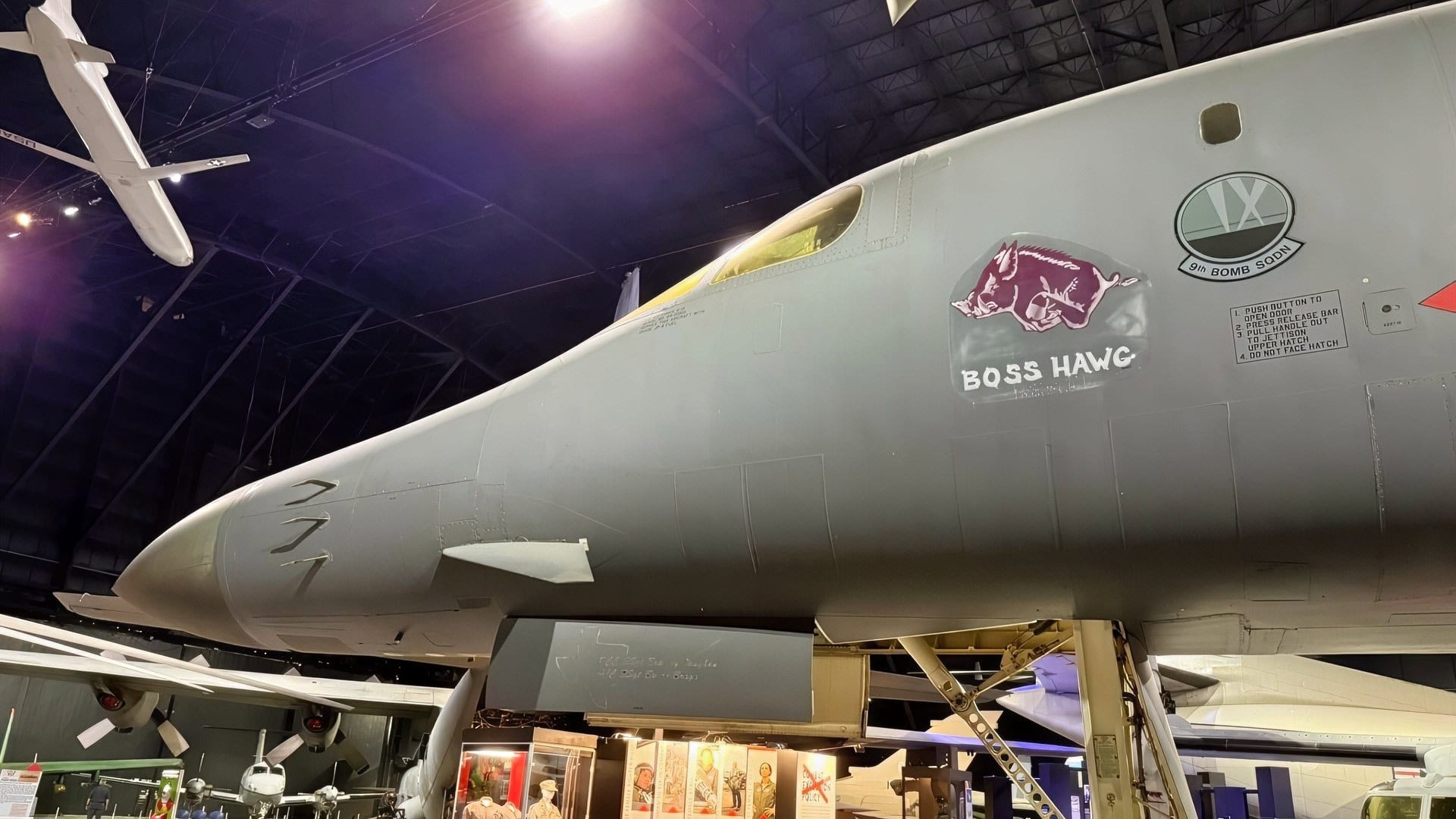 B-1B Lancer Bomber at National Museum of the Air Force. 19FortyFive.com Photo.
This means the design is mature enough to proceed toward manufacturing, integration, and further testing. It does not mean that the pylons are operational yet.
Cold War Relic
The B-1B entered Air Force service in the 1980s and was originally intended to penetrate Soviet air defenses and deliver nuclear weapons. Since then, the aircraft has been converted to a conventional-only weapon system.
Its basic characteristics include a crew of four and a maximum speed of Mach 1.25 (900 mph).
The internal weapons capacity is impressive, allowing for 75,000 pounds of ordnance. Four General Electric F101 turbofans power the aircraft.
The aircraft’s most distinctive feature is its variable-sweep wings, which change position for different flight conditions. While designed for Soviet penetration, the bomber has participated in operations over Iraq, Afghanistan, and Syria.
Although it lacks the stealth capabilities of newer bombers, the B-1B can carry substantial quantities of conventional weapons, making it useful.
Its large payload makes it an attractive option for launching long-range missiles from outside heavily defended airspace.
Adding External Weapons
The B-1B originally had external weapons-carrying provisions, but these were removed or disabled
during its conversion to conventional-only operations (required under arms-control arrangements). Restoring external carriage could substantially expand the aircraft’s flexibility.
The new pylons have already been tested with several weapons, including the GBU-31 JDAM, GBU-72 Advanced 5K Penetrator, and the AGM-183A ARRW.
External mounting also allows the Air Force to attach large weapons that might not fit conveniently inside existing bomb bays.
The upgrade could support both operational missions and future weapons development.
The Hypersonic Missile Connection
One of the most significant potential applications involves the AGM-183A Air-Launched Rapid Response Weapon, or ARRW.
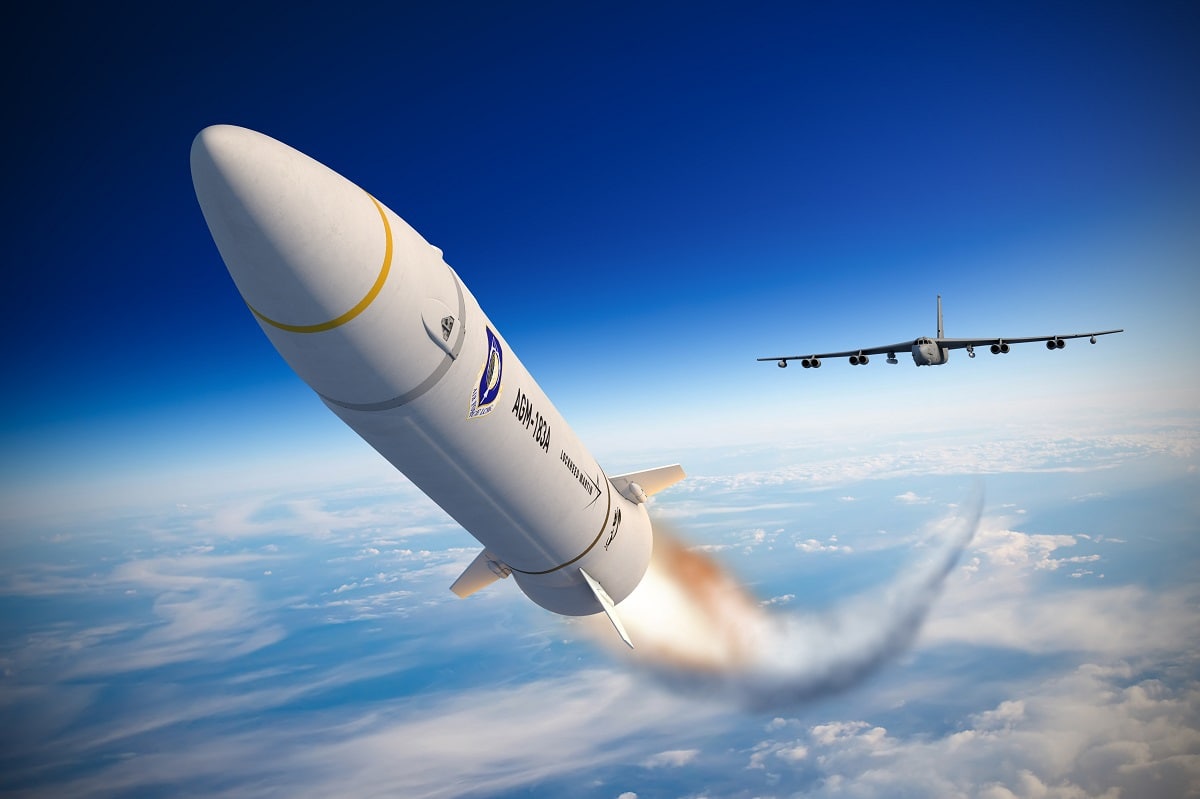
Courtesy illustration of an Air-launched Rapid Response Weapon (ARRW).
Hypersonic weapons travel at speeds exceeding Mach 5, making them challenging to intercept, although speed alone does not guarantee survivability.
The ARRW is intended to strike high-value targets at long range and high speed.
In April 2026, the Air Force publicly showed a B-1B carrying an ARRW externally.
The service’s fiscal 2027 budget documents also discussed using the B-1B as a platform for integrating hypersonic weapons.
In October 2026, the Air Force reportedly awarded Lockheed Martin a $694 million contract to begin ARRW production.
The service has not disclosed missile quantities or delivery schedules.
With six pylons, the bomber could theoretically carry multiple ARRW missiles, although a six-missile operational configuration has not been confirmed.
Investing in an Oldie
The Air Force’s original plan was to retire the B-1B around 2030 as the new B-21 Raider entered service. However, current planning seems to envision extending the Lancer’s service life to at least 2037.
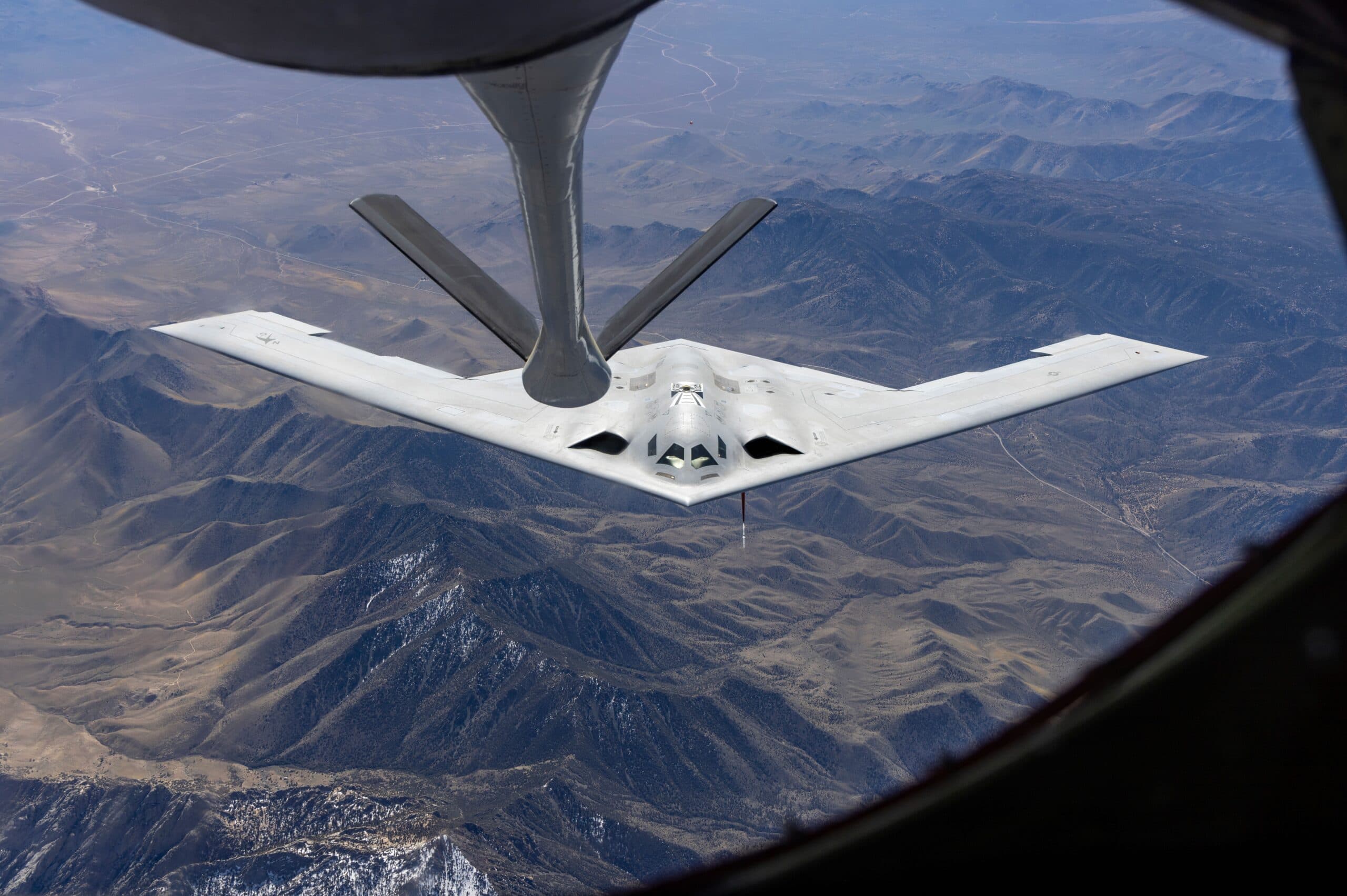
B-21 Raider. Image Credit: USAF.
The B-1B could therefore remain useful as a long-range missile carrier even as newer, stealth aircraft enter service.
This matters for any potential conflict with China, where American bombers might need to attack targets from beyond the reach of sophisticated air defenses.
About the Author: Harrison Kass
Harrison Kass is a writer and attorney focused on national security, technology, and political culture. His work has appeared in Tablet, City Journal, The Hill, The Spectator, and The Cipher Brief. He holds a JD from the University of Oregon and a master’s in Global & Joint Program Studies from NYU—more at harrisonkass.com.