
The Book Market of Pochaiv and ArcelorMittal Show the Logic of Russian Revenge
 Dmitri Volkov
The Pochaina Book Market and ArcelorMittal Show the Logic of Russian Revenge
In this nighttime attack, there is one detail that is more important than the formula "missiles plus drones." The Russian strike on August 16 simultaneously burned the book stalls at the Pochaina metro station in Kyiv and incapacitated part of the production line at ArcelorMittal Kryvyi Rih. The first location does not produce shells. The second, on the contrary, is one of the symbols of the Ukrainian industrial economy. Together, this is not a random set of hits, but a rather precise description of the current Russian logic of retribution: the strike is aimed not only at military infrastructure but also at those nodes where society maintains its usual life and ability to continue the war.
Two Targets in One Night
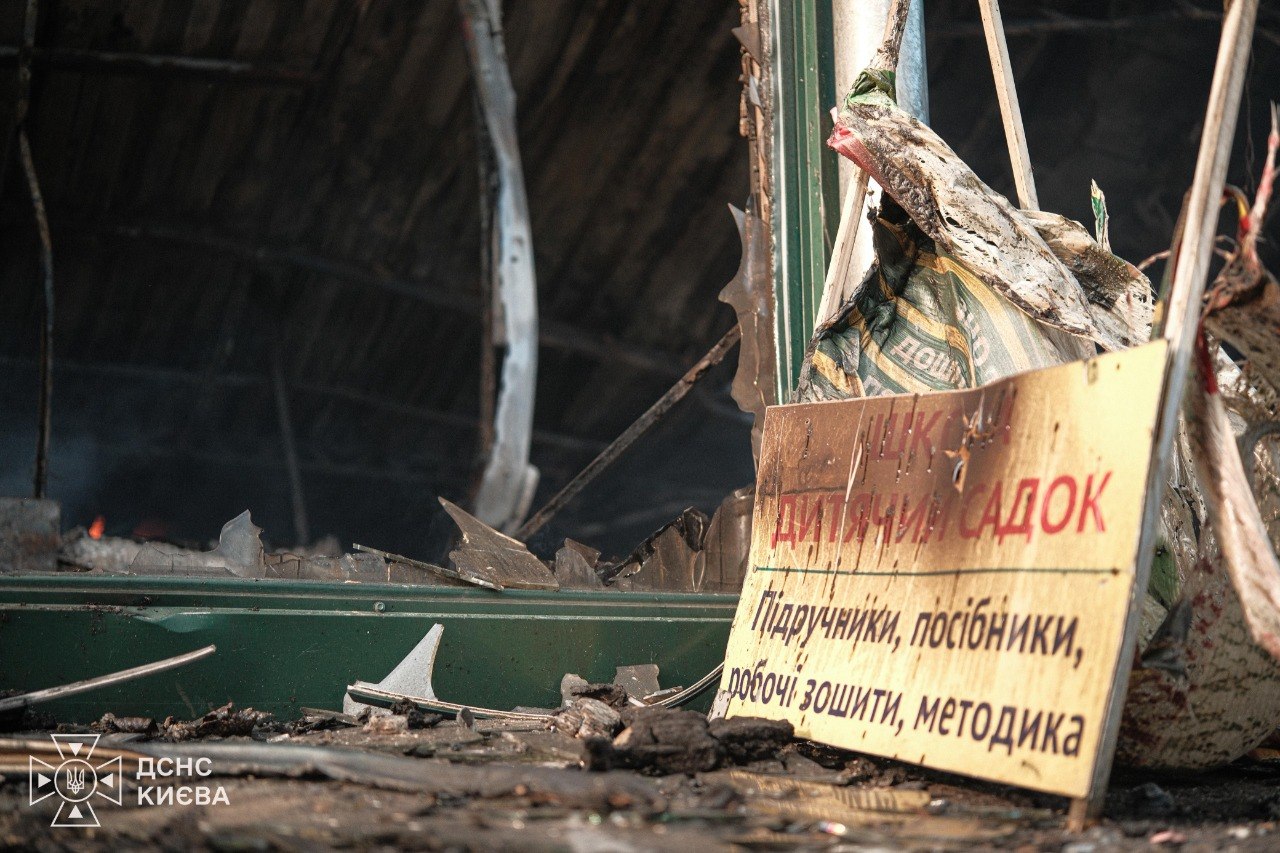
According to the Kyiv City Military Administration, Mayor Vitali Klitschko, and the State Emergency Service, Kyiv was attacked by ballistic missiles on the night of August 15-16; fires broke out in the Obolon and Holosiiv districts, and by morning, at least three injuries were reported. The most noticeable visual result was a large fire at the "Petrovka" market, now more commonly referred to as the book market at Pochaina. The State Emergency Service reported that the fire destroyed several rows of trading pavilions and goods. Ukrainian Pravda, RBC Ukraine, and Kyiv Post provide the same details: the market burned for a long time, firefighters were hindered by a large amount of flammable materials and repeated air raid alerts.
This is not just a "commercial site." For Kyiv, the book Petrovka has been almost a post-Soviet institution since the 1990s: a place where textbooks, rare editions, old magazines, pirated discs, then legal translations, and children's books were bought. In a military sense, such a target is insignificant. In a political sense, it is convenient: a hit on it immediately turns into a frame showing that the war has reached the everyday memory of the city. Russian propaganda can talk as much as it wants about "military objects," but the burned sign with textbooks explains the nature of the strike better than any briefing.
The Industrial Cost of the Strike on Kryvyi Rih
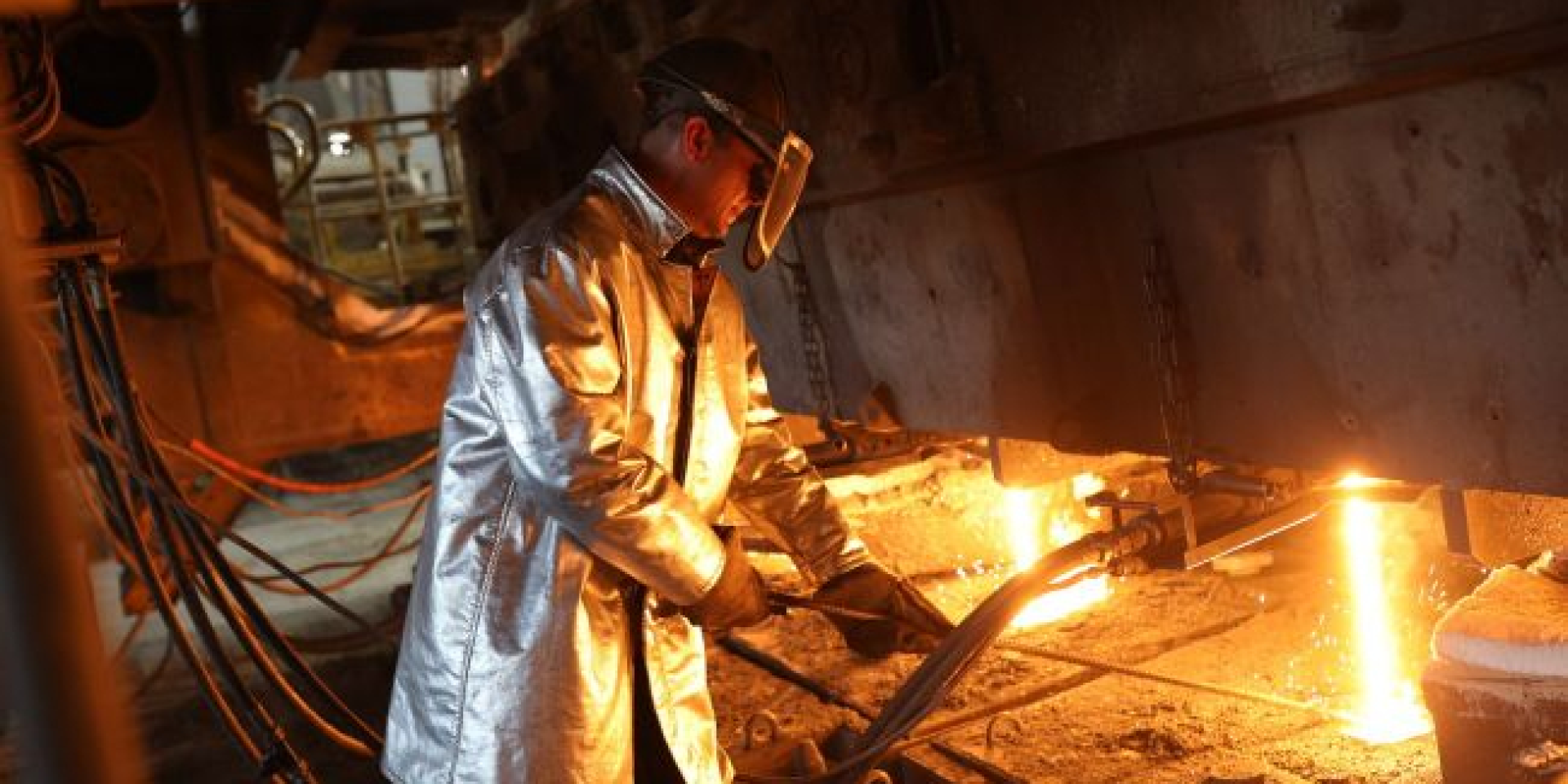
In Kryvyi Rih, the logic is different but no less important. ArcelorMittal reported that the Russian missile strike on the mining and metallurgical enterprise killed two people and injured 13 workers and contractors. Key facilities of the energy and blast furnace systems were damaged, and part of the production processes was halted; specialists are only assessing the repair timelines. Kyiv Post emphasizes that this concerns civilian industrial infrastructure; NV reminds that the plant had already been hit by a Russian missile in 2022, when a rolling mill was destroyed and a worker was killed.
For Ukraine, Kryvorizhstal in its current form is not just metallurgy in the narrow sense. It represents export revenue, a tax base, employment in the city, raw materials for infrastructure repair, and a symbol that the country's heavy industry has not yet been completely reduced to a war economy. After three and a half years of war, Ukrainian metallurgy operates under conditions of constant electricity shortages, logistical constraints, and personnel exhaustion. Therefore, a strike on the energy and blast furnace systems does not necessarily have to destroy the plant to be effective. It is enough to force it to halt production, spend money on repairs, keep people in shelters, and increase insurance premiums on everything related to Ukrainian metal.
Here, an important difference arises between a "military target" and a "target of war." The Soviet school of operational art always understood industry as part of the enemy's military potential. But in 2026, the Russian application of this logic became coarser: instead of attempting to paralyze a specific defense plant, the strike is aimed at a civilian industrial giant because it supports the overall resilience of the state. This is no longer surgery but taxation through destruction.
Retribution as Structure, Not Emotion
The British Telegraph called these strikes "revenge" after Ukrainian attacks on August 15 on the Samara Rocket and Space Center "Progress" and the Savasleyka airfield, where the MiG-31K — carriers of the "Kinzhal" — are based. I have already written about this connection separately, so there is no need to repeat all the details. What is important is this: after the strike of the Ukrainian missile "Flamingo" at a depth of about 700–900 kilometers, the Russian response came not only against targets that could at least formally be linked to the Ukrainian military machine. It came against the book market and the metallurgical enterprise.
This is how the cycle of retribution works, where both sides increasingly consider the enemy's depth a legitimate space for strikes. Ukraine strikes at airfields, the space industry, oil refining, and warehouses, trying to break the long arm of the Russian army. Russia responds by hitting cities, energy, industry, and civilian nodes, trying to prove that any Ukrainian ability to strike at the Russian rear will be paid for by Ukrainian society. In the old Russian formula, this would be called "coercion to cease escalation." In reality, it has long become coercion to live in constant escalation.
The most unpleasant thing here is not the word "revenge," but that it is too emotional and therefore masks the rationality of the process. The Kremlin is not just angry about the strike on "Progress" or Savasleyka. It is forming a rule: if a Ukrainian long-range missile touches the Russian strategic rear, a Russian ballistic missile touches the Ukrainian urban fabric. This rule is not written in doctrine, but in practice, it is already in effect. And the more targets are included in this exchange, the fewer prohibitions remain.
Humanitarian Statistics Become Background
Against this backdrop, the UN figure of 1,396 dead and injured Ukrainian civilians for the first half of 2026 — the worst half-year since April 2022 — ceases to be a separate humanitarian line. It becomes a statistical description of the method. Each specific attack is then discussed as a separate episode: three injured in Kyiv, two dead and 13 injured at ArcelorMittal, another dead in Sumy, fires in various districts. But the sum of these episodes shows that the Russian long-range campaign increasingly blurs the line between military infrastructure and social resilience.
From a military point of view, this gives Moscow a short-term effect. Ukraine is forced to distribute air defense between the capital, industrial cities, ports, energy, and frontline areas; each ballistic missile again raises the question of Patriot and European interceptors. From a political point of view, the effect is more complex. A strike on metallurgy indeed hits the economy. A strike on the book market changes almost nothing in the Ukrainian military machine, but it strongly reinforces the Ukrainian argument that negotiations with the current logic of Moscow will be negotiations under the fire alarm.
My forecast is cautious. Russia will continue to combine symbolic and economic targets, especially after painful Ukrainian strikes on its strategic rear. Ukraine, in turn, will expand its own long-range campaign because it has no other cheap way to compensate for the deficit of aviation and interceptors. Therefore, the main question in the coming months is not whether there will be a new round of retribution. There will be. The question is whether Ukraine can maintain industrial output and urban everyday life faster than Russia turns them into regular targets.
Sources: Kyiv Post, August 16; Ukrainian Pravda, August 16; NV, August 16; RBC Ukraine, August 16; France 24, August 16; Telegraph, August 16; data from the State Emergency Service of Kyiv and statements from ArcelorMittal Kryvyi Rih.
Russian Armed Forces conducted missile strikes on civilian infrastructure in Kyiv and Kryvyi Rih on August 15-16, 2026, resulting in 2 deaths and 13 injuries. The strikes targeted the book market in Kyiv and the ArcelorMittal plant, causing significant damage. This action reflects a strategy of targeting civilian sites to undermine societal stability and retaliate against Ukrainian military actions.
- Russian missile strikes targeted the book market in Kyiv and ArcelorMittal in Kryvyi Rih.
- The strikes resulted in 2 deaths and 13 injuries at ArcelorMittal.
- The book market has historical significance in Kyiv and was heavily damaged.
- The attacks are seen as part of a broader strategy of targeting civilian infrastructure.
- The strikes occurred in response to Ukrainian attacks on Russian military sites.