
The Challenge of 32 HIMARS Live Fire Exercises on Taiwan's West Coast for Japan's Southwest Defense in 2026
 Tanaka Takashi
The Challenge of 2026 Presented by Taiwan's HIMARS Live-Fire Exercise of 32 Rounds on the West Coast for Japan's Southwest Defense
The rockets launched from the mouth of the Dajia River headed towards the surface of the Taiwan Strait. On June 10, the Taiwan Army's 58th Artillery Command reportedly deployed the M142 HIMARS for live-fire exercises on the west coast of Taichung for the first time, firing 32 out of a planned 36 rounds. While the four misfires may seem like a minor note, to the author, they appear as a number that would only be revealed in practical training, rather than in a mere demonstration.
The Significance of Firing on the West Coast
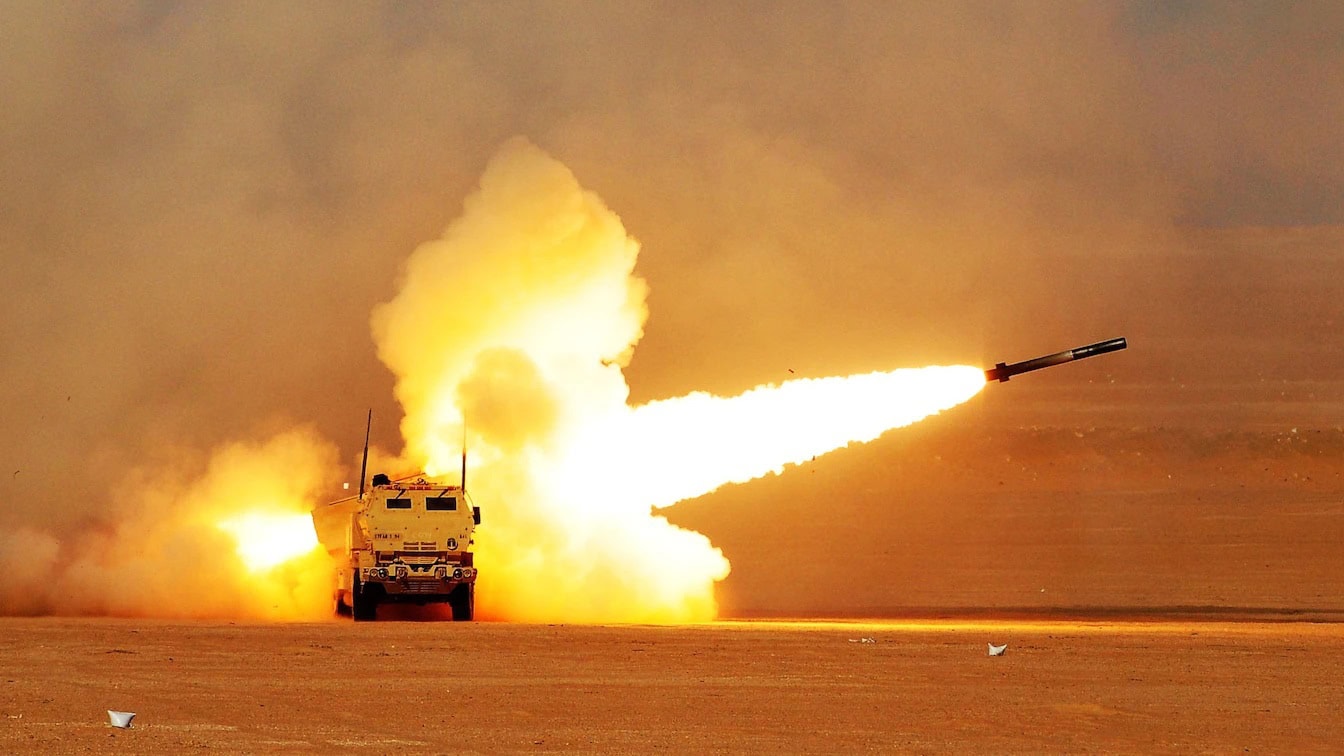
According to the Associated Press and Taipei Times, the exercise assumed a Chinese military landing and fired towards the Taiwan Strait from near the mouth of the Dajia River. Taiwan had already conducted test firings of HIMARS on the east coast, but live-firing on the west coast, facing the Chinese mainland, has a different character. This is not merely a display of firepower; it is a training exercise to measure how quickly mobile firepower can be deployed, fired, and withdrawn against landing sites such as mudflats and sandy beaches.
The standard range of HIMARS rockets is generally described as around 80 kilometers, and with ATACMS, it can reach up to 300 kilometers. It has been reported that Taiwan used training M28 series short-range munitions this time, with the impact area approximately 9 kilometers offshore. Therefore, interpreting this exercise as a demonstration of the ability to immediately attack Fujian Province is simplistic. The important point is not the range itself, but the fact that they actually managed fire control, movement, communication, and ammunition handling in front of the strait.
The First Island Chain for Japan
This movement is not unrelated to Japan's southwest defense. USNI News reported that in late June, during Valiant Shield 2026 and Resolute Dragon 26, U.S. military Typhon missile systems and HIMARS would be deployed around Kanoya Air Base and participate in integrated anti-ship training in the air and sea areas around Amami Oshima. According to Japanese announcements, the training will involve the southwestern islands, Kyushu, Okinawa, Miyako, Ishigaki, and Yonaguni.
The HIMARS on Taiwan's west coast and the HIMARS and Typhon around Kanoya and Amami are separate news items. However, they draw the same line on the map. The concept is to disperse mobile anti-ship and ground firepower along the first island chain connecting the Taiwan Strait, Miyako Strait, Bashi Channel, and Luzon Strait, preventing the opponent's fleet and landing forces from having a "safe approach route."
Discrepancy Between Capability and Intent
China's capabilities are expanding through a combination of aircraft carriers, rocket forces, maritime police, and militia vessels. The U.S. intelligence community's 2026 threat assessment pointed out that since Prime Minister Takagi's remarks in November 2025, China has intensified multi-domain pressure on Japan and may increase military and maritime police activities around the Senkaku Islands. The issue here is not to pin down China's intentions to a single point. With increased capabilities, the cold reality is that options have expanded from peacetime intimidation to wartime blockade.
The HIMARS in Taiwan adds a small friction to that choice. Firepower that briefly shows itself to fire at landing fleets, port accumulations, command posts, and bridges, and then quickly moves away, requires the PLA to enhance its reconnaissance, electronic warfare, and counter-battery capabilities. However, at the same time, Taiwan must also maintain post-launch resupply, reserve positions, communication security, and maintenance units. The practical weight lies not in the fact that 32 rounds were fired, but in how effectively the reasons for the four rounds not being fired can be systematically addressed.
Practical Challenges for the Japan-U.S. Alliance
For Japan, the focus is not on political declarations regarding Taiwan, but on whether it can safely operate the same type of mobile firepower in the southwestern islands. HIMARS and Typhon are not combat-effective with just the launchers. Transport ships, landing craft, air transport, fuel, ammunition storage, coordination with civilian ports, and explanations to island residents will be necessary. The Japan Maritime Self-Defense Force's SLOC (Sea Lines of Communication) protection is no longer just a mission for escort ships; it is believed to have entered a stage where it must be redesigned based on land firepower and air superiority.
The same pattern can be seen in the Philippines-China relationship. On June 12, the Associated Press reported that the Philippines criticized China's sanctions against Defense Secretary Teodoro as "unfriendly acts." Teodoro has been advancing visiting forces agreements with the U.S., Japan, France, Canada, and New Zealand. The era of treating Taiwan, southwestern Japan, and the Philippines separately is coming to an end.
Sources
- Associated Press, Taiwan fires rockets in China direction from US-supplied mobile launching system, 10 June 2026.
- Taipei Times, HIMARS fired off west coast in live-fire drill, 11 June 2026.
- USNI News, Japan Announces 2 Major Western Pacific Exercises with U.S., 25 May 2026.
- U.S. Intelligence Community, 2026 Annual Threat Assessment, March 2026.
- Associated Press, Philippines protests China sanctions against defense chief, 12 June 2026.
In the author's view, the core of this issue is not that Taiwan has "become stronger." It lies in the fact that each point along the first island chain, while using the same U.S.-made mobile firepower, has separate political decisions, separate supply lines, and separate domestic public opinions. The weakness of deterrence is not the number of launchers, but who decides how, in what order, and to what extent to use that dispersed firepower in the hours of crisis.
Taiwan Army's 58th Artillery Command conducted a live-fire exercise on June 10, 2026, firing 32 rockets from the M142 HIMARS towards the Taiwan Strait. This exercise aimed to simulate a response to potential Chinese military actions, marking the first use of HIMARS in a live-fire scenario on Taiwan's west coast. The rockets were fired from the Dajia River area, demonstrating Taiwan's artillery capabilities in a strategic context.
- Taiwan fired 32 out of 36 planned rockets during a live-fire exercise.
- The exercise was conducted to simulate a response to a potential Chinese invasion.
- The HIMARS system was used for the first time in a live-fire scenario on the west coast of Taiwan.
- The exercise involved shooting towards the Taiwan Strait from the Dajia River area.