
The Day UFS26 Eulji Freedom Shield Begins: What North Korea's Silence Indicates
 Tanaka Takashi
The Day UFS26 Ulchi Freedom Shield Begins: What North Korea's Silence Indicates
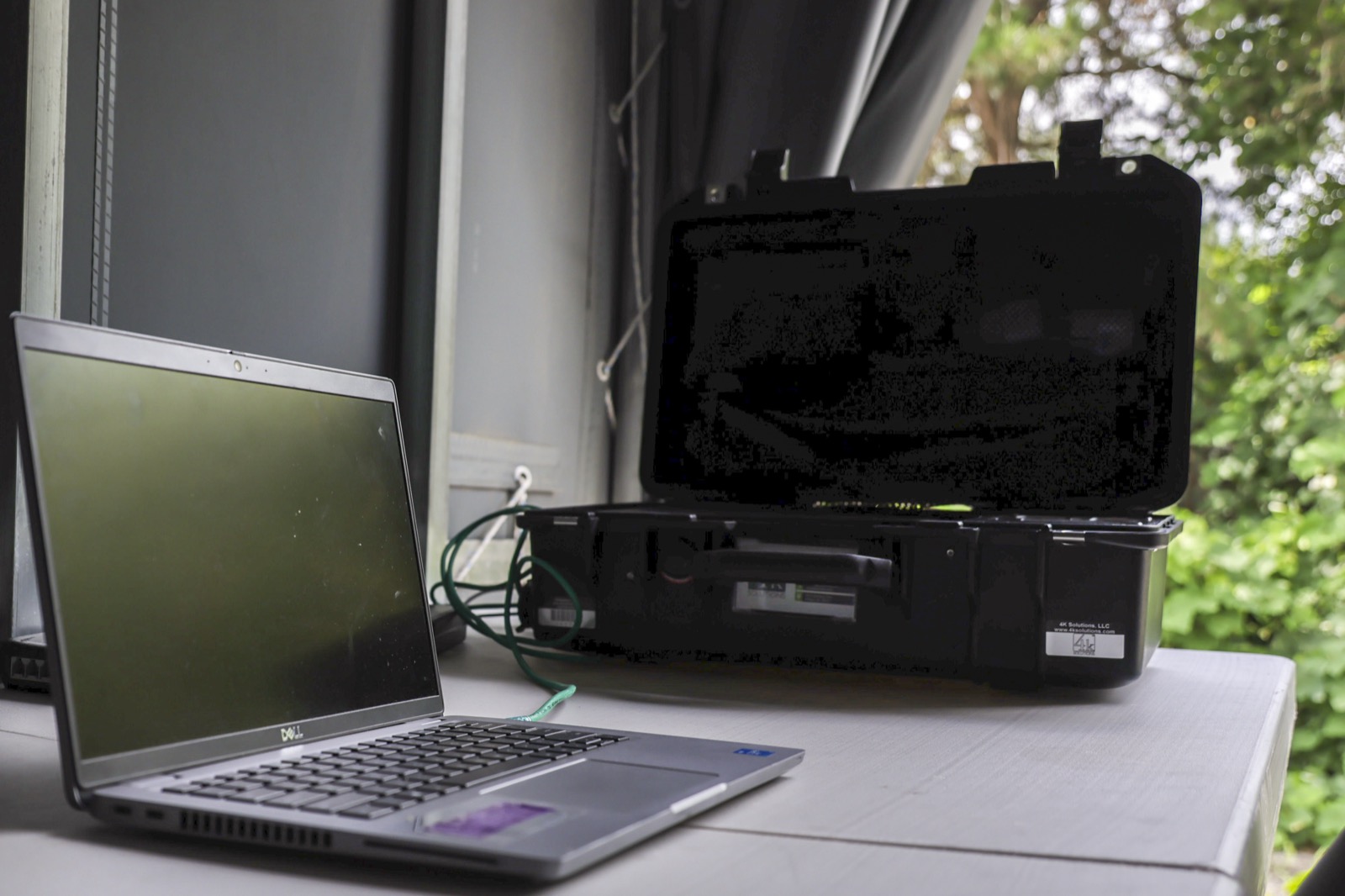
A terminal placed in front of communication equipment at Osan Air Base tells a lot about this year's Ulchi Freedom Shield. Starting on August 17, UFS26 is not an exercise measured solely by the number of tanks and infantry. The South Korea-U.S. Combined Forces will deploy approximately 18,000 South Korean troops over 11 days until the 27th, focusing on training to handle anti-drone operations, GPS jamming, and cyberattacks on the same operational map.
The Focus on the Opening Day Lies in the Silence After the Launch
As discussed in the preview article on August 11, UFS26 is the first large-scale exercise restructured based on the lessons learned by North Korea from the Ukraine war. However, what to observe on the opening day is not the scale of the exercise itself, but what Pyongyang did not say after launching missiles.
North Korea launched short-range ballistic missiles from the vicinity of Wonsan on August 6 and fired another ballistic missile from the same area on the 12th. According to the South Korean military, the latter flew over 700 kilometers, and Japan believes it fell outside its exclusive economic zone. The South Korea-U.S.-Japan alliance detected these launches from the early stages, and foreign affairs authorities confirmed through telephone consultations that they violated Security Council resolutions.
Silence as a Cheap Ambiguity
As The Diplomat pointed out on the 13th, North Korean state media has not disclosed any information regarding the two launches, including their type, purpose, or success. When Pyongyang wants to showcase achievements, it usually releases photos and scenes of Kim Jong-un's leadership by the next day. This time, silence continues. While there is a possibility of concealing a failure, that alone is not sufficient.
Reports indicate that the launch on August 6 exhibited flight characteristics different from a typical ballistic trajectory, suggesting it could have been an evaluation test of a short-range hypersonic glider or a derivative of the KN23 series. If it is a weapon still under development that they do not want to reveal, then silence is not a failure but a matter of secrecy. Conversely, if they do not disclose the type, the South Korea-U.S.-Japan intercept planners will have to assume multiple threats simultaneously.
The Alliance is Tested After Detection
On the 14th, the North Korean Foreign Ministry referred to the South Korea-U.S. exercises as a "new level of threat" and warned that they would respond with "new levels of deterrence." It is believed that North Korean soldiers have learned about drones, electronic warfare, and artillery coordination on the battlefield in Russia. The anti-drone, GPS, and cyber subjects of UFS26 are not mere decorations. In my view, the focus is not on "whether we can detect the launch," but on who makes the first judgment after communication is disrupted.
There are also temperature differences within South Korea. The Yoon Suk-yeol administration has experienced friction in exercise operations with the U.S. military command and has been exploring the partial restoration of inter-Korean military agreements. Pyongyang is observing this political leeway. While there is a high possibility of additional launches or a hardline statement under Kim Yo-jong's name after the opening, this time, the finer indicator will be "whether they will explain after firing" rather than "whether they will fire."
During the Cold War, the Japan Maritime Self-Defense Force placed greater importance on the positioning when an opponent's submarine stopped transmitting signals than when it was actively transmitting. The same is happening on the Korean Peninsula. What resonates most on the opening day of UFS26 is not the sound of missile explosions, but the silence that Pyongyang has yet to explain.
The U.S.-South Korea joint military exercise UFS26, involving 18,000 South Korean troops, is set to take place from August 17 to 27, 2023, focusing on anti-drone and cyber warfare capabilities. North Korea launched short-range ballistic missiles on August 6 and 12, 2023, but has not publicly commented on these launches, suggesting possible secrecy regarding their missile capabilities. The North Korean Foreign Ministry has warned that the joint exercise represents a new level of threat.
- UFS26 exercise involves 18,000 South Korean troops from August 17 to 27, 2023.
- North Korea launched short-range ballistic missiles on August 6 and 12, 2023.
- North Korea's state media did not report on the missile launches, indicating possible secrecy or failure.
- The U.S.-South Korea joint exercise focuses on anti-drone and cyber warfare capabilities.
- North Korea's Foreign Ministry warned of a new level of threat in response to the UFS26 exercise.