
George Washington Carrier Leaves Pacific Because Lincoln Is Out of Time
 Marcus Chen
George Washington Carrier Leaves Pacific Because Lincoln Is Out of Time
More than 260 days into USS Abraham Lincoln's deployment, the U.S. Navy is sending USS George Washington west from the Pacific to relieve it in the Middle East. That is the useful number. Not the talking-point number, not the press-release number. Two hundred and sixty days is long enough for a carrier crew to stop being a force package and start becoming the warning light on the dashboard.
AP reported on August 13 that George Washington had left Da Nang, Vietnam, and that the carrier, a cruiser, and a destroyer were later seen crossing the Singapore Strait. A Navy official confirmed the ship was in the Strait of Malacca, the gate between the Pacific and Indian oceans. USNI News put the same move in plainer Navy terms: George Washington is heading west, while Lincoln's deployment nears nine months.
The Route Matters
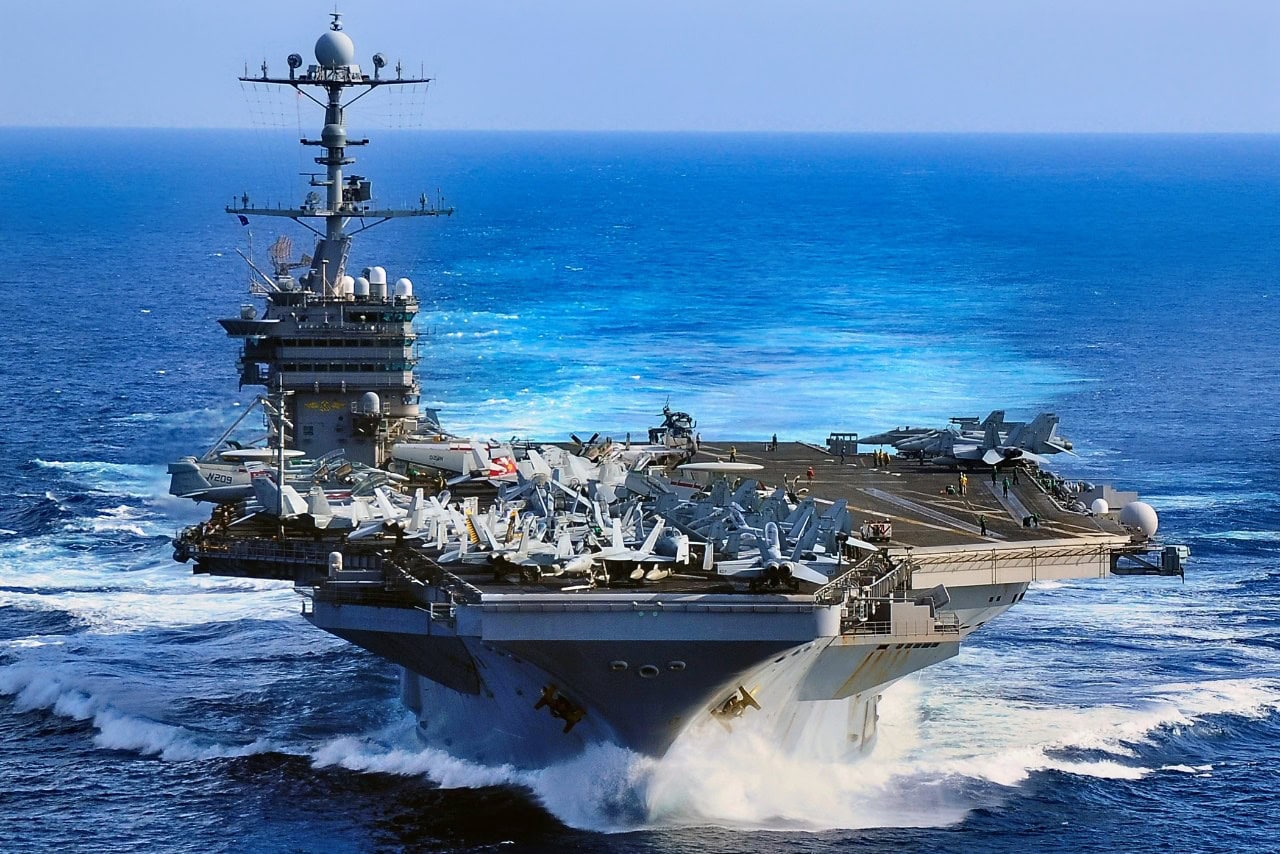
George Washington is not just another flattop. It is the forward-deployed carrier normally based at Yokosuka, Japan, the centerpiece of Carrier Strike Group 5. When Washington sends a carrier from San Diego or Norfolk, that is a deployment decision. When it pulls the Yokosuka carrier out of the western Pacific, that is a theater trade.
The transit itself tells the story. Da Nang to Singapore Strait to Malacca to the Indian Ocean is the route out of the first island chain and toward U.S. Central Command. It moves aviation, escorts, logistics demand, and command attention away from the theater where U.S. planning still assumes China is the pacing problem. AP noted that the move would leave the Pacific without a U.S. carrier presence for an unknown period. That sentence should bother people in Honolulu, Tokyo, Canberra, Manila, and Taipei.
Al Jazeera's August 15 headline was straightforward: a U.S. aircraft carrier was expected to relieve Lincoln in the Middle East. CBS carried the same basic account. Forbes framed it more pointedly, calling George Washington a forward-deployed carrier heading to the Middle East. The common fact across those reports is simple. The Navy is not rotating from abundance. It is shifting the least replaceable asset it has.
Lincoln Is the Warning Light
Lincoln deployed from San Diego on November 21 and reached the Middle East in January, ahead of the U.S. war against Iran that began on February 28. AP reported that the carrier has spent more than 240 uninterrupted days at sea and more than 260 days overall. U.S. Central Command said the Lincoln strike group had logged more than 10,000 aircraft flights and expended 1.5 million pounds of ordnance.
Those are impressive numbers until you remember that ships are not spreadsheets. Anyone who has served on a destroyer knows what a long deployment does before it breaks anything visible. Sleep gets thinner. Maintenance gets deferred in smaller and smaller increments. Mail becomes morale. A missing hygiene item becomes a leadership problem because it is one more signal that the ship is no longer inside a normal support rhythm.
The Navy has conceded part of the supply problem. It said the Iran conflict created a highly contested environment in which traditional Middle East supply hubs were disrupted by combat actions. The result, according to the Navy statement cited by AP, was shortages and lost mail aboard Lincoln. Leadership prioritized mission-critical supplies first: food, then hygiene items, then mail. That order is operationally rational. It is also a brutal description of life aboard a $13 billion nuclear carrier after eight-plus months at sea.
The mental-health dispute is harder to measure from outside, and the Navy is pushing back. Officials say they have not observed an increase in suicidal ideation or attempts aboard the ship, while declining to release data for privacy and operational-security reasons. AP also reported that a sailor went overboard in early August, was recovered, treated by the ship's medical department, and transferred off the ship for follow-on care. The official would not say whether it was being considered a suicide attempt.
The Middle East Is Eating the Schedule
The carrier swap is not happening in a calm region. The U.S. war with Iran is still shaping naval operations around the Strait of Hormuz. Even after renewed hostilities cooled in recent weeks, the Navy reimposed a blockade on Iranian ports, and Defense Secretary Pete Hegseth said the United States could maintain the blockade indefinitely. Indefinitely is not a plan. It is a claim made against a finite fleet.
That is why the rotation has tactical and operational value. Lincoln cannot stay forever. George Washington can keep a carrier air wing in the Central Command fight while Lincoln exits the line, resets its crew, and starts the long work of restoring a ship after a punishing deployment. The danger is the handoff window. During any carrier relief in place, commanders are balancing fuel, escort geometry, air tasking, and regional signaling. Iran will see the movement. So will China.
AP reported that Lincoln was one of two carriers then stationed in the Middle East. If George Washington replaces Lincoln, the regional count may stay steady on paper. The Pacific count does not. A carrier spreadsheet can make that look balanced. A map does not.
The Pacific Pays the Bill
The United States has spent years telling allies that Indo-Pacific deterrence is the main effort. Yet the newest carrier decision says the Middle East still has the power to raid the Pacific bench. That is not hypocrisy. It is force-structure math.
A Nimitz-class carrier is not a patrol aircraft that can be re-tasked overnight. It brings roughly 5,000 sailors, an embarked air wing, escorts, ammunition demand, replenishment cycles, and a maintenance tail. When one carrier is stretched toward nine months and another is pulled from Japan to replace it, the problem is not just the Iran war. The problem is that the U.S. Navy's carrier force is being asked to provide permanent presence in too many places with too little margin.
This links directly to the shipbuilding crisis without repeating it. The White House can issue memoranda about foreign-built warships and carrier catapults. Those are industrial symptoms. George Washington's westbound transit is the operational symptom. The fleet does not have enough rested, ready hulls to cover the Middle East and keep a carrier in the western Pacific when a war drags on.
The Carrier Gap Is Now Visible
The immediate decision is defensible. Lincoln needs relief, and George Washington is the available answer. But the larger conclusion is uncomfortable: America's carrier force is no longer large enough to make every theater promise true at the same time.
For Taiwan contingencies, South China Sea crises, or a sudden Korean Peninsula flare-up, the question is not whether the United States owns carriers. It does. The question is where the ready carrier is on the day the crisis starts. This week, the answer moved west through Malacca.
That is the bill. Washington can call China the pacing threat, Iran the active war, and the western Pacific the priority. The deck schedule will not salute. Lincoln is tired, George Washington is leaving Asia, and the U.S. Navy is showing allies exactly how thin the line has become.
USS George Washington is relieving USS Abraham Lincoln in the Middle East after Lincoln's extended deployment of over 260 days. The carrier's movement from Da Nang through the Singapore Strait to the Indian Ocean highlights the U.S. Navy's ongoing operational challenges in balancing presence across multiple theaters. This shift occurs amid heightened tensions with Iran and reflects the strain on U.S. naval resources.
- USS George Washington is deployed to relieve USS Abraham Lincoln in the Middle East.
- USS Abraham Lincoln has been deployed for over 260 days.
- The carrier swap occurs amid ongoing tensions in the Middle East, particularly with Iran.
- The U.S. Navy is facing challenges in maintaining carrier presence in both the Pacific and Middle East.
- The deployment of USS George Washington indicates a shift in U.S. naval strategy.