
Israel kills 11 in southern Lebanon, including 3 children, pushing June agreement to the brink of collapse
 Ahmed Al-Rashid
Israel Kills 11 in Southern Lebanon, Including 3 Children, and Pushes June Agreement to the Brink of Collapse
On the morning of August 15, the phrase "fragile ceasefire" was no longer sufficient to describe what was happening in southern Lebanon. The Lebanese Ministry of Health reported that two Israeli strikes killed at least 11 people, including three children, and injured 19 others in Ansar and Deir Zahani. The Associated Press described it as the most intense strikes since the ceasefire began on June 20, while Al Jazeera provided harsher details about a house in Ansar where seven were killed, followed by a second strike in Deir Zahani that killed four and injured 17.
The Strike that Broke the Language of Agreement
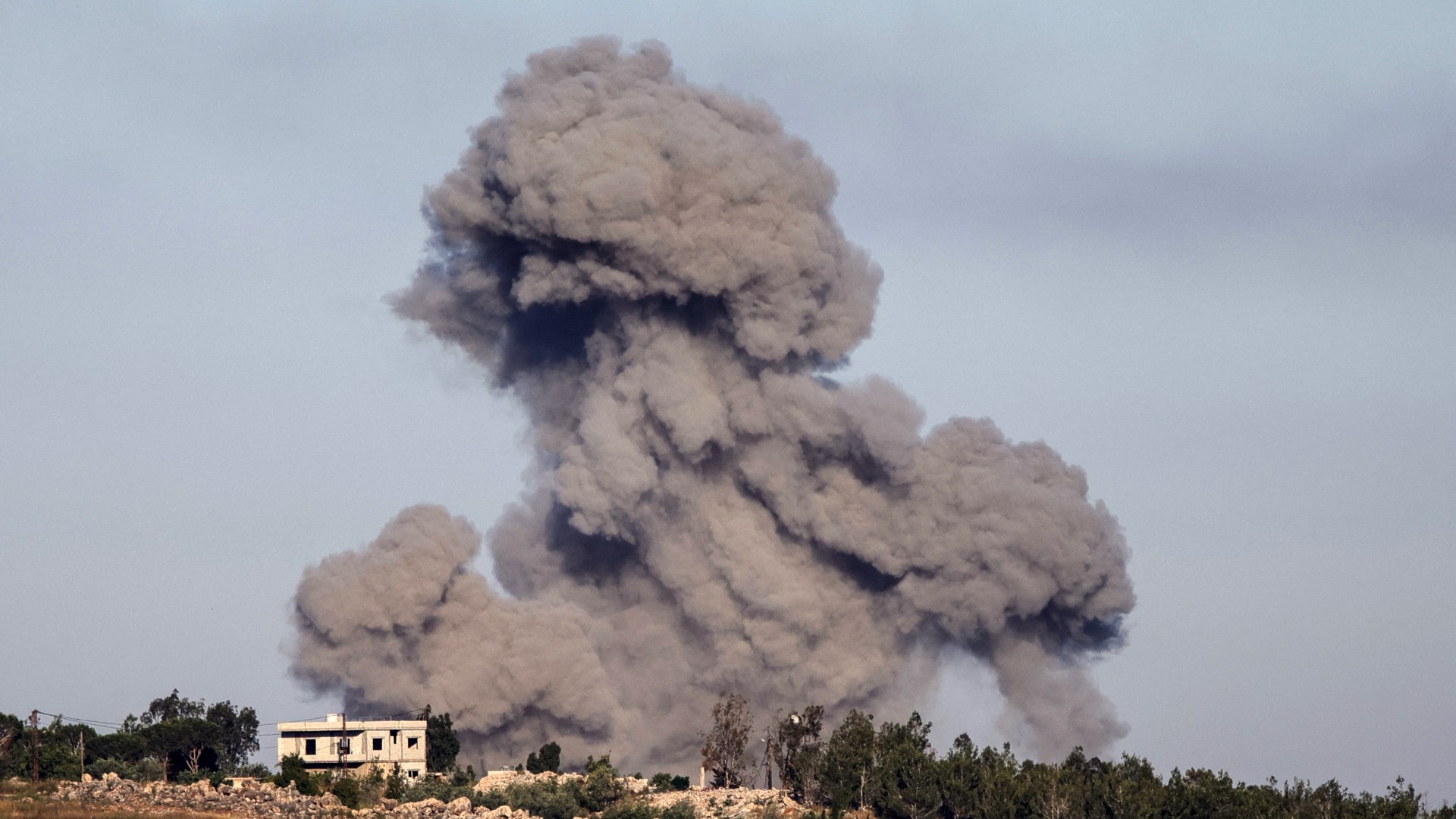
The Israeli army stated that it targeted Hezbollah infrastructure in the Nabatieh and Ansar areas in response to an action against its soldiers on Hill Ali al-Taher, later stating that the strike killed Ali Samir al-Haj Hassan, whom it described as a battalion commander in the Radwan force. Benjamin Netanyahu's office mentioned that three Israeli soldiers were seriously injured inside Lebanon. This is the usual Israeli narrative in the south: a military target first, then an acknowledgment that a family or civilians were present after the bodies are pulled from the rubble.
However, Lebanese Prime Minister Nawaf Salam responded with a statement that must be read militarily before it is read politically. He said that the dead in Ansar "are not military infrastructure" and that women and children are not military targets. President Joseph Aoun described the strikes as repeated violations of the framework agreement, the coordination mechanism, and international law, seeing them as a clear message to the negotiation process and to the American effort. In military language, when every village becomes potential "infrastructure," the agreement is no longer a control mechanism but a justification paper.
From Framework Agreement to Open Security Zone
The June agreement was not peace. It was a functional arrangement based on three ideas: the gradual disarmament of Hezbollah, an Israeli withdrawal from the south, and the deployment of the Lebanese army in experimental areas. Practically, this formula only succeeds if each party agrees to reduce its weapons and movement simultaneously. Israel wants Hezbollah disarmed before withdrawal. Hezbollah refuses to hand over its weapons while Israeli aircraft strike and the Israeli army maintains positions inside Lebanon. The Lebanese government is required to implement a clause for which it does not have full tools and bears a security responsibility it does not fully control.
This is why the strikes on August 15 seem more dangerous than just the death toll alone. The Lebanese National News Agency reported a series of strikes on Hill Ali al-Taher and a strike that reached a geographical depth not targeted since the ceasefire two months ago. Israeli Defense Minister Israel Katz said days ago that Israel would not withdraw as long as Hezbollah is armed, and Al Jazeera reported that he spoke of Israeli control over about 700 square kilometers, or nearly 7 percent of Lebanon's area. If this figure is correct, we are not talking about "border friction" but about redefining the south as an open Israeli security zone.
Hezbollah Between Response and Test
Hezbollah pledged a "suitable response" and called on the Lebanese state to stop what it called the humiliating direct negotiation process and rely on American mediation. This phrase, "suitable response," is intentionally vague. The party does not want to appear powerless in front of its audience after the killing of children and a family linked to a commander in Radwan, but it also knows that a broad response could give Israel a reason to expand the campaign. Any military person who has served in this area knows that calculated responses are sometimes more dangerous than large responses, as they keep both sides within an escalation ladder that no one knows where it ends.
The dilemma here is not only in Hezbollah's decision. The Lebanese army finds itself facing a nearly impossible equation. If it moves against the party's infrastructure as the agreement requires, it will appear to be acting under Israeli pressure. If it does not move, Israel will say that the Lebanese state is incapable and reserves the right to bomb. This is the essence of Lebanese weakness for years: the state is required to have full sovereignty over land where it does not have a monopoly on power, and is required to control Israel without having a real deterrent against Israel.
Lebanon Inside a Wider War
These strikes cannot be separated from the U.S.-Iran war over the Gulf and Hormuz. Since the U.S.-Iran memorandum of understanding in June, southern Lebanon has been the toughest testing ground. Tehran can claim that Hormuz is under its control, and Washington can threaten and negotiate at the same time, but the Lebanese front is different. Here, there is an armed Iranian ally within a beleaguered state, an Israeli army wanting freedom of action, and a Lebanese government trying to sell the idea that the agreement is still in place.
This is what makes August 15 a political blow to the American track as much as it is a military blow in Nabatieh. Washington bet that the ceasefire between Israel and Hezbollah would reduce the pressure of regional war while the files of Iran, Gaza, and Hormuz continue on separate tracks. But maps do not respect this separation. Israel today operates under the pressure of three fronts: Iran in the depth, Gaza in the south, and Lebanon in the north. The more it feels that the diplomatic window is constraining its hand, the more it tends to use force to establish facts on the ground before those constraints turn into commitments.
Children Are Not a Humanitarian Margin
In Arab military analysis, we sometimes fall into a cold error: we calculate distances and munitions and forget that the image of three dead children can change a political equation faster than a tank. The killing of children in Ansar gives Hezbollah material for mobilization that needs no explanation, and puts the Lebanese government in a defensive position before an audience that asks about the value of the agreement if it did not protect a single home. It also puts American mediators before a simple question: does the framework prevent war or organize its continuation at a lower pace?
Practically, if Israel continues to strike north of the Litani or near Nabatieh under the pretext of pursuing Radwan, and if Hezbollah continues to respond in a way that does not break the ceiling but does not stop it, the June agreement will turn into what military personnel call an "administrative contact line" rather than a real ceasefire. The paper will remain, meetings in Rome may continue, and perhaps the eighth round will be held as scheduled. But the people of Deir Zahani and Ansar do not live within the text of the agreement. They live under the planes.
Military Summary
The strike does not necessarily mean a return to full-scale war tomorrow, but it does mean that the brakes of June are weakening rapidly. Israel is testing the limits of the Lebanese response, Hezbollah is testing the limits of Israeli patience, and the Lebanese government is testing the limits of its ability to remain a mediator within its country. In such equations, the agreement does not collapse in a single moment. It collapses house by house, village by village, until everyone discovers that the ceasefire did not die in the political statement, but first died under the rubble.
Israeli airstrikes on August 15 killed 11 people, including 3 children, in southern Lebanon, injuring 19 others. The strikes targeted Hezbollah infrastructure in Ansar and Deir Zahani, marking the most severe violence since the June ceasefire. The Lebanese government condemned the attacks, asserting that civilians are not military targets and calling for adherence to international law.
- Israeli airstrikes killed 11 people, including 3 children, in southern Lebanon.
- 19 others were injured in the strikes.
- The strikes targeted Hezbollah infrastructure in response to attacks on Israeli soldiers.
- Israeli officials reported injuries to 3 Israeli soldiers in Lebanon.
- The Lebanese government condemned the strikes as violations of international law.