
The depletion of 65% of Patriot missiles and 38% of THAAD alters Gulf defense calculations in 2026
 Ahmed Al-Rashid
65% of Patriot Missiles and 38% of THAAD Change Gulf Defense Calculations in 2026
On July 30, 2026, the real news was not that the United States had heavily used Patriot and THAAD in the Iran War, but that estimates from the Center for Strategic and International Studies (CSIS), as reported by Defense News, indicated that nearly 65% of the Patriot stockpile was consumed before the war, and THAAD stocks had decreased by about 38% to between 234 and 278 interceptors. Any military personnel who has served in the region knows that this figure does not pertain to Washington alone. In the Gulf, every American air defense battery is also part of a political and psychological umbrella over bases, ports, and capitals.
Practically speaking, we are facing a harsh lesson for countries that purchased expensive defense systems and then assumed that the American backup stock would remain open when needed. The battery does not fight alone. The radar detects, the command center decides, and the launcher fires, but the interceptor missile is the currency that runs out first. When this currency becomes scarce, the rules of deterrence change even if all screens remain lit in the operations rooms.
The Problem is Not the Number of Batteries but the Depth of the Stockpile
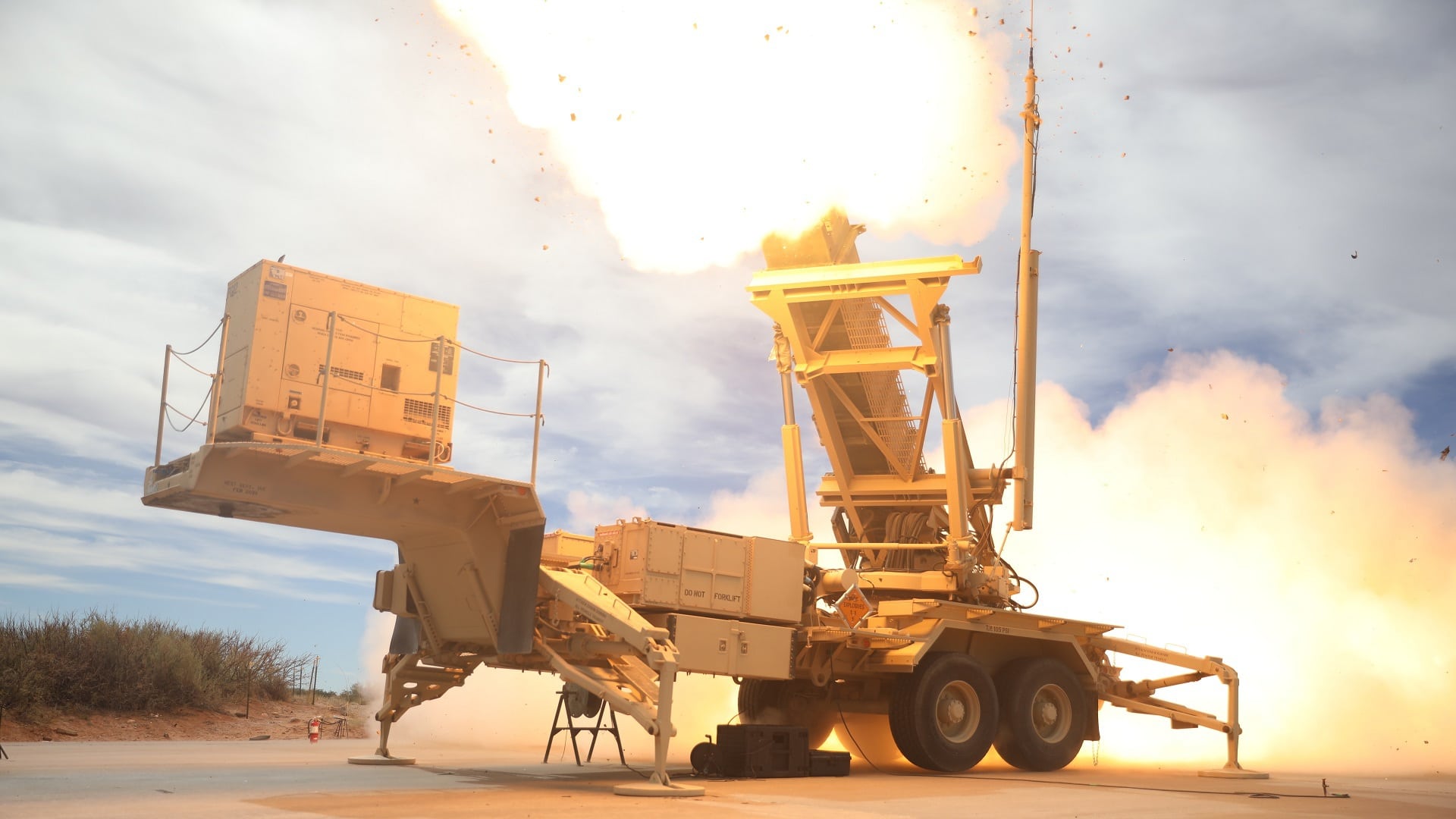
CSIS estimates that the United States has expended a significant amount of PAC-3 and THAAD missiles during Operation Epic Fury and prior interceptions in the Middle East. Defense News noted that the number of remaining Patriot missiles may be less than 1,000. These are not official figures from the Pentagon and should be treated as open-source estimates, but they are sufficient to show the trend of danger: modern air defense fails not only when an enemy missile gets through, but also when the commander is forced to choose what not to intercept.
This point is more important for the Gulf than it seems in Washington. Saudi Arabia, Qatar, the UAE, Kuwait, and Bahrain are not just buyers of Patriot systems or hosts of American systems. They are interconnected theaters of operations. Intercepting a missile barrage on an American base in Qatar can consume the same ammunition needed for an oil port in Eastern Saudi Arabia or a gas facility in Ras Laffan. When stockpiles are deep, risks can be distributed. When they narrow, air defense turns into a harsh sorting process between high-value targets and those left to chance.
Patriot and THAAD are Not the Same Weapon
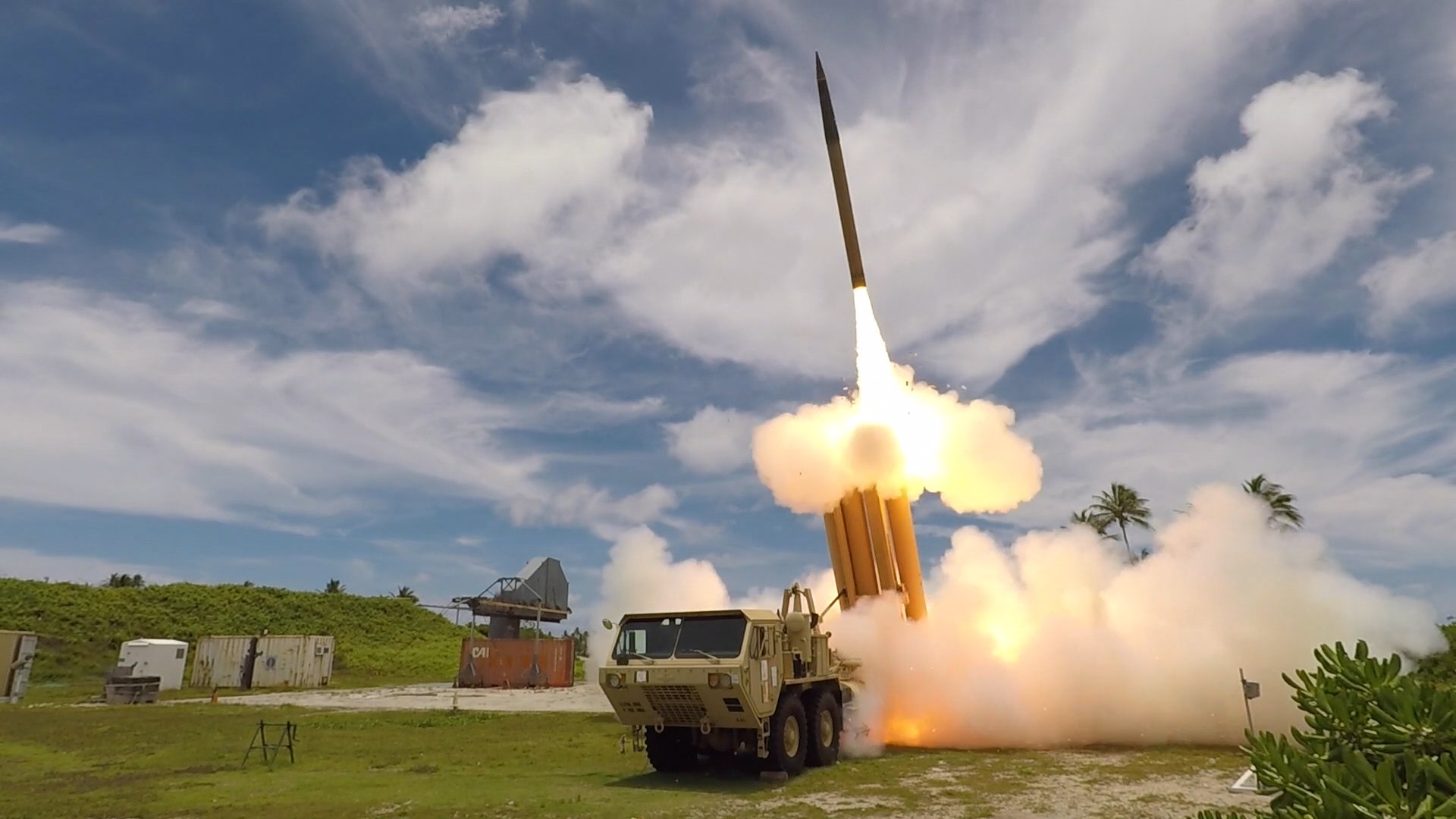
Patriot, especially the PAC-3 MSE, is designed to intercept short- and medium-range ballistic missiles, aircraft, and cruise missiles within close and medium defensive layers. THAAD, on the other hand, is dedicated to intercepting ballistic missiles at higher altitudes and in the terminal phase of their trajectory. Therefore, one cannot simply compensate for the lack of one with the other. If PAC-3 is depleted, THAAD does not become a solution for every drone or cruise missile. If THAAD is reduced, protecting distant and wide targets against ballistic missiles becomes more costly and risky.
Technical numbers reveal the essence of the problem. Patriot is capable of defending a point or a limited area, but it requires a network of radars, command and control, and continuous updates. THAAD provides a useful upper layer against ballistic threats, but it is not a daily system for every low-cost threat. Iran, the Houthis, and their allies have understood this equation for years: launch a cheap drone or a simple missile, and force the adversary to use ammunition that is tens or hundreds of times more expensive. Here, the goal is not always to destroy the target, but to exhaust the resupply schedule.
$58.6 Billion Deal Does Not Solve the 2026 Crisis
The United States announced a long-term contract with Lockheed Martin worth up to $58.6 billion for the production of PAC-3 MSE through fiscal year 2032. On paper, the figure seems reassuring. However, in my view, the financial value here conceals a fundamental weakness: the missile that is contracted today does not appear in the stockpile tomorrow. Experts have mentioned three to five years before the funds turn into ready munitions. This means that the risk window in 2026 and 2027 will not close simply with the announcement of a large contract.
The Gulf has become accustomed to reading American contracts as political messages. When Washington announces new billions for air defense, capitals are reassured that protection is ongoing. But military calculations are colder than politics. If the production line is limited, and if Ukraine, Europe, the Pacific, and the Middle East are all requesting the same type of interception, then money does not eliminate the queue. Sometimes it even lengthens it, as every customer wants to ensure priority delivery.
The Gulf Dilemma Between Buying the System and Owning the Capability
I have always said that military capability is a triangle: equipment, training, and institution. The Patriot and THAAD crisis adds a fourth side that buyers do not like to mention: industrial sustainability. A Gulf state can buy the battery, train the crews, and build a command center, but it does not have full capability if the critical ammunition comes from a distant production line and an American political decision. This is not an insult to anyone; it is the nature of high-tech weaponry when it is not part of a local or regional industrial base.
Saudi Arabia, the UAE, and Qatar have been talking for years about localization and joint manufacturing. However, most of these programs have focused on structures, vehicles, drones, or general maintenance. The harder question is: can the region produce complex interception components, rocket motors, seekers, jamming-resistant electronics, or even critical spare parts at a reliable level? The answer in 2026 remains limited. Without this depth, Gulf air defense will remain strong in the first week, but then the real concern will begin in the second week.
Iran Will Read the Stockpile, Not the Statements
Tehran does not need to know the exact number in the U.S. military's stockpiles to infer the trend. When American research centers publicly discuss a shortage of interceptions, that in itself is a signal. Deterrence is not just about telling the adversary that you are capable of shooting down their missiles. Deterrence is about making the adversary believe that you can do so after the tenth, hundredth, and five-hundredth strike. If they feel that patience and graduated salvos will force you to conserve ammunition, their behavior will change.
This does not mean that Iran has gained freedom of movement. The Patriot and THAAD systems remain dangerous and effective, and U.S. forces in the region still possess air and naval capabilities that make any Iranian calculation a gamble. But the difference is that deterrence becomes less automatic. Instead of a clear umbrella, a conditional umbrella appears: what is the protected target, how many missiles are incoming, how much is left in the stockpile, and are there other crises in Europe or Asia at the same time?
What Gulf Capitals Should Do
The easy answer is to buy more. The better military answer is to change the way of purchasing. First, air defense contracts should be linked to an internally declared ammunition stockpile and annual renewal plans, not just the number of launchers. Second, investment should be made in cheaper layers against drones and cruise missiles, such as guided artillery, electronic warfare, lasers when they mature, and low-cost short-range missiles. A million-dollar missile should not be used against a target that can be disabled by a cheaper means.
Third, Gulf states should consider a shared regional stockpile or an emergency distribution mechanism, even if it remains under careful political oversight. The Iranian threat does not respect customs borders, and air defense should not be treated as a completely closed national file. Fourth, localization should shift from opposition slogans to a specific question: which component in the interception chain can we produce or maintain locally during a crisis? If the answer is not clear, then localization remains a beautiful decoration around an old dependency.
Conclusion
The depletion of 65% of Patriot and 38% of THAAD, if these estimates are accurate, is not just an internal American story. It is a test of Gulf security imagination. The region has built its air security on the assumption that American technology is available, that the American stockpile is deep, and that Washington will prioritize the Gulf in every crisis. The Iran War has shown that technology may work efficiently, but sustainability is what determines the duration of trust.
In the old military adage: do not just ask how many guns you have, but how many rounds you can fire before falling silent. The Gulf today does not face a shortage of shiny systems, but rather the question of the next round. And this is the paradox that will haunt every discussion about defense independence: capitals want to appear less dependent on Washington, but in their most dangerous moments, they need the next American missile before any political statement.
The U.S. has significantly depleted its air defense missile stocks, with less than 1,000 Patriot missiles and 234 to 278 THAAD interceptors remaining as of July 30, 2026. This depletion impacts Gulf defense strategies, as regional nations rely on U.S. systems for protection against threats. The report highlights the challenges of sustainability and the need for Gulf states to reconsider their defense procurement strategies.
- 65% of Patriot missiles and 38% of THAAD interceptors have been consumed before the Iran conflict.
- Remaining Patriot missiles may be less than 1,000.
- THAAD stock is estimated between 234 and 278 interceptors.
- The U.S. has heavily utilized these systems in the Middle East, affecting regional defense calculations.
- The sustainability of air defense systems is questioned due to reliance on U.S. supply chains.