
The depletion of Patriot and THAAD missiles after the Iran war puts the Gulf in a defensive gap until 2029.
 Ahmed Al-Rashid
Depletion of Patriot and THAAD Missiles After the Iran War Leaves the Gulf with a Defensive Gap Until 2029
On May 28, 2026, the problem in the Gulf was not a new Iranian missile, but a cold number that came from Washington: the U.S. stockpile of Patriot and THAAD interceptors consumed in the Iran War will not return to its previous level until after 2029. This figure, published by CSIS and followed by Axios and Defense News, means that Gulf countries, which have become accustomed to treating air defense as an American service available on demand, will enter three difficult years where the interceptor missile itself becomes a rare political commodity.
From a military perspective, this is not an accounting issue. A Patriot or THAAD battery without ready missiles is like a gun without ammunition at the first engagement. An officer can explain to the command that the radar is operational and that the command and control network is connected, but the missile that comes out of the launcher is what determines the moment. Any military personnel who has served in the region knows that the Gulf lacks neither concrete nor air bases nor large procurement contracts, but sometimes it lacks the logistical depth that makes the weapon sustainable after the first week of war.
Numbers That Change Gulf Calculations
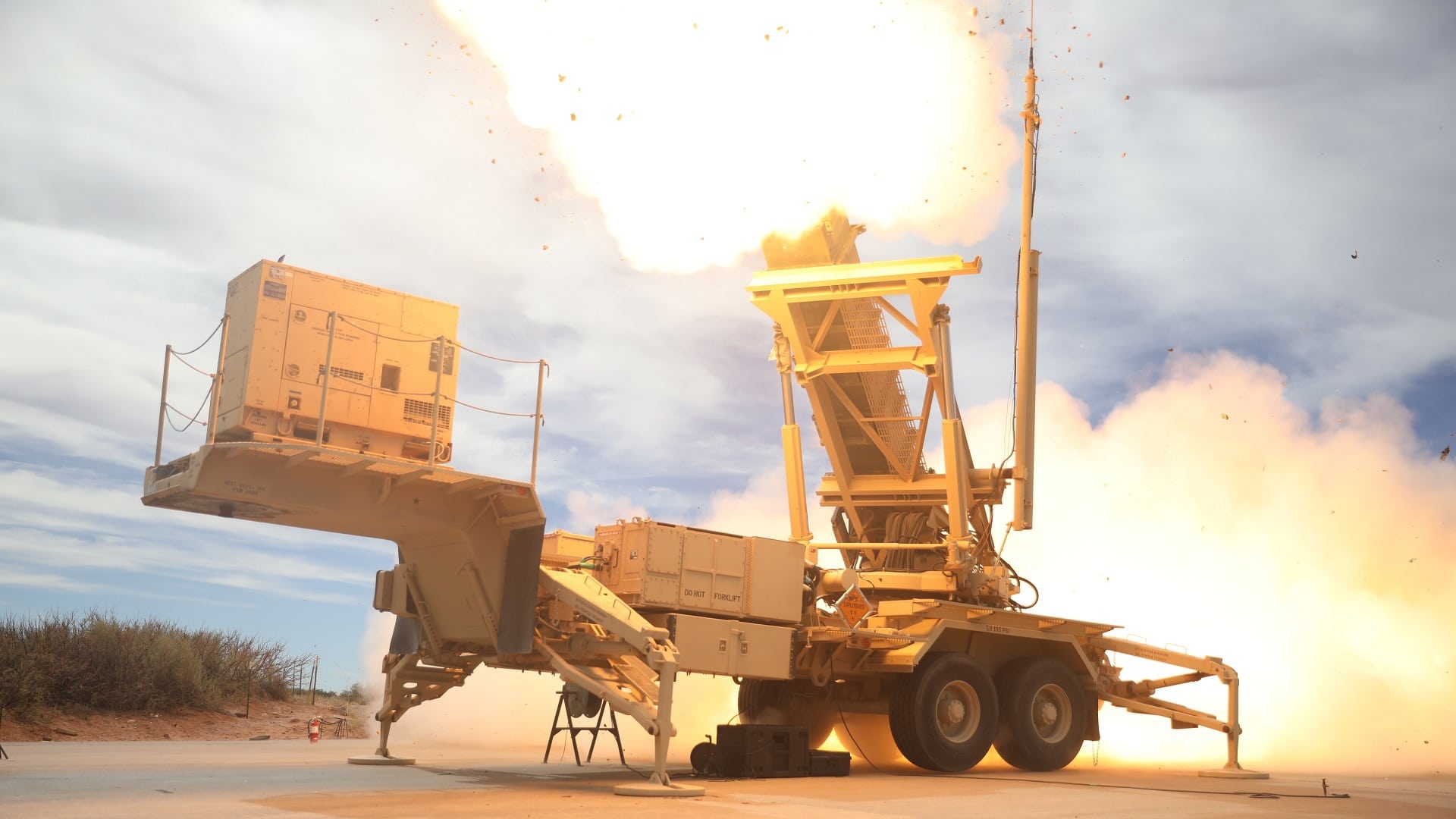
CSIS's estimate released on May 27 states that the 39-day bombing and air defense campaign against Iran depleted key U.S. munitions, including Tomahawk, THAAD, and Patriot. The report estimates that replenishing THAAD usage will not be completed until the end of 2029, and that the large Patriot shipments required in the 2027 budget will not start arriving until May 2029. Axios summarized the issue more clearly: the war in Iran created a multi-year missile defense gap, and munitions are not produced as quickly as they are fired.
Most importantly for the Gulf, CSIS does not speak of a U.S. stockpile separate from the region. The report explicitly states that Saudi Arabia has an old order for 360 THAAD missiles that has been partially fulfilled, and that the UAE purchased 96 missiles in 2022, and that both countries consumed a large part of their stockpiles in defense against Iranian missiles in the first phase of the war. This makes the Gulf not only a theater of consumption but also a party in a single global queue that includes Ukraine, Taiwan, and seventeen other users of Patriot missiles.
Purchasing Does Not Mean Priority
The Gulf states have the money, which is a real advantage, but they do not have the production line. In the past, Gulf decision-makers believed that a contract signed in dollars solved the problem. Today, the war shows that the contract only opens the door and does not guarantee a seat inside the American factory. When the U.S. military needs to refill its stockpiles, and Ukraine requests Patriot missiles to fend off Russian strikes, and Taiwan prepares for a potential crisis in 2027, the large Gulf check becomes one of several checks on a crowded table.
This does not mean that Washington will abandon the Gulf. On the contrary, the United States needs its bases, energy corridors, and regional networks. However, the Gulf's reliance on the assumption that Washington will always have enough surplus has become a weak assumption. A Defense News report quoted CSIS stating that the problem is not money but time, as expanding production capacity and building complex systems takes years. In the soldier's language, this is a painful statement: you can buy the intent quickly, but you cannot buy the ready missile at a similar speed.
Lessons from Patriot and THAAD in the Iran War
The Patriot PAC-3 MSE was primarily designed to intercept tactical ballistic missiles, cruise missiles, and some aircraft, and features a hit-to-kill capability that makes the cost of each engagement high. THAAD operates at a higher layer against ballistic missiles, which is important for the Gulf because the short distance across the Arabian Gulf reduces warning time. The problem is that Iran used a mix of missiles and drones, some of which are cheap enough to force the defender to expend ammunition that is much more expensive than the target.
This is the heart of the attrition equation. If Iran launches a cheap drone towards an oil facility, the Gulf air defense commander cannot wait to verify the financial value of the target. He must protect the facility, the city, and the airport. Therefore, Iran sometimes succeeds even when its missile fails to hit the target; it succeeds because it forces the opponent to expend stockpiles that are not quickly replenished. This is not a technological feat, but a patient calculation in the ammunition ledger.
Israel, the UAE, and the Indicator of Concern
On May 13, Janes published confirmation of U.S. Ambassador to Israel Mike Huckabee's statement that Israel sent Iron Dome batteries and personnel to assist the UAE in facing Iranian attacks. Politically, this is a sensitive development. Militarily, it is evidence that Gulf defense needed an additional and rapid layer that is not sufficiently present in its original system. The Iron Dome does not replace Patriot or THAAD, but it fills a gap in the short layer against less costly and more numerous threats.
Here lies the paradox. The UAE, which built one of the most advanced air defense networks in the region, found itself calling for practical Israeli assistance. Saudi Arabia, which requested THAAD and possesses Patriot and invests in localization, cannot ignore that the interceptor missile still comes from an external factory. Qatar, Kuwait, and Bahrain read the same numbers. Each country will ask the old question in a new form: should we buy a new battery, or buy ammunition depth, or buy partial manufacturing capability, or reduce the reason for being fired upon in the first place?
What the Gulf Should Do Now
The practical answer does not start with a new system for capturing images at defense exhibitions. It starts with ammunition stockpiles, rules of engagement, and fire management. Gulf countries need a clear separation between defending American bases, defending cities, and defending economic facilities. Each target does not hold the same value, and each drone does not warrant a missile costing millions of dollars. This is politically difficult talk, as governments do not want to admit that absolute protection is impossible, but it is militarily necessary talk.
Secondly, localization contracts must shift from local percentage slogans to the production of specific components. No one is asking Saudi Arabia or the UAE to produce a complete PAC-3 within three years. But they can invest in cheaper missiles, radars, command systems, counter-drone munitions, and heavy maintenance centers. If the goal is sovereignty, sovereignty does not start from a picture of the minister near the launcher, but from the warehouse, the technician, and the contract for supplying sensitive materials.
Thirdly, air defense should be treated as a Gulf network, not as a collection of national palaces. The Iranian threat does not respect administrative borders between Abu Dhabi, Riyadh, Manama, and Kuwait. If warning and interception systems operate for each country individually, Iran can exploit the gaps. And if countries share the aerial picture but do not share munitions and planning, the network will remain beautiful on the map but weak in times of attrition.
Summary by Ahmed Al-Rashed
The most dangerous aspect of the CSIS report is not that it states that America has consumed many of its missiles, but that it reveals the limits of the Gulf model itself. Purchasing American weapons has always been a mix of military need and political insurance. Now the question becomes harsher: what happens when the protector itself is forced to choose between the Gulf, Ukraine, Taiwan, and its national stockpile?
In my opinion, this gap will push Gulf countries into a new wave of purchasing, but if it is an ordinary purchasing wave, it will reproduce the problem. The region does not need another contract announced at a press conference and then waits for a production line busy until 2029. It needs an ammunition mentality, a multi-layered defense, and a political understanding that reduces the number of times a commander is forced to fire a PAC-3 missile at a target that is tens of times cheaper. And as the old military saying goes, the battle is not won by the one who has the most beautiful weapon, but by the one who still has something to fire on the third day.
Sources
The Gulf states are facing a significant missile defense gap due to the depletion of U.S. stocks of Patriot and THAAD missiles after the Iran war, with replenishment not expected until 2029. Saudi Arabia has a pending order for 360 THAAD missiles, while the UAE has purchased 96 Patriot missiles, both of which have been heavily utilized. This situation raises concerns about the Gulf's defense capabilities and reliance on U.S. military support.
- U.S. missile stocks of Patriot and THAAD will not return to pre-war levels until 2029.
- Gulf states have significantly depleted their missile inventories during the Iran conflict.
- Saudi Arabia has an outstanding order for 360 THAAD missiles, partially fulfilled.
- UAE purchased 96 Patriot missiles in 2022, with significant usage in the Iran conflict.
- The report indicates a multi-year missile defense gap affecting Gulf states.