
The Eastern Ukraine Conflict Drags On, Mutual Attacks Continue, Russian and Ukrainian Presidents Speak with Trump on the Same Day
[Global Times Special Correspondents in the U.S. Xiao Da, Wang Yi, Liu Yupeng] On the 14th local time, U.S. President Trump had a phone call with Russian President Putin. According to Russian presidential aide Ushakov, Trump emphasized the importance of ending the Russia-Ukraine conflict during the call and stated that he would exert influence on Ukraine and European countries at the G7 summit. On the same day, Ukrainian President Zelensky posted on social media that he also had a "pleasant conversation" with Trump. Although both Russia and Ukraine claim to hope for peace soon, both sides have simultaneously intensified their attacks on each other. On the 15th, the Ukrainian capital Kyiv was again subjected to large-scale airstrikes by Russian forces, and the Russian city of Tula was also attacked by Ukrainian forces, resulting in casualties on both sides. This conflict, which has lasted for more than 4 years and 3 months, has now exceeded the duration of World War I, becoming one of the longest battles in modern European history. Even more concerning is that there is still no end in sight for this conflict.
Close Communication Between the U.S. and Russia
According to an AP report on the 14th, Trump spoke with Putin that day, during which Putin congratulated Trump on his 80th birthday. This was the first conversation between the two leaders in nearly a month and a half. Putin also sent a congratulatory letter to Trump. Trump expressed deep gratitude for this, stating that Putin was the first foreign leader to call the White House to congratulate him.
According to a report from RIA Novosti on the 14th, after the call between the two presidents, Ushakov announced at a press conference that the conversation lasted 55 minutes and that the "atmosphere was frank and friendly." The two leaders discussed key issues regarding the current international situation, the development of U.S.-Russia bilateral relations, and possible contacts between representatives of both sides.
According to the announcement, regarding the Ukraine issue, Trump reiterated the necessity of stopping military actions, expressing his willingness to influence European partners and the Kyiv side, including engaging during the upcoming G7 summit. He also stated that recent attacks on Russian civilian targets have complicated the negotiation situation and emphasized that ending the war quickly would bring U.S.-Russia relations to "a new level."
Putin pointed out that any attempts by the Kyiv regime to strike Russian infrastructure would not change Ukraine's precarious situation on the battlefield. He emphasized that Europe and Zelensky "are still trying to turn black into white; they will only propose ideas that delay the conflict and prolong the war." Putin also told Trump that if Zelensky wants to meet with him, "he can come to Moscow."
According to the Russian newspaper Moskovsky Komsomolets on the 15th, this was the 13th call between the U.S. and Russian leaders since Trump returned to the White House in 2025, and the third phone conversation between the two sides this year. The report cited several experts' analyses stating that the calls between the U.S. and Russian leaders indicate that although trilateral talks involving Russia, the U.S., and Ukraine are at a standstill, communication between the U.S. and Russia is very close. The report noted that Trump expressed satisfaction with the upcoming signing of a memorandum of understanding between the U.S. and Iran during the call. He clearly hopes to sign more peace documents, as this would allow him to showcase diplomatic achievements to voters before the midterm elections. If the U.S. does more than before, the situation at the (Russia-Ukraine) negotiation table could change significantly.
Russia and Ukraine Intensify Mutual Attacks
According to the AP, Trump also spoke with Ukrainian President Zelensky on the 14th. According to the Ukrainian National News Agency on the 14th, Zelensky posted on social media that he had a "pleasant conversation" with Trump. In addition to congratulating Trump on his birthday, he also expressed gratitude for Trump's support for Ukraine. Zelensky described how the situation on the eastern front has improved, stating, "We agreed to discuss further during the G7 summit. We have some good ideas that could help promote peace."
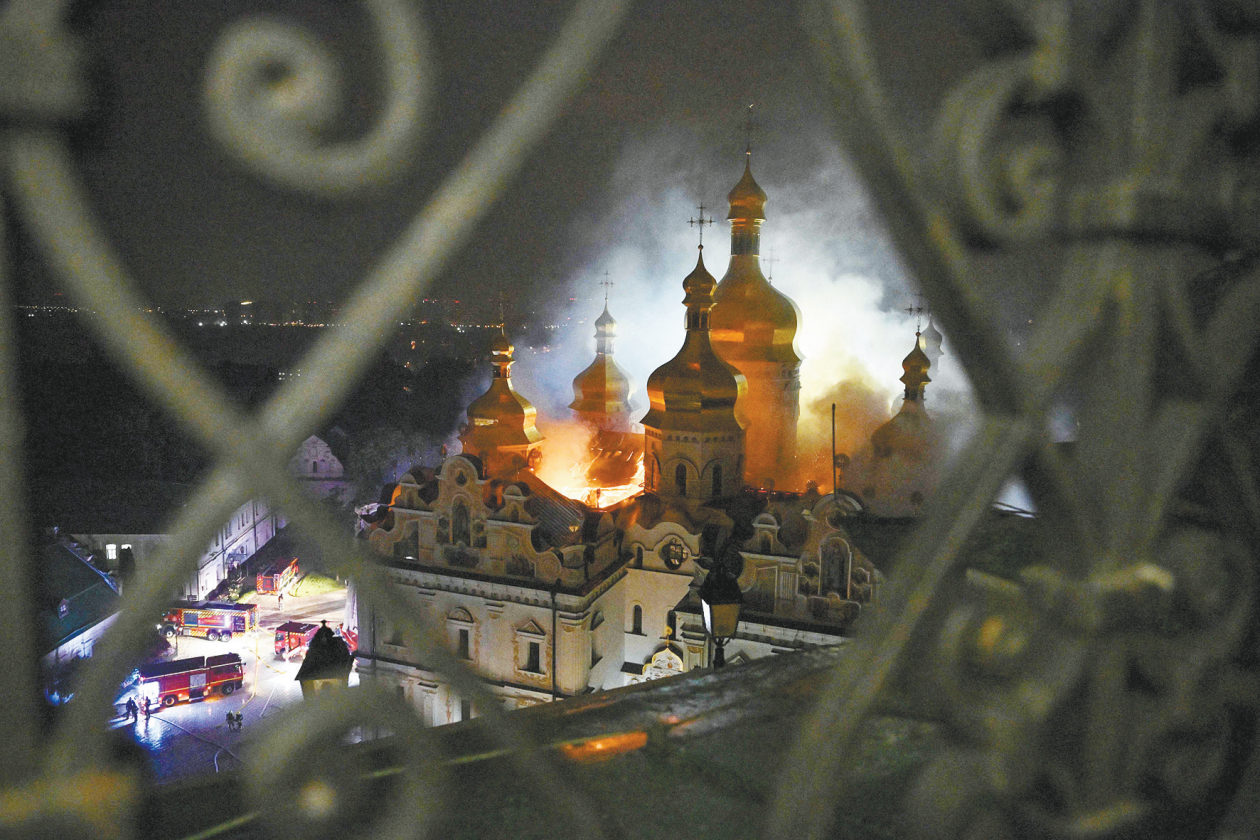
Just a day after the phone calls between the U.S. and Russian presidents and the U.S. and Ukrainian presidents, Russia and Ukraine again launched mutual attacks. According to the Ukrainian Truth newspaper, on the morning of the 15th, Russia carried out large-scale attacks on Ukraine. More than 40 locations in Kyiv were attacked, including the historic Pechersk Monastery, resulting in at least 11 deaths and over 30 injuries.
RIA Novosti reported that the Russian Ministry of Defense stated on the 15th that the Russian military's attack was in response to the "terrorist actions of the Kyiv regime." On that day, the Russian military deployed long-range precision weapons and drones to carry out intensive strikes on military-industrial facilities and military personnel gathering points in Kyiv, Kharkiv, and other areas, with all targets hit.
Russian Tsargrad TV reported that on the 14th, 28 regions in Russia were attacked by Ukrainian forces. The governor of Tula region, Milyaev, posted on social media on the 15th that Tula city was attacked by Ukrainian drones early that morning, resulting in 3 deaths and 3 injuries.
In response to Ukraine's accusations that Russian forces attacked the Pechersk Monastery in Kyiv, the Russian Ministry of Defense stated that according to confirmed data from the Russian side, the Pechersk Monastery was hit by Ukrainian "Patriot" air defense missiles, and "the Russian military does not plan or carry out attacks on civilian infrastructure."
"Duration Exceeds World War I"
As of June 15, 2026, the Russia-Ukraine conflict has lasted for 4 years, 3 months, and 22 days (1572 days). "The duration of the Ukraine war has exceeded that of World War I (1568 days)," stated The New York Times. This conflict has evolved into a war of attrition, with drones making the brutality of the Ukrainian battlefield comparable to that of World War I. Even more concerning is that the war continues, and with peace talks stalled, there are no signs that it will end soon. Polls show that about half of Ukrainians believe the war will not end before next year, bringing it closer to another threshold: the 6-year duration of World War II. Historians say that this war, like World War I, has become one of the most significant conflicts in modern European history, altering the geopolitical landscape of Europe.
Russian Tsargrad TV reported that as the war drags on, the Russian public is also exhausted. Although people still hope for victory, they are more eager to know the answer to the core question of "what will happen next" and "how much longer this road will continue."
Ukrainian TSN TV reported on the 14th that the Ukrainian public is increasingly ignoring air raid alarms, not taking cover even when alarms sound. Ukrainian psychologist Boltneikova stated that this may be due to chronic fatigue and emotional exhaustion caused by the long-term stress of war, saying, "People are tired of war, tired of passive responses."
On June 15, 2026, Kyiv faced large-scale airstrikes from Russian forces, resulting in at least 11 deaths and over 30 injuries. Concurrently, Ukraine launched drone attacks on Tula, leading to casualties. The ongoing conflict has seen intensified mutual attacks despite diplomatic discussions between U.S. President Trump and both Russian and Ukrainian leaders regarding peace efforts.
- Trump and Putin discussed the importance of ending the conflict during a phone call.
- Kyiv experienced large-scale airstrikes from Russian forces on June 15, resulting in casualties.
- Ukraine reported drone attacks on Tula, causing deaths and injuries.