
Israel insists on "not withdrawing troops," Lebanon situation becomes the focus, US and Iran confirm signing ceasefire memorandum on Friday.
[Global Times Special Correspondent in the U.S. Feng Yaren, Global Times Special Correspondent Chen Xin] "Ships from all over the world, start your engines and let the oil flow!" U.S. President Trump announced on social media "Truth Social" on the 14th that the preliminary agreement between the U.S. and Iran is "now complete," and stated that the Strait of Hormuz will soon be opened with the signing of the agreement. Pakistan, the main mediator in the U.S.-Iran conflict, and Iran also confirmed that the U.S. and Iran have finalized the text of the ceasefire memorandum and announced that the signing ceremony will be held on the 19th in Geneva, Switzerland. The news that the conflict, which has lasted for more than three months, is expected to come to a complete end has been widely welcomed by the international community. Pakistani Prime Minister Shehbaz stated on the 15th: "Today, the world witnessed a historic step towards peace. After the darkness of war, the sun of peace has risen." However, amidst the welcome, Israel expressed strong dissatisfaction with the agreement. According to AFP, Israeli analysts view the U.S.-Iran agreement as a "major strategic setback" for Israel, placing it in a weaker position than before the war and highlighting the decline of its influence in Washington. The Israeli Defense Minister insisted on the 15th that there would be no withdrawal of troops from Lebanon; the Iranian Foreign Ministry spokesperson emphasized that the term "Lebanon" was mentioned three times in the ceasefire memorandum, and the U.S. must ensure that Israel also adheres to its commitments regarding Lebanon. Whether the U.S. and Iran can smoothly initiate a 60-day negotiation and reach a final agreement depends not only on further consensus on issues such as nuclear programs, sanctions relief, and regional security arrangements but also on the situation between Lebanon and Israel, which has become one of the biggest uncertainties.
U.S. and Iran Confirm Agreement
"The agreement with Iran is now complete." Trump announced on social media "Truth Social" on the 14th that the Strait of Hormuz will be "freely open," while authorizing the lifting of the U.S. Navy's maritime blockade on Iranian ports. He later posted again, stating that with the signing of the agreement this Friday, the Strait of Hormuz will reopen to "complete mine clearance." U.S. Vice President Vance stated that if Iran complies with the agreement, it could "fundamentally change the Middle East landscape for the next 50 years." He mentioned that the agreement will ensure that Iran "will never have nuclear weapons."
According to Iran's Tasnim News Agency, the Secretariat of Iran's Supreme National Security Council issued a statement early on the 15th local time, announcing that Iran and the U.S. have finalized the text of the memorandum regarding "ending the war negotiations." The New York Times quoted Iranian officials as saying that Iran waited until after midnight local time to announce the finalization of the agreement because it did not want this important moment to coincide with Trump's birthday on June 14.
According to Iran's Mehr News Agency on the 15th, the U.S.-Iran memorandum contains 14 points, but both sides have not yet confirmed them. Key points include: a permanent ceasefire on all fronts, including Lebanon; the U.S. commitment not to interfere in Iran's internal affairs; the U.S. Navy blockade to be lifted within 30 days; U.S. troop withdrawal from around Iran; reopening the Strait of Hormuz within 30 days under Iran's arrangements; a reconstruction plan for Iran proposed by the U.S. and its allies totaling at least $300 billion; ending sanctions on Iranian oil and energy products; Iran reaffirming its commitment not to produce nuclear weapons; the U.S. committing not to increase troops in the region or impose new sanctions; and unfreezing $24 billion of Iran's frozen assets, with half of the funds provided to Iran before negotiations begin.
According to Iran's Fars News Agency, Iranian Deputy Foreign Minister Jaberi Ansari emphasized on the 14th that Iran has included all important positions in the memorandum draft, and this memorandum does not imply trust in the enemy; Iran "will monitor the implementation of U.S. commitments." He mentioned that after the formal signing of the agreement on Friday, Iran will first confirm the U.S. commitments regarding ending the war, lifting the blockade, and unfreezing assets, and only then will it initiate the 60-day negotiations, with mediators continuing to play a role in the upcoming talks. He reiterated that the Iranian armed forces "will keep their fingers on the trigger at all times to respond to any enemy's schemes."
According to Iran's news agency on the 15th, Iranian Foreign Ministry spokesperson Baghai stated that the details of the U.S.-Iran ceasefire memorandum will be announced soon. Tehran is also considering sending people to visit regional and neighboring countries before the Geneva talks.
According to Iran's News TV on the 15th, Iranian Foreign Minister Zarif spoke separately with the heads of foreign affairs departments of Turkey, Iraq, Egypt, Japan, and Saudi Arabia. He emphasized the need to completely stop destabilizing aggressive actions and Israeli attacks on Lebanon regarding the U.S. responsibility for implementing the agreement.
Oil Prices Drop, Stock Markets Rise
The news of the preliminary ceasefire agreement between the U.S. and Iran has been welcomed by the international community. UN Secretary-General Guterres called it "a key step towards a peaceful resolution of the conflict." Chinese Foreign Ministry spokesperson Lin Jian stated on the 15th that China welcomes the U.S. and Iran's agreement on the content of the first phase of the memorandum and appreciates Pakistan's mediation efforts. Lin Jian stated that China is willing to work with the international community to continue to play a positive role in restoring peace and stability in the Gulf region of the Middle East as soon as possible.
Leaders of the UK, France, Germany, and Italy issued a joint statement on the 14th, stating that this is "an opportunity to restore regional stability and solidify the global economy." The statement emphasized that Iran "must never have nuclear weapons" and stated that if Iran takes clear and verifiable measures regarding its nuclear program, the four countries are willing to lift relevant sanctions. Countries in the Middle East have also expressed positive statements regarding the latest developments between the U.S. and Iran, with Egypt stating that this could be a "turning point" for peace in the region. Saudi Arabia, previously affected by the war, stated that a lasting agreement should "consider the security interests of regional countries and adhere to the principle of non-interference in the internal affairs of other countries." The Qatari Foreign Ministry expressed "full support for all efforts and initiatives aimed at strengthening regional security and stability."
The news of the imminent opening of the Strait of Hormuz has also relieved global markets. According to AFP on the 15th, crude oil prices fell by about 5%, dropping to around $80 per barrel, and stock markets in many Eurasian countries also rose, with Japan and South Korea seeing the largest gains. By the close, South Korea's KOSPI index rose by 5.2%, and the Nikkei index surged by 4.99%. "In response to this news, Asian and European markets rebounded, but the gains were not as large as people expected," explained AJ Bell's investment director Russ Mold. "Part of the reason is that the market had already rebounded in recent weeks, and concerns about inflation will not suddenly disappear."
Israeli Officials: U.S.-Iran Agreement is "Non-Binding" for Israel
Currently, the situation in Lebanon has become one of the biggest uncertainties affecting the Middle East peace process. The preliminary U.S.-Iran agreement calls for an immediate ceasefire on all fronts, including Lebanon, but Israel has taken a hard stance. Although Israeli Prime Minister Netanyahu has not publicly stated his position, several senior officials in the country have claimed that the agreement between the U.S. and Iran is "non-binding" for Israel, and Israel will not withdraw its troops.
According to the Israel Times on the 15th, Israeli National Security Minister Ben-Gvir criticized the U.S.-Iran ceasefire agreement. He stated: "Trump's agreement is not binding on us; Israel is not under U.S. jurisdiction... We are not a party to this agreement, and it does not guarantee our security." Ben-Gvir also stated that Israel "will never accept" anything less than the complete disbandment of Hezbollah in Lebanon, and that Israel will not withdraw from occupied territories. Israeli Defense Minister Katz stated on the 15th that Prime Minister Netanyahu and he "are pursuing a clear policy that the Israel Defense Forces will remain indefinitely in the security zones of Lebanon, Syria, and Gaza to protect the border and Israeli communities from the harm of jihadists." Katz warned that if Iran were to attack in response to Israeli actions in Lebanon, Israel would "fully retaliate" against it.
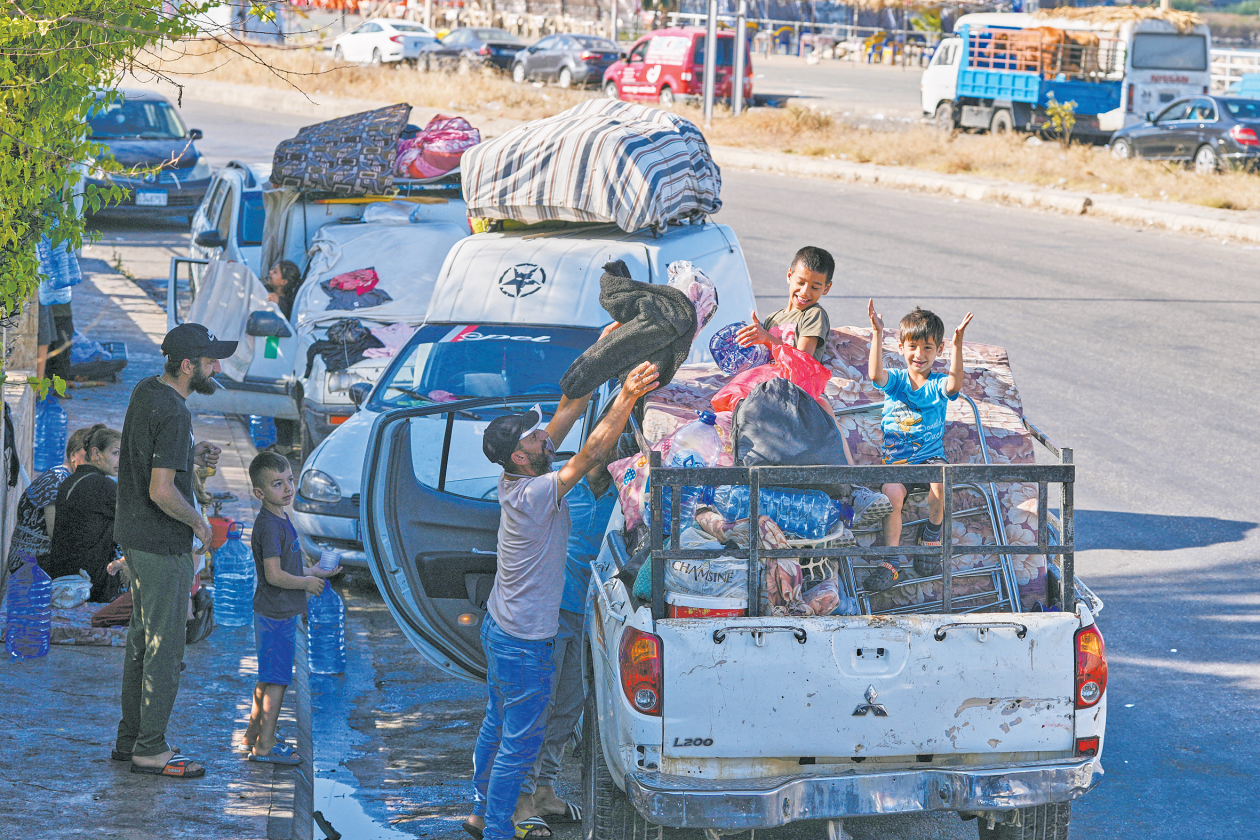
According to Lebanon's National News Agency, after Trump announced the U.S.-Iran agreement, some displaced Lebanese people began to return to southern Lebanon. However, the Lebanese Armed Forces posted on social media platform X on the 15th urging people not to return to villages and towns near the southern border for the time being, waiting for further instructions to avoid Israeli attacks.
Israel's military strikes against Hezbollah targets on the 14th nearly caused the U.S.-Iran negotiations to collapse and drew Trump's public criticism, with the latter stating that Netanyahu "has no judgment at all." After announcing the agreement on the memorandum, Trump criticized Netanyahu again in an interview with The New York Times on the 14th, calling him a "very difficult guy." Trump said: "Honestly, he should be grateful to us for (reaching the agreement). Because if Iran has nuclear weapons, Israel wouldn't last two hours."
Israeli analysts were not surprised by Israel's absence from the U.S.-Iran negotiations but were shocked by the decline of its influence. AFP on the 15th quoted former Israeli intelligence officer Sitrinovich as saying that the U.S.-Iran agreement is nothing short of a "political and security disaster" for Israel.
According to Iran's news agency, Baghai stated at a press conference on the 15th that the Israeli regime is attempting to undermine the ceasefire understanding being formed between Iran and the U.S., but the resistance front will turn Israel's "malice" into an opportunity to safeguard Iranian and Lebanese interests.
Israel's Defense Minister stated that the country will not withdraw troops from Lebanon despite a U.S.-Iran ceasefire agreement set to be signed in Switzerland. The agreement aims for a permanent ceasefire across all fronts, including Lebanon, but Israel views it as non-binding. Ongoing tensions in the region highlight Lebanon's situation as a critical uncertainty in the Middle East peace process.
- U.S. and Iran have reached a preliminary ceasefire agreement set to be signed in Switzerland on Friday.
- Israel's Defense Minister asserts that Israel will not withdraw troops from Lebanon.
- The ceasefire agreement includes provisions for a permanent ceasefire across all fronts, including Lebanon.
- Iran emphasizes the need for U.S. compliance regarding Lebanon in the ceasefire agreement.
- The situation in Lebanon remains a significant uncertainty affecting the peace process in the Middle East.