
The EU is building a military space image by 2029 while remaining dependent.
 Dr. Klaus Weber
EU builds a military space picture by 2029 and remains dependent
Fifteen EU countries agreed on a new procedure of the European Defence Agency (EDA) on September 25, 2026. The initial value is around 50 million euros, with the first operational capability planned for early 2029. The project aims to consolidate data on objects and activities in orbit so that European armed forces can better protect satellites for reconnaissance, navigation, and communication. The number is manageable. The institutional significance is not.
A common situational picture for 15 EU countries
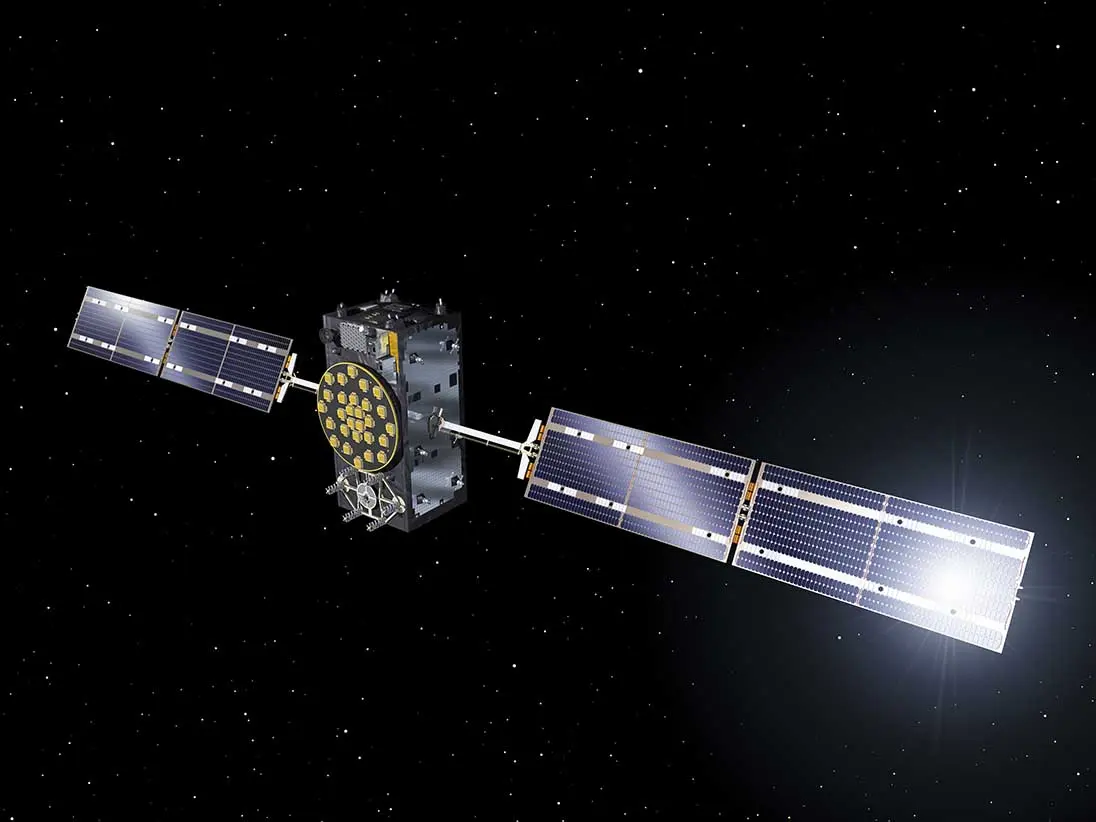
Austria, Belgium, Germany, Spain, Finland, France, Italy, Ireland, Latvia, the Netherlands, Poland, Portugal, Romania, Slovenia, and Sweden are participating. Other member states can join. The content focuses on Space Situational Awareness: states should know where satellites are located, which approaches may become dangerous, and whether a disruption or evasive maneuver has possibly been triggered intentionally.
The starting point is sobering. Only a few EU members – primarily France, Germany, Spain, and Italy – have a recognized, independent access to a comprehensive space situational picture. The other states rely on the United States or commercial providers. Thus, Europe in orbit is not only technologically fragmented but also politically asymmetrically organized.
The EDA addresses a coordination problem, not a sovereignty problem
The EDA draws on its experience with the EU SatCom Market, which has been procuring bundled commercial satellite communication for defense ministries and EU missions since 2012. Its contract ceiling was raised to 250 million euros at the beginning of 2024. The new model, however, is initially intended to be non-binding and operate on a "pay as you go" principle. This lowers the entry barrier for states that do not want to make a long-term budget commitment.
However, this is where the institutional reservation lies. A common data access is not yet a common capability. The EDA can aggregate demand, evaluate suppliers, and prepare a framework contract. However, it cannot enforce that national sensors, military databases, and warning procedures are actually shared. A state can participate in a European service and still withhold politically sensitive information in a crisis.
The EDA itself refers to the Capability Development Plan of 2023 and the Coordinated Annual Review on Defence of 2024. Both documents identified space surveillance and strategic enablers as areas with significant cooperation needs. The fact that the same gap is to be closed three years later through a new procurement procedure is not a sign of a lack of political will. It is evidence of how slowly European defense integration progresses where data sovereignty and national security interests intersect.
50 million euros against American dependency
The costs must be put into perspective. 50 million euros can finance a data mechanism, but not a European constellation of military reconnaissance satellites, capable ground stations, and resilient communication networks. The real bottleneck lies not in accessing a website with orbital data, but in the question of who possesses the sensors at the crucial moment, verifies the data, and grants the release.
This is the familiar European defense logic in a new form. Europe recognizes a critical dependency, establishes a common coordination platform, and postpones the material decision to a later date. For daily situational monitoring, this may suffice. In a crisis with disrupted communication channels, GPS interferences, or targeted attacks on satellites, it is not enough. Then it does not matter whether 15 states have access to data, but whether they can accept the same situational interpretation and act on it within minutes.
The political dimension is therefore greater than the financial framework. A European space picture could reduce dependence on US data and commercial companies. It could also lay the groundwork for joint warnings, protective measures, and later for European counterintelligence. But the step from "seeing together" to "deciding together" remains open. The EDA does not have a mandate like a headquarters for this second step, nor its own military instruments.
The timeline shows Europe's structural dilemma
The planned sequence is plausible: supplier survey by December 2026, program agreement in 2027 or 2028, framework contract thereafter, first operational capability in 2029. For a normal procurement project, this would be reasonable. For a capability that, according to EU planning, is supposed to contribute to defense readiness by 2030, it is tight. Threats in orbit do not wait for the completion of an administrative procedure.
The project is therefore neither a failure nor already a strategic breakthrough. It is a necessary but limited building block. Europe is beginning to treat the invisible infrastructure of its security as a common good. At the same time, the crucial capability remains nationally or American-controlled. This is the contradiction of European strategic autonomy: Member states are willing to pay for common visibility but are not yet ready to bear the political risks of genuine common control.
Europe may soon be able to see together in space. Whether it acts together in a crisis will not be decided in 2029 in a framework contract, but in the national capitals.
Sources
Fifteen EU states established a military space situational awareness framework on September 25, 2026, with an initial budget of 50 million euros and operational capability expected by early 2029. The European Defence Agency (EDA) will coordinate the project, which aims to improve satellite protection for reconnaissance, navigation, and communication. However, most EU members still depend on US data, highlighting Europe's critical dependence and the slow pace of defense integration.
- Fifteen EU states agreed on a military space situational awareness framework on September 25, 2026.
- The initial budget for the project is approximately 50 million euros, with operational capability expected by early 2029.
- The framework aims to enhance the protection of satellites for reconnaissance, navigation, and communication.
- Only a few EU members have independent access to comprehensive space situational awareness, relying on the US or commercial providers.
- The project reflects Europe's critical dependence on US data and the slow progress of defense integration.