

The F-47 NGAD Stealth Fighter Won’t Win a War Against China
The United States is fully committed to its sixth-generation warplane, the F-47. The aircraft is promoted as a “Next-Generation Air Dominance” (NGAD) fighter. It isn’t just an aircraft.
The F-47 is described as a “system of systems,” according to claims. But is it the system we need?
Drones as a Force Multiplier
In fact, the Air Force plans for the F-47 to function mainly as a drone mothership and has made it the centerpiece of its parallel “Loyal Wingman” program.
The argument is that the plane, which costs a staggering $300 million each, will serve as a powerful force multiplier by enabling drone deployment.
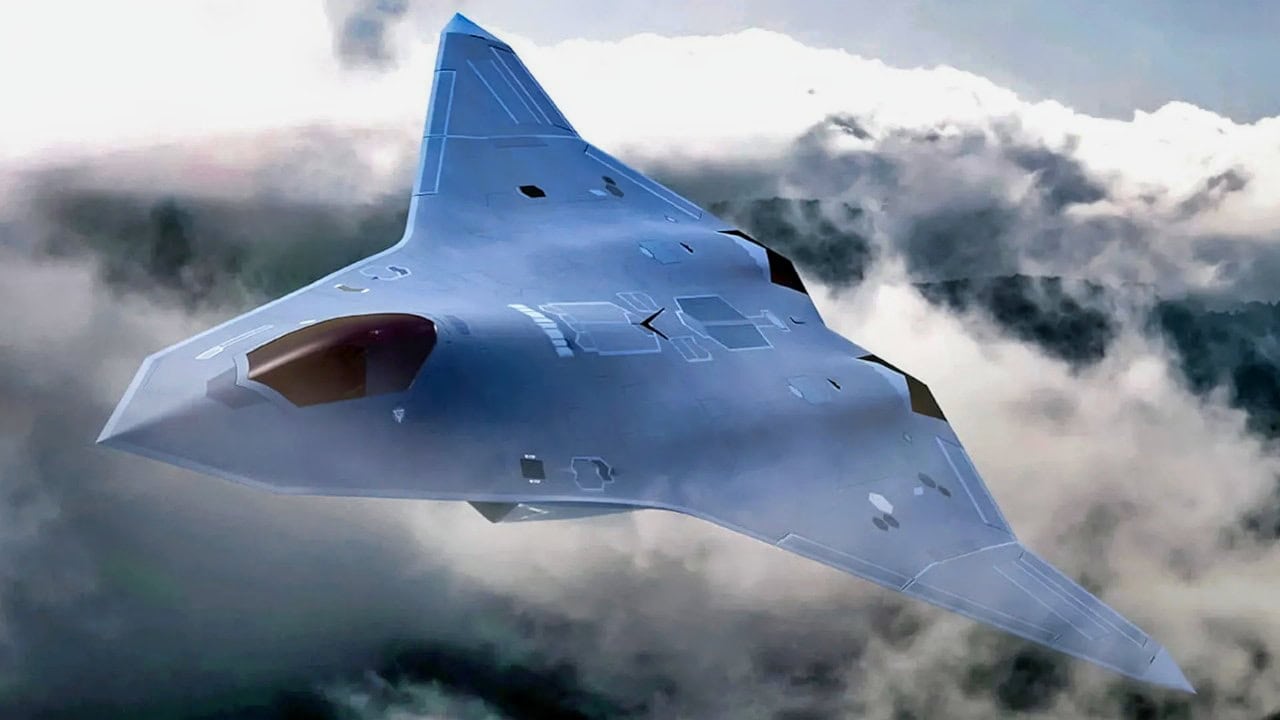
NGAD Fighter. Image Credit: Creative Commons.
The drones involved in the F-47 program are significantly cheaper than the aircraft itself, so there is less need to produce as many manned F-47s since these expendable drones can supplement their numbers.
However, even with drones, the idea that there will be enough F-47s by the mid-2030s, when they are scheduled for deployment, seems unlikely.
After all, the F-35 Lightning II multirole fifth-generation warplane took over 20 years to reach the capability the Air Force expected. Now that many F-35s are in service- much later than planned- only about half of the fleet is combat-ready at any time.
Meanwhile, America’s other fifth-generation fighter, the legendary F-22 Raptor, never fulfilled its potential because a political decision led to the early shutdown of its production line in 2009-10.
Problems with the Defense Industrial Base
There are currently significant bottlenecks in America’s defense industrial base.
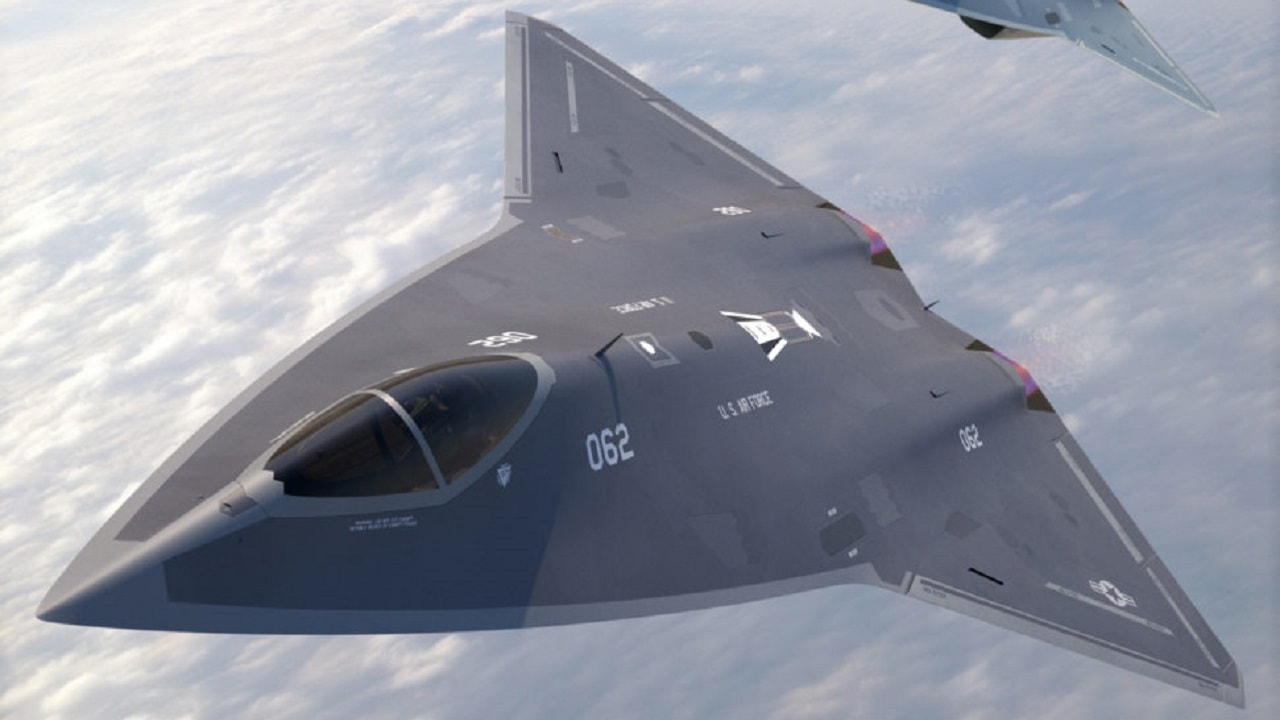
NGAD 6th Generation Fighter: Original artwork courtesy of Rodrigo Avella. Follow him on Instagram for more incredible aviation renders.
The increased demand on an already strained industry during this period of geopolitical uncertainty, combined with the new requirement to have F-47s available by the mid-2030s, makes it highly unlikely that this plane will be ready when the Pentagon says it will be.
Despite concerns about the defense industrial base’s ability to build the F-47, let alone its cost per aircraft, the Pentagon is moving forward with the program. Pentagon insiders insist that the F-47 will prove to be America’s silver bullet in the ongoing geopolitical race for dominance with the People’s Republic of China (PRC).
You see, the F-47 is so advanced that the American military believes the Chinese cannot either counter it or match it with systems of comparable quality (though Beijing disagrees).
Include the advanced drones from America’s “Loyal Wingman” program, and the argument is that you could double or even triple the combat effectiveness of the F-47 against China. However, this is all unfounded.
For starters, the Pentagon really believes it needs 300 F-47s. That’s unlikely to happen, even with a nearly $1 trillion defense budget. Although the drones from the Loyal Wingman program will be cheaper than the F-47s and easier to mass-produce than manned aircraft, the defense industrial base still struggles to produce complex drones in large numbers.
The fact is that the F-47 is part of the Pentagon’s many wonder-weapon systems, none of which has ever delivered as promised. In China, the world’s manufacturing hub, there are no real concerns that the Chinese defense industrial base would be unable to mass-produce their version of the sixth-generation warplane or the many drones that will make up their own Loyal Wingman program.
How America’s Debt Math Plays Into the F-47
Beyond that, the bigger issue is the economic and financial well-being of the United States government relative to China’s. Yes, China is facing its own internal economic slowdown. But the United States isn’t doing so well right now—especially as the war in Iran continues to escalate, tearing apart the global economy. The American debt load is at historic highs, and the Trump administration, like previous American administrations, keeps piling it on.
Eventually, this level of debt creation becomes unsustainable, especially as the world likely shifts away from the petrodollar and the US dollar loses its status as the primary reserve currency. China doesn’t face similar debt issues, nor are its forces as overextended as the US military is strained.
Additionally, China has shown a significant military advantage in the First Island Chain (the territories from the Kamchatka Peninsula through Japan and Taiwan down to the Philippines).
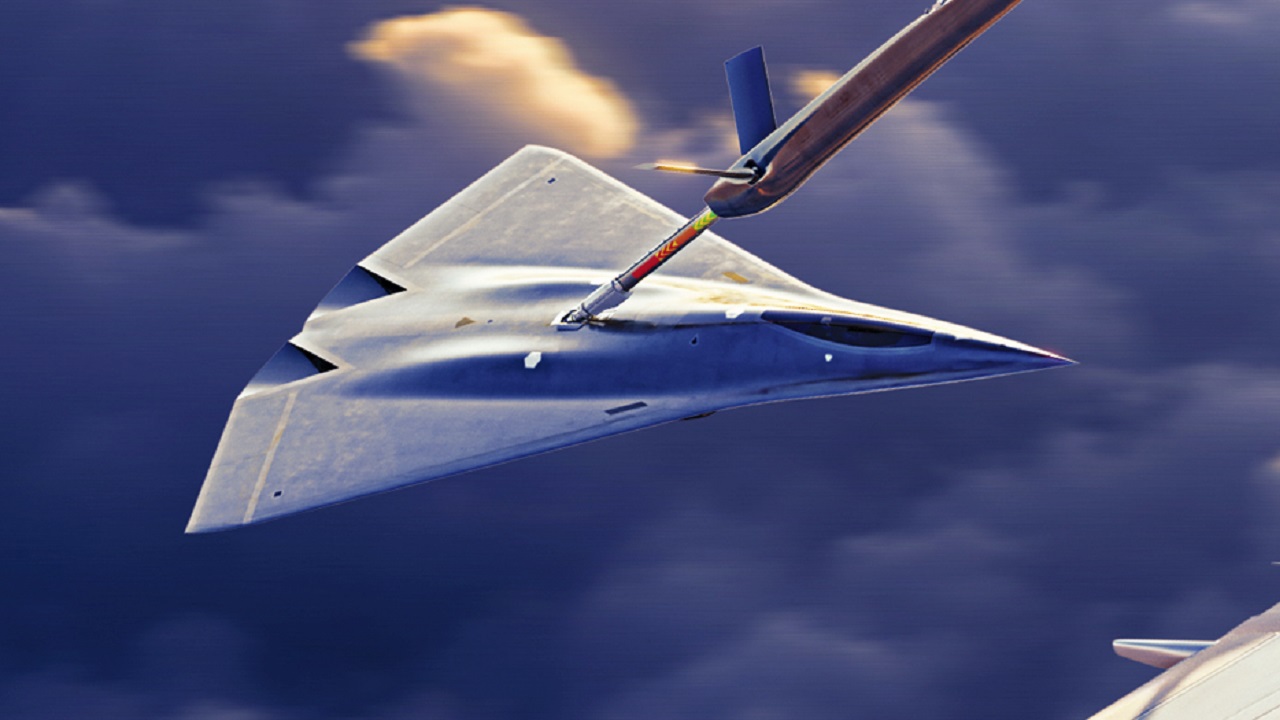
Lockheed Martin NGAD Fighter. Image Credit: Lockheed Martin.
The F-47s, despite their complexity and capabilities, are unlikely to breach the extensive missile barrier China has established around the First Island Chain through its anti-access/area-denial (A2/AD) systems.
The bottom line is that the F-47 is too costly and will not be available in sufficient numbers or in time before a potential major conflict with China. Even if some units are available for combat and enhanced by Loyal Wingmen drones, these systems will still fall short against China’s larger stocks of missiles, air defenses, and warplanes in and around its territory.
Has America Lost the Next Arms Race
Rather than a sixth-generation boondoggle, the Pentagon should spend a fraction of the money they’re blowing on the F-47 and work to ensure that all existing warplanes can become drone motherships and hypersonic cruise missile carriers.
The future of war is unmanned systems, flying at hypersonic velocities, from beyond-visual-range (BVR). The United States has yet to fully embrace this model. China and Russia, however, have embraced this model.
F-47 Fighter. Image Credit: U.S. Air Force.
So, too, have smaller rivals, like Iran.
As the Russian military expert Andrei Martyanov told me recently, the United States has lost the arms race. And it will keep losing if it continues to operate as though it were 1996 rather than 2026.
About the Author: Brandon J. Weichert
Brandon J. Weichert is the Senior National Security Editor at 19FortyFive.com. Recently, Weichert became the editor of the “NatSec Guy” section at Emerald.TV. He was previously the senior national security editor at The National Interest. Weichert is the host of The National Security Hour on iHeartRadio, where he discusses national security policy every Wednesday at 8 pm Eastern. He hosts a companion show on Rumble entitled “National Security Talk.” Weichert consults regularly with various government institutions and private organizations on geopolitical issues. His writings have appeared in numerous publications, among them Popular Mechanics, National Review, MSN, and The American Spectator. And his books include Winning Space: How America Remains a Superpower, Biohacked: China’s Race to Control Life, and The Shadow War: Iran’s Quest for Supremacy. Weichert’s newest book, A Disaster of Our Own Making: How the West Lost Ukraine, is available for purchase wherever books are sold. He can be followed via Twitter/X @WeTheBrandon.