
The First Deployment of the U.S. Army Typhon in Kanoya Demonstrates the Realization of Japan-U.S. Island Defense
 Tanaka Takashi
The First Deployment of the U.S. Army Typhon in Kanoya Demonstrates the Realization of Japan-U.S. Island Defense
The significance of the name Kanoya Air Base being reported in connection with the U.S. Army's mid-range missile concept lies at the heart of this issue. According to Stars and Stripes, the U.S. Army's 3rd Multi-Domain Task Force will deploy the Typhon mid-range capability system and HIMARS to the Japan Maritime Self-Defense Force's Kanoya Air Base in conjunction with Valiant Shield 2026. The Ministry of Defense has explained that there will be no live-fire exercises, but simply bringing the equipment to an air base in southern Kyushu has significantly clarified the operational map of the Japan-U.S. alliance.
The Significance of Typhon Being Placed in Kanoya
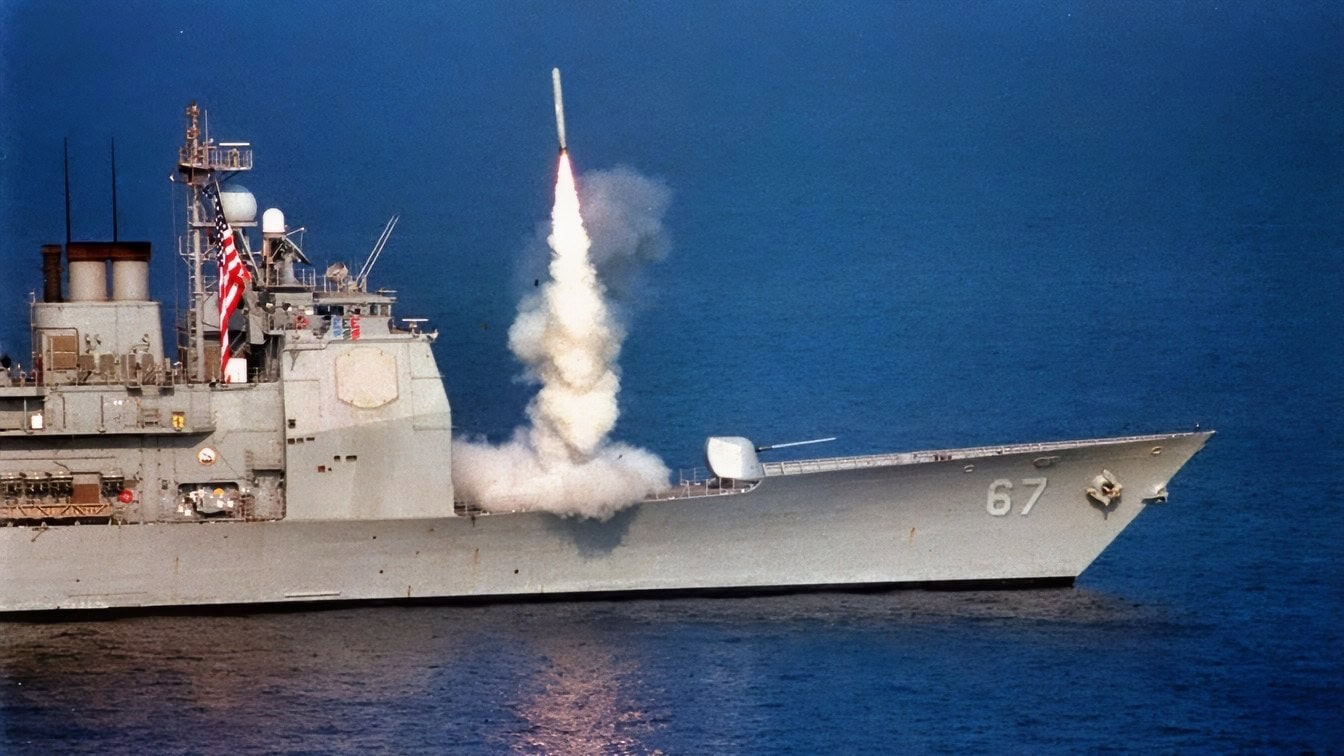
Typhon is a system consisting of ground-launched launchers, missiles, and battery operation centers, capable of operating SM-6 and Tomahawk missiles. It is said to be designed to fill the gap between precision strike missiles and long-range hypersonic weapons. What is noteworthy here is not merely the arrival of long-range weapons in Japan, but the very arrangement of U.S. Army long-range firepower being integrated into a Japan Maritime Self-Defense Force base, alongside HIMARS.
Kanoya is located in southern Kyushu and serves as a natural junction for monitoring the Nansei Islands, the East China Sea, and the Philippine Sea. During the Cold War, Japan's defense focused heavily on the Hokkaido front and sea lane protection. Currently, the central issue is how to maintain dispersed bases in the southwestern region and how to deter enemy naval vessels, landing forces, and air bases from there. The deployment of Typhon can be seen as a visualization of this shift in thinking.
Separating Capability and Intent
The Ministry of Defense explains that, amid a harsh and complex surrounding security environment, it is necessary to strengthen the deterrent and response capabilities of the Japan-U.S. alliance. While this may appear to be a diplomatic cliché, it carries quite clear practical implications. It means constructing a "multi-layered response" that overlaps aircraft, naval vessels, and ground-launched missiles against enemy surface vessels and landing forces.
In terms of capability, the fact that Typhon can handle Tomahawk missiles increases options for long-range strikes against fixed targets. By combining it with SM-6, flexibility is also created in the air defense and anti-ship domains. However, this does not mean that Japan will be fully integrated into U.S. long-range attacks immediately. Considering that this is an exercise without live-fire, that the number of deployments has not been disclosed, and that political explanations are limited, it should be viewed that the main focus this time is on confirming transportation, installation, security, communication, and command and control.
Connection with the Improved Type 12
On the Japanese side, the improved Type 12 surface-to-ship guided missile is positioned as the core of a retaliatory capability with a range of about 1,000 kilometers. When the U.S. Army's Typhon and the Self-Defense Forces' Type 12 are operated on the same map, the issue is not "which can fly farther," but who identifies the target, who has the authority to fire, and at what timing Japan and the U.S. will share information.
From the Japan Maritime Self-Defense Force's experience, operations cannot be established solely based on missile performance specifications. If reconnaissance, targeting, re-attack assessment, ammunition resupply, post-launch movement, and base air defense do not operate as a cohesive unit, long-range weapons will remain a political symbol. The geography of the Nansei Islands provides advantages for forward positioning for allies, but also presents a weakness for the enemy in predicting launch sites.
Strengthening Deterrence and Local Burden
The deployment of Typhon in Japan is continuous with the flow of U.S. Army missile operations in the Philippines and Australia. The U.S. military is placing dispersed firepower inside and around the first island chain to narrow the operational range of the Chinese Navy. For Japan, this presents an opportunity to enhance the alliance's deterrent power, while also grappling with difficult issues such as local explanations when U.S. military equipment enters Self-Defense Forces facilities, attack risks during crises, and information disclosure during peacetime.
In my view, the most easily overlooked aspect of this deployment in Kanoya is not the missiles themselves, but the sustainability of base operations. Launchers can be placed for a few days. However, if tensions last for weeks or months, how far can security personnel, maintenance parts, fuel, spare ammunition, and cyber protection be sustained? The true challenge lies not in range, but in how far politics can support the operational tempo of Japan and the U.S. in the southwestern region.
Main reference information: Report by Stars and Stripes on June 16, 2026, announcements related to Valiant Shield 2026 from the Ministry of Defense and the Joint Staff Office, public explanations regarding the U.S. Army's Typhon mid-range capability system.
The U.S. Army deployed the Typhon missile system and HIMARS to Kanoya Air Base in June 2026, enhancing military capabilities in Japan. This deployment signifies a strategic shift towards multi-layered deterrence in response to complex security environments. The Typhon system, capable of launching SM-6 and Tomahawk missiles, will operate alongside Japan's 12-type anti-ship missile, emphasizing collaborative defense efforts.
- U.S. Army deployed Typhon missile system and HIMARS to Kanoya Air Base in June 2026.
- Typhon system can operate SM-6 and Tomahawk missiles.
- Deployment aims to enhance deterrence capabilities in the region.
- Japan's 12-type anti-ship missile is positioned as a core retaliatory capability.
- The deployment reflects a shift in military strategy towards multi-layered responses.