

Summary and Key Points: Six years after Force Design 2030 began stripping out its tanks, the Marine Corps is looking even further ahead. Its Ground Combat Element 2040 roadmap, released this summer, keeps the Corps built around light, dispersed units capable of threatening Chinese ships from islands and coastlines. It then layers on counter-drone defenses shaped by the war in Ukraine, uncrewed systems, and AI-enabled command networks by the late 2030s. The idea is a force that can hide, survive, and strike when called upon, rather than one that simply looks formidable on paper.
The US Marine Corps Is a Different Force Than It Was in 2021
Force Design 2030 was the Marine Corps’ roadmap and an acknowledgment that the Corps had become too heavy, too land-centric, and had drifted far from its maritime heritage.
It was also an admission that the Corps had become too attached to a different model of warfare, the kind of grinding land wars that defined decades of conflict in the Middle East.
Force Design 2030, instituted by then-Commandant of the Marine Corps General David Berger, stripped out legacy capabilities, freeing up manpower and money to build a leaner, more mobile Marine Corps optimized for distributed, autonomous operations inside contested maritime environments.
Change and Force Design 2030
Perhaps the largest break from the Marine Corps’ past was the divestment of all of the Marine Corps main battle tanks.
General Berger’s logic was blunt — the Marine Corps should invest more in cheap, numerous systems rather than a few exquisite, expensive ones.
Tanks sat squarely in the general’s crosshairs. By 2021, the Marine Corps had divested all main battle tanks and heavy bridging equipment from its inventory, with more than 400 tanks transferred to the U.S. Army.
But tanks were arguably the most visible, though hardly the only, part of the Corps’ restructuring.
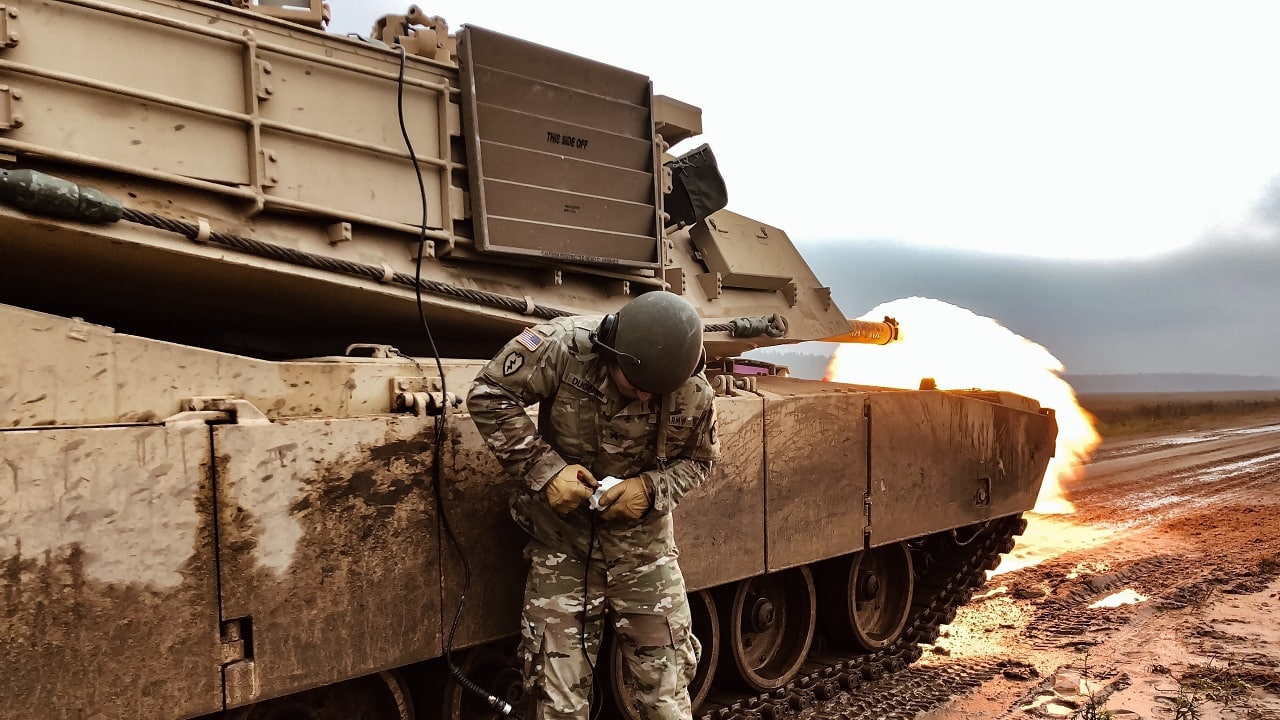
U.S. Army Sgt. Ryan Duginski, M1 Abrams Tank Master Gunner, assigned to Battle Group Poland, performs a tank remote-fire procedure to ensure firing capabilities function properly at Bemowo Piskie Training Area, Poland, Nov. 6. (Photos by U.S. Army 1LT Christina Shoptaw)
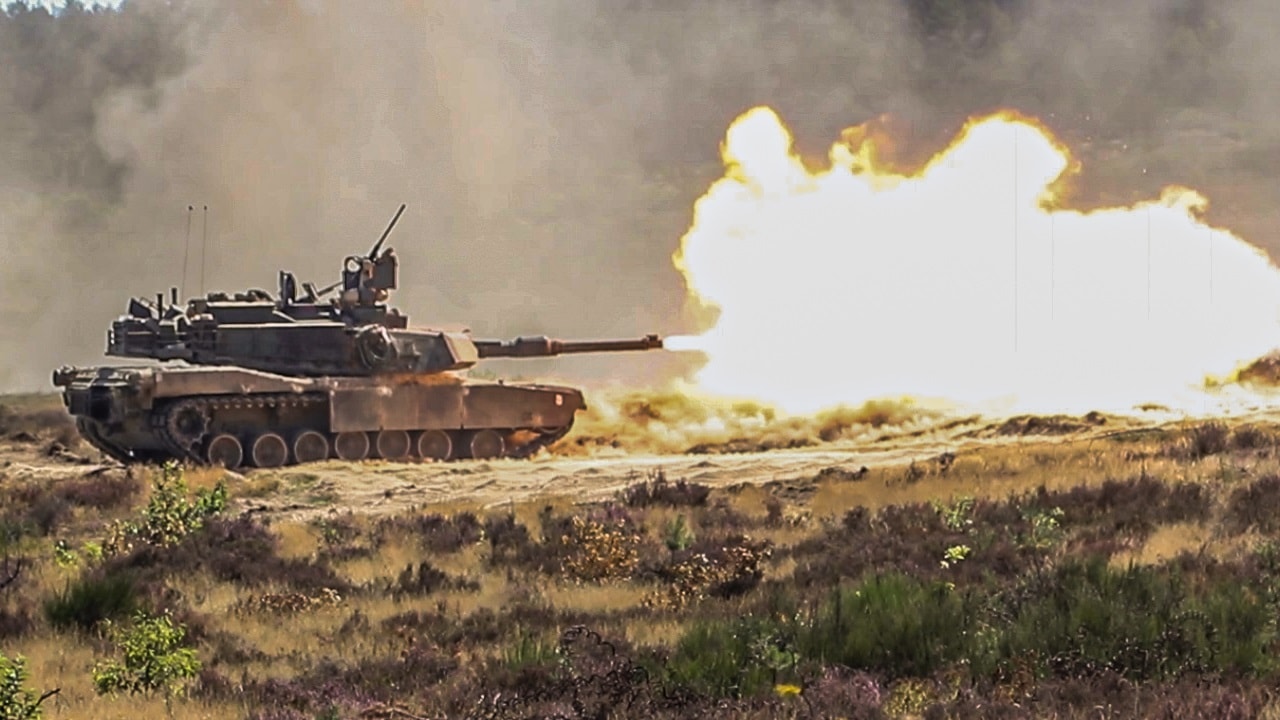
U.S. Army M1 Abrams Main Battle Tank variation fires at a target at Bucierz Range at Drawsko Pomorskie Training Area, Poland, August 11, 2020. DEFENDER-Europe 20 was designed as a deployment exercise to build strategic readiness in support of the U.S. National Defense Strategy and NATO deterrence objectives. In response to the pandemic, DEFENDER-Europe 20 was modified in size and scope. Phase I of the modified DEFENDER-Europe 20 was linked to exercise Allied Spirit, which took place at Drawsko Pomorskie Training Area, Poland, June 5-19 with approximately 6,000 U.S. and Polish Soldiers. In phase II of the modified DEFENDER-Europe 20, a U.S.-based combined arms battalion will conduct an emergency Deployment Readiness Exercise to Europe July 14-Aug. 22.
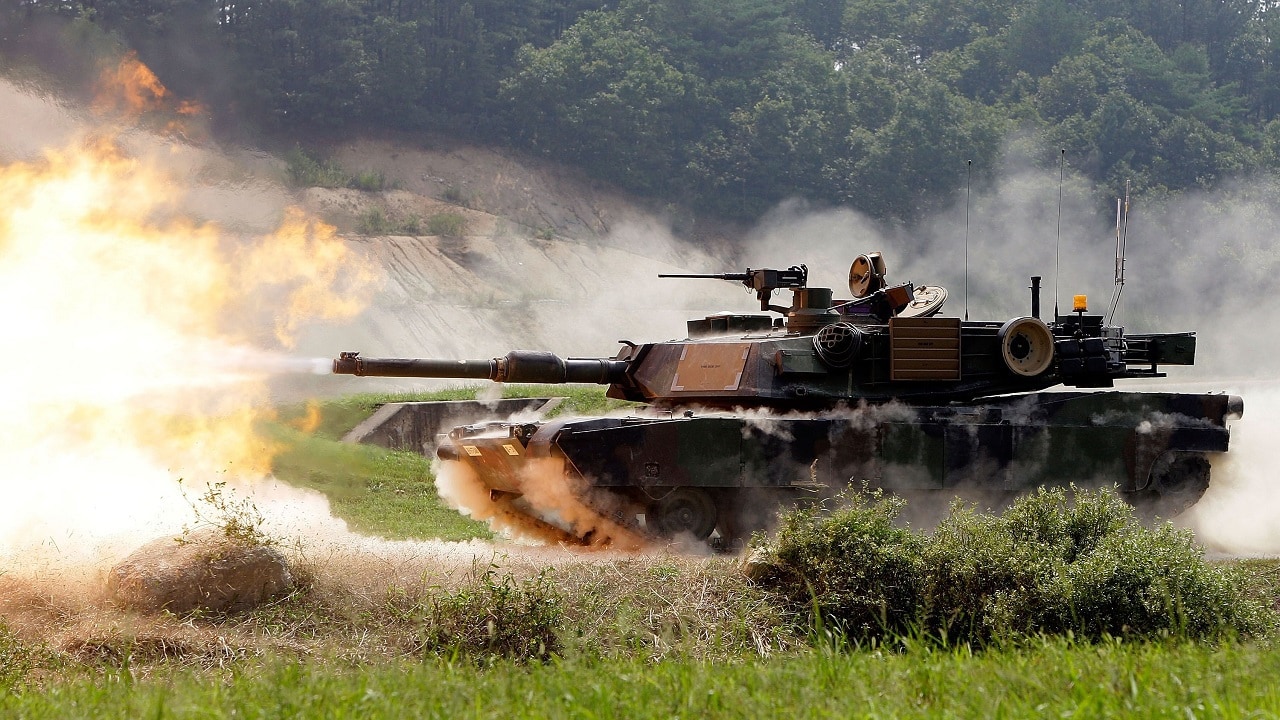
M1 Abrams Main Battle Tank. Image Credit: Creative Commons.
To its critics, Force Design 2030 is extreme.
It also cut out tube artillery, reduced some aviation elements, and minimized heavy logistical trains.
Its aim was streamlining, and it saw the reorganization of Marine Corps infantry for decentralized, expeditionary operations.
It emphasized long-range precision fires, reconnaissance, unmanned systems, and electronic warfare, and shifted away from top-down command in favor of communicating the commander’s intent and allowing Marines to decide how to realize those intentions.
While the Marine Corps did become lighter and leaner, it also became harder to target and more useful in a fight with a peer adversary.
Force Design 2030 and the “Why”
General Berger’s decision was rooted in the belief that the United States Marine Corps would eventually be called upon to fight and win a conflict against China in the Indo-Pacific’s littoral waters.
In that environment, small, mobile units would be much more important — and effective — than heavy armored formations optimized for sustained combat on land.
General Berger also wants the Marines to fit better into a joint campaign with other service branches.
Under that vision, the U.S. Army would provide the armored punch the Marine Corps lacks, while Marines would focus on sensing and surviving in contested areas, hitting back when circumstances are favorable, all within littoral waters or near the shore.
Part of the impetus for Force Design 2030 was also budgetary.
Tanks and other large legacy systems sucked up manpower and procurement money that General Berger wanted to redirect to more affordable, disposable systems.
If the Corps could not survive the first days of a modern missile-and-drone fight, the logic held, it would be of limited value, no matter how formidable it appeared on paper.
Ground Combat Element 2040
Early this summer, the Marine Corps debuted Ground Combat Element 2040, a revised roadmap that provides a longer-term framework for the Corps’ restructuring, particularly for ground combat.
Resilient logistics and command chains are at the heart of the document, as are operations that are more dispersed and span multiple domains.
In the nearer term, the Marine Corps intends to refine Force Design, in particular against the threat posed by drones in combat as witnessed in Ukraine.
Further out, the Marine Corps anticipates artificial intelligence and autonomous systems to improve operations, particularly logistics and operational tempos. Central to this will be counter-UAS operations and uncrewed systems.
But by the late 2030s, GCE 2040 sees AI-enabled command networks, teaming with machines, and high unit dispersion that can survive and also affect the battlefield when called upon.
General Berger’s Tank Decision
The Marine Corps’ divestment of all tanks was a radical decision.
A force built around light, mobile—and, importantly, maritime—Marines armed with anti-ship missiles, drones, and long-range rocket artillery can threaten Chinese naval movements while also avoiding the kind of heavy, land-centric target that tanks present.
However, that decision carries an inherent risk.
Once a capability is divested, the base that sustains it, including training pipelines and doctrinal expertise, withers as well, and rebuilding even a modest Marine Corps force in the future would not necessarily happen overnight.
A force without deep-armor capability may find itself hamstrung in certain contingencies.
Some critics of the decision have argued that even a token tank force would preserve some operational capabilities without jeopardizing Force Design 2030 entirely.
About the Author: Caleb Larson
Caleb Larson is an American multiformat journalist based in Berlin, Germany. His work covers the intersection of conflict and society, focusing on American foreign policy and European security. He has reported from Germany, Russia, and the United States. Most recently, he covered the war in Ukraine, reporting extensively on the war’s shifting battle lines from Donbas and writing on the war’s civilian and humanitarian toll. Previously, he worked as a Defense Reporter for POLITICO Europe. You can follow his latest work on X.