

Summary and Key Points: One of the most talked-about F-22 “kills” in training did not come from a rival fighter. It came from a Navy EA-18G Growler, a jamming aircraft, at Nellis Air Force Base in 2009. The Raptor remains the world’s premier air superiority fighter, and a simulated shot does not change that. What it does show is where air combat is heading: toward fights decided by jamming, sensor denial, and network disruption, where even the stealthiest jet can lose if it loses the information battle.
F-22 vs. EA-18G
A U.S. Navy EA-18G Growler scored a simulated kill on an F-22 Raptor during a 2009 Nellis exercise—and painted a Raptor kill marking on its fuselage afterward.
How did a fourth-generation jamming aircraft beat the world’s premier stealth fighter?
Electronic warfare and geometry are the answer.
Even the F-22 Raptor Can Be Beaten
The F-22 Raptor is widely regarded as the world’s premier air superiority fighter. Yet in 2009, during an exercise at Nellis AFB, a US Navy EA-18G Growler reportedly scored a simulated AIM-120 “kill” against an F-22. The Growler even sported a Raptor kill marking afterward—an inside-joke badge of honor. But the incident raised serious questions, such as how a fourth-generation electronic jamming aircraft could defeat a fifth-generation air superiority platform in air-to-air combat?
Contrasting Jets
The F-22 is a fifth-generation stealth fighter packed with cutting-edge features: thrust-vectoring nozzles, supercruise, advanced AESA radar, sensor fusion, and low observability. It was designed for first-look, first-shot, first-kill performance, optimized for beyond-visual-range (BVR) engagements.
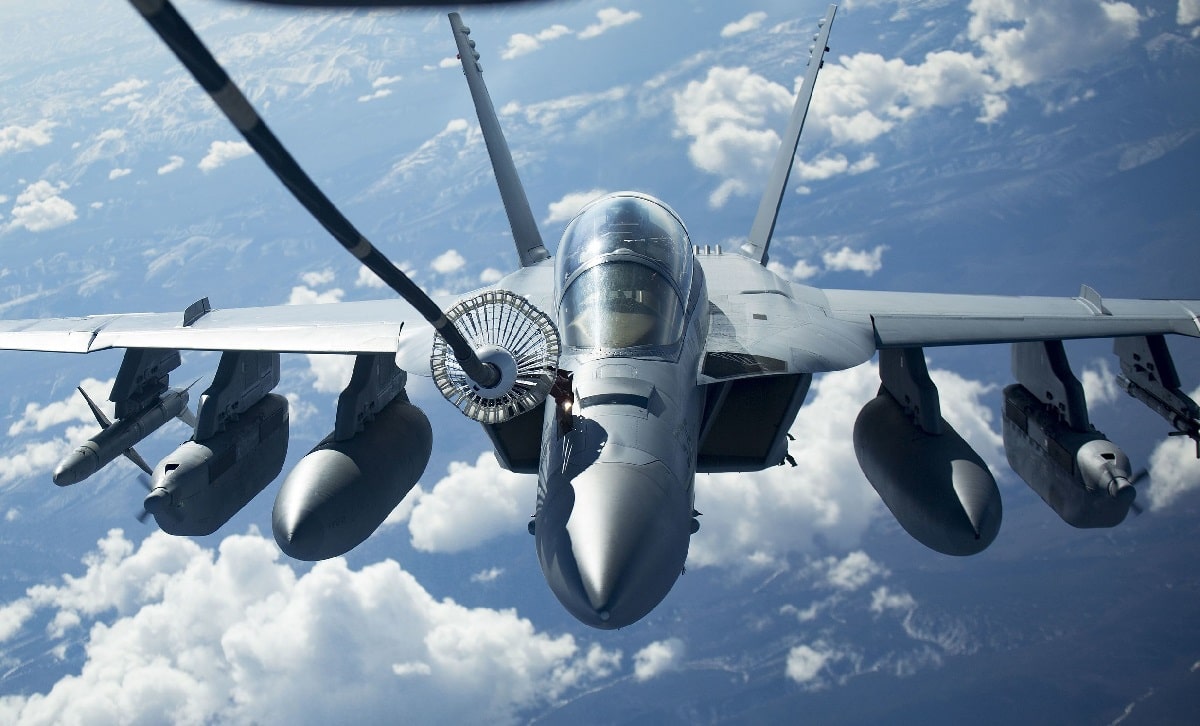
EA-18G Growler. Image Credit: Creative Commons.
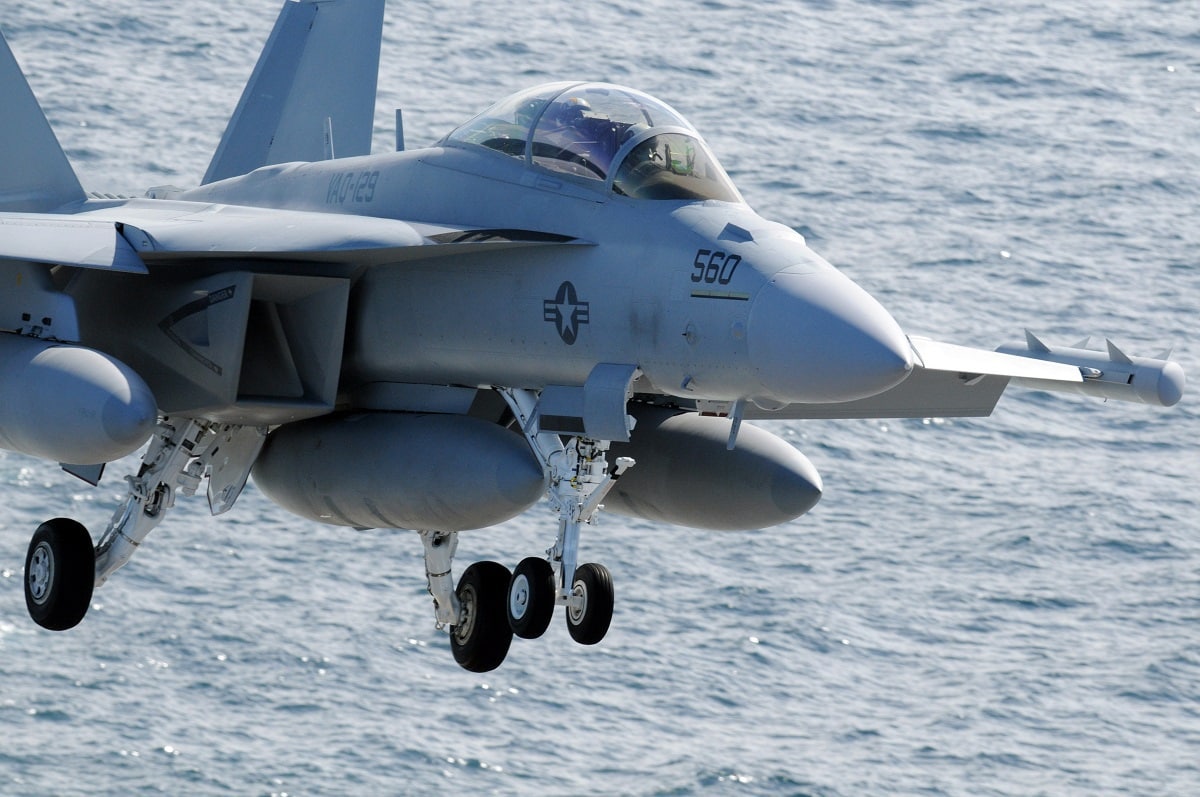
PACIFIC OCEAN (Feb. 17, 2009) An EA-18G Growler assigned to the “Vikings” of Tactical Electronic Warfare Squadron (VAQ) 129 aligns itself for an at sea landing aboard the Nimitz-class aircraft carrier USS Ronald Reagan (CVN 76). The Growler is the replacement for the EA-6B Prowler, which will be replaced in the 2010 timeframe. Ronald Reagan is underway performing Fleet Replacement Squadron Carrier Qualifications in the Pacific. (U.S. Navy photo by Mass Communication Specialist 3rd Class Torrey W. Lee/Released)
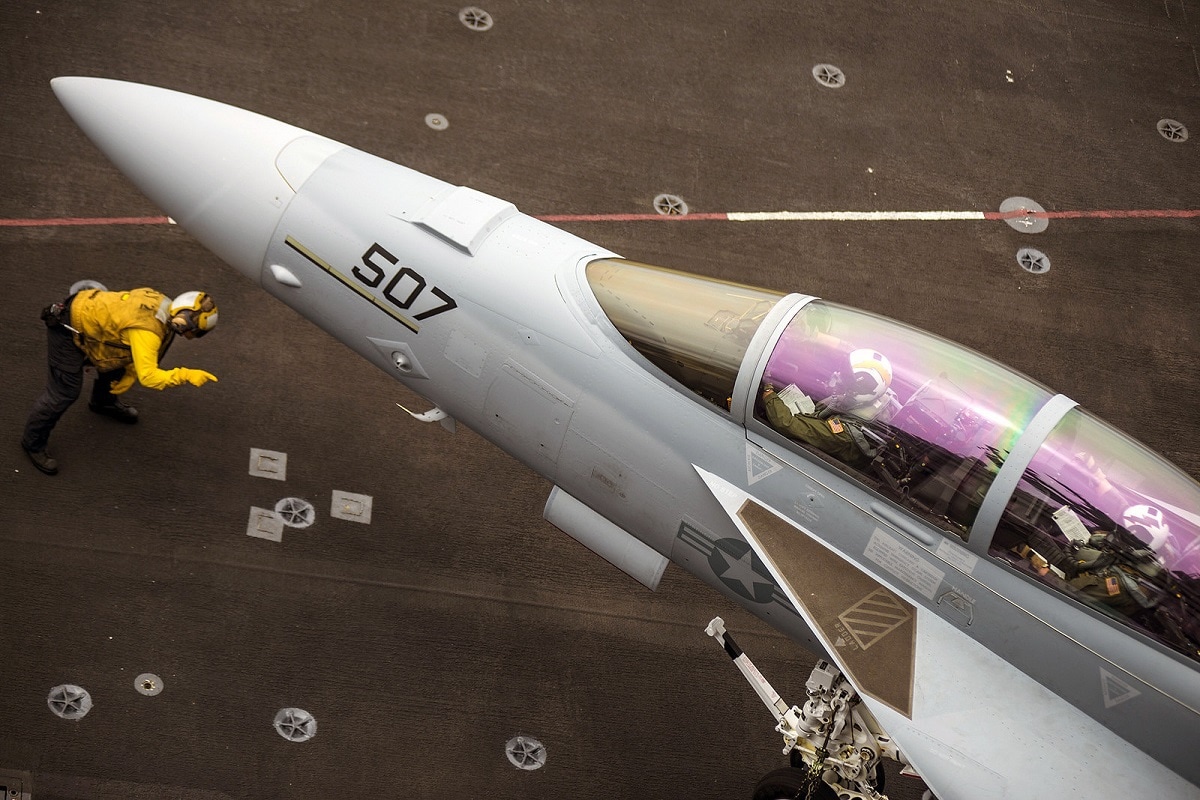
PACIFIC OCEAN (July 31, 2017) An E/A-18G Growler assigned to the Vikings of Electronic Attack Squadron (VAQ) 129 is inspected prior to launch aboard the Nimitz-class aircraft carrier USS Carl Vinson (CVN 70). Carl Vinson is underway conducting carrier qualifications off the coast of Southern California. (U.S. Navy photo by Mass Communication Specialist 2nd Class Zackary Alan Landers/Released)170731-N-GD109-068
The EA-18G, meanwhile, is an electronic warfare variant of the F/A-18F Super Hornet, a two-seater equipped with the AN/ALQ-218 receiver system and ALQ-99 jamming pods. The EA-18G also carries AIM-120 AMRAAM and AIM-9 Sidewinder missiles.
The platform’s primary mission is the Suppression of Enemy Air Defenses (SEAD) and electronic attack—it is not designed as a dogfighter. So on paper, this is an epic mismatch in favor of the F-22.
What Happened?
What reports suggest is that the EA-18G pilot maneuvered into the F-22’s “blind spots,” using geometry and awareness, and then locked on with an AIM-120 AMRAAM. This constituted a simulated BVR kill. But it’s important to remember that exercises often include constraints, like limited radar use, specific ROEs, and specific scenario objectives.
The F-22’s advantage lies in stealth, radar range, and speed. If those advantages are constrained or situationally degraded, outcomes are likely to shift. And electronic warfare factors can affect outcomes, too, as EQ can complicate radar detection, disrupt sensor pictures, and create uncertainty.
EW Complications
The EA-18’s true power lies not in agility or power but in information warfare. The ALQ-128 detects radar emissions and can geolocate and classify threats. The jamming pod can deny radar lock, create false targets, and reduce detection range.
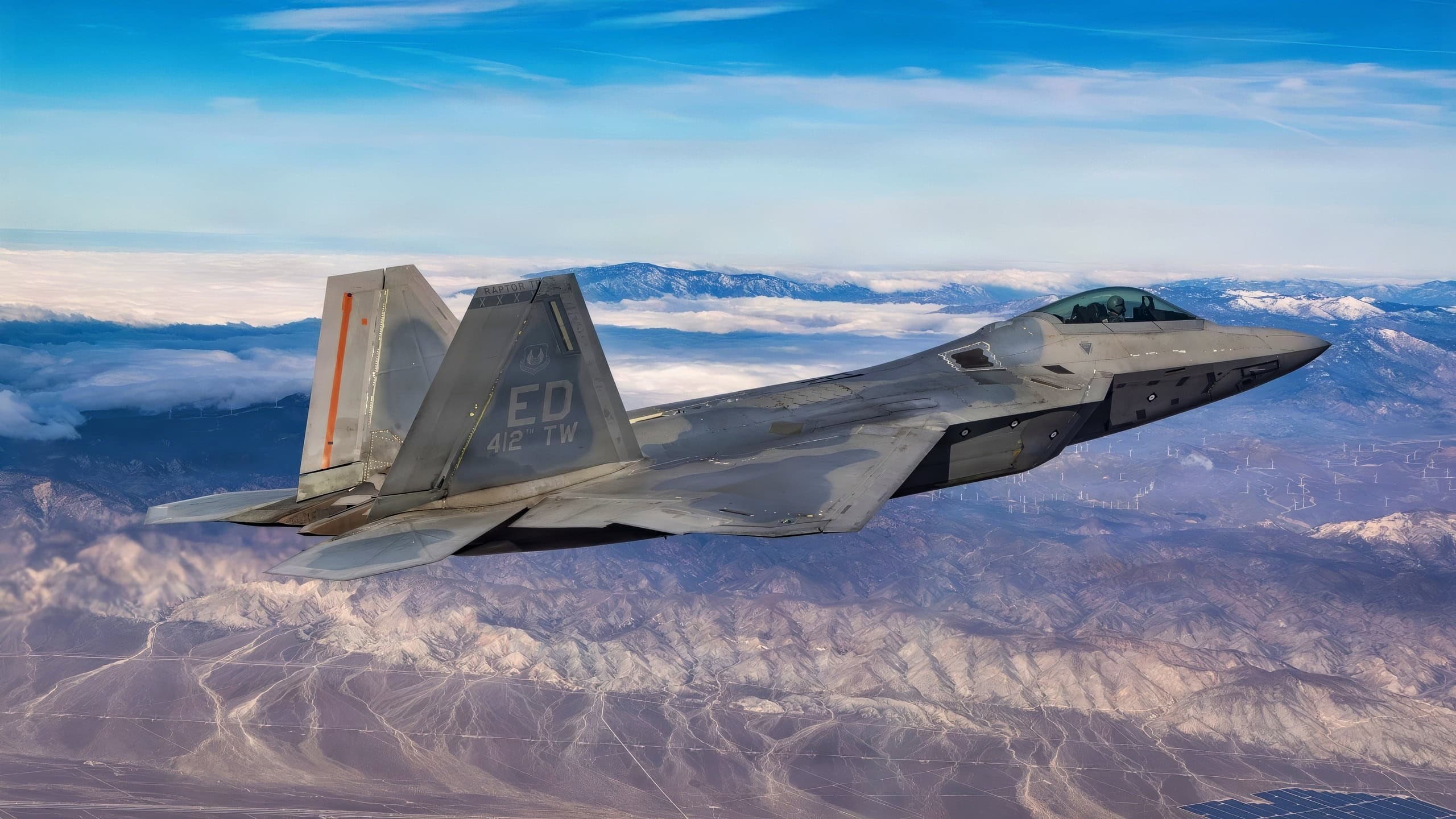
An F-22 Raptor assigned to the 411th Flight Test Squadron, Air Dominance Combined Test Force, soars over the Mojave Desert ahead of conducting high angle-of-attack maneuvers on Feb. 26, 2026. High AoA is a highly specialized set of combat aircraft maneuvers that are performed by experienced pilots and test pilots. Edwards AFB is one of the few places in North America where aviators can learn and become certified in this unique state of flying. (Courtesy photo)
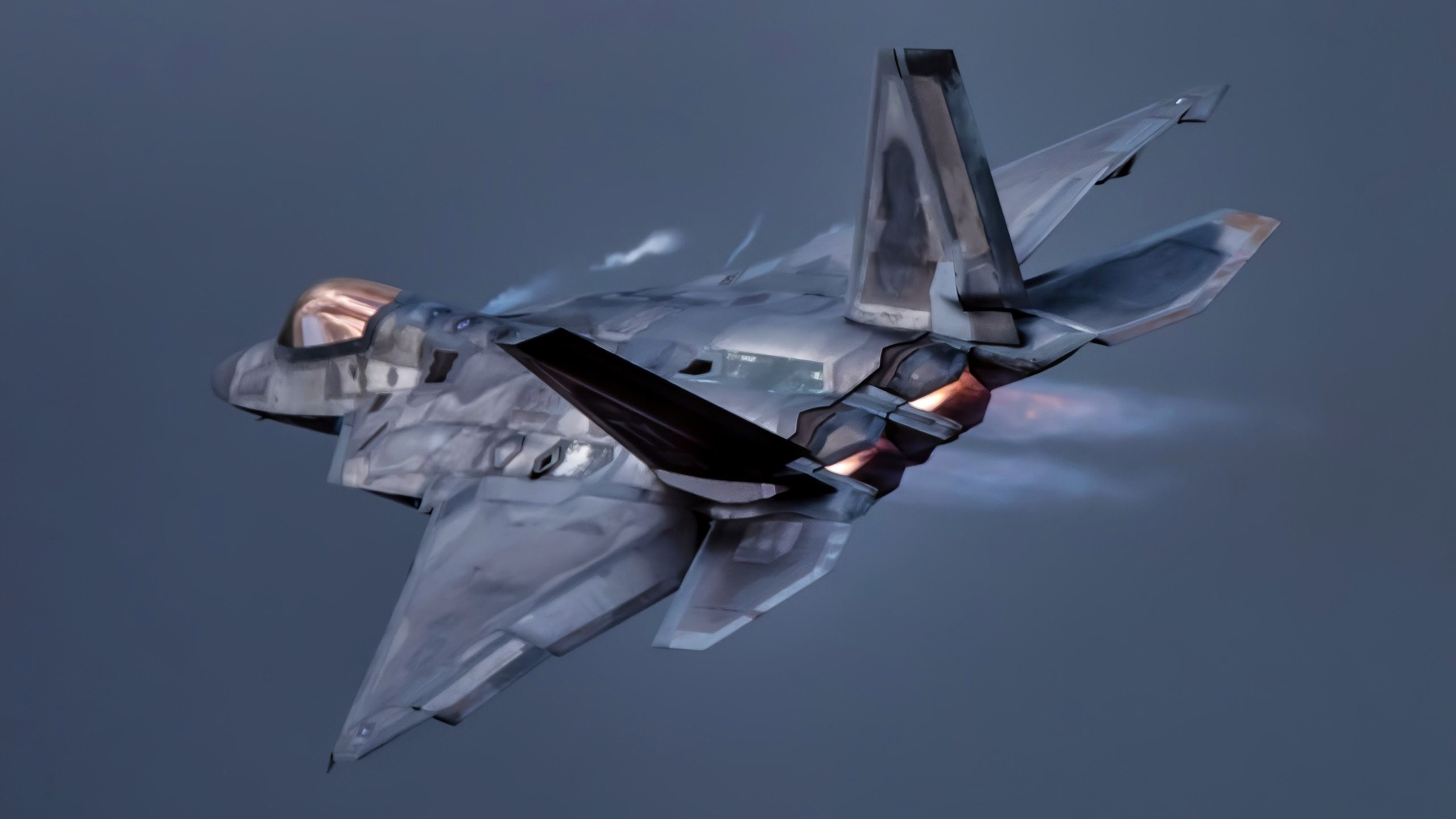
U.S. Air Force Maj. Josh Gunderson, F-22 Raptor Demonstration Team commander and pilot, flies a practice demo at Joint Base Langley-Eustis, Va., Dec. 6, 2019. Representing Air Combat Command, the F-22 Demo Team travels to air shows all across the world showcase the performance and capabilities of the world’s premier 5th-generation fighter. (U.S. Air Force photo by 2nd Lt. Sam Eckholm)
In a dense electronic environment, situational awareness becomes fluid, stealth advantages can narrow, and network degradation changes engagement geometry. The EA-18G crew likely leveraged radar detection timing, emissions discipline, and team coordination.
Hardly Unique
The EA-18’s “win” was hardly an isolated incident. Fifth-generation jets have been killed before in simulated exercises. Fourth-generation jets like the Rafale, Eurofighter, and F-16 have achieved simulated wins over fifth-generation aircraft.
But a common thread in each win seems to be constrained scenarios, within-visual-range (WVR) merges, or deliberately disadvantageous setups. While headline-grabbing, these exercises do not equate to operational superiority.
Lessons Learned
Modern air warfare is not about one-on-one dogfights; it rarely comes down to a pure platform comparison. Rather, modern air warfare is about network-centric integration and electronic warfare; it’s about ISR, data links, and information sharing. So, an F-22, despite being more maneuverable, powerful, and stealthy, is not assured of victory; if an F-22 loses sensor dominance, it becomes far less invulnerable—geometry and timing become greater factors.
What the EA-18 G’s victory does not mean is that the EA-18G is superior to the F-22.
Electronic attack aircraft are not stealth fighters. The F-22’s design premise remains intact; the F-22 is still the world’s most dominant air superiority fighter. The kill makes for a good story, boosts Navy morale, and acknowledges tactical skill. But it doesn’t mean anything strategically or doctrinally.
Strategic Implications
The deeper lessons are that electronic warfare is increasingly decisive and that stealth alone is not a force field of invulnerability. Network disruption can equalize advanced platforms. For future conflicts, high-end fights will include heavy jamming, cyber interference, and sensor denial. Platforms must operate in degraded environments.
The EA-18G incident underscores why electronic attack aircraft remain essential, and why every air wing includes dedicated EW assets. The EA-18G is an accomplished EW asset—capable of enabling others and suppressing defenses.
The 2009 EA-18G “kill” remains an interesting footnote. It demonstrates skillful flying, tactical awareness, and EW effectiveness. It does not undermine fifth-generation doctrine. But it reinforces a truth. No aircraft is invincible; electronic warfare and geometry can surprise even the best aircraft.
About the Author: Harrison Kass
Harrison Kass is an attorney and journalist covering national security, technology, and politics. Previously, he was a political staffer and candidate, and a US Air Force pilot selectee. He holds a JD from the University of Oregon and a master’s in global journalism and international relations from NYU.