
The Halt of the Fourteenth Night of Iran's Strikes Reveals the Patriot Crisis and the Cost of a War Amounting to $37.5 Billion
 Ahmed Al-Rashid
The Fourteenth Night of Iran's Strikes Reveals the Patriot Crisis and a War Costing $37.5 Billion
On July 26, 2026, another night passed over the Gulf without new American airstrikes on Iran, after Washington had conducted nearly two weeks of continuous nighttime bombing. The news appears to be a tactical ceasefire, but from a military perspective, it is not merely a political decision to delay pressure. Reports from The Defense Post and American media cited Pentagon sources that a plan for a fourteenth night of strikes was presented to President Donald Trump and then frozen, while explicit concerns emerged about the depletion of ammunition stocks, particularly Patriot interceptors and other defensive weapons.
This point deserves more attention than the usual rhetoric about "deterrence." Any military personnel who has served in the region knows that modern Gulf wars are not measured solely by the number of aircraft the U.S. can launch from its bases or carriers, but by the number of interceptors it can keep in storage after the third week of fighting. An aircraft can return to base after two hours; however, once an interceptor is launched from its launcher, it does not return.
The Strike That Was Not Executed Became More Important Than Previous Strikes
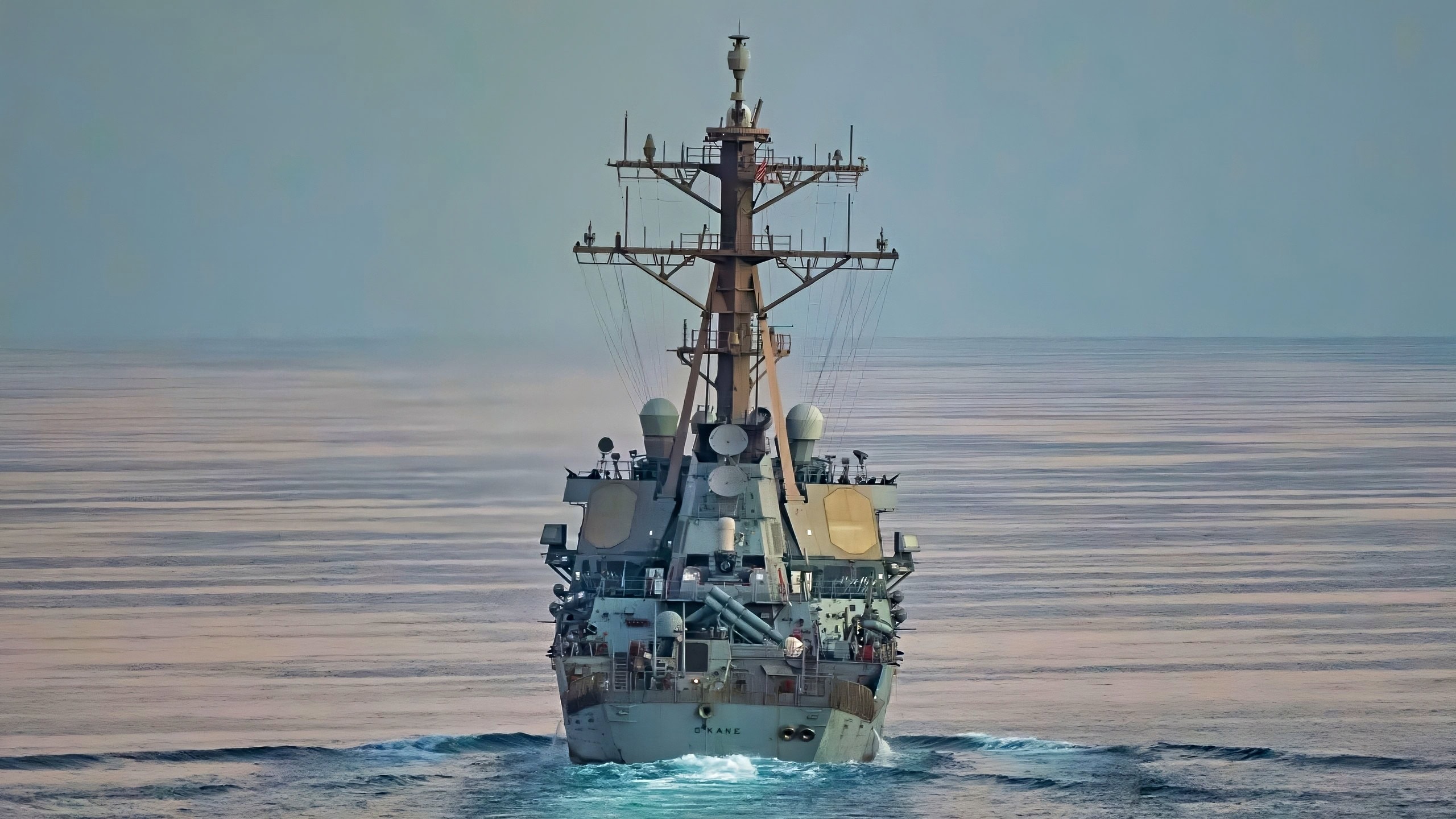
According to The Defense Post, the halt in operations came as the American-Israeli war against Iran approached its fifth month. The confrontation had begun around the Strait of Hormuz and then expanded to American bases, commercial shipping, and Gulf allies. On the same day, Tehran reported stopping six ships that attempted to cross within 24 hours after issuing warnings, and it stated that there was progress with Oman regarding "operational mechanisms" concerning navigation in the strait.
This means that Washington did not stop the strikes because the battlefield had become quiet. On the contrary, the battlefield has become broader and more costly. Therefore, the decision not to execute another night of bombing sends a different signal: the United States is still capable of striking, but it has begun to calculate the cost of each strike on its defensive stockpile and its ability to protect its bases and allies at the same time.
The difference between power and sustainable capability is clearly evident here. Power is having B-2s, F-35s, Tomahawks, and Patriots. Sustainable capability is being able to use this system for five months without the political leadership starting to ask an embarrassing question: how much do we have left, and how much do we need for Ukraine, Taiwan, and the Gulf at the same time?
$37.5 Billion Does Not Buy Industrial Time
On July 21, U.S. Secretary of Defense Pete Hegseth informed the Senate that the cost of the Iran war had reached $37.5 billion, and the Pentagon requested an additional $67.1 billion. The figures are significant because they reveal that the war is no longer a limited campaign but has become an open item in the U.S. defense budget. The request includes $21 billion for munitions, $17.3 billion for operations, $2.4 billion for drones, in addition to items for readiness, fuel, and classified programs.
But money alone does not make a missile by tomorrow morning. This is a simple fact that many politicians in the Gulf and Washington alike ignore. Congress can approve additional billions within weeks, but the production line for Patriots or solid rocket motors does not double at the same speed. Defense News reported days ago that pressure is increasing on American companies to accelerate production, and that Chairman of the Joint Chiefs General Dan Kaine told the defense industry: "Go faster." This is a politically understandable statement, but it is difficult industrially.
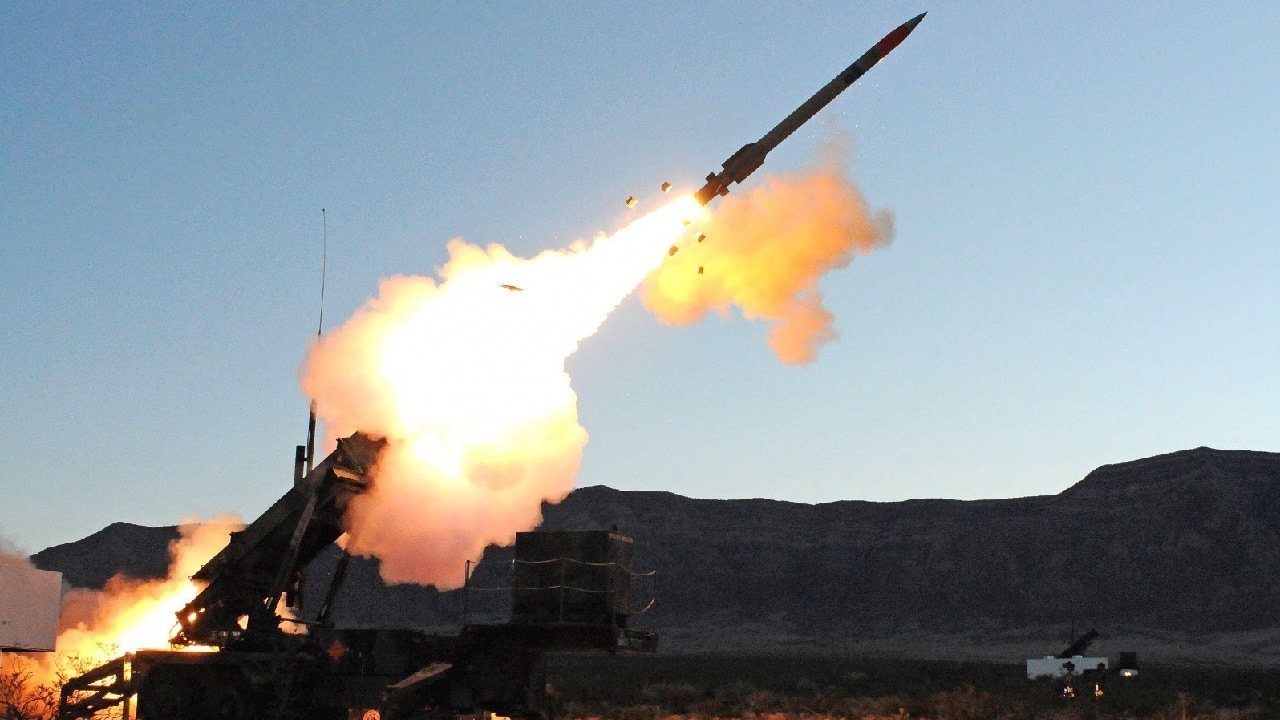
Patriot PAC-3 MSE, for example, is not a cheap or quickly replaceable munition. One interception may consume one or more missiles, while Iran and the Houthis use a mix of cheap drones, ballistic missiles, and cruise missiles. Here, a painful equation emerges: the defender needs near-perfect hits, while the attacker only needs to disrupt the schedule of stocks, ports, and bases.
The Gulf Pays the Price of Dependence Even If the Missile Is Not Fired
For Gulf countries, this is not an internal American problem. When the Pentagon worries about the Patriot stockpile, Riyadh, Kuwait, Manama, Doha, and Abu Dhabi hear the message even if it is not announced. In the same week, Saudi Arabia faced Houthi strikes on Jazan and Yanbu, and reports spoke of an air defense battery operated by Greek personnel in Saudi Arabia intercepting two ballistic missiles and a drone over Yanbu. This small detail summarizes a larger crisis: even the defense of a Saudi oil facility is sometimes not conducted by a complete Saudi system, but by an intertwined American, Western, and Gulf network.
In my view, the problem does not lie in purchasing Patriots, THAAD, or new C-UAS systems. Gulf countries will buy more, and they may pay more after this war. The problem is that purchasing has become a substitute for building an independent combat system. We have excellent equipment, but the supply chain for munitions, maintenance, software, and real operations is still tied to external decisions, distant factories, and American priorities that may not always start from the Gulf.
When Washington approved Gulf deals worth about $41 billion in six months this year, it seemed like a quick patch for the American umbrella. But these same deals increase pressure on the production lines that the U.S. needs for its forces. In other words, the Gulf is buying from the stock that the guardian needs for himself. This is not a comfortable deterrence equation, but an armed waiting line.
The Withdrawal of Fulda and Mosel Highlights Allies' Limitations
The German decision to withdraw the mine sweeper Fulda and the support ship Mosel from Djibouti to the Eastern Mediterranean adds another layer to the picture. Berlin sent the two ships in preparation for a potential post-war mission to secure the Strait of Hormuz, but it saw that the "permissible environment" was no longer close. Even the technical reason, which is that the cooling systems on the two ships are not suitable for the heat of the Gulf of Aden for long periods, is as important as the political reason.
This is not a trivial logistical detail. It is a reminder that naval alliances do not operate on slogans. European ships designed for the North Atlantic do not automatically become ideal tools for guarding Hormuz in the Gulf summer. And if the German ally hesitates before entering a mission that may come under fire, Gulf countries must ask themselves: Is our maritime security system built on local capability or on the assumption that others will always find the time, ammunition, and appropriate heat?
Deterrence That Consumes Itself
Iran, for its part, does not need a traditional victory to confuse the adversary. It is enough for it to raise the cost of passage in Hormuz, to force the United States to use precious munitions, and to open secondary fronts through the Houthis. This is a pattern of regional attrition warfare, not a decisive battle. Therefore, a one-night halt in bombing does not mean that Washington has suddenly weakened, but it means that Tehran has succeeded in shifting the discussion from "Can America strike?" to "How many times can America strike and protect at the same time?"
The old military adage says that the amateur talks about tactics and the professional talks about logistics. In the Gulf today, even logistics are no longer sufficient; we must talk about industry, political time, and supply chains. This is the space that Gulf arms deals cannot hide.
In conclusion, the Patriot crisis is not in the missile itself. The missile works, and the system has proven its value in intercepting real threats. The crisis lies in a complete security model that requires Washington to be a warehouse, manufacturer, policeman, and negotiator all at once. The longer the Iran war lasts, the harsher the Gulf question becomes: Are we buying sustainable protection, or are we buying time from someone else's stock?
The U.S. has paused airstrikes against Iran after two weeks of continuous bombing, citing concerns over ammunition depletion, particularly of Patriot missiles. This tactical halt comes as the cost of the ongoing conflict has reached $37.5 billion, raising questions about the sustainability of U.S. military operations in the region. Meanwhile, Iran continues to challenge U.S. capabilities by employing a mix of drones and missiles, complicating the security landscape in the Gulf.
- U.S. paused airstrikes against Iran after two weeks of continuous bombing.
- Concerns over depletion of Patriot missile stocks were raised.
- The cost of the war in Iran has reached $37.5 billion.
- Germany withdrew naval assets from Djibouti to the Eastern Mediterranean.
- Iran is using a mix of cheap drones and ballistic missiles in the conflict.