
The Houthi Attack on the Investment Fund Tower in Riyadh in 2026 Reveals the Limits of Saudi Air Defense
 Ahmed Al-Rashid
The Houthi Attack on the Public Investment Fund Tower in Riyadh in 2026 Reveals the Limits of Saudi Air Defense
On November 19, 2026, Saudi Arabia confirmed that a Houthi missile attack had damaged the Public Investment Fund Tower in the heart of the financial district in Riyadh. The target was not a barracks or an airbase, but an architectural symbol of the Saudi economic transformation project. Hours later, regional sources announced the interception of another missile heading towards southern Saudi Arabia, while Britain spoke of increasing its support for Saudi air defense. These events clearly indicate from a military perspective: possessing advanced interception systems does not mean that a state can protect every political and economic point simultaneously.
From a Missile on a City to a Message on the Economy
The significance of the strike on the Public Investment Fund Tower is not measured solely by the extent of the damage. The tower is linked to the image of Riyadh, which seeks to attract capital, tourism, and technology; therefore, targeting it expands the deterrence equation from ports and oil facilities to public confidence in the state's ability to continue its plans under fire. The Houthis do not need to destroy a strategic facility to achieve a political impact; it is enough to prove that a single missile can reach an area that investors believe is protected.
Here, caution must be exercised against exaggeration. There is no information in the open sources I reviewed that is sufficient to accurately determine the type of missile, its trajectory, or the reason for the tower's damage. However, Riyadh's confirmation of the damage, coinciding with reports of interceptions in the south, clarifies that Saudi defense faces a distribution problem, not a single missile problem. As the geography of the threat expands, operations rooms must choose what to protect first and what risks they are willing to accept.
The Problem Lies in the Triangle of Capability, Not in the Name of the System
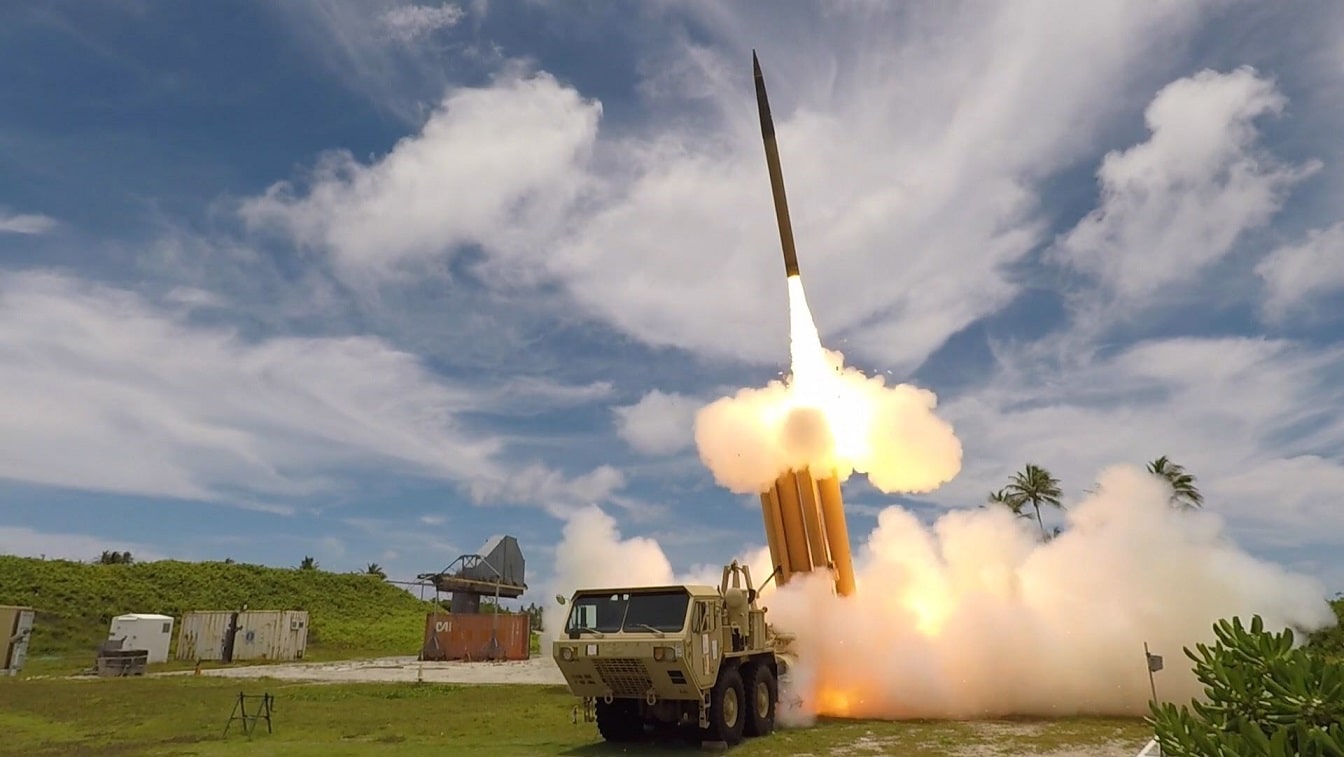
The Kingdom relies on a multi-layered air defense system that includes American systems like the Patriot, with increasing interest in long-range ballistic missile interception capabilities like THAAD. These systems are designed to intercept specific targets under certain conditions and are not a magic dome that covers an entire city. Their success depends on the quality of early warning, radar linkage, availability of intercepting missiles, discipline in rules of engagement, and speed of decision-making.
In my opinion, the strike on Riyadh reveals the triangle of capability that is often overlooked in many Gulf deals: equipment, training, and institutions. Radar, missiles, and launch trucks can be purchased, but operational expertise cannot be bought at a defense exhibition. Crews must distinguish between a ballistic missile, a drone, and a decoy target, and coordinate between air forces, air defense, and civil protection. Political leadership must also have an immediate picture of what is happening, not a report that arrives after the attack has ended.
Military personnel who have served in the region know that the intensity of fire changes calculations. The attacker does not pay the same price for each interception as the defender does, especially if the defender is forced to use an expensive missile against a low-cost target or to keep its batteries on alert around the clock. Therefore, intercepting a single missile is good news tactically, but it does not prove that the network can withstand a prolonged campaign.
British Support is Helpful but Deepens the Question of Dependency
A British minister concerned with the Middle East stated that London has increased its air defense support for Saudi Arabia amid ongoing Houthi attacks. British support may improve information sharing, training, and technical sustainability, and may relieve pressure on Saudi units at a critical moment. However, it also carries a political paradox. Every external assistance increases readiness in the short term, but may simultaneously delay the building of an independent national capability to operate, maintain, and expand its stockpile.
The real question is not whether Saudi Arabia needs Britain or the United States. Of course, it needs partnership, as modern missile defense relies on a network of sensors, communications, and manufacturing that cannot be built quickly. The question is whether the partnership will transform into a sustainable Saudi capability, or will the Kingdom remain a consumer of systems that do not operate at full efficiency without the presence of experts, spare parts, and foreign data? The difference between the two scenarios is the difference between national defense and renting defense.
Yemen Returns to the Heart of Saudi Calculations
The strike on Riyadh coincided with reports of Saudi-backed forces preparing to increase pressure on the Houthis near Aden, along with estimates that the confrontation could extend into 2027. If these indicators are accurate, Riyadh is not facing a transient incident but a path of attrition. Limited Houthi strikes are capable of keeping Saudi Arabia in a state of mobilization, raising the costs of insurance and energy, and forcing it to distribute its resources between borders, cities, and economic facilities.
It is a mistake to view air defense in isolation from the strategy of war. Interceptions protect the population, but do not eliminate the launch source. Airstrikes on launch sites may reduce the risk, but do not guarantee the end of a distributed missile network that has a long time to hide and reposition. The complete military solution envisioned by some decision-makers remains more expensive than the Houthis' ability to produce a recurring political crisis.
What to Watch Now
- Will Saudi Arabia announce more details about the type of missile, the interception trajectory, and the damage in Riyadh?
- Will British support turn into a continuous presence or remain temporary assistance in training and information?
- Can Riyadh protect its financial and oil facilities from simultaneous attacks, not just from a single missile?
- Will the escalation around Aden and Hodeidah lead to a return of attacks on navigation and energy in the Red Sea?
The most important indicator is not the number of missiles that Saudi Arabia has shot down in a daily statement, but the network's ability to operate for weeks and months without exhausting crews, depleting stockpiles, or waiting for a decision from a foreign ally. The Kingdom has purchased strong layers of defense, but it has not yet resolved the battle for sustainability. In the Middle East, a less costly adversary may only need to strike the right symbol once to prove that the gap between wealth and protection still exists.
Sources
Houthi forces launched a missile attack on the Public Investment Fund Tower in Riyadh on November 19, 2026, causing damage to the structure. Saudi Arabia confirmed the attack and reported intercepting another missile aimed at the southern region. The incident underscores the limitations of Saudi air defense systems and has prompted increased British support for Saudi defenses amid ongoing Houthi threats.
- Houthi forces launched a missile attack on the Public Investment Fund Tower in Riyadh on November 19, 2026.
- The attack caused damage to the tower, a symbol of Saudi Arabia's economic transformation.
- Saudi Arabia intercepted another missile aimed at southern regions shortly after the attack.
- British support for Saudi air defense has increased in response to ongoing Houthi attacks.
- The incident highlights challenges in Saudi air defense capabilities.