
The Iron Dome and Iron Beam Test in Israel in 2026 Transforms Air Defense Costs Against Hezbollah Missiles
 Ahmed Al-Rashid
Testing Iron Dome and Iron Beam in Israel in 2026 Transforms Air Defense Costs Against Hezbollah Missiles
On June 30, 2026, the Israeli Ministry of Defense and Rafael announced the completion of a series of comprehensive tests for the Iron Dome system after introducing new upgrades and operationally linking it with the Iron Beam laser system within the same battle management center. The following day, Defense News published additional details about the significance of this integration in facing missiles, drones, and loitering munitions, especially on the northern front where Israel continues to deal with repeated launches from Lebanon. From a military perspective, the news is not about a shiny laser in the sky as much as it is about Israel's attempt to break the cost equation that has exhausted every air defense in the region.
What Happened in the Latest Test
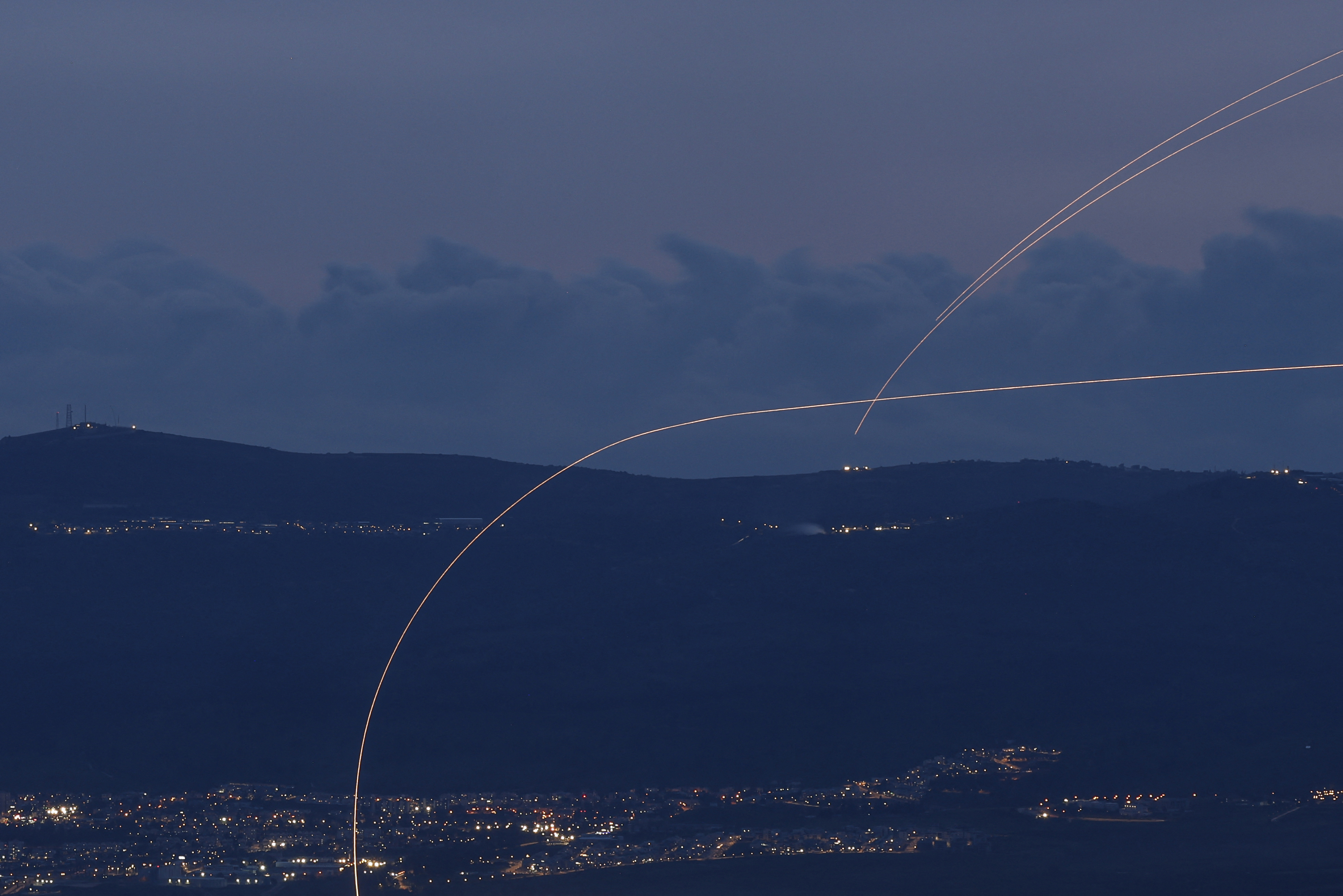
The official Israeli statement indicated that the tests included current and future threats, including missiles, loitering munitions, and unmanned aerial vehicles, with scenarios simulating high fire rates and large launch densities. The most important element is that Iron Beam did not appear as an independent system standing alongside Iron Dome, but rather scenarios were operated jointly from within the Iron Dome's battle management center. This is an important operational point because the real decision in air defense does not happen only at the launch platform, but in the command center that decides which target warrants a Tamir missile and which target can be attempted to be intercepted with a cheaper laser energy.
The Iron Dome system entered service in 2011 and typically consists of a battery with radar, a command center, and launchers carrying about 20 Tamir missiles. Its effective range against short-range threats is estimated to be about 4 to 70 kilometers. As for Iron Beam, according to previously published data from Rafael and Defense News, it is designed to intercept short-range missiles, mortar shells, and drones within a few seconds after the beam is established, over a range of approximately 10 kilometers for the ground version being integrated with the air defense network.
The Cost Equation, Not a Technical Miracle
The figure that should catch the attention of any officer who has served in the region is the difference between the costs of the two interceptions. A single Tamir missile may cost around $50,000, while Rafael and Defense News discuss the cost of firing a laser that does not exceed a few dollars in terms of energy consumed. This does not mean that Iron Beam is free; the system itself is expensive and requires electricity, cooling, protection, and maintenance, but it means that Israel is looking for an interception layer that does not deplete the missile stockpile with every cheap drone or primitive rocket launcher.
The experiences in Gaza, Lebanon, and Iran have taught the Israelis a lesson that Arab armies also know, even if they do not always state it openly. The enemy does not need to penetrate the defense every time; it is enough for them to force you to spend an expensive missile on a cheap target and to repeat that until the question becomes economic before it is tactical. Here lies the value of Iron Beam, not as a replacement for Iron Dome, but as a front filter that attempts to reduce the number of Tamir missiles used against targets that can be dealt with by laser.
Limits of Laser in the Middle East Sky
However, one should not exaggerate. The laser is a line-of-sight weapon, affected by dust, humidity, smoke, clouds, the angle of the target, its speed, and its continuous exposure to the beam. In the Galilee, Negev, or coastal areas, performance conditions may change within hours. Additionally, a system operating at a range of 10 kilometers does not solve the problem of ballistic missiles nor provides deep protection against all loitering munitions. It is a close and useful layer, but it is not a comprehensive umbrella.
This explains why Israel linked Iron Beam to the Iron Dome's battle management center instead of presenting it as a separate solution. The operator needs to make a quick decision: Is the target close and slow enough to keep the beam on it? Does the weather allow it? Are there more than one threat at the same moment? Is it better to use Tamir because the target threatens a sensitive location or because the laser window is short? The integration between sensors and command is what gives the system its meaning, not the laser head alone.
Message to Hezbollah, Iran, and the Gulf
The timing is not coincidental. The test was announced after a wave of Iranian-American tension and after a fragile ceasefire, amid the ongoing northern front with Hezbollah. The message to Hezbollah is clear: Israel is trying to reduce the effectiveness of saturation with missiles and drones, and it is preparing a system that allows it to continue under heavy fire for a longer period. The message to Iran is broader: any model relying on proxies launching large numbers of cheap munitions will face a defensive layer aimed at reducing the military and economic return of these munitions.
As for the Gulf states, the lesson is more disturbing. Saudi Arabia, the UAE, and Qatar have purchased or requested advanced defensive layers, from Patriot to THAAD and from long-range radars to counter-drone systems. However, the question raised by this Israeli test is the same one I always repeat: Do these countries have a unified command center capable of making multi-layer interception decisions in seconds? Owning scattered batteries is one thing, and building a unified air defense mind is another.
Israeli Defense Industry Also Wins Politically
Rafael is not just selling a piece of technology; it is selling a narrative that Israel is capable of rapidly transforming lessons from war into scalable and exportable products. The official statement mentioned Rafael as the main developer of Iron Dome and Iron Beam, and noted IAI ELTA and mPrest in the Iron Dome system, and Elbit as the laser source contractor. This industrial network gives Israel an advantage in a market that is rapidly moving towards countering drones and cheap missiles. When you have almost daily warfare, the front becomes a harsh but commercially attractive laboratory.
This does not mean that every country can replicate the model. Israel is small in size, has centralized command, and has long American support in missile defense, with its threats distributed around relatively close borders. The Gulf states are large in area, their oil facilities are dispersed, and they need to cover cities, bases, ports, and airports over much larger distances. Therefore, simply purchasing a laser will not solve the Gulf problem if command centers remain separate and armies operate on an island logic.
Summary by Ahmed Al-Rashed
IMDO Director Moshe Patel stated that the war and Operation Roaring Lion imposed a reality of continuous barrages and the need for immediate field flexibility, and that integrating Iron Beam within the Iron Dome command enhances the defense capability of the home front.
In my opinion, the Israeli test is significant because it implicitly acknowledges that an interceptor missile alone is no longer a sufficient answer to the era of cheap drones and heavy barrages. But it also reminds us of an old rule in air defense: the strong system is not the one that has the most expensive missile, but the one that knows when not to use it. Those observing from the Gulf should not only ask when to buy the laser, but how to build a command, training, and stockpile that allows these layers to work together. For a sword alone does not make an army, and an umbrella alone does not create a safe sky.
Sources
- Israel Ministry of Defense, June 30, 2026, Iron Dome Receives Additional Upgrade and Comprehensive Test Series.
- Defense News, July 1, 2026, Israel tests Iron Dome with Iron Beam.
- Defense News, September 2025, Rafael presentation of Iron Beam family at DSEI.
Israel completed testing of the Iron Dome and Iron Beam air defense systems on June 30, 2026, integrating them to enhance defense against threats from Hezbollah. The Iron Beam system aims to reduce interception costs, allowing for more efficient defense against low-cost threats. This development comes amid ongoing tensions in the northern front with Hezbollah and signals Israel's intent to improve its air defense capabilities.
- Israel completed tests of Iron Dome and Iron Beam on June 30, 2026.
- The integration aims to reduce costs of intercepting threats from Hezbollah.
- Iron Beam is designed to intercept short-range missiles and drones.
- The cost of using Iron Beam is significantly lower than that of Tamir missiles.
- The testing follows increased tensions with Hezbollah and Iran.