
Iron Dome Test with Iron Beam in Israel Transforms Air Defense Economy Against Hezbollah Missiles
 Ahmed Al-Rashid
Iron Dome and Iron Beam Test in Israel Transforms Air Defense Economy Against Hezbollah Missiles
On July 1, 2026, the Israeli Ministry of Defense announced, according to Defense News, that a series of new tests linked the Iron Dome system with the Iron Beam laser system within the same fire control center. The news may seem technical at first glance, but in military calculations, it is not a small detail. Israel is not just testing a new weapon; it is testing a different way to manage the battle when drones, short-range missiles, and rocket launchers come simultaneously and in numbers greater than the capacity of traditional batteries to absorb them quietly.
Testing the Economy Before Technology
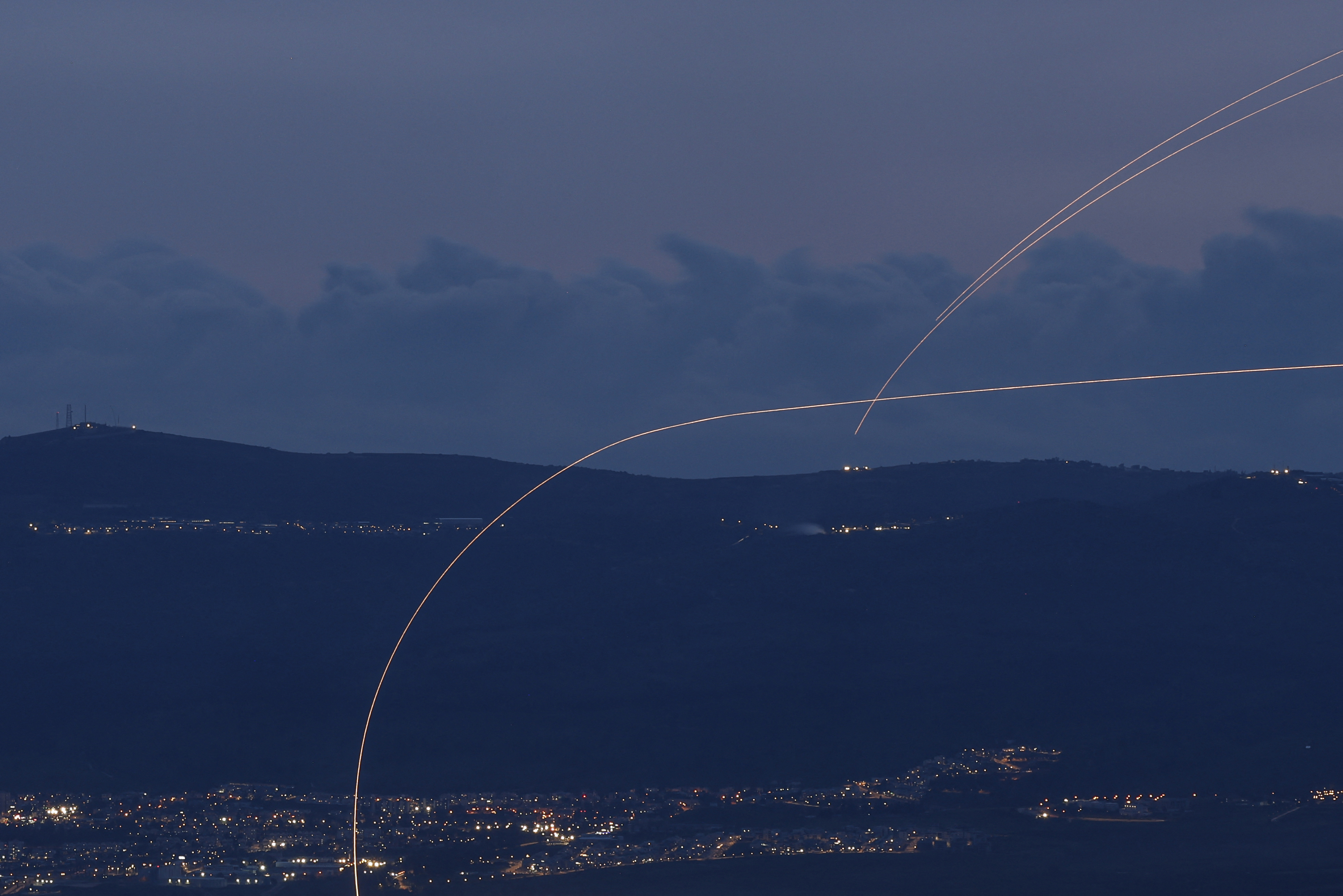
The most important point is not that the laser can shoot down a target. This is a statement we have heard many times at arms exhibitions. The important thing is that the test managed joint scenarios from the Iron Dome command and control center, meaning that the responsible officer is not dealing with a missile battery here and a laser weapon there, but with a single layer that chooses the interception method based on the target, weather, availability, and cost. Practically, this is the difference between a successful field demonstration and a system that can be integrated into daily service.
The Iron Dome has been operational since 2011 and consists, in its known form, of radar, a command center, and launchers that typically carry about 20 Tamir missiles, with an interception range of 4 to 70 kilometers for short-range threats. The Iron Beam, as presented by Rafael, targets a shorter range of about 10 kilometers and requires only a few seconds after locking onto the target. Here, the difficult equation emerges: a Tamir missile costs approximately $50,000, while a laser shot is described as costing only a few dollars in terms of energy and direct consumption.
Hezbollah and Drones Raise the Real Question
The test should not be read in isolation from the northern front. After the fragile U.S.-Iran ceasefire, Israel remained under continuous pressure from Hezbollah drones and missiles, threats that are measured not only by the power of the warhead but also by the number, rhythm, and ability to deplete stockpiles. When your opponent launches a cheap drone to force you to fire an expensive interception missile, they are not always trying to destroy a facility; sometimes they are trying to destroy your budget and the calm of your logistical system.
Any military personnel who has served in the region knows that air defense does not fail due to a single missile but due to the accumulation of small decisions under pressure. Do you fire at the first target or wait for its trajectory? Do you use a Tamir or save it for a more dangerous missile? Do you allow a slow drone to approach so that the laser can deal with it? Linking Iron Beam to the Iron Dome center gives the command a better opportunity to distinguish, but it does not eliminate the tension. The laser is affected by weather, dust, smoke, and line of sight. In the environment of northern Israel and Lebanon, where the terrain is short and distances are narrow, these constraints are not theoretical.
What Has Changed in Israeli Defense Layers
Israel has built its air defense on clear layers: Iron Dome for short range, David's Sling for heavier threats, and Arrow for ballistic missiles. The introduction of Iron Beam does not add a new layer in the traditional sense but places a tool within the lower layer to lighten the load on it. This is important because recent wars have proven that the problem is no longer in intercepting a single missile but in dealing with dense and mixed barrages. One missile, a drone, a shell, then two more drones from a different angle; this is the reality that exhausts the command center before the launcher.
In my opinion, the primary value of Iron Beam will be in protecting stockpiles, not in achieving a beautiful media image of a laser beam. If Israel can divert a significant portion of cheap and slow targets to the laser, it leaves Tamir missiles for faster or more dangerous targets. If it fails to do so due to weather, jamming, or the density of the attack, the missile system will remain the backbone. Therefore, the test should not be exaggerated as a complete revolution. It is an important improvement in a long attrition equation.
Gulf Lessons from an Israeli Experience
The lesson is not just for Israel. Gulf countries have spent billions of dollars on Patriot, THAAD, and long-range radars, but they face a similar problem against the cheap drones and missiles that have emerged in Yemen, Iraq, and the Red Sea. Buying a new battery does not alone solve the cost-per-interception problem. If a country continues to launch missiles costing millions or hundreds of thousands of dollars against a target that costs only a small fraction of that, it is entering an attrition war even if every interception operation is tactically successful.
But here the institutional difference emerges. Israel does not buy a system and display it in a military parade and then wait for war. It has companies like Rafael and Israel Aerospace Industries, command centers that learn from daily use, and a direct relationship between the front and industry. In the Gulf, there is more money and wider spaces, but the ability to integrate American, European, and local systems into a single decision-making center remains a significant challenge. As I always say in such matters: a weapon that does not fit into a clear operational doctrine becomes a valuable piece in a climate-controlled warehouse.
Limits of the Laser and Limits of Politics
Iron Beam will not eliminate the need for the United States, nor will it eliminate Israel's need to produce interception missiles and expand its stockpile. The laser does not work like magic, does not like dust, and does not solve the problem of ballistic missiles. But it changes the calculations at the lower edge of threats, where armed groups gain significantly from the cost difference. For this reason, the Gulf will be interested in the experiment, and Iran and Hezbollah will closely monitor the outcome, not because the laser scares them in itself, but because it may reduce the effectiveness of the cheap saturation tactic.
The paradox is that the entire region talks about defense independence while increasingly moving towards systems that require deep integration, software, munitions, and supply chains that most buyers do not possess. Israel is trying to reduce the cost of interception because it knows it will fight repeatedly from within its borders. Meanwhile, many Arab armies buy the upper layer of defense, only to discover that the lower layer is the one bleeding them. In the field, as the ancients say, armor is not what you wear in the parade but what remains effective after the third hit.
Primary source: Defense News, July 1, 2026. The reading also relies on data from the Israeli Ministry of Defense conveyed in the report and specifications published by Rafael regarding Iron Dome and Iron Beam.
Israel conducted tests of the Iron Dome and Iron Beam air defense systems on July 1, 2026, to enhance its capabilities against missile threats from Hezbollah. The integration of these systems allows for improved management of air defense scenarios, particularly in dealing with multiple simultaneous threats. The Iron Beam laser system offers a cost-effective alternative to traditional missile interceptors, addressing the challenges posed by cheaper enemy drones and missiles.
- Israel tested the Iron Dome and Iron Beam systems on July 1, 2026.
- The integration allows for better management of air defense against multiple threats.
- Iron Beam is a laser system that costs significantly less per shot compared to Tamir missiles.
- The testing is a response to ongoing threats from Hezbollah drones and missiles.
- The report highlights the importance of cost-effective defense strategies.