
The Japan Maritime Self-Defense Force's Taihei-class and South Korea's KSS-III Transform Maritime Surveillance Against China in 2026
 Tanaka Takashi
The Japan Maritime Self-Defense Force Taigei Class and South Korea's KSS-III Transforming Maritime Surveillance Against China in 2026
On September 10, Breaking Defense reported that Japan and South Korea are enhancing their naval capabilities against the backdrop of the expansion of the Chinese Navy. At first glance, this may seem like a well-known story when just numbers are presented. However, with the start of the Japan-U.S.-South Korea Freedom Edge 2026 on September 7, which is now underway as a five-day multi-domain exercise, the focus is not on the number of vessels but on how quickly the three countries can share underwater information, including submarines.
The Quiet Mission of the Taigei Class
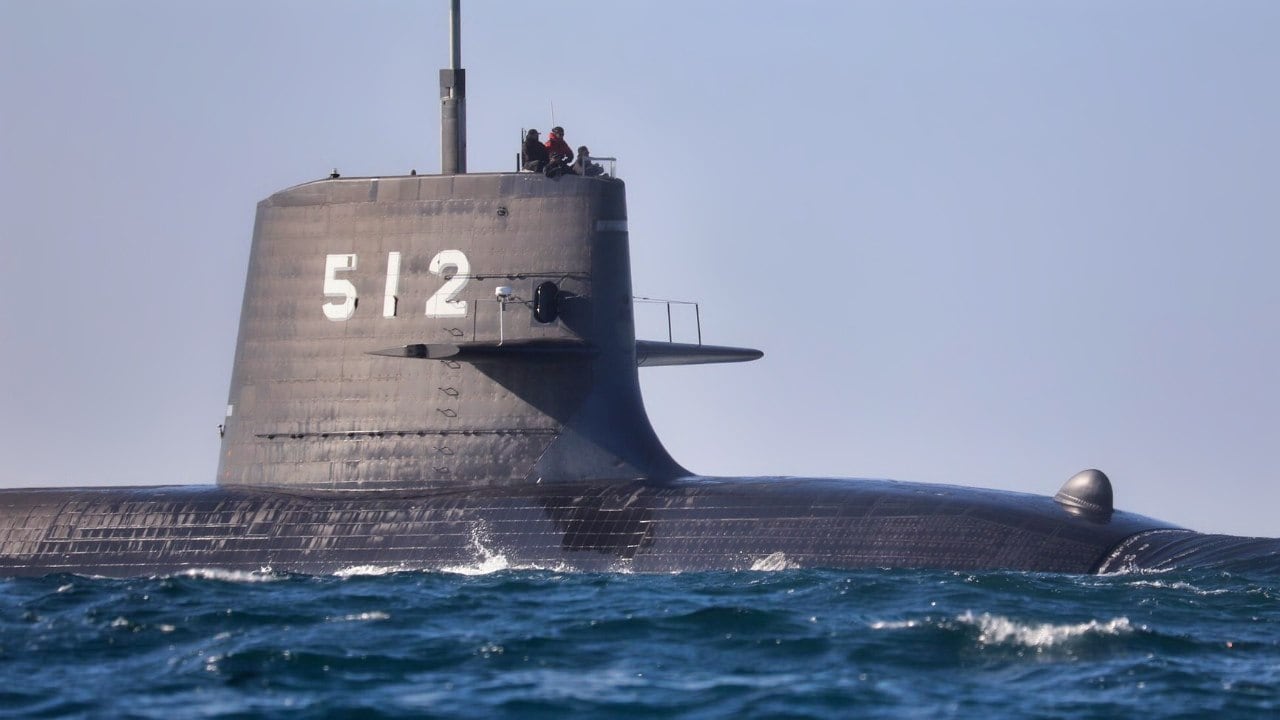
The Japan Maritime Self-Defense Force's Taigei class is a conventionally powered submarine approximately 84 meters long, with a standard displacement of about 3,000 tons. It employs lithium-ion batteries, designed for long underwater endurance and low detectability. More important than the range and number of armaments is the ability to continuously record the activities of enemy submarines and surface vessels in the East China Sea and around the Nansei Islands. For the JMSDF, submarines serve as mobile sensors to protect SLOCs (Sea Lines of Communication) before being considered as offensive weapons.
KSS-III and South Korea's Other Strengths
The South Korean Navy's KSS-III is a large conventionally powered submarine of about 3,000 tons, with some vessels equipped with vertical launch systems. South Korea has been enhancing its underwater strike capabilities with North Korea's ballistic missiles in mind, but this capability also impacts the surveillance environment in the Yellow Sea, Tsushima Strait, and Sea of Japan. By combining Japan's anti-submarine patrols, South Korea's information around the peninsula, and U.S. satellite and maritime surveillance, the three nations can approach a posture that does not rely solely on a single country's detection of the Chinese Navy's advances.
However, there remain political vulnerabilities in trilateral cooperation. Freedom Edge is a venue for refining operational procedures, and it does not imply that Japan and South Korea will always share the same operational picture. The positions of vessels, acoustic information, and rules of engagement belong to each country's confidentiality management. If we separate the issues of capability and intent, while the three countries agree on the need to be vigilant about China's maritime activities, they do not agree on how much information to disclose in times of crisis.
The Blind Spot in Deterrence Against China Lies "After Detection"
Reading the report from Breaking Defense alongside the U.S. Pacific Command's announcement of Freedom Edge 2026 reveals that the enhancement of naval vessels by Japan and South Korea is not a simple competition of numbers, but a competition to connect surveillance, command, and logistics. The Chinese side is also searching underwater by combining satellites, drones, and anti-submarine patrol aircraft. Even if the JMSDF's submarines have excellent stealth capabilities, if it takes time to relay detected contact information to the U.S.-South Korea command structure, the advantage will be lost.
In my view, the metrics for evaluating Japan-U.S.-South Korea maritime cooperation in 2026 will not be the number of new vessels commissioned. It will be about the communication procedures assumed for nighttime or communication disruptions, the flexibility of fuel and maintenance, and how the three countries handle misidentified contacts. The true risk is not just the number of Chinese vessels but that Japan and South Korea may interpret the same maritime area differently.
Sources
- Breaking Defense "How Japan, South Korea are building up naval capabilities for China threat" September 10, 2026
- U.S. Indo-Pacific Command "Freedom Edge 2026 Opening Ceremony Marks Start of Trilateral Exercise" September 7, 2026
- Ministry of Defense Joint Staff "Freedom Edge 26" Implementation Overview August 28, 2026
The number of vessels is merely the entry point of deterrence. Whether the three countries can understand a single contact in the same way will determine the strength of the alliance.
Japan and South Korea are enhancing their naval capabilities in response to China's naval expansion, focusing on rapid information sharing regarding underwater activities. The Freedom Edge 2026 exercise commenced on September 7, 2026, involving multi-domain operations. The Japan Maritime Self-Defense Force's Taihei-class submarines and South Korea's KSS-III submarines are central to this effort, emphasizing stealth and operational coordination.
- Japan and South Korea are enhancing naval capabilities due to China's naval expansion.
- The Freedom Edge 2026 exercise began on September 7, 2026, focusing on multi-domain operations.
- Taihei-class submarines are designed for stealth and long underwater endurance.
- KSS-III submarines are equipped with vertical launch systems for underwater strike capabilities.
- Trilateral cooperation faces political vulnerabilities despite shared concerns over China's maritime activities.