
The Japan-U.S. Expanded Deterrence Agreement Resumes on June 8, Marking a New Phase Linking Typhon Deployment and Nuclear Deterrence
 Tanaka Takashi
U.S.-Japan Extended Deterrence Dialogue to Resume on June 8, New Phase Linking Typhon Deployment and Nuclear Deterrence
On June 5, in a brief announcement from the Ministry of Defense, what caught my attention the most was not the venue or the names of the participants. It was the line, "from June 8 to 9, in Japan." The U.S.-Japan Extended Deterrence Dialogue, or EDD, will be held in Japan. This is not just a regular meeting; it should be viewed in the context of the same timeline as the upcoming Valiant Shield 2026, Resolute Dragon 26, and the temporary deployment of the Typhon missile system and HIMARS to Kanoya Air Base starting in late June.
EDD is a dialogue mechanism established in 2010
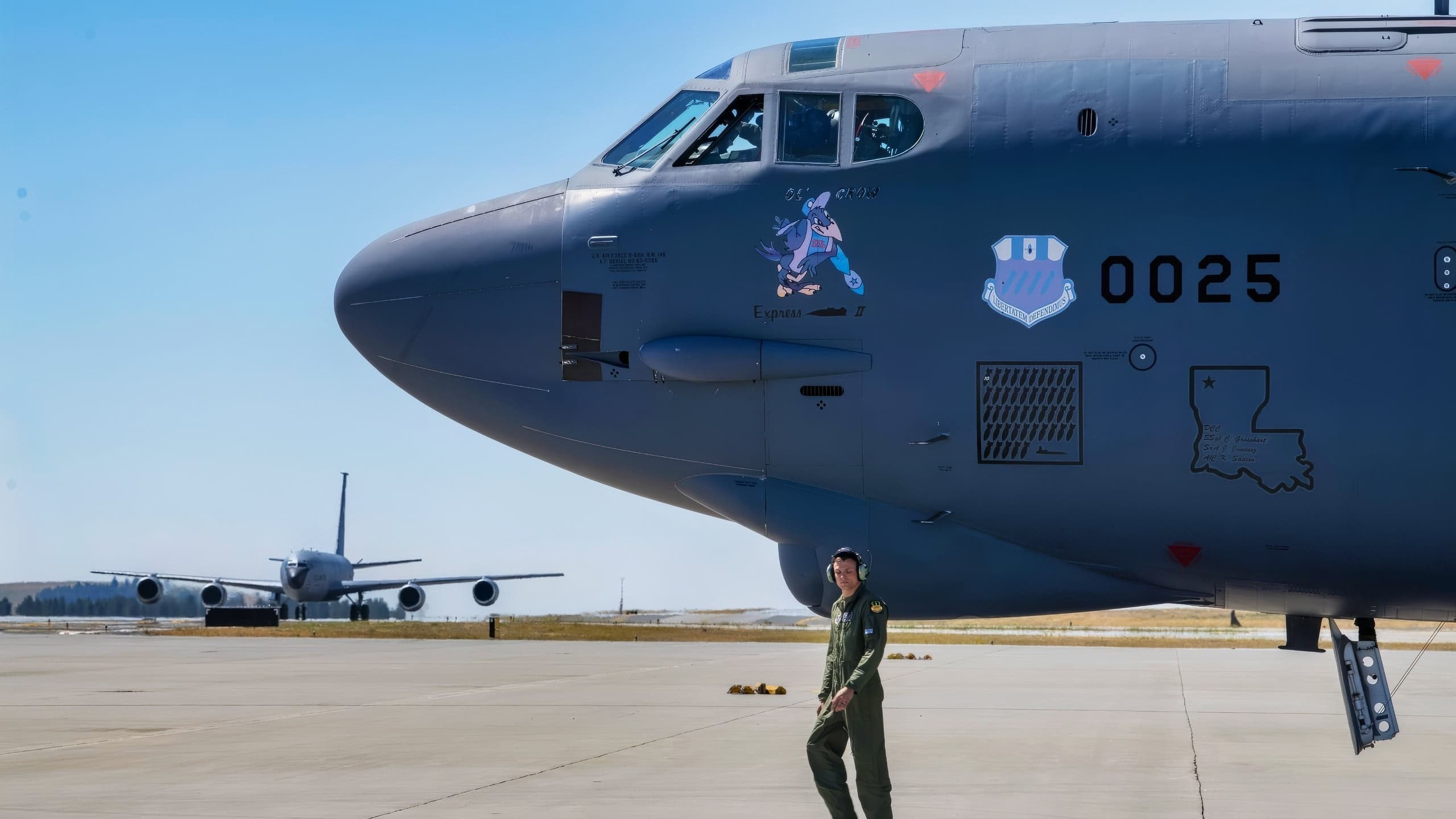
According to the Ministry of Defense, this EDD will serve as a forum to discuss the regional security environment, the defense posture of the U.S.-Japan alliance, nuclear and missile defense policies, arms control, and risk reduction as part of strategic deterrence. Established in 2010, while the nuclear umbrella during the Cold War was an implicit political understanding, the current EDD treats operations, conventional forces, missile defense, and crisis communication as a single bundle.
According to the record of the previous meeting published by the Ministry of Foreign Affairs on February 22, the U.S. side was co-chaired by the State Department and the Department of Defense, while the Japanese side was co-chaired by the Ministry of Foreign Affairs and the Ministry of Defense, with participants including the Joint Staff Office, the U.S. Joint Chiefs of Staff, U.S. Strategic Command, and the Indo-Pacific Command. This is crucial. The EDD is not just a meeting of diplomats. It is a practical discussion where the U.S. Strategic Command, which possesses nuclear capabilities, sits at the same table as the divisions responsible for Japan's integrated operations.
Conventional forces support the credibility of nuclear deterrence
At the February EDD, the U.S. reaffirmed its commitment to Japan's defense through "all capabilities, including nuclear," and acknowledged that Japan's investment in conventional forces reinforces U.S. deterrence. This reflects the recent changes in the U.S.-Japan alliance. Japan is no longer in a position of waiting from afar, trusting in U.S. nuclear capabilities. The enhanced Type 12 surface-to-ship missile capability, the introduction of Tomahawks, integrated air and missile defense, and the mobility of forces in the southwestern region are becoming the foundation that transforms U.S. extended deterrence into "usable deterrence."
During the U.S.-Japan defense ministerial meeting held in Singapore on May 30, both countries confirmed flexible distribution of air power in the southwestern region, forward presence, and the temporary deployment of U.S. missile systems. Additionally, the acceleration of joint development and production, including SM-3 Block IIA and AMRAAM, and the TRISHIP concept involving Australia were also discussed. These are not separate issues outside the EDD; they are components of the same deterrence system.
The Typhon in Kanoya holds more significance than symbolism
According to a report by USNI News on May 25, the Japan portion of Valiant Shield 2026 will take place from June 22 to July 1, with Typhon and HIMARS deployed at Kanoya Air Base. The Typhon is a containerized medium-range firepower system capable of launching SM-6 and Tomahawk missiles, while HIMARS is a highly mobile rocket artillery system. According to the Ministry of Defense, live-fire exercises are not planned at Kanoya.
However, evaluating the significance of this deployment solely based on whether live ammunition will be fired would be a misunderstanding. Kanoya is a Japan Maritime Self-Defense Force air base, located near a junction for air and maritime traffic routes heading towards the southwestern islands, the East China Sea, and the waters east of Taiwan. The placement of U.S. Army long-range firepower there indicates that the mission boundaries of the Japan Maritime Self-Defense Force, the Japan Ground Self-Defense Force, the U.S. Marine Corps, and the U.S. Army are becoming blurred. We are entering an era where land-launched missiles are necessary to protect maritime traffic routes.
The discussions will simultaneously address China and North Korea
At the February EDD, the rapid and opaque nuclear buildup of China, North Korea's nuclear and missile programs, and Russia's violations of arms control were on the agenda. These three issues will likely be inseparable in the June meeting as well. The Chinese Navy has normalized aircraft carrier operations in the Western Pacific, and North Korea is moving towards combining tactical nuclear weapons with ballistic missiles. For Japan, the era of only considering ballistic missile defense is over.
In my view, the substantive focus of this EDD is not just on "strengthening the nuclear umbrella." Rather, it is about how to coordinate U.S. strategic nuclear and conventional missile forces, Japan's counterstrike capabilities, and dispersed operations in the southwestern region during the first few hours of a crisis. This is more about communication procedures, target identification, logistics, base usage, and evacuation plans than political documents.
The weaknesses of deterrence lie not in equipment but in procedures
Holding the EDD in Japan carries weight in terms of explaining to domestic public opinion. Rather than the classic signals of showcasing B-52s or strategic submarines, the current U.S.-Japan alliance has entered a stage where deterrence is demonstrated through the integration of missiles, sensors, drones, and joint command. In that sense, the discussions on June 8, while taking place in a conference room, are situated above the operational lines connecting Kanoya, Miyako, Ishigaki, Yokota, and Guam.
On the other hand, excessive expectations should be avoided. The types of equipment have increased, and the names of exercises have multiplied. However, during a crisis, at what point will U.S. medium-range firepower be mobilized, what information will Japan share and at what speed, and how far will political approval go in advance? If these procedures remain ambiguous, deterrence will not be as strong as it appears. The true weakness lies not in the range of missiles but in the range of decision-making for both Japan and the U.S.
Sources
- Ministry of Defense, Regarding the Holding of the U.S.-Japan Extended Deterrence Dialogue, June 5, 2026
- Ministry of Foreign Affairs, Japan-U.S. Extended Deterrence Dialogue, February 22, 2026
- Japan Ministry of Defense, Japan-U.S. Defense Ministerial Meeting Summary, May 30, 2026
- USNI News, Japan Announces 2 Major Western Pacific Exercises with U.S., May 25, 2026
The Japan-U.S. Extended Deterrence Dialogue (EDD) is scheduled for June 8-9, 2026, in Japan, focusing on nuclear deterrence and military cooperation. Discussions will include the deployment of Typhon missile systems and HIMARS, emphasizing the integration of conventional and nuclear capabilities. This meeting aims to strengthen deterrence against threats from China and North Korea, involving high-level military officials from both nations.
- The Japan-U.S. Extended Deterrence Dialogue will take place on June 8-9, 2026, in Japan.
- The discussions will focus on nuclear deterrence, military cooperation, and the deployment of Typhon and HIMARS systems.
- The Typhon system is a containerized medium-range firepower system capable of launching SM-6 and Tomahawk missiles.
- The meeting will involve high-level military officials from both nations, indicating a practical approach to defense discussions.
- The strategic context includes addressing threats from China and North Korea.