
The JNIM Encircles Djibo — Five Military Posts Fall on the Day of Burkina Faso's Independence
 Marie Dubois
The JNIM Encircles Djibo — Five Military Posts Fall on Burkina Faso's Independence Day
On August 5, at 8:55 AM, the channels of the Group for Support of Islam and Muslims (JNIM) announced the capture of four military posts north of Djibo, the capital of the Soum province, followed by a fifth in Gorgadji, in the neighboring Séno. On the very day that Ouagadougou celebrates its independence. The coincidence is not accidental.
The sequence is broader. From August 3 to 9, the JNIM struck the Center-North, the Sahel, the North, and the Boucle du Mouhoun within a week, according to the weekly review of the AES compiled by Sahel Horizon. This occurs during the rainy season — the time that once froze motorized columns on laterite tracks.
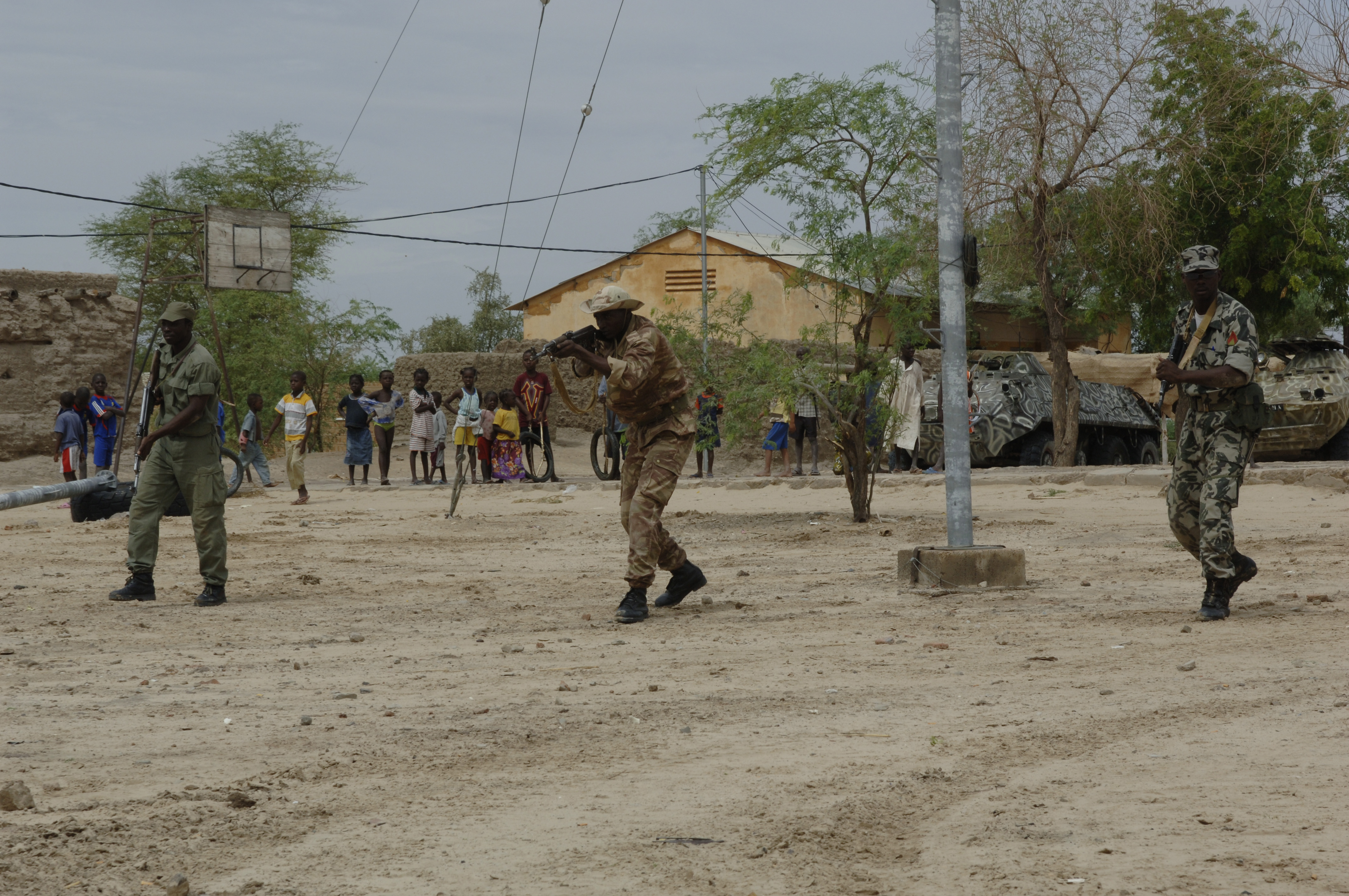
On August 5, Five Posts in One Day
According to claims from the JNIM relayed by specialized monitors, four positions of the Defense and Security Forces (FDS) north of Djibo fell on August 5, followed by a post in Gorgadji. Djibo has been besieged since February 2022: the city survives only through escorted convoys and air rotations. The loss of these forward posts — those that held the cordon between the city and the Malian border — tightens the noose on the last square kilometers still administered by the state in Soum.
The date is calculated. August 5 is Independence Day. By choosing this symbol, the JNIM tells the Burkinabè what its videos have been repeating for months: the state no longer controls its own territory, even on its national holiday. On the ground, the effect is immediate — the fallen posts are looted, flags replaced, weapons taken away.
One Week, Four Regions, One Offensive
The timeline of the strikes is relentless. On August 3, a post in Sabcé, in Bam, is attacked: about ten assault rifles, machine guns, and ammunition are taken. On August 4, it is Dargo, in Namentenga, and two positions of Volunteers for the Defense of the Homeland (VDP) near Kaya. On August 5, Soum and Séno. On August 7, Silmagué, in Namentenga, where the group claims to have taken the locality and its military post. On August 8, Sollé, in Loroum, and a post in the Dédougou area, in Boucle du Mouhoun, attacked and taken.
Four regions in seven days. The JNIM is no longer content with harassing the routes: it is methodically dismantling the network of posts that has constituted, since 2022, the backbone of the junta's strategy. Each fallen post is a weapons depot offered to the enemy. Each destroyed VDP position is a local recruitment pool dried up. On August 11, in Youba and Aoréma, in the North, an attack attributed to Ansarul Islam, affiliated with the JNIM, killed at least fifteen VDP and looted the post of its weapons and motorcycles.
The Eastern Front Opens Towards Togo
The most concerning aspect is unfolding in the East. The JNIM claims to have killed forty soldiers near Diabo, in the Gourma province, during an attack where it asserts it seized thirty-nine AK rifles, four PK machine guns, and four RPGs after repelling an army column. In Soudougui, in Koulpélogo, a few kilometers from the Togolese border, coordinated assaults reportedly caused dozens of casualties among the FDS and VDP, according to the same sources.
These claims are not independently confirmed — it must be said. But geography speaks: Gourma and Koulpélogo border Togo and Benin. This is exactly the trajectory that the JNIM has been following for two years, from Liptako-Gourma towards the coastal states. If the Eastern front is confirmed, it is no longer just the north and center of the country that are burning, but the gateway to the Gulf of Guinea.
“The JNIM has crossed a threshold: it is no longer just seeking to survive, it administers, taxes, and punishes in the areas it controls. The rainy season no longer slows it down.” — regional security observer quoted by Sahel Horizon
The Gap Between Discourse and the Map
While the posts fall, the government spokesperson, Pingdwendé Gilbert Ouédraogo, expresses his satisfaction: “We are proud of the work of the BIR-C,” he says about the elite units. No official communication has detailed the loss of the five posts on August 5. This gap is not trivial. In Soum, where rumors spread faster than official statements, each post that falls without an official response feeds the feeling of abandonment that, for two years, has emptied the ranks of the VDP and caused entire villages to fall under jihadist influence.
The contrast is all the more striking as the week was also marked, on August 4, by the attack with an improvised explosive device against the supply convoy of the Essakane gold mine, about forty kilometers from Dori — at least ten soldiers killed — and by accusations of reprisals against civilians in Alkoma and Sambonaye, which testimonies estimate at around forty dead. On the ground, the pressure is double: military and political.
What This Sequence Changes
Three lessons. First, the simultaneity: striking four regions in seven days requires logistics, communications, and a mass of fighters that the JNIM had not demonstrated at this scale since the major offensive of 2025. Next, the war economy: each captured post replenishes the group's arsenal — rifles, machine guns, vehicles, motorcycles — and reduces the cost of the struggle for it. Finally, the season: the rainy season no longer protects loyalist forces. The tracks are cut off for supply columns, but the JNIM fighters move by motorcycle and on foot, along routes they control.
From experience, I would say this is the most dangerous combination for a static army: a mobile enemy that chooses its targets while your reinforcements are stuck in the mud. The strategy of posts has had its time in Soum; without reactive airstrikes and without local human intelligence, the reconquest of lost positions around Djibo will be long and costly.
The question is no longer whether the JNIM can hold the ground it has just taken, but where it will strike next. Two axes to watch: the road from Kaya to Djibo, the lifeline of Soum, and the Koulpélogo corridor towards the Togolese border. If the next offensive combines the two, Burkina will not only lose posts — it will lose control of its southern border.
On August 5, 2023, JNIM encircled Djibo and captured five military posts, coinciding with Burkina Faso's independence day. The attacks resulted in at least 40 soldiers killed and significant weaponry seized, indicating a shift in JNIM's operational strategy. The group has conducted coordinated assaults across multiple regions, tightening its grip on territory and undermining state control.
- JNIM captured five military posts on August 5, 2023, coinciding with Burkina Faso's independence day.
- At least 40 soldiers were reportedly killed in attacks near Diabo.
- The JNIM has been conducting coordinated attacks across multiple regions in Burkina Faso.
- The captured posts included significant weaponry, enhancing JNIM's capabilities.
- The situation indicates a shift in JNIM's operational strategy, moving from harassment to direct control.