

Iran’s Zulfiqar main battle tank is best understood as a sanctions-era engineering project rather than a clean-sheet rival to the M1 Abrams. Tehran combined technology it already knew how to maintain: suspension and automotive ideas associated with the American M48 and M60 Patton, plus a Soviet-derived 125mm smoothbore gun and carousel autoloader associated with the T-72. The result was a domestically assembled tank for Iran when access to complete foreign systems and spare parts was restricted.
The project grew from the damage and isolation left by the 1980-1988 Iran-Iraq War. Before the 1979 revolution, Iran purchased large fleets of American Patton tanks and British Chieftain tanks. During and after the war, sanctions made those mixed inventories increasingly difficult to support. Iran later obtained T-72s and began assembling T-72S tanks, giving its engineers experience with the Soviet 125mm gun, ammunition, and three-man crew arrangement.
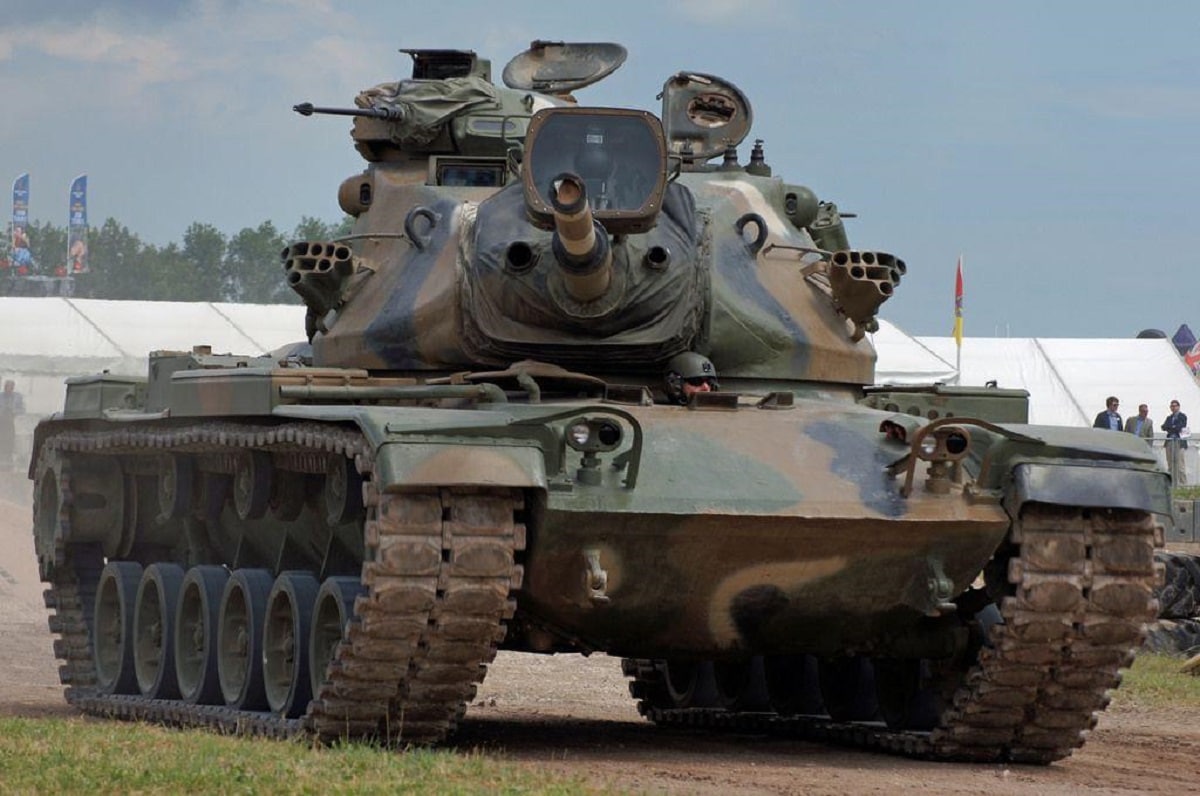
M60 Patton Tank. Image: Creative Commons.
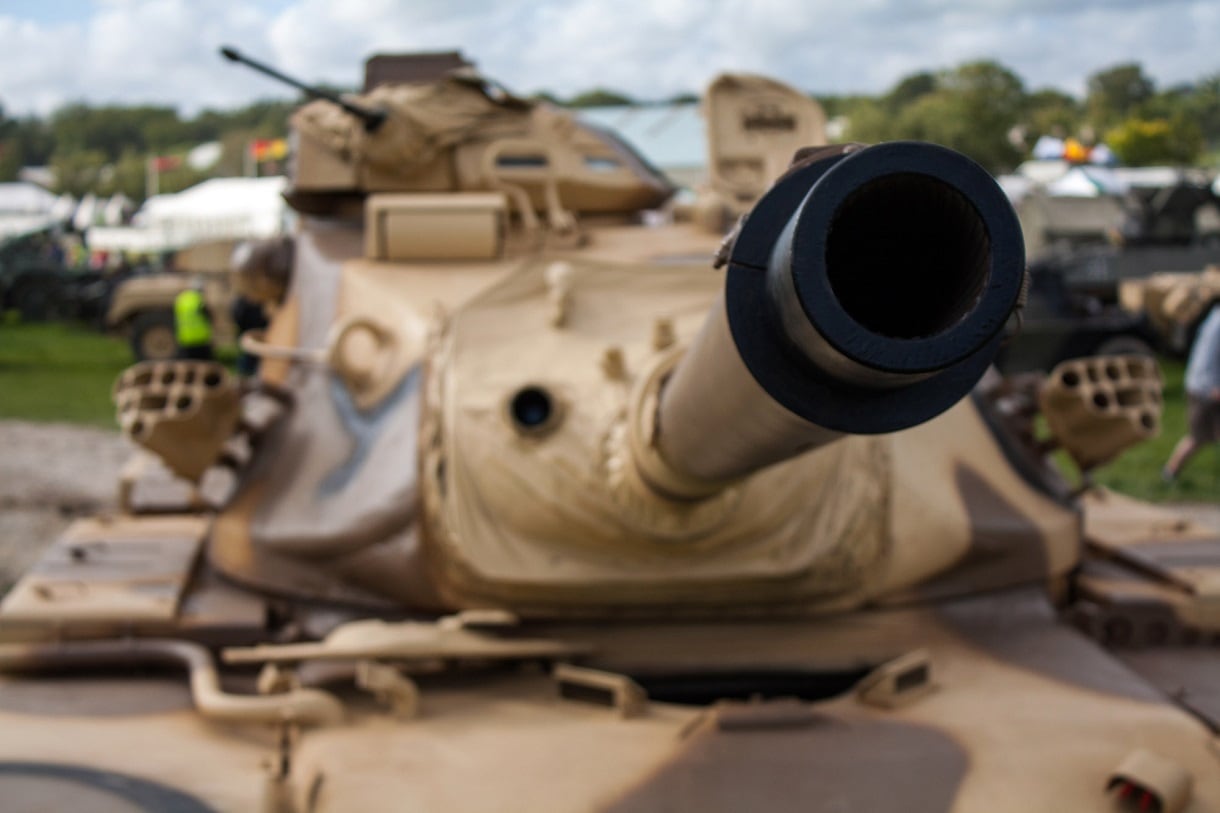
M60. Image: Creative Commons.
The U.S. Army’s Worldwide Equipment Guide dates the evaluation of the first Zulfiqar prototypes to 1993.
The tank appeared publicly in 1994, and six semi-industrial prototypes were produced and tested in 1997. Iran named it after Zulfiqar, the legendary sword associated with Ali, but its practical purpose was less symbolic: to build a tank around industrial skills, components, and repair knowledge already available inside Iran.
The first Zulfiqar reportedly weighed about 36 tons and used a 780-horsepower diesel engine, carrying a crew of three and achieving a power-to-weight ratio of roughly 21.7 horsepower per ton.
Its main weapon was a 125mm 2A46-family smoothbore cannon backed by 7.62mm and 12.7mm machine guns. Calling every major subsystem T-72-derived goes too far. Open-source technical descriptions report that the early tank used Slovenia’s EFCS-3 fire-control system, while later versions received Iranian-developed sights, stabilization and fire-control changes.
Iran Opened a Zulfiqar Production Line but Never Published a Reliable Fleet Total
Iranian officials said series production began in 1996. President Akbar Hashemi Rafsanjani formally inaugurated a line for Zulfiqar tanks and Boragh armored vehicles at the Shahid Kolah Dooz Industrial Complex in July 1997.
That event demonstrated real manufacturing capacity, but it did not establish how many tanks were shipped from the factory.
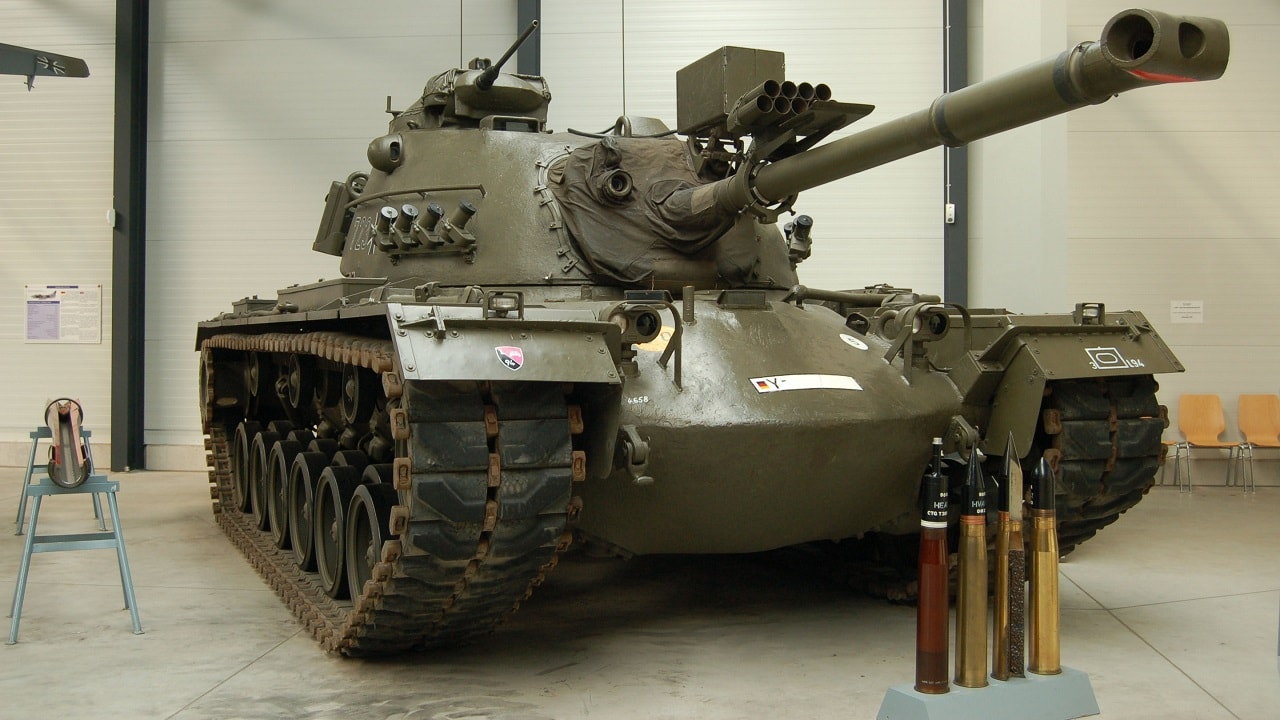
M48 Patton Tank. Image Credit: Creative Commons.
The most defensible public number is now a decade old. A 2016 U.S. Army threat report listed 150 Zulfiqars in Iranian service. It did not divide them by variant or describe their readiness. Much larger figures repeated online are rarely supported by contracts, unit records, or identifiable production batches.
The Zulfiqar-2 served mainly as a development vehicle with an extended chassis and a more powerful engine. The larger Zulfiqar-3 became the most ambitious version, adding changes to the turret, chassis, engine, protection, and fire-control equipment while retaining the 125mm gun and autoloader.
In January 2013, Army commander Brig. Gen. Ahmad Reza Pourdastan said the upgraded tank had a new stabilizer and fire-control system but would enter mass production only after General Staff approval. That qualification matters because it separates an unveiled design from an established production program.
Iran also announced in 2016 that it had tested a locally developed active-protection system on a Zulfiqar.
Public evidence has never shown the system installed across the fleet. The same uncertainty surrounds armor composition, thermal-imaging quality, and the ability to manufacture modern penetrators in quantity. An angular turret resembling an Abrams does not provide equivalent protection.
The Zulfiqar Has No Confirmed Combat Record
No credible public account has placed a Zulfiqar in a verified tank battle. The design emerged after the Iran-Iraq War, and photographs from Syria did not confirm the deployment of Iranian units there.
During the 2025 and 2026 conflicts, attacks concentrated on missiles, air defenses, aircraft, naval forces, and military infrastructure rather than a sustained ground invasion. Iran displayed Zulfiqars in parades and exercises, but no independently confirmed battlefield kills or combat losses have been attributed to the type.
That absence leaves its most important qualities untested.
Modern tank performance depends on crew training, optics, ammunition, communications, maintenance, and protection against top-attack missiles and drones, not merely gun diameter.
Iran’s large but uneven ground force operates T-72s, Pattons, Chieftains, and several domestic rebuilds, creating a difficult logistics and training burden.
Iran’s Karrar and Soleiman-402 Have Overshadowed the Zulfiqar
Iran has since promoted the T-72-derived Karrar as its more advanced domestic tank, with newer explosive reactive armor, sights, and a remote weapon station. Tehran also continues to rebuild its American-made M60s into the Soleiman-402 configuration.
Those parallel programs indicate that the Zulfiqar never became a single replacement for Iran’s aging armored fleet.
As of August 12, 2026, the U.S. Army still lists the Zulfiqar-1 and Zulfiqar-3 as Iranian systems.
Tehran has not released a verifiable current production total, unit-by-unit inventory, or readiness rate.
No publicly confirmed image or official loss record has identified a Zulfiqar destroyed in combat.
About the Author: Harry J. Kazianis
Harry J. Kazianis (@Grecianformula) was the former Senior Director of National Security Affairs at the Center for the National Interest (CFTNI), a foreign policy think tank founded by Richard Nixon based in Washington, DC. Harry has over a decade of experience in think tanks and national security publishing. His ideas have been published in the NY Times, The Washington Post, The Wall Street Journal, CNN, and many other outlets worldwide. He has held positions at CSIS, the Heritage Foundation, the University of Nottingham, and several other institutions related to national security research and studies. He is the former Executive Editor of the National Interest and the Diplomat. He holds a Master’s degree focusing on international affairs from Harvard University.