
The JNIM Strangles Bamako in Mali in 2026 — Tabaski Reveals the Economic War
 Marie Dubois
JNIM Strangles Bamako in Mali in 2026 — Tabaski Reveals Economic Warfare
On May 26, at the livestock markets in Bamako, the war was not evident in the sound of weapons but in the price of a sheep. Just days before Tabaski, Malian families who usually buy an animal for sacrifice have refrained. A teacher quoted by the Associated Press explains that a small sheep has gone from 177 to 266 dollars, which is now enough to exclude part of the capital from the ritual. This detail is not folkloric. It is an operational indicator.
The Support Group for Islam and Muslims (GSIM/JNIM), affiliated with Al-Qaeda, announced earlier this month a blockade of the roads leading to Bamako. It does not set up fixed checkpoints like a conventional army. It strikes convoys, burns trucks, disappears before the Malian forces can react, and then lets uncertainty do the rest. On the ground, this method is often more effective than permanent control: it forces every transporter, every herder, every wholesaler to calculate the route as a combat mission.
A Capital Supplied by Too Long Corridors
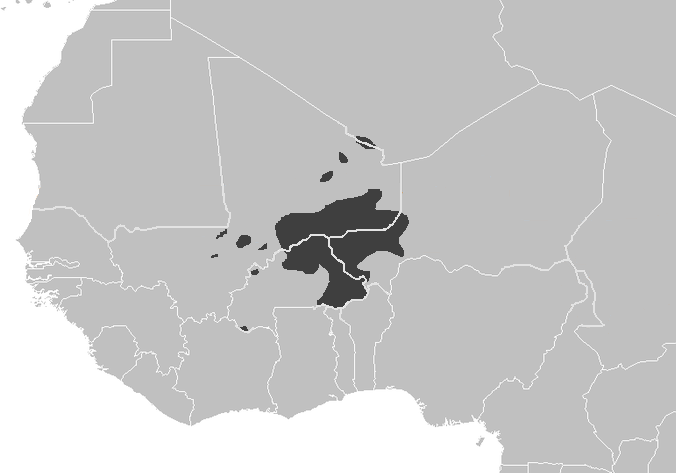
Bamako is an landlocked capital. Its fuel, mechanical parts, some of its food supplies, and much of its livestock depend on roads coming from Senegal, Ivory Coast, and the pastoral areas of western Mali. The case of Diéma, about 345 kilometers west of Bamako, summarizes the problem. A livestock trader says he has only 50 sheep available instead of the 200 he usually transports before Tabaski, with the rest waiting for trucks escorted by the army. Three hundred forty-five kilometers is not a strategic distance on a map. It is a day and a half of travel with weak points, bridges, fuel stops, and villages where information circulates quickly.
The blockade is therefore not total. Goods still enter the capital, and there is no urban famine at this stage. But JNIM does not need to close Bamako like shutting a door. It only needs to reduce the flow, make insurance impossible, force the army to disperse its units into road escorts, and turn the market into a barometer of distrust. In a Sahelian war, logistical economics is often more decisive than taking an administrative building.
From Spectacular Raids to Diffuse Siege
This economic pressure prolongs the coordinated attacks of April 25 against Bamako, Kati, Gao, Mopti, Sévaré, and northern Mali. JNIM and the Azawad Liberation Front (FLA) have claimed a coordination that would have seemed improbable not long ago, given their divergent objectives. The jihadists seek political and religious dominance; the Tuareg separatists aim for Azawad. But for now, they have found a common enemy: the junta in Bamako and its Russian partners.
The death of Defense Minister Sadio Camara during an attack in Kati dealt a symbolic blow to the heart of the regime. Kati is not just a suburb. It is the military hub that protects Bamako and concentrates part of the power stemming from Mali's coups. When a car bomb reaches this level of target, it does not prove that the regime will fall tomorrow. It proves that its intelligence, filtering, and counter-surveillance networks have been breached.
The recapture of Kidal by armed groups has added a strategic humiliation. Since 2023, the reconquest of this northern city served as political proof: Bamako, with Russian support, would have restored lost sovereignty. Its loss indicates the opposite. Government forces can still hold regional capitals, but they struggle to ensure continuity between them. This is where the blockade of Bamako becomes dangerous: it connects the symbolic north to the daily life of the south.
The AES Responds from the Air, Not Yet on the Ground
The Alliance of Sahel States (AES), which includes Mali, Niger, and Burkina Faso, claims to have conducted intense air campaigns following the April attacks. Niger has praised a rapid response from the unified force, presented as having between 5,000 and 15,000 men by mid-April. On paper, this is progress. In the mud, sand, and villages between Gao, Ménaka, Kidal, and Bamako, it is another story.
A common force is not a common capability. It requires compatible radio frequencies, fuel, rules of engagement, mechanics, updated maps, officers willing to share sensitive intelligence, and logistical chains that do not stop at the border. Airstrikes can disrupt a column, kill a leader, or reassure public opinion. They do not sustainably reopen a road if ground units do not hold the strong points, crossroads, and localities that supply the fighters.
The other limitation lies with the Russian partner. Chatham House notes that the hasty withdrawal of elements of the Africa Corps from Kidal exposed the fragility of the setup. Moscow can provide firepower, close protection for the regime, and an anti-Western narrative. But the Sahelian war is won less by the prestige of an ally than by the patient control of secondary tracks. The French experience in the Sahel should humble any external actor: Barkhane had superior means, and it did not succeed in preventing the expansion of JNIM.
The Message Sent to the Inhabitants
JNIM also targets the psychology of urban dwellers. When an employee in Bamako refrains from traveling to Ségou, 240 kilometers away, because he fears attacks on the road, the armed group has already shifted the front line in his mind. When families pool their resources to buy a cow due to the lack of affordable sheep, the war enters the religious celebration without needing to occupy the mosque.
However, caution is necessary. The price and stock figures come from markets and witnesses; they do not constitute a comprehensive measure of Bamako's supply. The blockade is fluid, partial, sometimes circumvented by escorts. But this uncertainty is part of the desired effect. JNIM does not need every truck to burn. It wants every driver to wonder if he will be next.
What to Watch Now
The next indicator is not just the number of claimed attacks. Three things need to be monitored: the pace of escorted convoys from Diéma and Kayes, the state of gas stations in Bamako, and the army's ability to simultaneously secure Kati, the road to Ségou, and the routes to Senegal. If Malian forces concentrate too many units around the capital, they concede space to the north and center. If they stretch themselves too thin, they expose Bamako to new raids.
My assessment is simple: JNIM is not yet seeking to take Bamako street by street. It seeks to show that the junta can no longer guarantee the price of a sheep, the fare of a taxi, or the family trip for Tabaski. In a Sahelian capital, this is a form of indirect fire. The immediate danger is therefore on the roads, not just at the gates of barracks. The next battle for Bamako could begin in Diéma, Kayes, or on a stretch of asphalt where a convoy will wait too long for its escort.
Sources
- Associated Press, May 27, 2026, report on Tabaski and the blockade of Bamako.
- Africanews/AFP, April 29, 2026, announcement of the blockade of Bamako by JNIM.
- Africanews/AFP, May 1, 2026, airstrikes claimed by the AES after the attacks in Mali.
- Chatham House, April 30, 2026, analysis of the coordinated attacks and the limitations of the Malian setup.
- ACLED, Africa Overview May 2026, tracking JNIM-FLA offensives and the recapture of Kidal.
JNIM imposed a blockade on roads leading to Bamako in May 2026, significantly increasing the price of sheep and impacting local families ahead of Tabaski. The blockade has disrupted supply routes, forcing the military to divert resources for escorting convoys. While supplies still reach Bamako, the reduced flow creates economic pressure, indicating a strategic shift in the conflict dynamics in Mali.
- JNIM has announced a blockade of roads leading to Bamako.
- Prices of sheep have increased significantly, impacting local families' ability to participate in Tabaski.
- The blockade has not completely cut off supplies to Bamako, but it has reduced the flow of goods.
- The JNIM and FLA have coordinated attacks against multiple locations in Mali.
- The situation reflects a broader strategy of economic pressure rather than direct military confrontation.