
The largest military exercise in Southeast Asia, with 30 countries and 8,000 troops participating this year! "Golden Cobra" adds space and cyber operations for the first time.
[Global Times Report, Reporter Guo Yuandan] On February 24 local time, the "Cobra Gold 2026" multinational joint military exercise commenced at the U-Tapao Naval Airbase in central Thailand. This is the largest and longest-running multinational military exercise in Southeast Asia. According to Thailand's "National News," the exercise will last until March 6, with participation from 30 countries and approximately 8,000 troops, co-hosted by the Royal Thai Armed Forces and the U.S. Indo-Pacific Command.
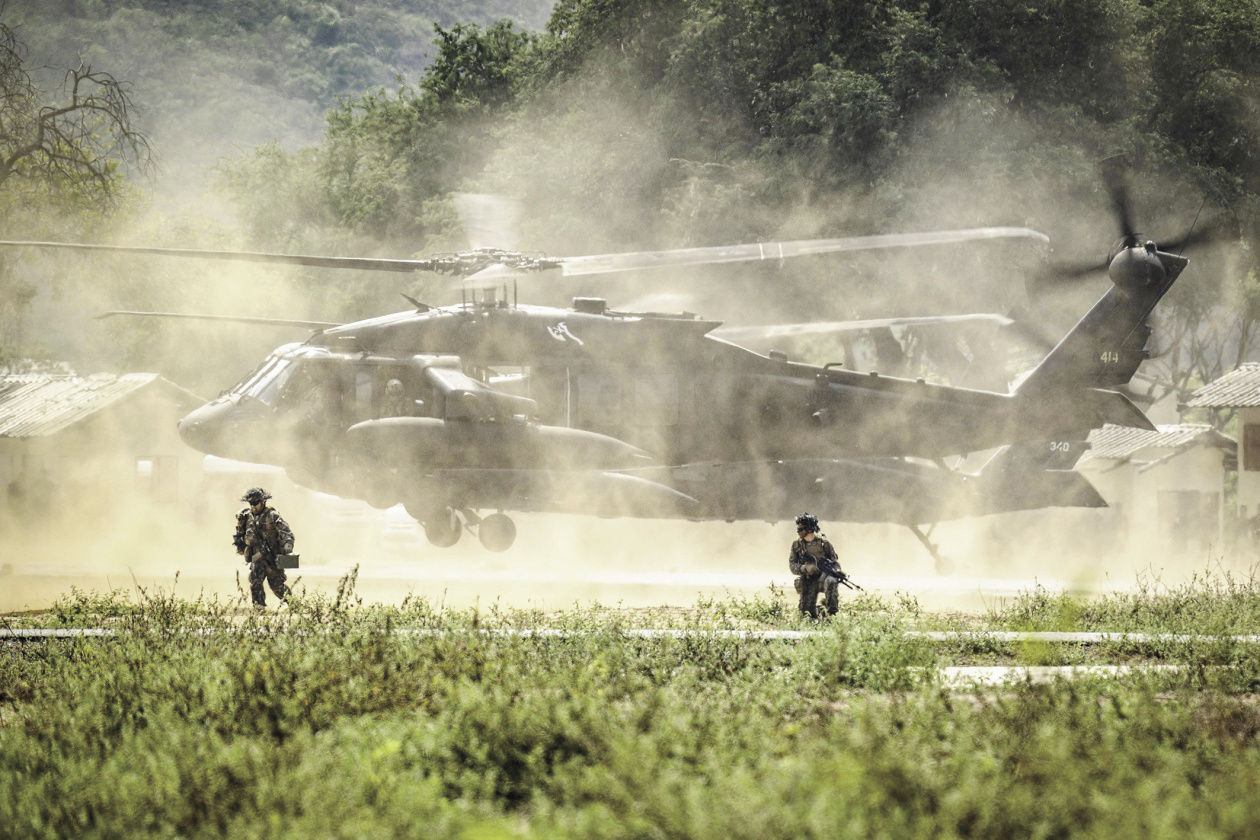
Integrating All-Domain Operational Capabilities
The "Cobra Gold 2026" exercise will for the first time include advanced space and cyber operations to address modern global threats. The focus of the exercise is on joint all-domain operations, integrating various combat capabilities across land, sea, air, space, and cyber domains within this framework.
In his opening speech, Thai Defense Minister Udomdet Boonthanod stated that the exercise will emphasize showcasing military capabilities in multi-domain joint operations on land, at sea, and in the air, with a significant focus on capabilities in space and cyber domains.
U.S. Ambassador to Thailand Sean O'Neill remarked, "To address new challenges, 'Cobra Gold' must continue to evolve."
Military expert Zhang Junsha told a Global Times reporter on the 26th that the exercise features a rich and diverse content, including traditional combat scenarios such as amphibious landings, as well as simulations in new combat domains like space and cyber. "The arrangement of the exercise topics indicates that the U.S. aims to gain a high ground in both traditional and new combat domains. Through such drills, the U.S. intends to enhance its own and its key allies' operational capabilities in these areas, thereby strengthening its control over allies' operations and ultimately maintaining its hegemonic position in the Asia-Pacific region."
According to Zhang Junsha, since the inception of the "Cobra Gold" military exercise in 1982, the main forces involved from the U.S. military have included land, sea, air, Marine Corps, and special operations forces. Its purpose has gradually shifted from initially addressing so-called "external aggression" to regional intervention. "In the drills, the U.S. conducts joint operational exercises in traditional domains with core allies, including land and maritime operations, as well as amphibious landings, infiltration operations, special operations, and mine warfare, to enhance its military presence and intervention capabilities in the Asia-Pacific region."
A military expert stated on the 26th that within the framework of the "Cobra Gold" exercise, the U.S. Marine Corps will utilize resources from space and cyber domains to support its conventional operations. For instance, during amphibious landing operations, information and intelligence provided by the U.S. Space Force can help accurately select weak points in the "opponent's" coastal defenses, allowing relevant forces to conduct landing or island-seizing operations with greater precision in their deployment direction. Additionally, U.S. forces and their allies can use intelligence and data provided by the U.S. Space Force to adjust to the dynamic deployment of "opponent" forces.
"The introduction of space resources aims to enhance reconnaissance and situational awareness capabilities in the battlefield environment, continuously refining tactics and methods during dynamic processes," the expert stated.
It was noted that this year's "Cobra Gold" has added cyber warfare-related topics, primarily to assist and coordinate with conventional operations, ensuring that relevant combat forces remain in a state of efficient connectivity and share information and intelligence with other combat forces. Experts analyzed that "the U.S. military can also use cyber information attacks to undermine the morale and spirit of the 'opponent.' Therefore, the U.S. needs to integrate its space resources and cyber technology advantages with conventional operational models. The U.S. Marine Corps will also demonstrate corresponding capabilities during this joint exercise."
U.S. Forces and Key Allies' Participation is Significant
According to a report from the U.S. Naval Institute on the 24th, the U.S. military has dispatched the amphibious dock landing ship USS Ashland to form a task force participating in the "Cobra Gold" military exercise. The participating forces include approximately 200 U.S. Marines from the 15th Marine Expeditionary Unit, the 3rd Assault Amphibious Battalion, and the 17th Combat Logistics Regiment, as well as nearly 400 sailors from the USS Ashland.
A press release from the U.S. Marine Corps stated that the U.S. has brought a "force specifically built for amphibious operations" to participate in "Cobra Gold 2026," showcasing a flexible and highly adaptable naval expeditionary presence model aimed at maintaining regional presence and enhancing partner nations' capabilities.
U.S. staunch allies in the Asia-Pacific region, Japan and South Korea, have also dispatched their main combat forces to participate. According to Kyodo News, approximately 280 members of the Japan Self-Defense Forces are participating, and during the exercise, they will cooperate with the U.S. and Thai militaries to conduct training for evacuating Japanese nationals using the Air Self-Defense Force's C-2 transport aircraft. Additionally, the Japan Self-Defense Forces will also participate in disaster response training for floods and other emergencies.
According to Yonhap News Agency, the South Korean military has sent over 390 personnel, along with the landing ship ROKS Marado, five KAV-7 amphibious assault vehicles, two self-propelled howitzers, and one K30 Biho wheeled air defense artillery.
Zhang Junsha stated, "From the U.S. military and the forces of Japan and South Korea participating, it can be seen that the U.S. will conduct amphibious landing operation drills with closely allied nations."
Zhang Junsha analyzed that from a campaign and tactical perspective, the U.S. dispatching amphibious task forces to participate in the exercise can enhance the U.S. military's ability to respond to regional security crises or armed conflicts, laying the groundwork for military intervention in regional security issues. "This is not only a demonstration of military capabilities but also a coordination of allies in terms of operational concepts, regulations, and other aspects, enhancing allies' command capabilities and joint operational capabilities."
China's Participation Contributes to Better Maintenance of Regional Peace and Stability
Thailand's "National News" reported that in the "Cobra Gold 2026" exercise, Thailand and the U.S. are among the seven core participating countries, with three additional participating countries: China, India, and Australia. Additionally, there are ten countries in the Multinational Planning Augmentation Team (MPAT), including Bangladesh, Canada, and Fiji, while Brunei and Germany are observer countries.
Official sources indicate that China has participated as an observer in the "Cobra Gold" exercise since 2002 and first sent troops to participate in 2014. The year 2024 marks the 11th consecutive invitation for China to participate. Since its participation, China has actively provided Chinese experience and wisdom to enhance international joint disaster relief capabilities, receiving praise from all parties.
The Chinese Ministry of Defense previously introduced the participation of Chinese troops in the "Cobra Gold-2024" multinational joint military exercise, with 25 participating personnel engaged in humanitarian rescue and disaster relief drills. That exercise was set against the backdrop of multinational forces jointly assisting the government of the disaster-stricken country in emergency rescue operations, including humanitarian engineering construction, humanitarian rescue and disaster relief tabletop exercises, high-level forums, and live drills.
Zhang Junsha stated that China's participation in the "Cobra Gold" series of exercises focuses on non-traditional security areas, such as earthquake rescue and humanitarian relief and disaster reduction. These topics address common threats faced by humanity, and participation in the drills helps enhance the ability to jointly respond to non-traditional security threats with other countries, which is of great significance for maintaining regional peace and stability.
"By participating in the drills, the Chinese military demonstrates an open and transparent posture, expressing a desire to strengthen mutual understanding and friendship with the militaries of other countries," Zhang Junsha stated. China's participation aligns with the expectations of all parties to enhance relevant capabilities, and China's involvement helps promote the exercise in a positive direction, better maintaining regional peace and stability, and showcasing China's role as a responsible major power.
The 'Cobra Gold 2026' multinational military exercise commenced on February 24, 2026, at Utapao Naval Air Base in Thailand, involving 30 countries and approximately 8000 troops. The exercise emphasizes joint operations across land, sea, air, space, and cyber domains, showcasing military capabilities. U.S. forces, including the Marine Corps, are participating with specialized units, while China is involved as an observer, focusing on humanitarian assistance.
- The 'Cobra Gold 2026' exercise involves 30 countries and approximately 8000 troops.
- The exercise runs from February 24 to March 6, 2026, at Utapao Naval Air Base in Thailand.
- The focus includes advanced space and cyber operations alongside traditional military exercises.
- U.S. Marine Corps and allied forces are participating with specialized amphibious units.
- China is participating as an observer and has previously sent troops for humanitarian exercises.