
The Launch of the 2026 Japan-U.S.-Australia TRISHIP and Joint Production of AMRAAM Will Change Air Defense in the First Island Chain
 Tanaka Takashi
The Launch of the 2026 Japan-U.S.-Australia TRISHIP and Joint Production of AMRAAM Will Change Air Defense Along the First Island Chain
During a roughly 60-minute meeting on May 30 in Singapore between Defense Minister Koizumi and U.S. Secretary of Defense Hagel, two notable phrases emerged. One was "Operation Supercharge," aimed at accelerating joint missile development and production, and the other was "TRISHIP," which refers to the operational name for Japan-U.S.-Australia air defense and missile defense information sharing. This is not a flashy announcement of new equipment. However, for those who have witnessed command communications and air defense operations in the Japan Maritime Self-Defense Force, this seems to represent a more practical turning point.
The Focus of the Meeting Was Not on Troop Deployment but on Ammunition and Information
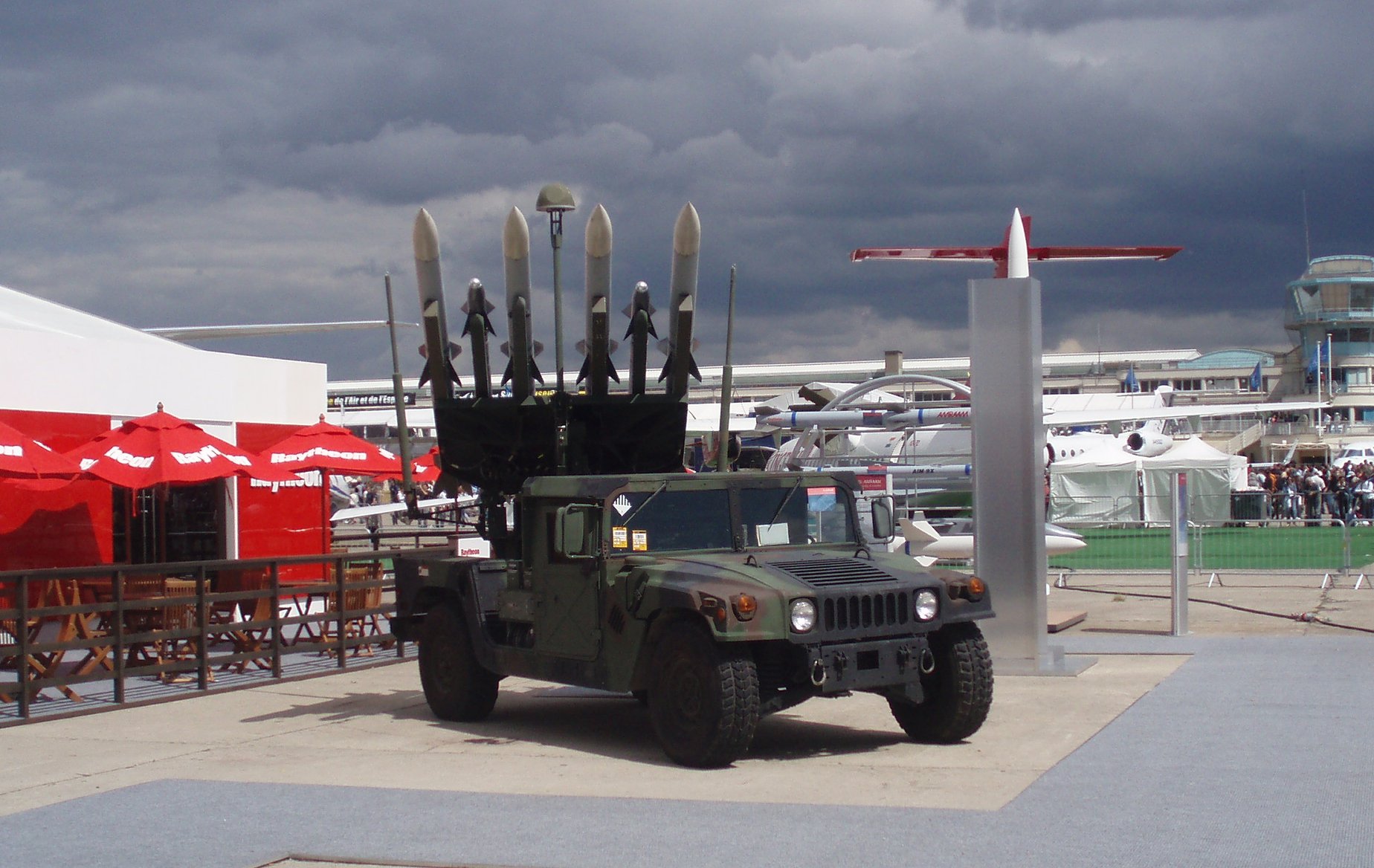
According to the Ministry of Defense's announcement, both ministers supported more advanced and realistic joint training across Japan, flexible air dispersal in the southwestern region, and the temporary deployment of U.S. missile systems. This follows discussions the previous day regarding Kanoya and the southwestern islands. However, what is more noteworthy in this document is the joint development and production exemplified by the SM-3 Block IIA and AMRAAM. Interceptor missiles and air-to-air missiles are the ammunition that determines the alliance's endurance not only on the first day of a crisis but also when a crisis prolongs.
The SM-3 Block IIA is responsible for the upper tier of ballistic missile defense, while the AMRAAM is involved in both air superiority and base defense. If Japan treats these not merely as purchases but as topics of production capability, the alliance will shift from the stage of "the U.S. brings in, and Japan provides the location" to "Japan's industrial power supports the continuity of U.S. military operations." This may not be politically prominent, but operationally it is significant.
TRISHIP Represents the Realization of a Trilateral Air Defense Network
Another focus is the networked air defense and missile defense architecture among Japan, the U.S., and Australia. The Ministry of Defense has termed this TRISHIP, which stands for Trilateral Air/Surface/Missile Information Sharing in the Indo-Pacific. The fact that it has been named should not be taken lightly. It signals a move from desk-based discussions to the stage of refining operational procedures, connectivity standards, information security, and duty systems.
Air defense along the First Island Chain cannot be established solely on a single country's radar screen. The question is how far Japan's fixed and mobile radars, U.S. air and space sensors, and Australia's southern surveillance capabilities can share the same threat picture. In an environment where ballistic missiles, cruise missiles, drones, and gliding weapons coexist, it is the side that determines "What is this?" that gets bogged down before the side that fires. The value of TRISHIP lies not in increasing the number of interceptors but in shortening the decision-making time by even a few seconds.
Hagel's Remarks and Pressure on Japan
According to USNI News and others, Secretary Hagel stated at the Shangri-La Dialogue that "we need partners, not protectorates," strongly urging burden-sharing among allies. For Japan, this is not merely a simple request for an increase in defense spending. The issue is not whether the ratio is 2% or 3%, but whether the increased funds will go towards ammunition, maintenance, personnel, fuel, communications, and base resilience. Simply increasing the number of vessels and aircraft will not suffice; if missile stockpiles and maintenance capabilities are thin, SLOC (Sea Lines of Communication) defense will become difficult within days.
In my view, this meeting should be seen as Japan beginning to redefine its role within the alliance rather than passively accepting U.S. demands. The temporary deployment of missiles to the southwestern islands serves as a visible deterrent. On the other hand, the joint production of AMRAAM and SM-3, along with TRISHIP's information sharing, builds the foundational strength for crisis management. The former represents capabilities shown to the adversary, while the latter represents the ability to continue combat operations.
The Remaining Weakness Is the Speed of Political Decision-Making
However, there are points that should be viewed with caution. Even if a framework for information sharing is established, the questions of at what stage to treat engagement information, at what stage to share with third parties, and at what stage to delegate interception authority are separate issues. Even if technical connectivity among Japan, the U.S., and Australia progresses, if Japan's political decision-making is delayed, the network will remain a high-performance alarm system.
During the Cold War, the Japan Maritime Self-Defense Force had an awareness of ultimately protecting the maritime traffic routes around Japan while assuming joint operations with the U.S. Navy. The 2026 TRISHIP and Operation Supercharge are the modern versions of this. However, the true challenge is not merely how many AMRAAMs can be produced. It is about who can make decisions, based on what information, and how quickly at the moment they need to fire.
Key Materials
- Japan Ministry of Defense, May 30, 2026, "Japan-U.S. Defense Minister Meeting" Announcement
- USNI News, May 30, 2026, Remarks by Secretary Hagel at the Shangri-La Dialogue
- AP, May 30, 2026, Reports on U.S. Pacific Security Commitments
Japan, the U.S., and Australia initiated the TRISHIP program on May 30, 2026, to enhance defense cooperation and accelerate joint missile development, including AMRAAM and SM-3 Block IIA missiles. This program aims to improve missile defense capabilities and information sharing among the three nations, marking a significant shift in Japan's role within the alliance. U.S. Defense Secretary stressed the importance of burden-sharing among partner nations.
- Japan, the U.S., and Australia are launching the TRISHIP program for defense cooperation.
- Joint missile development and production of AMRAAM and SM-3 Block IIA are being accelerated.
- The focus is on enhancing missile defense capabilities and information sharing among the three nations.
- U.S. Defense Secretary emphasized the need for partner nations to share defense burdens.
- Japan is redefining its role within the alliance, focusing on production capabilities rather than just procurement.